Matox News

Truth Over Trends, always!

Supreme Court to weigh Trump’s bid to end birthright citizenship—what’s at stake?

US Supreme Court to Decide Future of Birthright Citizenship and Its Geopolitical Consequences

The United States stands at a pivotal crossroads as the Supreme Court prepares to decide on the legitimacy of Donald Trump’s executive order that seeks to restrict the constitutional guarantee of birthright citizenship. This significant legal battle stems from Trump’s attempt to reinterpret the 14th Amendment, ratified in 1868, which guarantees automatic citizenship to every individual born on U.S. soil. The case, Trump v Barbara, has ignited fierce debates around legal authority, immigration policy, and the very fabric of American identity.

The dispute centers on a direct challenge to a long-standing principle that has shaped U.S. society for over a century. Under President Trump’s order, if upheld, tens of thousands of children born in the U.S. annually could lose their citizenship if their parents are undocumented or temporarily residing in the country. The policy would deny these children access to vital government programs like Medicaid, food aid, and educational benefits, altering the socio-economic landscape for future generations and raising grave questions about how society treats its most vulnerable. Legal analysts suggest that such a move, if legalized, would signal a major shift in immigration policy—effectively redefining what it means to be an American at a fundamental constitutional level.

Historically, the U.S. has been among the roughly 30 nations worldwide that extend automatic citizenship to anyone born on their territory. Countries like Canada and Mexico have similar policies, framing them as both humanitarian standards and statements of national sovereignty. However, critics argue that Trump’s legal push—underpinned by a fringe interpretation of the 14th Amendment—aims to curtail immigration, particularly from Latin America and other regions viewed with suspicion by the current administration. The American Civil Liberties Union (ACLU) and numerous legal scholars have vocally opposed the executive order, asserting it violates the fundamental constitutional rights rooted in over 150 years of American legal tradition.

Internationally, this legal challenge signals a broader geopolitical impact. As global powers observe the U.S. re-assessment of its immigration and citizenship norms, foreign governments and international organizations are left to grapple with the implications. Many view the U.S. as a leader in human rights and legal standards; thus, altering its constitutional interpretation risks undermining its credibility on the world stage. Political analysts warn that such internal shifts could embolden other nations to reevaluate their own citizenship policies, potentially fueling regional instability and further complicating transnational migration patterns. The decision by the Supreme Court, expected in early summer, will not simply determine the fate of a legal principle but could recalibrate America’s role as a land of opportunity versus a fortress of exclusion.

As historians and international observers chart the turbulent waters of this legal showdown, the weight of history presses heavily upon the courtroom. What is at stake is not only the future of countless children and families but the very identity of a nation built upon the promise of equality and opportunity. The Court’s ruling will echo across generations, shaping the narrative of America’s commitment to its foundational ideals or signaling a profound departure into a more restrictive, divided society. In the unfolding chapters of this legal saga, the world watches—and the true story of what it means to be an American continues to be written, one verdict at a time, leaving a legacy that history may one day question as either a beacon of hope or a cautionary tale of loss and division.
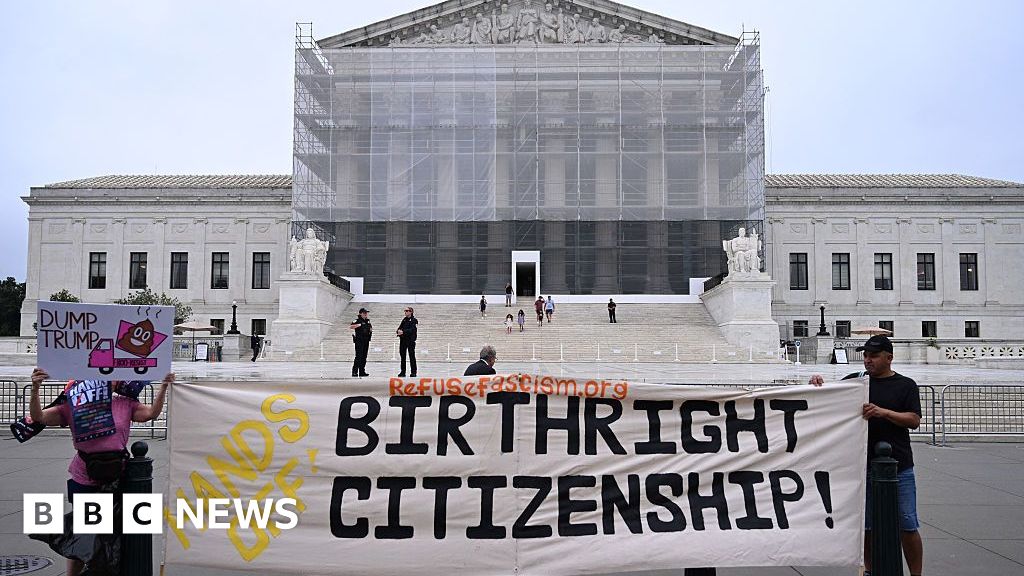

Supreme Court to Decide on End to Birthright Citizenship Refund

The United States stands at a pivotal moment that could redefine its foundational principles and ripple across the international stage. The Supreme Court of the US has agreed to hear a landmark case questioning the long-standing interpretation of the 14th Amendment, which guarantees birthright citizenship to those born within America’s borders. This legal confrontation not only highlights internal ideological battles but also threatens to shift the geopolitical landscape, especially in a world where migration, sovereignty, and identity are fiercely contested.

Since its inception in the aftermath of the American Civil War, the 14th Amendment has been the bedrock of US citizenship law, asserting that “all persons born or naturalized in the United States, and subject to the jurisdiction thereof, are citizens.” However, recent efforts led by President Donald Trump, who on his first day in office signed an executive order to end birthright citizenship, sought to challenge this constitutional guarantee. Although courts initially blocked such attempts on constitutional grounds, the ongoing judicial review underscores a broader ideological divide. Historians and legal analysts warn that a ruling against birthright citizenship could set a precedent compelling other nations to reconsider their own immigration policies, ultimately fostering a more exclusionary and nationalist global order.

Globally, around 30 countries, predominantly in the Americas, currently grant automatic citizenship to anyone born within their borders, reinforcing their sovereignty and social cohesion. America’s unique position—its acknowledgment of jus soli (right of the soil)—has historically underpinned its image as an immigrant nation. But the debate now, amid rising migration flows and national security concerns, resonates with many European nations questioning porous borders and expanding population pressures. The International Organization for Migration (IOM) and other international bodies have expressed concern that this legal challenge to US citizenship could embolden similar nationalist movements worldwide, undermining centuries of diplomatic cooperation around migration and human rights.

Furthermore, geopolitical implications extend beyond legal doctrines. Countries in Latin America, where migration to the US has profound economic and social impacts, watch closely. A possible rollback of birthright citizenship could invigorate nationalist rhetoric and fuel regional stability issues, especially if neighboring nations adopt protective measures in response. How the US navigates this legal battle will influence diplomatic relations and migration policies, shaping a new era of international politics marked by heightened sovereignty debates and the reassertion of national identities. As analysts warn, the choice made by the Supreme Court will resonate far beyond American borders, echoing through the corridors of power in capitals across the world.

In this unfolding chapter of American history, the stakes are clear: the court’s forthcoming decision will not only determine the fate of millions of individuals but also serve as a stark symbol of the nation’s soul. Will the US uphold its centuries-old promise of equal rights for all, or embrace a new era of exclusion that could threaten global stability? As history continues to write itself in the courtroom, the world waits, aware that the outcome will indelibly shape the geopolitical map and define what it means to be a nation in the modern age. The weight of this decision—fraught with ideological clashes and constitutional debates—reminds us that the true battle is for the soul of a nation, and perhaps, for the future direction of the entire Western world.

Social Media Auto Publish Powered By : XYZScripts.com