Matox News

Truth Over Trends, always!

Australia Faces Key Fight Over State Health Funding, Teen’s Body Found After Blue Mountains Camping

As the global landscape reels with shifting alliances and rising tensions, Australia finds itself at a pivotal crossroads, where internal politics threaten to ripple across the world stage. In the midst of negotiations over critical national issues such as health funding, aged care, and gun control, decision-makers in Canberra are making choices that could redefine Australia’s geopolitical stance for decades to come. Recent reports highlight a flurry of activity in the National Cabinet, as leaders grapple with a complex web of domestic challenges that hold profound implications beyond their borders.

The ongoing negotiations over the health funding deal underscore a larger theme of national sovereignty and resilience. Prime Minister Anthony Albanese and his cabinet are under pressure to secure an agreement that balances fiscal responsibility with the urgent needs of Australia’s health system. The proposed delay in launching new programs, such as the autism intervention under the NDIS, signifies an attempt to buy time in a climate of fiscal strain and political brinkmanship. Such decisions, analysts argue, reflect a broader strategic calculus that may influence Australia’s role in regional security and economic stability, especially as rival powers like China and Russia continue to expand their influence in the Indo-Pacific.

Meanwhile, the alarm over aged care shortages and misuse of funding reveals underlying tensions within Australian society that echo wider global concerns about social stability and human rights. Reports of prolonged wait times—up to 245 days for in-home care—highlight the failure to meet basic societal obligations, sparking sharp criticism from opposition parties and international observers alike. The scandal surrounding the unauthorized use of restrictive practices against NDIS participants exposes a severe failure in safeguarding vulnerable populations, a crisis that echoes similar issues in various Western nations. These domestic failures threaten to undermine Australia’s diplomatic standing, as allies and adversaries alike scrutinize how internal policies shape its commitments to international standards.

Furthermore, the debate surrounding the federal government’s approaching gun buyback scheme exposes the delicate balance of sovereignty and security. Albanese’s push for a comprehensive program costing hundreds of millions faces resistance from regions like Queensland and the Northern Territory, complicating efforts to present a unified front on national security. This internal discord risks emboldening international actors who interpret Australia’s divisiveness as a sign of political fragility—an unintended signal in an era of rising geopolitical instability. As historians warn, such internal divisions could weaken Australia’s capacity to act decisively in regional conflicts and global crises, thereby fostering a perception of vacillation at a time when strong leadership is desperately needed.

Every decision in Canberra resonates beyond its shores, shaping the very fabric of international diplomacy and conflict. Nations watch closely as Australia contends with internal crises that threaten to spill over and influence regional power dynamics. From escalating health crises to security gambits, the choices made by Australia’s leadership may well determine whether the continent remains a pillar of stability or succumbs to internal discord that invites opportunism from rivals. The weight of history presses heavily upon this nation, whose trajectory now hinges on the resolve to prioritize national interests in a world teetering on the edge of chaos. The unfolding saga remains a stark reminder: in the theater of geopolitics, the stakes have never been higher, and the future is written in the decisions of today.
Pope Leo Makes Historic Visit to Istanbul's Blue Mosque
Pope Leo Makes Historic Visit to Istanbul’s Blue Mosque

Global Diplomacy and Faith: Pope Leo XIV’s Historic Journey to Istanbul and Lebanon

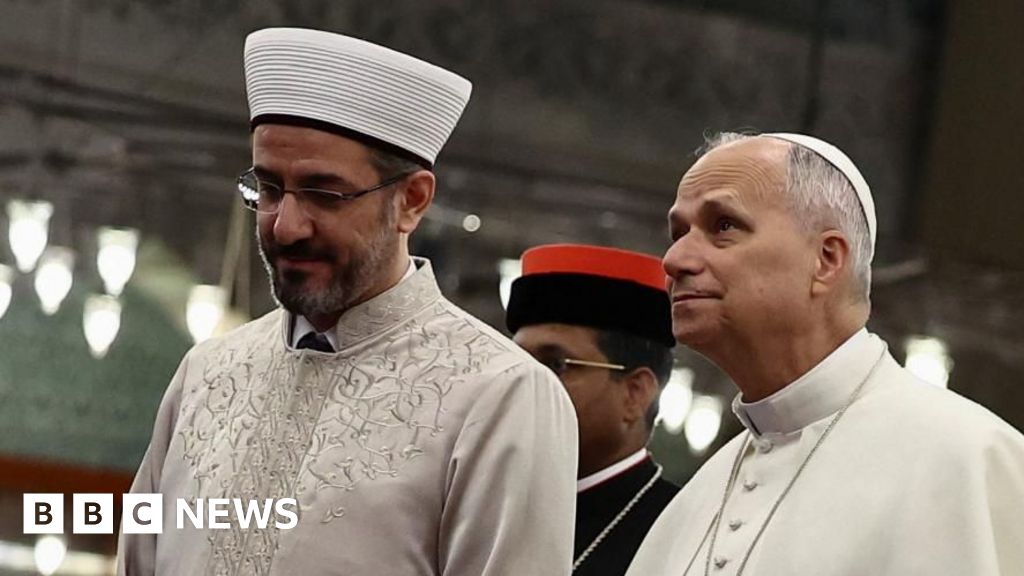
In a move that underscores the renewed importance of *interfaith dialogue* and *geopolitical stability*, Pope Leo XIV embarked on his first official visit to a *Muslim place of worship* by touring the Sultan Ahmed Mosque, popularly known as the Blue Mosque, in Istanbul. This historic gesture, aligned with his predecessor’s acts of spiritual outreach, offers a potent symbol of *bridging divides* amidst a rapidly evolving global order. The church’s leader, who entered with a bow, refrained from performing prayers—an act that emphasizes both respect and the delicate balance of religious diplomacy. The Vatican publicly stated that the visit was “in a spirit of reflection and listening,” signaling an understanding that *building trust and mutual respect* between faiths remains a cornerstone for global stability.

This visit is part of a broader four-day pilgrimage to *Turkey and Lebanon*, regions that have become flashpoints for wider geopolitical shifts. The purpose extends beyond the spiritual, serving as a diplomatic gesture aimed at fostering dialogue between Christians, Muslims, and other faith communities. In Beirut, Pope Leo will meet with *faith leaders and youth*, and pay homage at a site scarred by the devastating 2020 port explosion—an act symbolizing resilience and hope in a zone often defined by conflict and fragility. Such gestures naturally ripple through the international sphere, influencing perceptions of *Western influence* and *interfaith cooperation*, especially in a time marked by *heightened global tensions*.

Geopolitical Ramifications and International Alignments

  • The Pope’s engagement in Istanbul and Beirut underscores the complex reality of *Islamic-Christian diplomacy*, vital in a world where geopolitical alliances are shifting rapidly. European and Middle Eastern nations observe with keen interest, recognizing that religious gestures often carry layers of geopolitical messaging. Historians and analysts note that the history of papal visits—from John Paul II’s historic trip to Damascus in 2001 to Pope Benedict XVI’s prayers at the Blue Mosque in 2006—demonstrates an evolution from purely spiritual acts to strategic diplomatic endeavors. These moments act as *soft power tools* designed to influence regional stability, counter extremism, and bolster alliances rooted in shared values.
  • The visit also demonstrates that *Western religious institutions are re-engaging with the Middle East* as a means of diplomatic influence, particularly in nations where faith remains intertwined with national identity. This increasing involvement can be viewed as an effort to counterbalance *regional conflicts*, such as the ongoing tension between *Turkey* and *Kurdish groups* or Lebanon’s fractured political landscape. Leaders and organizations like the European Union and the United Nations are closely monitoring these movements, which could either catalyze peace or exacerbate existing divides if mismanaged.
  • Furthermore, the thematic focus on *building bridges* is a stark reminder that *global conflicts often transcend borders*, demanding collective efforts rooted in mutual understanding. The timing is especially critical, as *rising geopolitical instability*—from the Taiwan Strait to Ukraine—threatens the fragile fabric of peace. The Vatican’s overtures are seen by some as a subtle assertion of moral leadership amid a world increasingly divided along ideological lines.

Implications for Nations and Societies

The decisions made during this diplomatic voyage are not without consequence. For **Turkey**, a nation balancing its Muslim identity with aspirations for European Union accession, the Pope’s visit signals a *potential softening of relations* with Western institutions and Christian communities. For **Lebanon**, a country suffering economic collapse and internal strife, the presence of the Pope and the orchestrated events serve as a rallying call for *unity and resilience*. As analysts warn, these acts of interfaith diplomacy may steer *domestic politics* and societal attitudes—either fostering *hope and cooperation* or exposing *divisions* exploited by radical factions.

International bodies like the Vatican and *religious organizations* are increasingly viewed as *alternative power brokers* capable of influencing *regional stability*. According to experts, such moves could either serve as *catalysts for peace* or, if missteps occur, deepen the divides they aim to bridge. With history watching from the sidelines, the significance of these gestures extends beyond the spiritual to encompass *geopolitical influence*—a reminder that in the chess game of global power, faith is often a pawn, a bishop, or a king.

As Pope Leo XIV’s journey concludes in Beirut, the weight of history presses heavily upon this unfolding chapter. *Will these acts of diplomacy herald a new era of cooperation?* Or will they become fleeting memories in a world where conflicts often outpace reconciliation? The answer remains unwritten, yet the echoes of these moments will undoubtedly resonate through the annals of history—reminding us that in the relentless tide of change, the pursuit of peace remains humanity’s most profound and perilous endeavor.

Blue Origin booster lands safely, showing strength and innovation during launch

Blue Origin’s Historic Launch Signifies Shifting Power Dynamics in Space

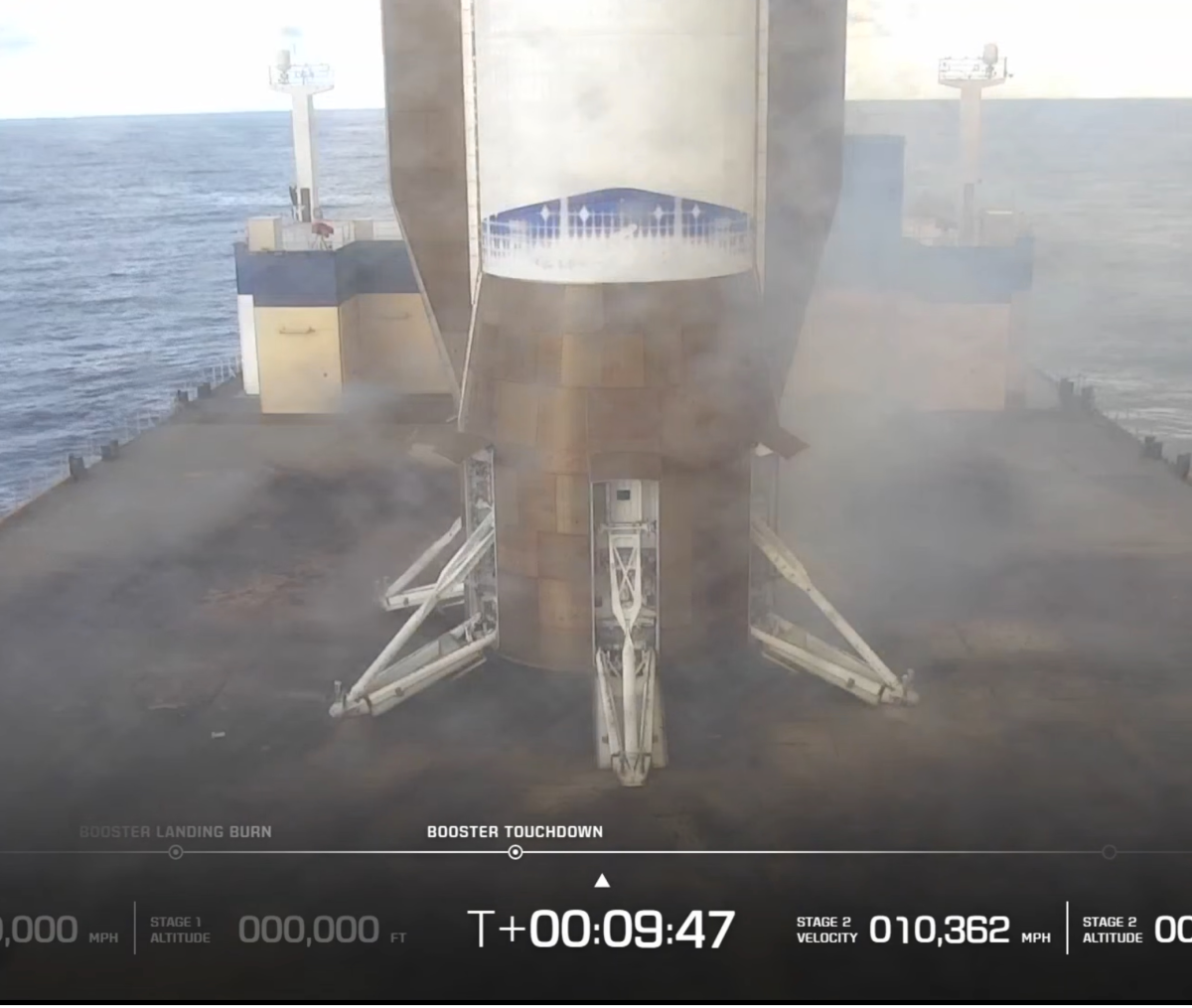
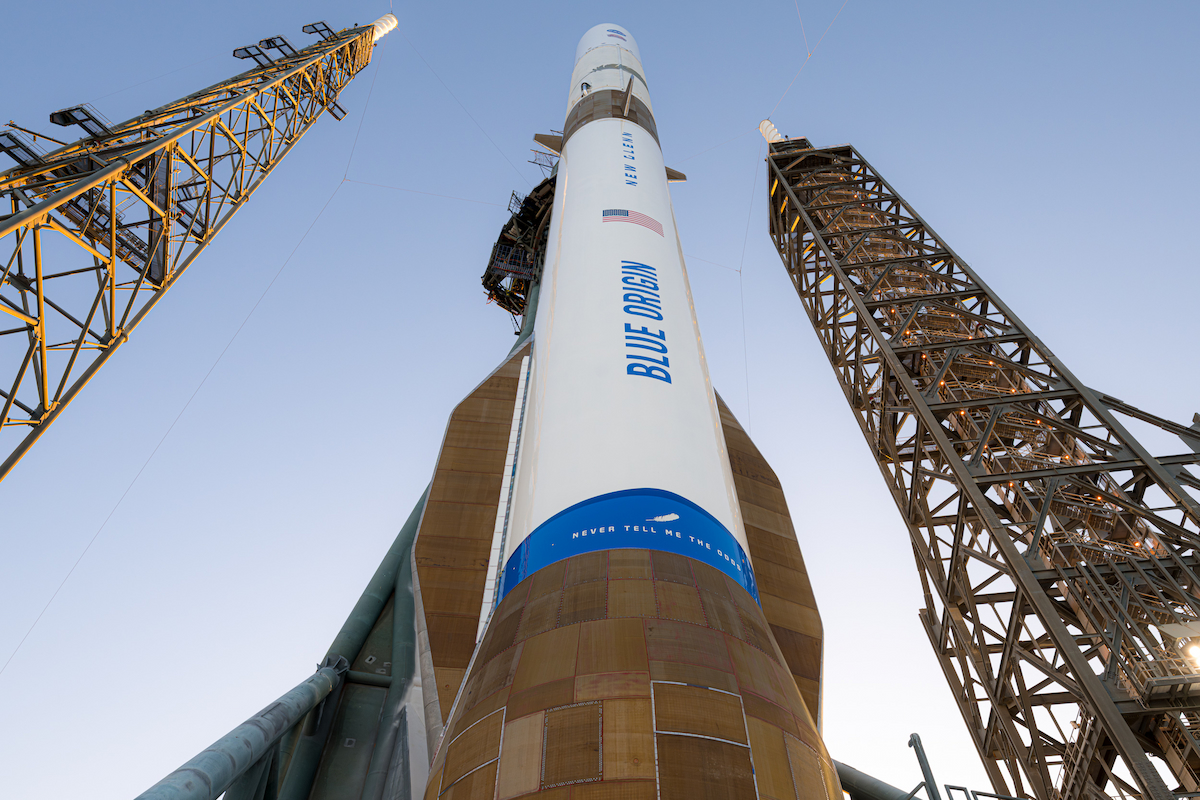
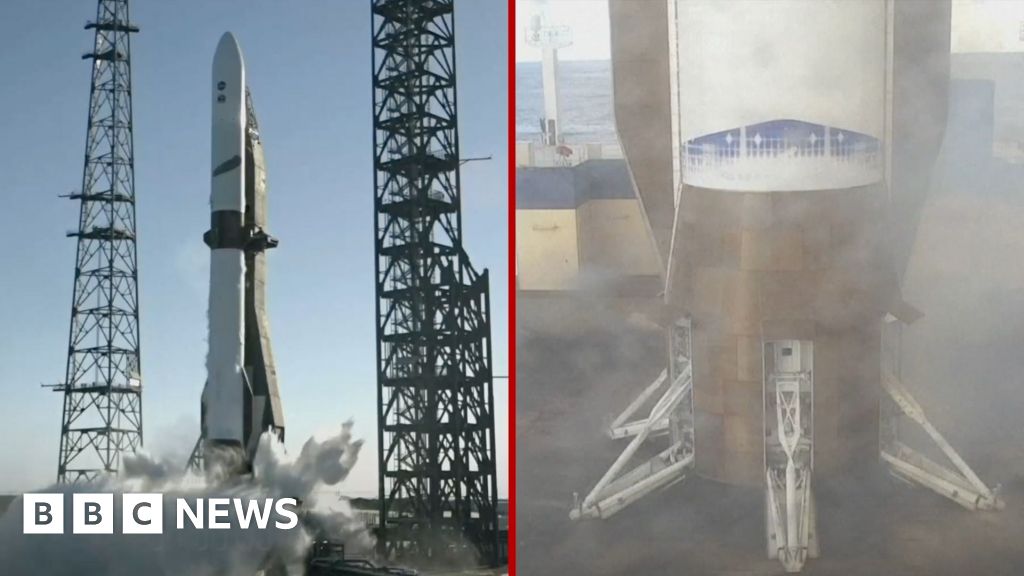
In a notable development that signals the intensifying competition for supremacy beyond Earth’s atmosphere, Blue Origin, the space enterprise owned by billionaire Jeff Bezos, successfully launched its New Glenn rocket from Florida. This mission, which carried two NASA spacecraft destined for Mars, underscores the strategic importance of commercial space ventures as nations and corporations vie for dominance in the final frontier. The successful landing of Blue Origin’s reusable booster on a floating Atlantic platform marks a crucial milestone, echoing the pioneering spirit that has historically fueled geopolitical influence.

This event underscores a broader shift in international space policy and power. NASA and private companies like Blue Origin and SpaceX are increasingly at the forefront of space exploration, redefining the boundaries of global influence. While SpaceX pioneered reusable rocket technology in 2015, Blue Origin’s recent achievement signals a rapid evolution in the commercial space sector, intensifying the race to establish military, economic, and scientific dominance. Many analysts, including those from the International Space Institute, see this as a compelling reminder that space has become the latest theatre for geopolitical leverage, where control of extraterrestrial infrastructure could translate into future global power.

Consequences of Commercial Space Expansion

As nations and private entities expand their reach into space, the geopolitical landscape is shifting. Historically, the United States has maintained a strategic lead—first through NASA’s Apollo program and later through space shuttle missions. However, the entrance of corporations like Blue Origin suggests a new paradigm—where private enterprise is becoming a pivotal actor in shaping future international order. This decentralization of space exploration creates both opportunities and risks, particularly concerning the potential for weapons proliferation, resource extraction, and sovereignty claims in space. While the Outer Space Treaty of 1967 remains the baseline legal framework, many experts warn that current policies are ill-equipped to regulate the fast-paced development of commercial space activities, potentially leading to a new kind of global conflict with extraterrestrial stakes.

  • The successful launch of Blue Origin’s New Glenn represents more than technological progress; it reflects a strategic move that could tilt the balance of power, especially if space becomes a domain for military and economic competition.
  • Private companies’ advancements catalyze a geopolitical narrative where traditional superpowers must adapt rapidly or risk losing dominance.
  • Major international organizations, including the United Nations Office for Outer Space Affairs, are under mounting pressure to update treaties and enforcement measures, balancing innovation with security concerns.

Unfolding Narratives: The Future of Humanity’s Extraterrestrial Ambitions

With each launch, global powers are rewriting history—shaping a future where space exploration is not solely the pursuit of academia or government agencies, but a strategic chessboard for economic control and military advantage. Many see the recent Blue Origin milestone as a turning point: a reminder that the “final frontier” is becoming a contested domain where alliances shift and new actors emerge with each technological breakthrough. As the world watches this space race escalate, one question remains —will international cooperation prevail, or will the battlefield for celestial dominance turn into a new arena of conflict? The weights of history hang heavy as humanity’s gaze turns upward, where the seeds of peace or chaos are quietly sown in the silence of space, now a vital frontier for those daring to shape the destiny of nations and societies for generations to come.

Blue Origin nails second try, lands New Glenn booster—proof of real progress

Blue Origin Achieves Milestone with Second-Stage Landing of New Glenn Rocket, Signaling Disruption in Space Launch Industry

In a remarkable display of technological innovation and launch system resilience, Jeff Bezos’ Blue Origin has successfully landed the booster of its New Glenn mega-rocket on a drone ship in the Atlantic Ocean, marking only its second-ever launch attempt. This achievement positions Blue Origin as a formidable competitor to SpaceX, which pioneered reusable rocket landing technology. Such a feat demonstrates the rapid advances in space transportation, fundamentally altering the commercial space landscape.

The October 12th flight from Launch Complex 36 in Cape Canaveral is a testament to Blue Origin’s commitment to innovation, as it illustrates their ability to develop reliable reusability at scale for heavy-lift vehicles — crucial for future payloads to the Moon, Mars, and beyond. The successful recovery of the 189-foot booster is significant not just as a milestone but as a disruptive breakthrough with potential to reduce costs and increase launch cadence across the industry. Meanwhile, the spacecraft payload, cargo for NASA consisting of twin spacecraft destined for Mars, underlines the capabilities of New Glenn as a platform for complex interplanetary missions—emphasizing its role in the emerging space economy.

Market Implications and Industry Disruption

While SpaceX led the charge in reusability, Blue Origin’s recent success is expected to accelerate the pace of industry-wide innovation. Experts from MIT and industry analysts like Gartner now see disruptive potential in heavy-lift reusable rockets, envisioning a future where multiple players provide competitive launch services with significant cost savings. The fact that Blue Origin’s booster successfully touched down after a previous failed attempt signals a clear shift in competitive dynamics, especially as new entrants and traditional players alike scramble to secure a foothold in this high-stakes market.

  • Potential for reduced launch costs, fostering new business models
  • Enhanced payload capacity for government and commercial missions
  • Accelerated development of lunar infrastructure and Mars exploration missions

Recent developments reinforce the idea that disruption is inevitable in space transportation. Companies now race toward sustainable and reusable platforms, with Blue Origin’s progress prompting increased investment and innovation. Elon Musk’s SpaceX has already set the bar high, but the latest success from Blue Origin indicates a broader industry shift towards more economical and reliable off-planet logistics. As Peter Thiel and other visionary investors note, the race for space dominance is entering a critical phase, with game-changing implications for global geopolitics and economic expansion.

Looking Ahead: The Future of Space Innovation

As the industry stands on the cusp of a new era, the urgency to innovate remains paramount. Reusability, payload flexibility, and cost-effective access to space are no longer aspirational goals but definitive markers of success. With Blue Origin’s recent advancements, stakeholders across government, academia, and private sectors must prepare for a future characterized by rapid technological evolution and unprecedented disruption. The upcoming years will be pivotal, as these emerging players push boundaries, challenge traditional monopolies, and unlock new economic opportunities beyond Earth’s orbit. Investors, policymakers, and entrepreneurs should heed the evolving landscape—with the clock ticking, tomorrow’s space economy is shaping today.

Blue Origin cancels second New Glenn launch, aims for November 12 comeback

In a notable display of disruption in space launch technology, Blue Origin has faced setbacks but remains steadfast in its pursuit to revolutionize the commercial space sector. The company’s latest attempt to launch its groundbreaking New Glenn mega-rocket, scheduled for last Sunday, was scrubbed due to a confluence of weather conditions, minor launch pad equipment issues, and the unexpected intrusion of a cruise ship into the flight path. Despite the setback, the company announced a rescheduled launch for Wednesday, November 12, signaling its resilience and commitment to innovation amidst operational hurdles. According to Blue Origin’s official updates, the FAA’s recent restrictions—stemming from the ongoing government shutdown—have complicated launch permissions, illustrating the delicate regulatory environment that emerging space enterprises must navigate.

This mission is a pivotal moment for Blue Origin as it seeks to demonstrate complete reusability of the New Glenn booster — a critical benchmark for reducing launch costs and disrupting traditional space industry economics. In its inaugural orbital attempt in January, the New Glenn reached orbit but was lost upon impact in a booster explosion. The current mission aims to test the booster’s ability to land for the first time, a feat that could significantly undermine Elon Musk’s dominion with SpaceX. As industry analysts like Gartner highlight, reusability is no longer a mere innovation but an industry standard that distinguishes a sustainable, scalable space business. The successful recovery of the booster would not only validate Blue Origin’s technical capabilities but could also recalibrate the competitive landscape—ushering in lower-cost, frequent, reliable launches that challenge space monopolies.

Beyond proving reusable technology, this mission also signals a shift towards more ambitious commercial payload deliveries. The New Glenn is tasked with carrying NASA’s ESCAPADE spacecraft, aimed at Mars exploration, and a tech demonstrator for Viasat. This aligns with a broader trend of privatization and commercialization of space, where firms like Blue Origin aim to become indispensable partners in government and commercial projects. The venture’s success will carry substantial business implications: scaling new spaceflight economies, fostering innovation ecosystems, and accelerating the transition into a weaponized, commercially driven space age. Industry leaders and analysts, including those at MIT’s Space Systems Laboratory, anticipate that the next decade will determine whether private firms like Blue Origin become long-term players—or fall prey to the harsh realities of space-scale disruption.

Looking ahead, the unfolding developments epitomize the urgency with which space enterprises must adapt to an era of rapid technological change and intense competition. As industry dynamics shift, Blue Origin’s perseverance in tackling technical, regulatory, and environmental challenges underscores a crucial takeaway: _disruption in space is no longer hypothetical_; it is happening now, and the pace will only accelerate. Tech investors and policy stakeholders must monitor these milestones closely, as the success or failure of New Glenn will likely influence the trajectory of the entire space economy—from satellite networks to lunar mining and beyond. The next few years could redefine global competitiveness in space endeavors—making the coming launch attempt more than just a routine test; it’s a critical inflection point that may dictate the future frontiers of the commercial space age.

LA Dodgers Dominates again, Secures Back-to-Back World Series Titles Over Blue Jays

In an era marked by geopolitical upheaval and shifting alliances, the recent World Series victory by the Los Angeles Dodgers over the Toronto Blue Jays somewhat mirrors the international landscape’s complex dance of competition and resilience. Just as baseball fans around the world observed tense moments in a gripping game seven—where both teams displayed remarkable strategic flexibility—nations worldwide grapple with the unpredictable nature of their geopolitical contests. The game’s culmination, highlighted by a dramatic home run from Smith that set the Dodgers within reach of the title, echoes a broader theme: in the global arena, pivotal moments often hinge on fleeting opportunities and decisive actions.

Historically, sports championships serve as microcosms of larger geopolitical dynamics, reflecting the interplay of strategy, timing, and resilience. Meanwhile, international analysts note that the current geopolitical climate is anything but predictable, with challenges emanating from resurging powers, technological rivalries, and regional conflicts. The recent series and its unpredictable turns remind observers of how swiftly alliances can shift and decisions can alter the course of history. The involvement of high-profile athletes and tactical substitutions in the game also exemplify the same strategic calculus that nations pursue on the diplomatic stage—where the sight of a single, game-changing move can redefine the outcome for entire populations.

Moreover, the series’ narrative of perseverance amidst adversity parallels the ongoing struggles of nations facing territorial disputes, economic sanctions, and ideological clashes. Just as Toronto’s Blue Jays threatened to take the game into extra innings—building up to a crescendo of collective anticipation—so too do global conflicts build to critical junctures where diplomacy, or lack thereof, determines whether peace holds or erupts into turmoil. According to international organizations like the United Nations, the world’s stability now hinges on whether leaders recognize the consequences of their choices—a concept vividly illustrated by the high-stakes performances of baseball pitchers like Yoshinobu Yamamoto, whose relief victory underscored the importance of resilience and tactical ingenuity.

As history’s echoes reverberate through today’s shifting alliances, it becomes clear that the decisions made now will echo through generations. The outcome of this ongoing saga, like the game’s final innings, remains unwritten—awaiting a decisive moment that could turn the tide of progress or plunge the world into further chaos. Just as fans held their breath during those critical last plays, the international community must reflect on the profound impact of leadership, foresight, and unity. In this fragile closing chapter of a complex game, the weight of history presses heavily upon us, reminding all that the unfolding narrative of global conflict and cooperation is far from over, and the playing field remains unforgiving and unpredictable.

Blue plaque honors Thomas the Tank Engine’s creator at his home

As Britain commemorates the 80th anniversary of the beloved Thomas the Tank Engine series, it serves as a stark reminder of how cultural icons rooted in heritage can shape societal identity and influence international perceptions. The recent unveiling of a historic plaque at the Rev W Awdry’s former residence in Stroud exemplifies a broader recognition of the profound impact that cultural figures can have across generations. The ceremony, part of the Railway 200 celebrations, highlights not only nostalgia but also underscores a nation’s investment in preserving its history amid the tumult of global geopolitics.

From the vantage point of international commentators, the enduring success of Awdry’s literary universe, further amplified by televised adaptations, demonstrates the power of cultural diplomacy. Renowned historians note that such stories serve as international bridges, often creating a sense of shared history and values. The ongoing fascination with a fictional island like Sodor, and its real-world commemorations, shows how a nation’s cultural exports can transcend borders, fostering admiration and soft power. Nonetheless, these cultural landmarks also reflect how decisions about heritage preservation and cultural promotion can be manipulated within larger geopolitical narratives, especially when countries seek to project influence under the guise of cultural diplomacy.

Meanwhile, European and global organizations such as Historic England emphasize that heritage isn’t static but a living component of national pride. Duncan Wilson, the agency’s chief executive, eloquently described the significance of the foundation laid by Awdry’s stories as a “global phenomenon rooted in the magic of steam trains,” a narrative that resonates universally. These initiatives parallel the strategic efforts of nations to mobilize cultural assets as a form of resilience and soft power amid geopolitical shifts. Critics argue, however, that the over-commercialization of such icons risks diluting their genuine historical value, turning beloved stories into mere commodities in a rapidly shifting international order.

The geopolitical impact of heritage decisions extends beyond cultural diplomacy into the realm of international stability. As emerging powers like China and Russia galvanize their own cultural narratives to bolster national identity, Western nations face a crucial task in balancing heritage preservation with strategic interests. The symbolism of an old house or a stained glass window might seem insignificant, but these tokens become battlegrounds for influence, echoing the larger conflicts over history, national pride, and sovereignty. As history continues to unfold, the legacy of such icons remains a testament to how societies craft their narratives — a narrative that, in today’s world, is more contested than ever, leaving the future’s story written not just in books, but in the very fabric of international powerplays.

£3,000 in Parking Fines on School Runs, Even with Blue Badge

Newham council is drawing criticism after a local parent received 19 penalty charge notices (PCNs) for driving in a restricted “healthy school streets” zone, despite holding a blue badge access permit. The situation escalated following a car accident, during which the parent was provided with three courtesy cars by their insurance company. To comply with local regulations, they acquired temporary permits for each courtesy vehicle, ensuring they could still drop off and collect their children from school.

This incident highlights a significant concern among residents regarding the council’s enforcement policies. Many individuals with disabilities rely heavily on their vehicles, and unexpected situations, such as accidents, shouldn’t result in such heavy penalties. It raises vital questions about how councils balance the need for traffic regulation with the realities faced by families who depend on mobility. As communities reassess their traffic policies, the focus should be on finding practical solutions that support rather than penalize those in need.

Social Media Auto Publish Powered By : XYZScripts.com