Matox News

Truth Over Trends, always!

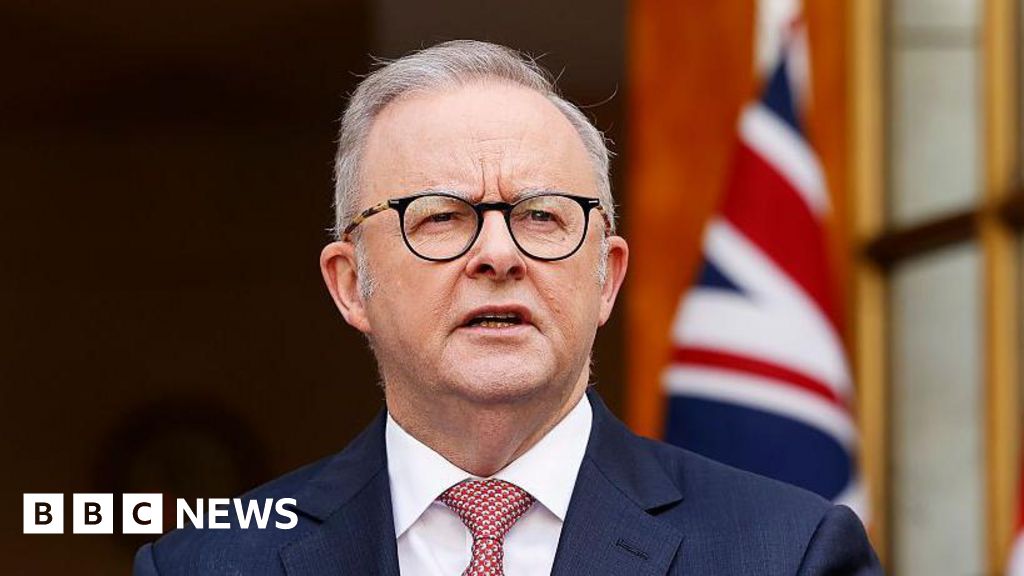
Australia’s Prime Minister booed at Sydney mosque iftar during Ramadan

Global Ripples as Community Tensions Surge in Australia Amid Middle East Conflict

Since **Hamas** launched its devastating attack on **Israel** on 7 October 2023, the international community has been gripped by escalating tensions and a surge of divisive sentiments, with **Australia** experiencing a notable rise in both antisemitism and Islamophobia. The attack, which resulted in the tragic death of over 1,200 civilians and the kidnapping of 251 hostages, has ignited a firestorm of emotions worldwide. This violence has not only deepened regional instability but has also struck a chord within diaspora communities in **Australia**, exposing the fragility of social cohesion in an increasingly polarized world.

In response to the conflict, reports of community conflicts and discriminatory acts have risen sharply across **Australia**, illuminating the delicate balance between free expression and societal harmony. Reports indicate an alarming increase in antisemitic speech and violence directed at Jewish communities, alongside heightened Islamophobic incidents targeting Muslim populations. Experts warn that these trends threaten to undermine multicultural integration, risking the emergence of fractured societies in a nation that prides itself on diversity. International organizations, such as the **United Nations**, have expressed concern that unchecked hate crimes could fuel social divides, thereby complicating both domestic policy and international diplomacy. The situation underscores how *decisions made in international arenas have tangible repercussions on societal stability and social cohesion* in countries far from the conflict zone itself.

Meanwhile, the broader **geopolitical impact** of the Middle East crisis continues to unfold. Countries like **Iran**, **Turkey**, and **Egypt** are navigating complex diplomatic waters, balancing their regional interests while facing internal pressures to support Palestinian resistance or condemn violence. The escalation has prompted some to question whether a new Cold War is brewing, with nations aligning along ideological lines that threaten to fracture regional alliances and global peace. Historically, analysts like Samuel P. Huntington and recent reports from the **International Crisis Group** have warned that ongoing conflicts in the Middle East risk destabilizing the entire international order, with ripple effects that could threaten global security for decades to come.

As the conflict drags on, its *turning points* become more apparent. The Israeli military’s significant offensive in Gaza has resulted in catastrophic loss of life — more than 72,000 Palestinians according to the Hamas-run health ministry — raising serious questions about the path to enduring peace. The international community remains divided, with some nations calling for ceasefires and humanitarian corridors, while others advocate for military escalation. The outcome of these decisions will shape the fate of millions and determine the future of diplomacy in the Middle East. As historians assessing this moment warn of the potential for sustained conflict or even regional war, the world watches with bated breath. This is a pivotal chapter in history—one that will either forge a new path toward peace or plunge the region into deeper chaos, with consequences that will echo through generations.
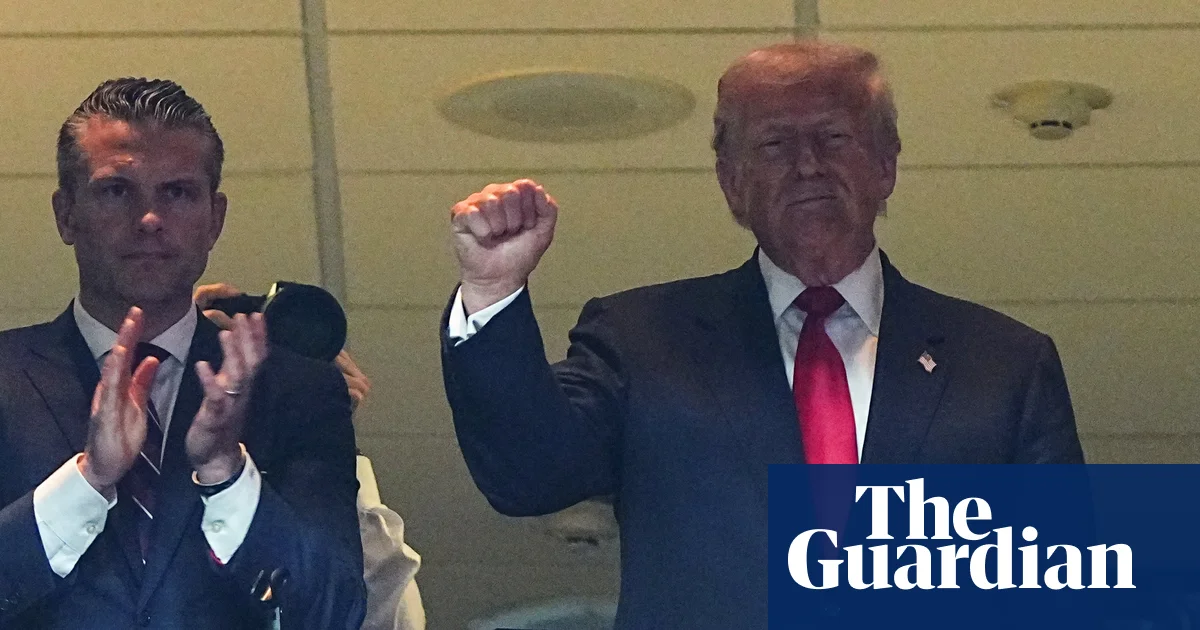

Trump booed at Commanders game before taking over Fox broadcast booth to call plays

In an unprecedented move that symbolically bridges the worlds of sports, politics, and international influence, Donald Trump made history as the first sitting U.S. president in nearly fifty years to attend a regular-season NFL game. His presence at the Washington Commanders’ match against the Detroit Lions not only ignited heated reactions among fans but also served as a vivid display of the ongoing cultural and geopolitical fractures within America. While crowds in Washington, D.C., expressed their mixed sentiments—ranging from cheers to boos—the spectacle underscored how deeply divided the nation remains, and how influential figures from the global arena continue to leverage sports as a stage for political statement and influence.

This public spectacle is more than just a partisan protest; it reflects a broader geopolitical narrative where domestic political conflicts are playing out under the watchful gaze of the international community. Historically, such the attendance of a sitting U.S. president at an NFL game signals the importance of national identity and internal cohesion. Yet, the reactions from the crowd—boos, chants, and jeers—highlight a nation polarized along ideological lines. Experts remind us that the U.S.’s internal fractures are, in many ways, echoed globally, as international powers observe and interpret America’s political turbulence on every stage, from the battlefield to the sports arena.

The event also has implications for geopolitical positioning. Trump’s desire to have the Commanders’ new stadium named after him, as revealed by reports of White House intermediaries, demonstrates how branding and influence extend beyond politics into the realm of international soft power. This project, valued at nearly $4 billion, symbolizes a broader trend: the merging of economic ambitions with national identity—an ambition echoed in the development of international alliances and contentious treaties. As noted by several international analysts, such moves can be seen as the embodiment of a nationalist resurgence aiming to solidify American influence domestically while projecting strength internationally.

Furthermore, this event occurs amidst a global chessboard, where neighboring and distant powers watch as internal tensions simmer. Historians caution that when national symbols become politicized—such as debates over stadium naming and the involvement of political figures in civilian life—it can have far-reaching effects on a nation’s international image and diplomatic relations. The spectacle of a U.S. president mingling with military personnel during the game, and the NFL’s participation in patriotic initiatives, serve to reinforce a narrative of resilience amid division. Yet, critics argue that this superficial unity masks underlying societal conflicts that could, if left unaddressed, lead to fragile stability.

As the weight of history presses down, the unfolding story of Trump’s NFL appearance is more than a fleeting media event. It is a mirror held up to a world grappling with its own divisions and aspirations. While leaders and analysts debate the implications, the image of a polarizing figure standing amidst cheers and jeers at a sports stadium echoes a deeper truth: the forces shaping the future are playing out in arenas of both national pride and international influence. It is a reminder that history is a constant battlefield, where every gesture and decision—no matter how seemingly trivial—can ripple across borders, shaping the course of nations for generations to come.

Social Media Auto Publish Powered By : XYZScripts.com


