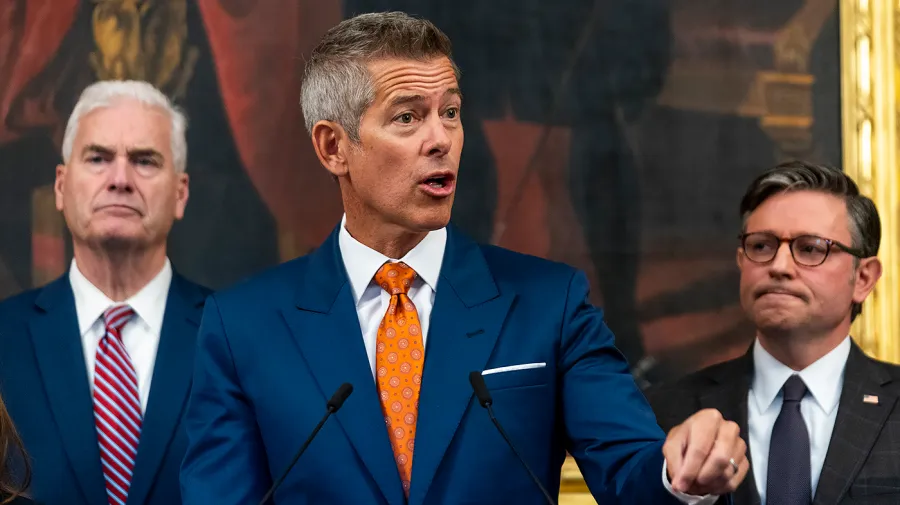

The recent statement by Transportation Secretary Sean Duffy regarding predicted declines in energy prices following the reopening of the Strait of Hormuz encapsulates a broader narrative of political optimism rooted in economic and strategic assumptions. While Duffy, who is ostensibly focused on transportation infrastructure, emphasizes a connection between geopolitical events and market responses, this narrative reveals how political actors attempt to shape public perception amidst complex power struggles. The assertion that energy prices will stabilize, predicated on the reopening of a crucial maritime passage, exemplifies the tendency of politicians to leverage geopolitical crises to justify their policy positions and to implicitly frame contentious foreign policy decisions as “necessary” victories for the populace.
Decisions surrounding the control of the Strait of Hormuz—an vital chokepoint for global oil supply—are emblematic of power struggles that ripple through the international order. Historically, geopolitical bottlenecks like Hormuz have become focal points for broader strategic battles involving regional hegemons and Western interests. The rhetoric of stability and assured relief from energy prices masks behind-the-scenes negotiations and conflicts over influence, oil rights, and regional dominance. As the Biden administration navigates these treacherous waters, the true game becomes a political theater where public policy is often a reflection of larger strategic calculations. Experts in constitutional law and international relations warn that relying on such narratives risks oversimplification of complex, often volatile, geopolitical realities.
Within the domestic political arena, the push to portray the administration’s foreign policy as effective and aligned with energy security goals signifies a clear effort to bolster voter confidence. The administration’s policy shifts—primarily the focus on energy independence and international stability—are reminiscent of historical paradigms pushed by figures like Ronald Reagan and Murray Rothbard, who emphasized sovereignty and free markets. However, critics argue that these policies may merely serve as noise points in the ongoing contest for power and influence. The fact remains that political decisions are ultimately a reflection of who controls the levers of state power and how those decisions impact the everyday lives of citizens—costs, stability, and national security alike.
As political theorists such as Carl Schmitt have long argued, in moments of crisis or transition, sovereignty becomes a contest over the definition of the political. Today, this is vividly illustrated by the ongoing debates about energy policy, foreign intervention, and the role of government in safeguarding national interests. Whether these decisions are driven by genuine strategic necessity or political expediency, they reaffirm that power struggles are often played out on the world’s geopolitical stage—deciding the course of nations and shaping the destiny of peoples. Ultimately, the real battle is not just over policies, but over the narrative of national purpose. In this chess game, where every move is orchestrated to influence future generations, politics remains the fine art of authoring history—one bold decision at a time, carving the future where the outcome waits in silence, yet profoundly shapes the story of the nation.