
Matox News

Truth Over Trends, always!

Fed Chief Powell: Stock Prices Looking Priced to Perfection

Federal Reserve Chair Acknowledges Elevated Asset Prices Amid Rate Cuts

In a recent speech delivered in Providence, Rhode Island, U.S. Federal Reserve Chair Jerome Powell addressed concerns regarding current asset prices, particularly those of stocks and other risk instruments, which he described as “fairly highly valued.” His remarks come on the heels of a decision by the Federal Open Market Committee (FOMC) to lower the benchmark overnight borrowing rate by a quarter percentage point, a move that has fueled recent gains in financial markets. Powell’s acknowledgment of elevated stock valuations raises important questions about the sustainability of the current market rally and the implications for investors.

During the press conference, Powell emphasized the significance of overall financial conditions and the Federal Reserve’s commitment to achieving stable economic growth. He stated, “We look at overall financial conditions, and we ask ourselves whether our policies are affecting financial conditions in a way that is what we’re trying to achieve.” His comments reflect a broader acknowledgment among financial leaders that while markets generally respond positively to lower borrowing costs, there exists a delicate balance between encouraging investment and ensuring financial stability.

The timing of Powell’s remarks is particularly impactful, as they follow a significant rally in stock prices leading up to the FOMC’s recent policy meetings. Many market analysts attributed the increase to growing investor confidence that interest rates would decline, resulting in an influx of capital into equity markets. However, following Powell’s statements regarding elevated asset prices, markets reacted negatively, with major stock averages trading lower. This volatility illustrates the sensitivity of investors to signals from the Federal Reserve and highlights the challenges in predicting market behavior based on economic policy adjustments.

Despite acknowledging the high valuations, Powell reassured stakeholders that this is “not a time of elevated financial stability risks.” However, his comments serve as a cautionary note for young investors, emphasizing the need for careful analysis in the current market environment. As the Federal Reserve continues to navigate the complex landscape of monetary policy, the implications of rate changes and market responses will remain crucial for investors and economic stakeholders alike. The conversation surrounding asset prices underscores the necessity for vigilance as the potential for asset bubbles looms amid low borrowing costs.
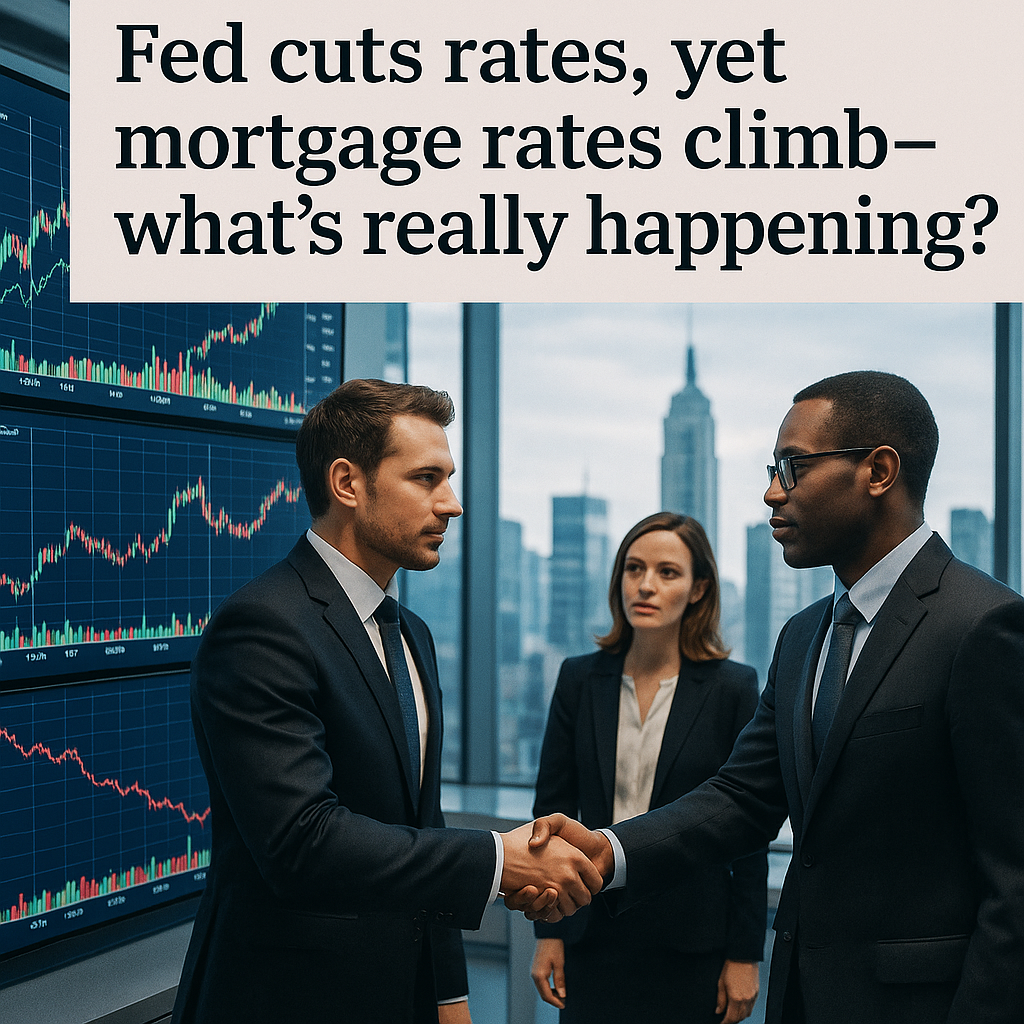
Fed cuts rates, yet mortgage rates climb—what’s really happening?

The U.S. Treasury bond market is experiencing notable upheaval as long-term yields defy expectations following the Federal Reserve’s recent interest rate cut. Despite the Fed’s decision to lower the benchmark rate by a quarter percentage point to a range of 4.00% to 4.25%, bond traders responded with a surge in longer-dated treasury yields. The 10-year Treasury yield soared past 4.14%, after briefly dipping below 4%. Meanwhile, the 30-year treasury yield climbed above 4.76%, signaling a complex reaction to the Fed’s moves. This divergence indicates that market participants are trying to interpret the Fed’s policy signals within a broader context of market expectations and global economic signals, with consequential market impact on borrowing costs, stock valuations, and inflation outlooks.

Market analysts, including prominent economists like Peter Boockvar, emphasize that the bond market is “selling the news” — a phenomenon where investors, having anticipated the rate cut, now adjust their positions based on the perception that the Fed’s move may signal a shift in policy stance or underlying economic risks. Boockvar notes that the recent spike in yields reflects traders’ skepticism about the Fed’s intentions, especially considering its updated economic projections, which reveal that policymakers see a modest acceleration in inflation — slightly above the 2% target — into 2026. This outlook raises questions about the Fed’s commitment to inflation control, potentially easing policy tightening prematurely and paving the way for persistent inflationary pressures.

The implications for policy consequences are significant. The Fed’s rate cut was framed as a “risk management” move amidst softening labor market data, including weaker employment figures earlier this month. Fed Chair Jerome Powell indicated that the central bank remains cautious, prioritizing job market stability while trying to keep inflation in check. However, the pushback from bond traders suggests that the market perceives a disconnect between the Fed’s communication and the longer-term economic outlook. As Boockvar and fellow investors watch international developments — where yields globally are also trending higher — it becomes clear that the global economic environment is influencing U.S. bond dynamics, adding layers of complexity to the policy landscape.

Meanwhile, the housing sector reflects these broader market uncertainties. For instance, Lennar, one of the largest homebuilders, recently reported disappointing quarterly revenue and weak future guidance, citing “continued pressures” in the housing market driven by elevated interest rates. Such signals from the real estate sector reinforce concerns that persistent high yields and monetary policy tightening could hinder economic growth and the labor market. As economist Chris Rupkey warns, these rising bond yields may ironically signal tougher times ahead. He cautions that declines in bond yields often presage recessions, yet rising yields are currently driven by stable employment data, which might create a paradoxical environment where good labor markets inadvertently complicate monetary policy and dampen consumer confidence.

Looking forward, the bond market’s reactions underscore a fundamental truth: the economy is a living pulse that responds not just to current policies, but to perceptions of future policies and global shifts. The stage is set for a decisive period where the Fed’s next moves could reshape economic trajectories. Will they succeed in tightening inflation without stifling growth, or will markets push policymakers to revisit their approach amid mounting international pressures? One thing is clear: the bond yields act as a barometer of this complex dance — an epic display of economic forces shaping the very foundation of future power. As nations watch, the true test lies ahead: navigating the turbulent waters of inflation, growth, and global interconnectedness to forge the robust, resilient economy of tomorrow.

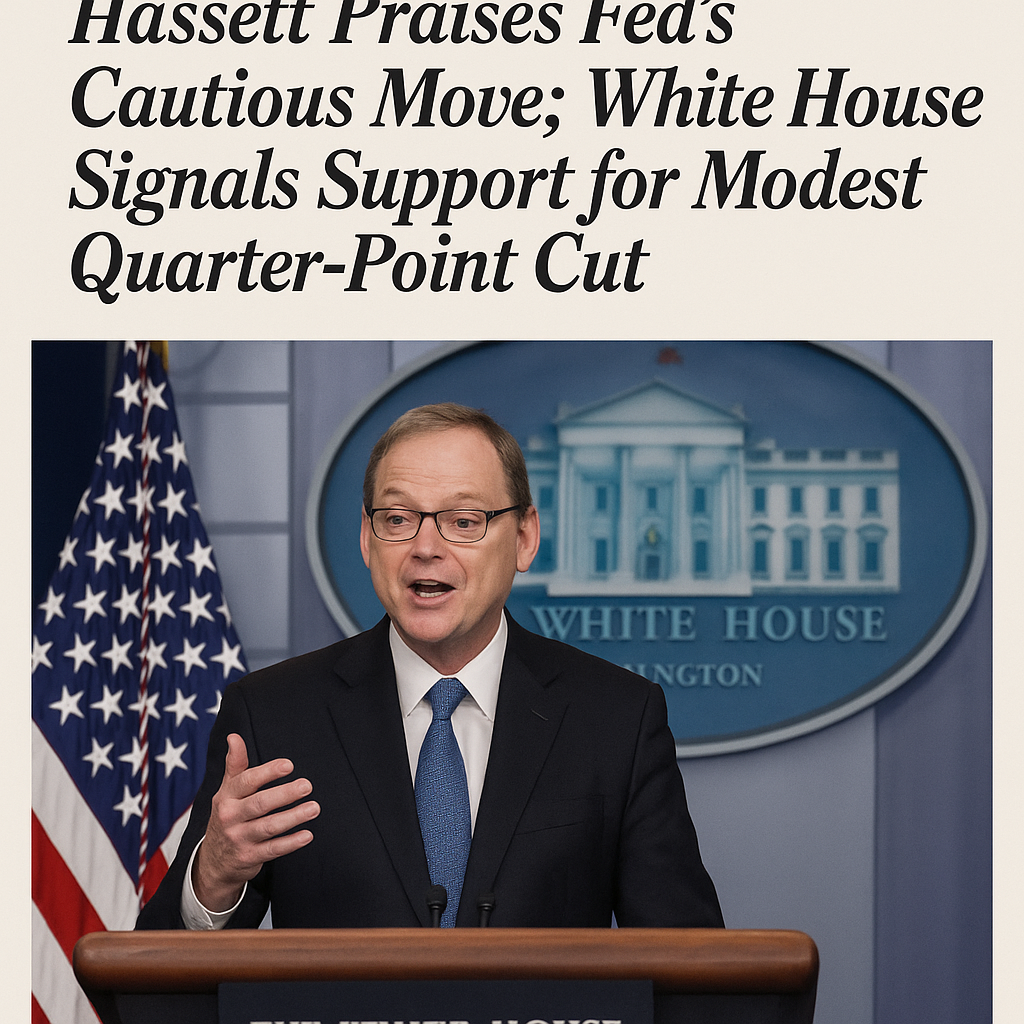
Hassett praises Fed’s cautious move; White House signals support for modest quarter-point cut

Federal Reserve’s Rate Cut Sparks Market Movements and Policy Debates

The Federal Reserve recently implemented a modest quarter-percentage-point cut to its key borrowing rate, signaling a cautious approach as it navigates a complex economic landscape. This decision, perceived by some as a step towards economic stabilization, comes amid shifting market sentiments and ongoing debates among policymakers, economists, and investors. As the global economy faces rising inflationary pressures yet remains resilient, the Fed’s move exemplifies the delicate balancing act it must perform—tamping inflation without stifling growth.

Notably, the White House expressed support for the Fed’s measured approach, with National Economic Council Director Kevin Hassett emphasizing the prudence of a “slow and steady” policy. While some within the administration advocated for a more aggressive half-point cut, the Fed’s decision reflects a consensus aimed at cautious optimism. The recent economic indicators show a robust third-quarter growth rate exceeding 3%, a figure that traditionally would argue against easing monetary policy. Still, inflation running above the Fed’s 2% target, combined with concerns about persistent financial risks, has prompted a nuanced response that favors gradualism over rapid cuts.

Market impacts from this decision are multifaceted. Investors remain vigilant, with equities, bonds, and commodities reacting to the delicate narrative of growth versus inflation control. The policy considerations extend beyond immediate market behavior, touching on policy consequences that could shape future economic stability. Analysts from think tanks and leading economists, including those linked to the Federal Reserve and major banks, indicate that this cautious move might set the stage for future rate adjustments. The decision also underscores ongoing debates about the policy trajectory—should the Fed prioritize containing inflation or supporting a thriving housing market and manageable debt levels?

Importantly, the political dimension persists, with President Donald Trump advocating for more aggressive cuts—arguing that the current rates are insufficient to boost the struggling housing sector and manage the national debt. Such political influences, though not directly altering Fed decisions, shape the policy environment and investor sentiment. As the Fed considers its next moves amid diverse economic signals, the broader implications for market impact and policy stability will be paramount. The coming months will test whether this measured approach will secure sustained growth or prompt future rallying cries for more rapid easing, reflecting the eternal tug-of-war at the heart of economic policy.

Looking ahead, the pulse of the economy remains a reflection of national strength and future global influence.

In this high-stakes game, where monetary policy acts as both shield and sword, the resilience of economies hinges on informed decision-making and bold leadership. Investors, policymakers, and citizens alike watch with anticipation, realizing that the economic landscape is a grand stage—an epic arena where the forces of innovation, policy, and global power collide. While uncertainties persist, the underlying momentum suggests that the future economy will be shaped by those willing to navigate its shifting tides with vision, precision, and resolve. This moment underscores the vital truth: **the economy is not merely a system of numbers, but the beating pulse of nations, heralding the dawn of a new era of global influence and economic ascendancy**.

Social Media Auto Publish Powered By : XYZScripts.com



