
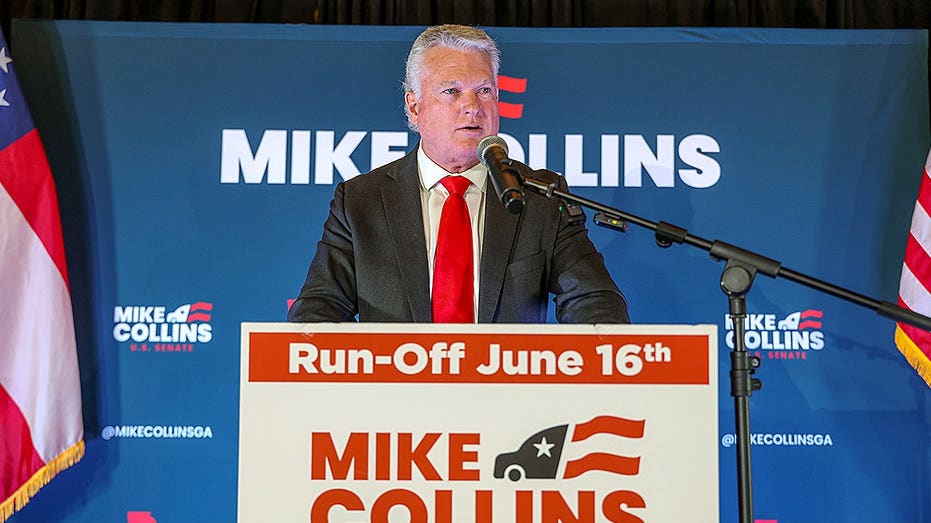

Former President Donald Trump on Saturday delivered a pivotal, eleventh-hour endorsement in Georgia’s critical Republican Senate runoff, backing Representative Mike Collins. This move, reported by the News Desk, comes just days before Tuesday’s decisive vote, which is poised to shape the Republican Party’s path to maintaining its slim majority in the U.S. Senate this November.
Collins, a vocal supporter of the MAGA movement, faces former college football coach Derek Dooley. Dooley, in contrast, enjoys the strong backing of Georgia’s popular conservative Governor Brian Kemp. The outcome of this intra-party contest will determine who challenges incumbent Democratic Senator Jon Ossoff in what Republicans view as one of the most vulnerable Senate seats up for re-election.
The High Stakes for the GOP Majority
Georgia remains a pivotal battleground state, and this Senate race is no exception. With the national landscape for control of the Senate hanging precariously, every state contest carries immense weight. Republicans are intensely focused on unseating Senator Ossoff, believing his first-term status makes him susceptible in a state that has seen shifting political tides.
The winner of Tuesday’s runoff will step into a highly competitive general election, where fundraising and grassroots mobilization will be paramount. The national implications of this single race cannot be overstated, as it could very well be the linchpin for the Republican Party’s legislative agenda in the next Congress.
A Clash of Conservative Endorsements
The Georgia runoff presents a fascinating dynamic within the conservative movement. Representative Mike Collins has consistently championed his alignment with former President Trump’s ‘America First’ agenda. His campaign has leaned heavily on these credentials, appealing directly to the former president’s base.
Trump had remained neutral throughout the primary and much of the runoff, making his late endorsement of Collins particularly impactful. This contrasts sharply with Dooley’s campaign, which has benefited from the robust support of Governor Brian Kemp and Georgia First Lady Marty Kemp. The governor’s active presence on the campaign trail with Dooley underscores the deep ties and long-standing friendships at play, highlighting a subtle but significant internal struggle for influence within the state’s Republican apparatus.
“This runoff is more than just a local contest; it’s a barometer for the direction of the Republican Party in a crucial swing state.”
Candidates and Their Backgrounds
Mike Collins, representing Georgia’s 10th Congressional District, hails from a family with a political legacy; he is the son of the late Congressman Mac Collins. Beyond his political career, Collins is an entrepreneur, having founded and co-owned a successful trucking company with his wife. His background as a businessman and his direct appeal to the populist wing of the party resonate with a significant portion of the electorate.
Derek Dooley, a lawyer by profession, brings a different kind of public profile. He is widely recognized for his tenure as a former University of Tennessee football coach and is the son of the legendary University of Georgia head football coach Vince Dooley. This connection to a beloved figure in Georgia sports provides Dooley with considerable name recognition and a distinct advantage in a state where college football holds immense cultural significance.
The two candidates emerged as the top contenders from a crowded primary field where no candidate secured over 50% of the vote, necessitating this runoff election. Voters now face a clear choice between two distinct conservative profiles, each backed by powerful figures within the Republican Party.
As Tuesday approaches, the eyes of the nation will be on Georgia. This runoff is not merely about selecting a candidate; it’s about the future direction of the Republican Party and its ability to unify disparate factions ahead of what promises to be a challenging general election. The outcome will undoubtedly offer insights into the enduring influence of former President Trump’s endorsements and the strength of established state leadership within the GOP.






