Matox News

Truth Over Trends, always!

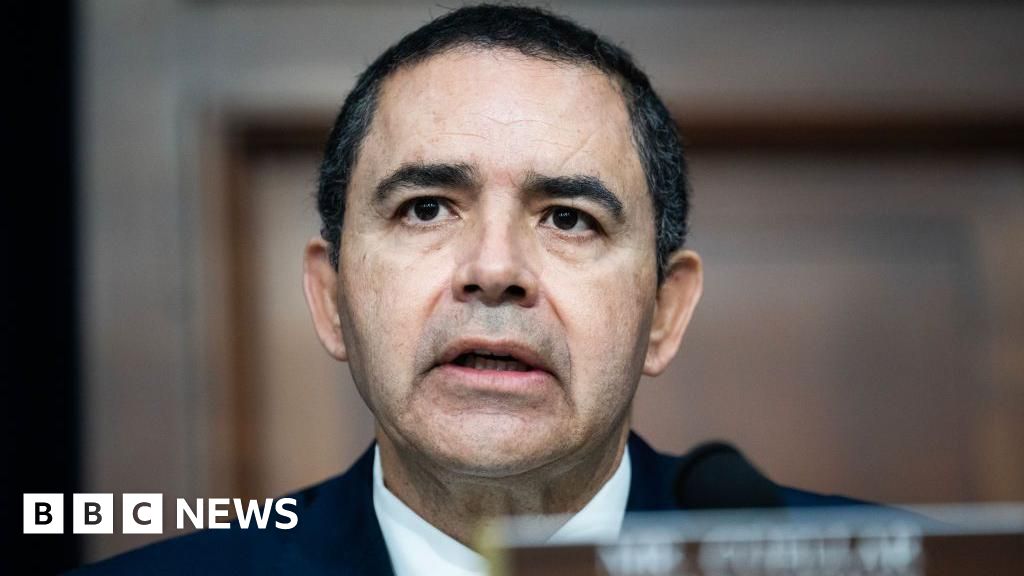
Trump announces pardon for Democratic congressman in bribery scandal

Global Stability in the Balance as U.S. Political and Judicial Shifts Reshape Alliances

The recent developments in United States politics underscore a critical juncture that could redefine international perceptions of American power and influence. President Donald Trump has announced his intention to issue a “full and unconditional” pardon to Congressman Henry Cuellar, a Texas Democrat embroiled in corruption charges linked to accepting bribes from foreign entities. This move, unprecedented in its boldness, ignites a debate over the integrity of U.S. political institutions and the influence of partisan interests on judicial processes, casting a long shadow over America’s global image.

Cuellar’s case, involving allegations of illicit payments from Azerbaijani and Mexican financial interests, exemplifies the complex web of foreign influence increasingly entwining domestic U.S. affairs. The Department of Justice under Joe Biden accused him of conspiring to sway U.S. foreign policy in favor of Azerbaijan and a Mexico City bank—charges that, if substantiated, reveal just how deeply foreign power centers seek to manipulate American decision-making. While Cuellar maintains his innocence, the political implications—especially given his moderate stance and opposition to the more progressive wing of the Democratic Party—highlight a fissure within the U.S. political landscape that investors and allies worldwide must watch closely.

Decisions That Echo Beyond Borders

  • The depiction of Cuellar as the “last pro-life Democrat” and his vocal stance on immigration have allegedly made him a target, according to his supporters, with Trump portraying the charges as politically motivated retaliation for his outspoken beliefs.
  • Meanwhile, Trump’s recent pardons of figures like Juan Orlando Hernández, the former Honduran president convicted of drug conspiracy, and the commutation of financial violator David Gentile signal a broader pattern of controversial clemency moves that challenge established legal norms.
  • International analysts suggest that such actions amplify the erosion of legal boundaries—potentially emboldening authoritarian tendencies and undermining legal sovereignty, thereby affecting diplomatic relations and security alliances vital to Western efforts against organized crime and corruption.

Adding another layer of complexity, these decisions resonate powerfully across global markets and diplomatic agreements. Countries watching U.S. policies unfold must now consider whether this pattern reflects a retreat from the rule of law or a strategic realignment driven by internal political battles. Historians like Niall Ferguson warn that American governance appears increasingly fragmented, risking the loss of moral authority that once positioned the U.S. as the beacon of liberal democracy and judicial integrity.

Implications for the International Arena

In a world teetering on the edge of geopolitical upheaval, stability hinges on the perceived reliability of superpowers. As President Biden confronts mounting domestic turmoil and diplomatic anxieties, the choices made in Washington will surely impact NATO unity, the intensity of the Russia-West rivalry, and the future of global economic stability. The narrative spun around these pardons and charges influences how allied nations interpret American commitment to justice and order, which in turn shapes their policies and alliances.

More broadly, international organizations like the United Nations and EU monitor these internal shifts for signs of weakening American influence. Many experts argue that such internal partisan and judicial turmoil could accelerate the fragmentation of global governance frameworks, presenting adversaries with a golden opportunity to advance their interests at the expense of Western alliances. If America appears discredited or internally divided, the power vacuum left behind could ignite conflicts and destabilize regions critical to world peace and economic security, such as the Indo-Pacific and the Middle East.

History’s Weighty Unfolding

As history continues its relentless march, the decisions made in the corridors of power today will be etched into the fabric of the future. The spectacle of political leaders pardoning convicted foreign-influence agents amid mounting questions about justice and transparency stands as a stark reminder that the tides of history are seldom predictable, and no nation is immune to their forces. How this chapter concludes remains to be seen, but the implications for world stability, national sovereignty, and the moral authority of the United States are profound and far-reaching. In an era where the balance of power depends on clarity and integrity, the unfolding story in Washington may yet reshape the geopolitical landscape for decades to come.
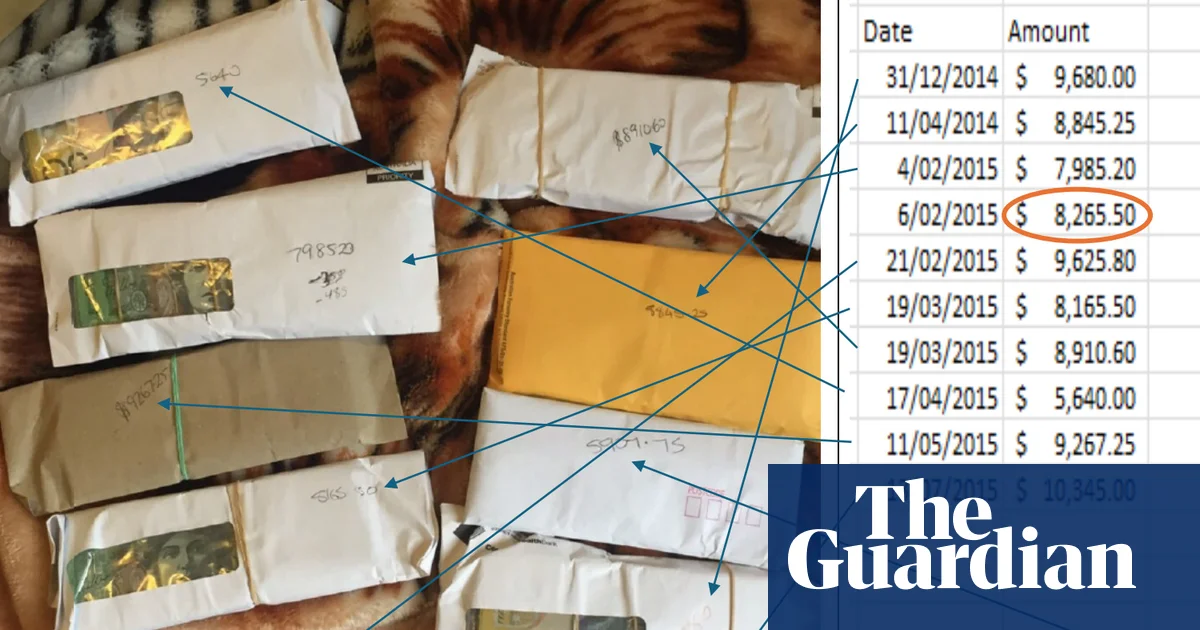

NSW Transport Official Confesses to Bribery Scandal at Oporto to Inflate Invoices

Corruption Scandal in New South Wales: A Window into International Governance and Accountability

In a development that underscores the persistent fight against corruption within governmental institutions, Australia’s New South Wales Independent Commission Against Corruption (ICAC) is currently investigating a multi-million-dollar kickback scheme involving senior officials. The case of Ibrahim Helmy, a former project engineer at the Roads and Maritime Services (RMS), offers a disturbing glimpse into how entrenched corruption can erode trust in public infrastructure development, which has significant geopolitical undertones, especially in regions with booming infrastructure projects. As the investigation unfolds through detailed testimonies—exposing falsified invoices, illicit cash exchanges, and scheming at the heart of Sydney’s transport sector—the implications ripple far beyond Australia, impacting regional stability and international perceptions of governance.

This scandal is not merely an isolated incident; it reflects broader systemic vulnerabilities that many nations face in their efforts to combat corruption. Helmy’s admissions, including his involvement in inflating invoices related to key Sydney roads such as the M4 motorway, highlight how state resources are manipulated to benefit private interests at society’s expense. Such breaches of integrity threaten not only economic development but also the legitimacy of state institutions. In the context of Australia’s strategic regional role—positioned within the Indo-Pacific—a failure to address corruption effectively could weaken alliances, deepen foreign skepticism, and hinder efforts towards regional cooperation on governance reforms. Asian and Pacific analysts warn that unchecked internal scandal feeds into a narrative of governance fragility, which adversaries could exploit to undermine Western-backed infrastructure and development initiatives.

Moreover, the case of Helmy underscores how international standards and treaties—such as the United Nations Convention Against Corruption—are vital in establishing accountability benchmarks, even as local institutions grapple with enforcement challenges. According to experts at Transparency International, the persistence of such schemes in federal or provincial levels demonstrates that anti-corruption frameworks require not only legislative strength but also political will. The international community watches closely as Australia demonstrates its commitment to transparency, for its credibility directly influences regional and global cooperation. Whether or not Helmy’s case results in criminal charges, the exposure of these corrupt practices may catalyze tougher reforms in public procurement laws and enforcement agencies that can serve as models for emerging economies grappling with similar issues.

Finally, the broader geopolitical impact of this scandal is evident in the way corruption scandals taint international perceptions of stability and governance. As historian Dr. Laura Grant notes, “cases like Helmy’s serve as a reminder that even seemingly stable democracies are vulnerable to internal decay, which can be exploited by adversaries to foster instability or justify external interventions.” With ongoing investigations extending into allegations of over $11.5 million in personal receipts, and the involvement of figures linked to private contractors, the case echoes through corridors of power and influences international discourse on governance integrity. The unfolding story remains a stark warning—one that reminds us all that in the relentless tide of history, the struggle against corruption is a vital battleground shaping the future of nations.

Former reform politician admits to Russia-linked bribery scandal

The recent admission by Nathan Gill, former Member of the European Parliament, to eight charges of bribery has ignited a firestorm of debate within the corridors of power and among the electorate. Such allegations underscore the persistent perception of corruption that plagues modern politics, especially within institutions tasked with safeguarding democratic values. Gill’s admission not only tarnishes his personal reputation but also symbolizes a broader power struggle, illustrating how the mechanisms of influence and money continue to shape policy outcomes and political loyalties across the European political arena.

This scandal surfaces at a critical juncture, drawing attention to the fragility of institutional integrity amidst a landscape where trust in political actors is waning. The charges—centered on bribery—highlight a recurring theme in political history: the corrupting influence of wealth and clandestine dealings in the shaping of legislation and the allocation of power. As constitutional experts like John Rawls and Carl Schmitt have argued, the very foundational principles of democratic governance hinge on transparency and the separation of powers. Gill’s case starkly contrasts these ideals, exposing how decision-making processes can be compromised when individual actors prioritize personal gain over public service.

Within this context, the power struggle becomes palpable. Political parties, watchdog organizations, and the judicial system are now tasked with not only addressing individual misconduct but also confronting systemic vulnerabilities. The scene echoes historical parallels, reminiscent of scandals involving figures like Richard Nixon or more recent cases within the European Union, where high-stakes conflicts for influence have tested the resilience of democratic institutions. The unfolding saga serves as a stark reminder that how decisions are made—and by whom—fundamentally dictates the direction of policy and the future of sovereignty.

As the political landscape shifts, the question lingers: who holds the ultimate power to determine the trajectory of governance? The charges against Gill serve as a flashpoint, revealing the ongoing internal power struggles that define contemporary politics. This event will inevitably influence public perceptions of legitimacy and fuel calls for reform within the European Parliament. Ultimately, politics remains the grand stage where the battle for influence is fought in shadows and spotlight alike, where destinies are crafted through the choices of those in power. The corruption scandal underscores a perennial truth—politics is not merely a game but the arena where future civilizations are shaped, and where the contest for authority continues unabated, echoing through history’s hall of mirrors.

Social Media Auto Publish Powered By : XYZScripts.com



