Matox News

Truth Over Trends, always!

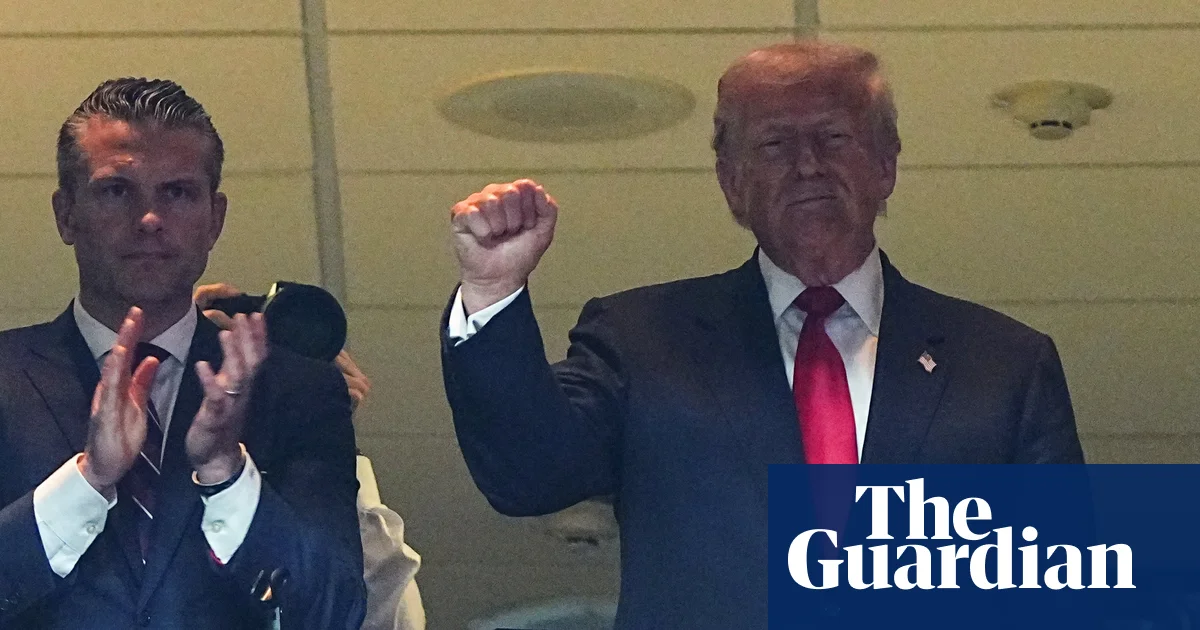
Trump booed at Commanders game before taking over Fox broadcast booth to call plays

In an unprecedented move that symbolically bridges the worlds of sports, politics, and international influence, Donald Trump made history as the first sitting U.S. president in nearly fifty years to attend a regular-season NFL game. His presence at the Washington Commanders’ match against the Detroit Lions not only ignited heated reactions among fans but also served as a vivid display of the ongoing cultural and geopolitical fractures within America. While crowds in Washington, D.C., expressed their mixed sentiments—ranging from cheers to boos—the spectacle underscored how deeply divided the nation remains, and how influential figures from the global arena continue to leverage sports as a stage for political statement and influence.

This public spectacle is more than just a partisan protest; it reflects a broader geopolitical narrative where domestic political conflicts are playing out under the watchful gaze of the international community. Historically, such the attendance of a sitting U.S. president at an NFL game signals the importance of national identity and internal cohesion. Yet, the reactions from the crowd—boos, chants, and jeers—highlight a nation polarized along ideological lines. Experts remind us that the U.S.’s internal fractures are, in many ways, echoed globally, as international powers observe and interpret America’s political turbulence on every stage, from the battlefield to the sports arena.

The event also has implications for geopolitical positioning. Trump’s desire to have the Commanders’ new stadium named after him, as revealed by reports of White House intermediaries, demonstrates how branding and influence extend beyond politics into the realm of international soft power. This project, valued at nearly $4 billion, symbolizes a broader trend: the merging of economic ambitions with national identity—an ambition echoed in the development of international alliances and contentious treaties. As noted by several international analysts, such moves can be seen as the embodiment of a nationalist resurgence aiming to solidify American influence domestically while projecting strength internationally.

Furthermore, this event occurs amidst a global chessboard, where neighboring and distant powers watch as internal tensions simmer. Historians caution that when national symbols become politicized—such as debates over stadium naming and the involvement of political figures in civilian life—it can have far-reaching effects on a nation’s international image and diplomatic relations. The spectacle of a U.S. president mingling with military personnel during the game, and the NFL’s participation in patriotic initiatives, serve to reinforce a narrative of resilience amid division. Yet, critics argue that this superficial unity masks underlying societal conflicts that could, if left unaddressed, lead to fragile stability.

As the weight of history presses down, the unfolding story of Trump’s NFL appearance is more than a fleeting media event. It is a mirror held up to a world grappling with its own divisions and aspirations. While leaders and analysts debate the implications, the image of a polarizing figure standing amidst cheers and jeers at a sports stadium echoes a deeper truth: the forces shaping the future are playing out in arenas of both national pride and international influence. It is a reminder that history is a constant battlefield, where every gesture and decision—no matter how seemingly trivial—can ripple across borders, shaping the course of nations for generations to come.
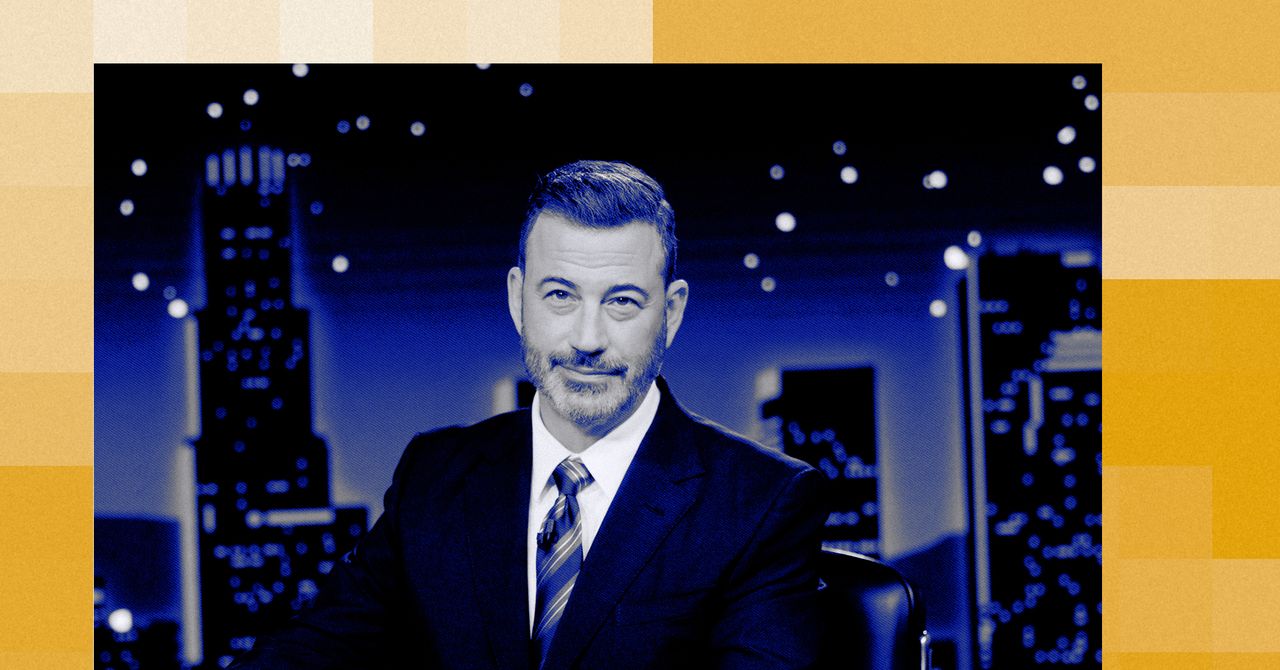
Broadcast TV’s melting—Kimmel’s heating things up even more

Major Shift in Broadcast Media: Technology and Power Dynamics Evolve

This week’s controversy surrounding ABC and the suspension of Jimmy Kimmel highlights a brewing transformation within the media industry—one driven by technology, regulatory influence, and cultural polarization. The decision by Sinclair and Nexstar, two influential right-leaning affiliates, to refuse carriage of Kimmel’s show is emblematic of a broader shift that signals the accelerating decline of traditional television as the dominant distribution medium. It’s a wake-up call for media giants and startups alike, illustrating how disruption within the sector is poised to reshape business models and market power structures in the coming years.

The roots of this upheaval lie in the fundamental obsolescence of the regulatory framework governing TV broadcasting. The Federal Communications Commission (FCC), long a gatekeeper of broadcast licenses—originally designed to serve a predominantly over-the-air, antenna-based viewership—now faces irrelevance in an era where streaming services, internet platforms, and on-demand content dominate consumer habits. Industry analysts from Gartner and academic institutions like MIT concur that the era of “broadcast spectrum” as a critical asset is nearing its end, with some experts estimating that the burden of legacy regulation could soon be lifted entirely.

This impending transformation isn’t just theoretical; it’s already underway. Disney and other industry leaders are moving aggressively into streaming—Disney+, ESPN+, and similar outlets are pioneering direct-to-consumer models that bypass traditional affiliates entirely. The notion that broadcasters could be threatened with license revocation if they refuse to air controversial content or political viewpoints underscores how governmental influence is flexing to maintain control over an industry that no longer fits within its original design. Former FCC officials and industry insiders believe that this pressure is just the tip of the iceberg, with “broadcast is a melting ice cube”—a phrase that encapsulates the urgency for traditional companies to adapt or face obsolescence.

In response to these seismic shifts, innovative financial and strategic recommendations are emerging from think tanks and investment firms such as Needham. Their endorsement of Disney’s move to fully transition into streaming underscores a broader industry consensus: disruption is inevitable, and adaptation is paramount. The suggestion that Disney should immediately begin streaming its entire schedule exemplifies how the business model must evolve to maximize profit streams, enhance viewer engagement, and hedge against declining traditional ad revenues. The potential market implications are substantial; as streaming subscriptions and ad-based digital models proliferate, entrenched cable and broadcast revenue streams could be reduced to a fraction of current values. The overall market cap of major conglomerates like Disney could surge, driven by efficiencies and new consumer engagement avenues, leaving old-school broadcasters scrambling to stay relevant.

Looking ahead, the industry’s trajectory suggests a swift acceleration toward hyper-digital, decentralized content distribution. Regulatory bodies like the FCC may soon lose their grip, paving the way for a deregulated environment where innovation reigns supreme. Traditional broadcasters will need to pivot rapidly—embracing AI, data analytics, and direct-to-consumer streaming platforms—to avoid becoming relics of a bygone era. For youth-oriented investors and tech innovators, this is a defining moment: the rules are being rewritten, and the stakes have never been higher. The question now is whether legacy players can harness the disruptive wave or if new entrants—agile, tech-savvy companies—will take control of the future media landscape. The urgency to act is clear; if they fail to adapt now, they risk becoming footnotes in a burgeoning digital empire driven by innovation, disruption, and relentless competition.

Social Media Auto Publish Powered By : XYZScripts.com



