
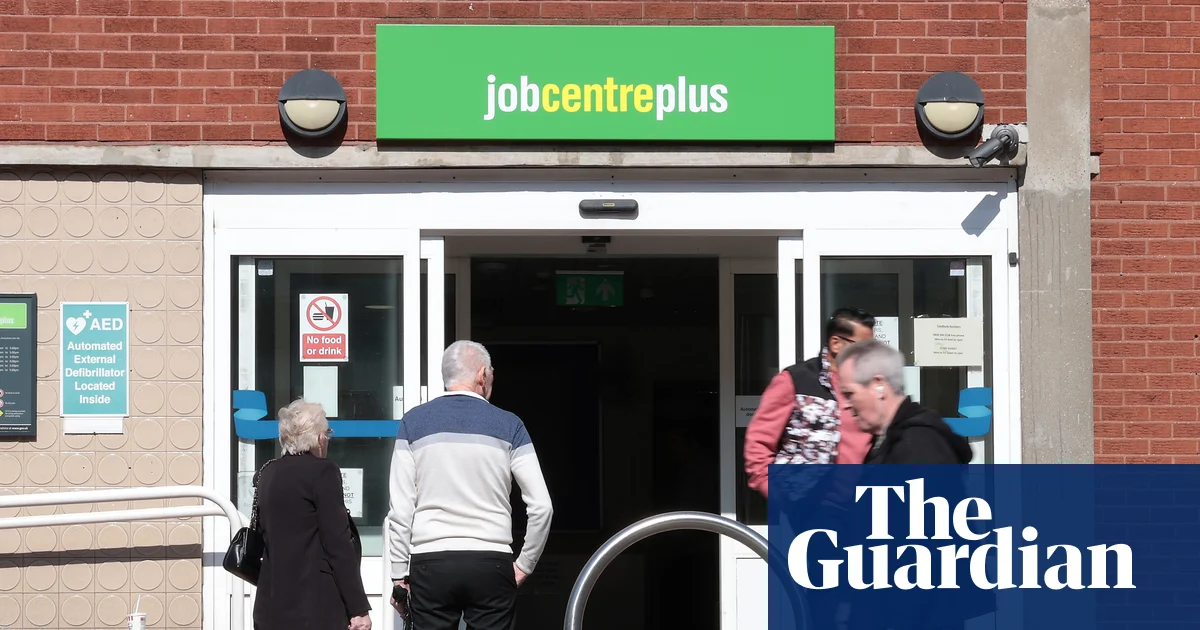

Across the United Kingdom, recent labor market statistics reveal a troubling trend: unemployment has surged to a four-year high of 5.1% in the quarter ending October. This escalation signals a significant economic weakening, with the Office for National Statistics (ONS) reporting a decline of 38,000 payroll employees in November alone. Such figures echo a broader instability that threatens to destabilize the country’s fiscal and social stability. The rise in unemployment benefits and the reduction in hiring activity collectively underscore a labor market under duress, indicting ongoing economic vulnerabilities that have profound impacts on societal cohesion and national confidence.
Notably, the most affected demographic appears to be younger workers, a trend highlighted by analysts and supported by studies from organizations like the Resolution Foundation. These experts emphasize that, since 2020, an additional 415,000 individuals under 26 have joined unemployment rolls, posing serious questions about the future of youth employment and social mobility in the UK. The persistent rise in joblessness, despite the official unemployment rising from 3.9% in late 2023 to 5.1% by September 2025, signifies *a systemic crisis*. It reveals how the interconnectedness of global markets and domestic policy failures can magnify economic hardship for emerging generations, with potentially long-lasting geopolitical consequences.
Global analysts suggest that these economic difficulties are unlikely to be isolated incidents. The growing unemployment trend, combined with stagnant wage growth—currently hovering at 4.6%, only marginally above inflation—further compounds the challenge. Inflation has eased somewhat but remains elevated at approximately 3.6%, creating pressure on household budgets. The impending decision by the Bank of England to potentially cut interest rates from 4% to 3.75% indicates an attempt to mitigate economic strain. Yet, such measures could have broader ramifications for international financial markets and influence economic alliances, especially as the UK navigates an era of geopolitical uncertainty powered by shifting alliances and economic competition.
Historically, economic downturns of this magnitude not only weaken a nation’s internal stability but also recalibrate its global standing. As analysts warn of potential divisions within international powerhouse blocs, the UK’s economic trajectory may serve as a signal to other nations facing similar challenges in the wake of global upheaval. European and American allies watch closely—highlighting how economic resilience or fragility in one nation can alter the course of international relations. There is an increasing recognition—both among policymakers and global strategists—that economic stability is now intertwined with geopolitical influence, with the current UK crisis illustrating a broader pattern of *nation-states grappling with the consequences of global dislocation*.
As history continues to unfurl, the fragile fabric of a nation’s economy becomes a mirror of its geopolitical destiny. The decisions made today—whether to stimulate growth, reform labor markets, or fortify social safety nets—will resonate through the corridors of history. The shadow of unemployment and economic uncertainty looms large, a stark reminder that in an interconnected world, the fate of a nation is writ not solely in its borders but across the intricate web of global power dynamics. As leaders grapple with meeting the crisis, the weight of history presses ever harder, hinting that the coming months could redefine the course of the United Kingdom and, perhaps, the balance of global influence itself.




