
Matox News

Truth Over Trends, always!

Trump Town Faces Shutdown Boot as Budget Crisis Builds

The US Government Shutdown: A Local Impact with Global Geopolitical Ripples

As the United States government enters its third month of shutdown, the geopolitical consequences are rippling far beyond the halls of Washington, impacting local communities and societies with tangible immediacy. In Martinsburg, West Virginia, a town emblematic of the broader American fabric, federal employees, veterans, small business owners, and residents find themselves at the mercy of political deadlock. While the immediate effects include furloughed workers and shuttered services, analysts warn that this crisis highlights the deeper fissures and vulnerabilities within the very structure of American governance.

The shutdown began after a contentious political impasse over federal funding, with Democrats and Republicans entrenched in their stance since October 1st. The result has been the suspension of vital programs that sustain not only the lives of millions but also the stability of local economies. For instance, in Martinsburg—an area with a significant federal workforce—over 3,300 federal employees are directly affected, with additional thousands commuting to the capital daily. The impact on veteran care, as seen through the story of Army veteran Jonathan Giba, exemplifies the human toll: delayed medical treatment, halted career transition programs, and a growing sense of worry among those already scarred by service. Somber voices,” as noted by analysts, suggest this crisis is not merely about politics but about the systemic neglect of everyday Americans’ needs.

Within the broader geopolitical context, this shutdown underscores divisions within the United States—dubbed “Trump country”—where a fierce sense of independence and skepticism toward establishment politics runs deep. The political stalemate reflects more than a budget dispute; it embodies an ideological struggle that risks eroding trust in democratic institutions at a time when international confidence in American stability could waver. Historians fragility warn that repeated shutdowns risk long-term damage to the @America’s global standing, as allies and adversaries watch with keen interest. International organizations, like the United Nations, have expressed concerns over the stability of US policies and their capacity to meet global commitments, emphasizing that the world cannot ignore the internal crises of the most powerful nation on Earth.

Meanwhile, the impact is felt deeply within the American heartland—where small businesses like Tina Hissam’s suffer from the ripple effects of disrupted federal contracts and service closures. With USDA service centers shuttered and furloughed IRS workers further delaying claims and refunds, local economies flounder in uncertainty. According to economists and local leaders, such as Kelly Allen of the West Virginia Center on Budget and Policy, the suffering touches every stratum—from laid-off federal personnel to the most vulnerable members whose survival depends on stable government support. These mounting pressures threaten to further destabilize a politically divided society, fueling an urgent call for resolution amid a landscape of growing economic fragility.

As the crisis drags into the months, the narrative remains one of profound uncertainty—where history offers grim lessons: prolonged shutdowns lead to deeper policy failures, increased societal fractures, and a diminishing capacity for government to serve its people. With each passing day, the weight of history presses down; the American experience is once again at a crossroads, teetering between political brinkmanship and the imperative for leadership, unity, and purpose. The question persists—will this be a moment of reckoning, or a chapter of further decline, as the unstoppable momentum of history continues its relentless course?
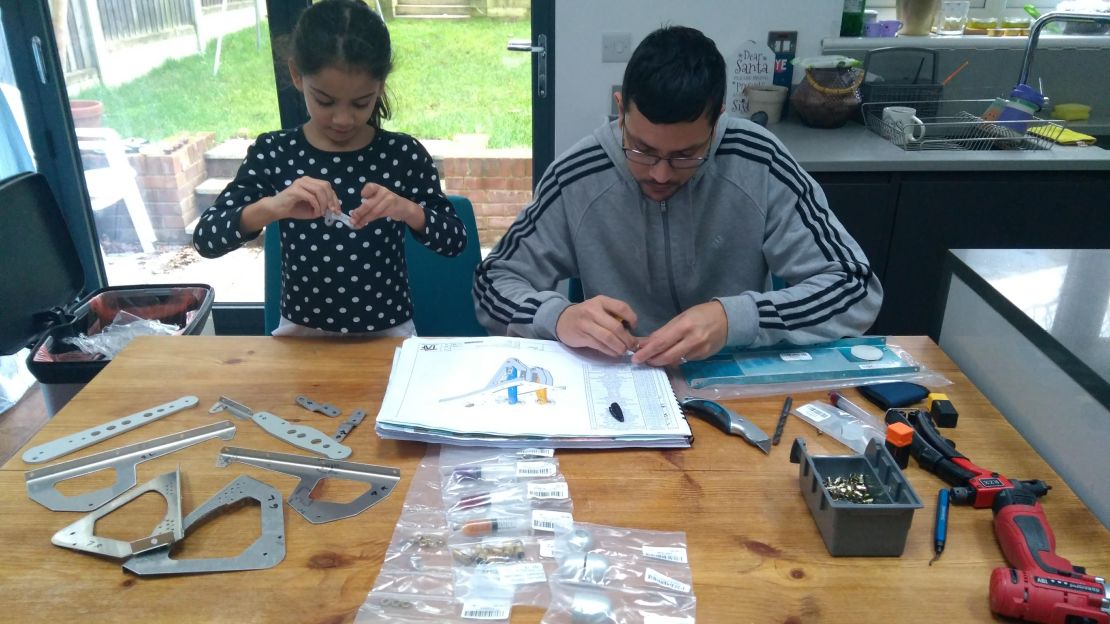
Local Dad Turns Backyard into Flight Deck, Builds Family’s Own Plane for Endless Adventures

Embracing Freedom: The Journey from Hobbyist to Homebuilt Pilot

In an era where personal achievement intersects with notions of independence and self-reliance, a rising movement among adventurous youth is redefining what it means to live life on your own terms. A compelling example emerges from the UK, where mechanical engineer Ashok Aliseril Thamarakshan transformed a simple passion for aviation into a life-defining project — building his own aircraft during the challenging months of the COVID-19 pandemic. This story isn’t just about aviation enthusiasts; it’s an emblem of how shift in lifestyle values can lead to extraordinary experiences, driven by a desire to connect more intimately with the skies and one’s community.

Aliseril’s journey began when proximity to an airfield in Essex sparked his curiosity about flying. What started as a birthday gift — a 30-minute flight experience over the Isle of Wight — ignited a profound sense of possibility in him. Motivated by the thrill of liberty that flying offers, he secured a private pilot’s license in 2019. From there, his explorations extended beyond mere flights; he sought a deeper understanding of aircraft by embarking on a ambitious self-assembly project. His choice to build a Sling TSi”— a four-seater kit plane — exemplifies a growing trend among young followers of the maker movement: turning construction into a lifestyle of pursuit and mastery.

The pandemic, rather than halting his ambitions, became an accelerator. With restrictions in place, Aliseril dedicated over 18 months to constructing his aircraft in a self-made shed in his backyard. This decision was fueled by a desire for full control and comprehension of every aspect of his plane, emphasizing the importance of knowledge and responsibility in aviation. His experience as an engineer, coupled with his home improvement skills, made him confident in building from detailed instructions and working with specialized tools—making the dream of flying his own aircraft not just a possibility, but a reality grounded in resilience and craftsmanship.

Building Community and Personal Freedom

One of the most inspiring aspects of Aliseril’s journey is the sense of community that aviation fosters. He notes that many in his circle are retirees or individuals with the financial ability to undertake such projects, creating a close-knit community that shares a common passion. The social benefits extend beyond merely sharing flights; the friendships forged among private pilots form a kind of modern brotherhood of explorers. For Aliseril, this community enhances both personal growth and safety, providing a buffer of collective experience and camaraderie in pursuit of individual adventure.

Cost considerations—often a concern among young enthusiasts—are increasingly mitigated by shared ownership models and the affordability of modern kit planes. With total expenses for the build approximating the cost of an SUV, many see it as an eye-opening opportunity: a pursuit that combines affordable luxury with long-term value. His experience underscores that a passion for flight can become accessible beyond regional elites, fostering a new generation of pilots who prioritize hands-on engagement and self-sufficiency.

As Aliseril’s story reveals, embracing a lifestyle of self-built achievement does more than deliver personal freedom; it challenges traditional notions of expertise and wealth, proving that with determination coupled with community support and careful planning, the sky is truly within reach. His journey from a curious engineer to a pilot who has flown over 300 hours, crossing over to countries like Norway and even traveling to France, embodies the spirit that underpins a generation eager to carve out its own path.

Ultimately, life is an ongoing voyage—one that invites each of us to define our own horizon. Whether it is learning to fly, building a craft, or simply seeking moments of meaningful adventure amid the hectic pace of modern life, these stories remind us that the true destination lies in embracing our capacity to create, explore, and connect. For the young and restless, the sky isn’t the limit; it is the opening chapter of an extraordinary journey.

Playboy Renounces Hefner, Builds New Post-MeToo Image

Playboy’s Evolution: From Hefner’s Legacy to a New Global Paradigm

Over the past seven decades, Playboy has symbolized a complex chapter in global cultural history, intertwining liberalization with shifting societal values. Founded by Hugh Hefner in 1953, the magazine initially epitomized a provocative frontier of sexuality, famously featuring Marilyn Monroe in its inaugural issue. Hefner’s creation was an emblem of sexual liberation for many, yet it simultaneously perpetuated narrow standards of beauty—white, slim, able-bodied, blonde—that reinforced persistent societal stereotypes. As historians and cultural analysts observe, these standards, while celebrated by the initial audience, also reflected problematic ideals rooted in exclusivity and aesthetic conformity. Despite Hefner’s claimed support for causes like abortion rights and early inclusivity acts—such as featuring the transgender model Caroline “Tula” Cossey—the broader impact of Playboy’s imagery contributed to a culture that often marginalized diverse bodies and identities.

Decades into its legacy, the cultural and societal landscape surrounding Playboy has dramatically transformed. Hefner’s death in 2017, just before the explosion of the #MeToo movement, symbolized the end of an era that many critics argue was built on the manipulation and objectification of women. The 2022 docuseries, “The Secrets of Playboy”, unveiled allegations of sexual misconduct from former associates, including Sondra Theodore and Holly Madison, shedding light on the underbelly of Hefner’s empire. In a post-#MeToo society, Hefner’s legacy is re-evaluated, prompting brands like Playboy to distance themselves from the patriarchal and exploitative practices of the past. The company issued statements condemning Hefner’s actions, emphasizing its renewed focus on progressive values such as sex positivity and equal representation—marked by leadership comprising roughly 40% women and a focus on creator-led content through platforms like Playboy Centerfold.

Global Cultural Shifts and Geopolitical Impacts

The evolution of Playboy epitomizes a broader geopolitical shift—where traditionally male-oriented consumer cultures are increasingly responding to progressive social movements. This transformation is not confined to entertainment; it reflects profound international societal reevaluations of gender, sexuality, and power dynamics. The brand’s pivot towards inclusivity and empowerment aligns with global trends that challenge authoritarian or patriarchal norms, but also raises questions about the cultural commodification of social justice. As international organizations and analysts note, these shifts have geopolitical implications: they influence diplomatic discourse on human rights, shape gender policy debates, and impact economic alliances rooted in evolving cultural standards.

The displacement of Hefner’s original vision with a more inclusive, creator-driven model mirrors the **moves of nations** that are redefining their cultural identities amid geopolitical realignments. While some regimes impose strict censorship, others adapt, fostering a space where personal expression and societal norms intersect. Analysts warn that the future of global social diplomacy will depend on how nations balance economic interests with the demands for social justice, fueling debates around how cultural exports, like Playboy, influence international perceptions of liberalism and conservatism. Such debates are echoed in the statements of international think tanks, emphasizing that cultural symbols are now active agents in geopolitical negotiation.

Historical Echoes and the Unfolding Future

As history continues to unfold, the Playboy brand stands at the crossroads of legacy and reinvention. Its transformation from Hefner’s patriarchal enterprise to a platform championing independent, diverse expressions of sexuality signifies a much larger societal quest for authenticity and agency. Far from merely a magazine, Playboy has become a cultural icon—embedded in fashion, social movements, and digital spheres—where its imagery and ethos influence youth worldwide. The recent resurgence of its associated stars, including *Holly Madison* and *Bridget Marquardt*, underscores an emerging narrative of emancipation and reflection that challenges the myths of patriarchal dominance.

In the shadows of these developments, the geopolitical impact remains profound—shaping international discourses on gender rights and societal progress. The legacy Hefner built may have been rooted in a specific history of American liberalism, but its echoes now ripple across borders, influencing global norms and policies. As the gates of the Playboy Mansion close forever, the story of its rebirth is only just beginning—a story that continues to write itself into the annals of history, where every chapter holds the power to redefine the future of social freedom and human dignity. The world watches, as the narrative of sexuality, power, and identity morphs under the weight of a changing epoch—an epoch where societal norms are challenged, reshaped, and perhaps finally, rewritten altogether.

Social Media Auto Publish Powered By : XYZScripts.com