
Matox News

Truth Over Trends, always!

Decoding Andy Burnham’s Low-Key Style Game: The Outsider’s Fashion Edge for Today’s Youth

In the evolving landscape of politics, fashion has become an unexpected but powerful tool for shaping identity and making a social statement. Andy Burnham, the charismatic mayor of Greater Manchester and self-styled “king of the north,” has recently embraced a more casual, understated wardrobe during public appearances—trading suits for black joggers, bombers, and simple workwear-inspired pieces. His appearance at the launch of the Class Ceiling report at Whitworth gallery exemplifies a broader cultural shift: politicians are no longer just speaking through speech or policy; they’re communicating through their everyday style. Burnham’s wardrobe signals a departure from the polished, often detached London political class, and instead aligns with the working-class roots and regional pride that fuel his electoral base.

This deliberate shift toward casual, workwear-inspired fashion is more than mere aesthetics. For sociologists and fashion analysts like Andrew Groves, director of the Westminster Menswear Archive, Burnham’s all-black, nonconformist look is “as calculated as any Westminster suit, just aimed at a different audience.” It’s a visual rejection of the “parliamentary polish” that many associate with distant, elitist politics. Instead, it projects an image of practicality, authenticity, and regional solidarity—elements increasingly vital to engaging young voters who crave transparency and relatability in their leaders. As Jonathan Tonge, a politics professor at the University of Liverpool, asserts, Burnham’s fashion aligns with his moderate, left-of-center politics: a statement that “I’m different from Westminster.”

What’s truly fascinating is how Burnham’s personal style also represents a broader societal narrative: the emergence of regional identities in national discourse. His “Manchester way” aesthetic—described as “the Smiths meets Britpop”—evokes local cultural icons and musical heroes, reinforcing regional pride and resisting the homogenizing influence of mainstream London politics. Meanwhile, his style stands in contrast yet subtle proximity to Keir Starmer, whose slightly more mainstream Britpop-inspired look—Stone Island, Harringtons, open-neck shirts—signals a different political momentum. While Starmer maintains hints of non-conformity, Burnham’s more radical authenticity taps into the social momentum fueled by **youth culture** and regional resilience, making style an essential language of political legitimacy.

  • Growing regional pride and identity movements
  • Increased importance of relatable, non-elite visuals in politics
  • The unspoken cultural dialogue between London and the North
  • Fashion as a gateway to authenticity and grassroots trust

As the fashion of Andy Burnham continues to evolve, it raises a compelling question about the role of cultural symbolism in shaping political futures. Will politicians follow suit, turning their style into a strategic form of communication that bridges the gap between their policies and the everyday lives of voters? Or is this merely a fleeting trend, a superficial gesture that masks deeper societal divides? The next big question—possibly the most urgent of all—might be whether this deliberate dressing-down truly signifies a shift towards a more authentic, regional-driven politics or whether it’s just a temporary fashion statement in a landscape still dominated by traditional, top-down hierarchies. As Burnham’s casual yet meaningful style gains traction, the future of political culture may well rest on whether other leaders choose to embrace their regional roots and personal identity—because, in the end, style might yet become the most radical act of all.
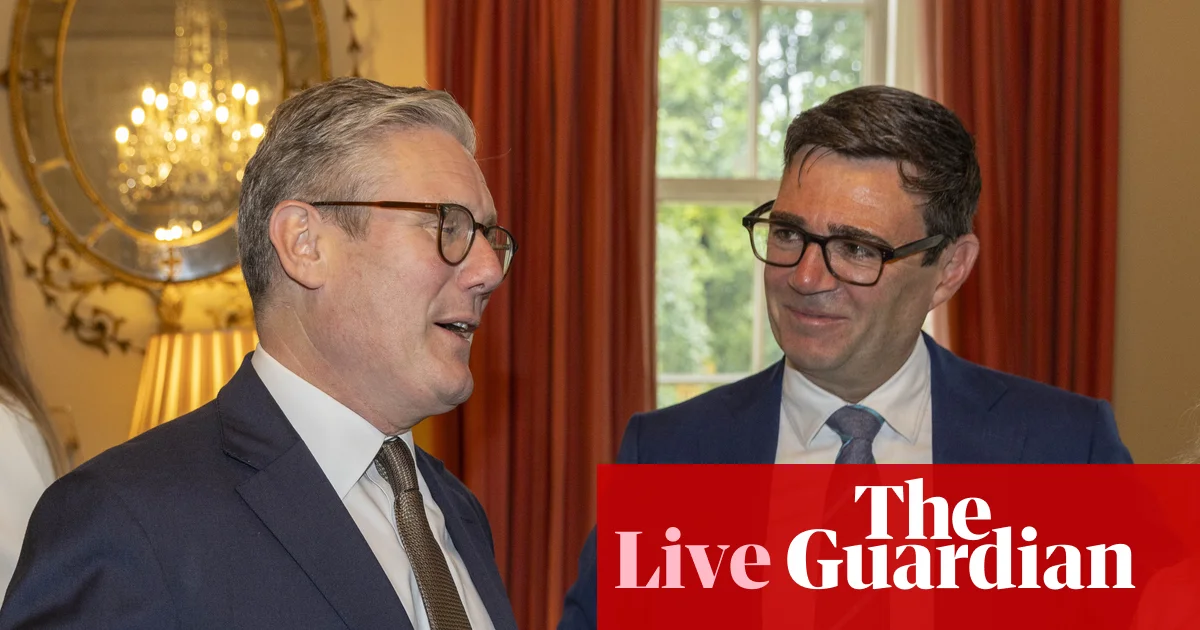
Starmer Stands Firm, Blocks Burnham's Byelection Bid – UK Politics Live
Starmer Stands Firm, Blocks Burnham’s Byelection Bid – UK Politics Live

The tumultuous landscape of British politics continues to reverberate across the international stage, as internal disputes within Labour threaten to undermine the nation’s stability and the broader geopolitical narrative. The recent decision by Keir Starmer and his leadership to block Andy Burnham from standing as the Labour candidate in the upcoming Gorton and Denton byelection exemplifies the growing rift in the party, one that analysts warn could have unforeseen consequences beyond the UK’s shores.
Historically, the internal conflicts of the UK Labour Party have served as a mirror to larger global shifts—where ideological fissures often presage shifts in regional alliances, electoral viability, and national security. When senior officials prioritize short-term electoral strategies over broader political unity, especially during a time of heightened international tension, the ripple effects can diminish the UK’s diplomatic standing and weaken its influence in key alliances such as NATO.

According to renowned historians and global policy analysts, the decisions made within London’s political corridors carry symbolic weight. \”This internal strife,” noted Dr. Clara Martins of the European Council on Foreign Relations, “exposes a nation grappling with its identity at a moment when global powers are recalibrating their alliances and priorities. Such divisions can embolden rivals and weaken diplomatic protocols that rely on stable leadership.”

The internal Labour debate reveals competing visions: one emphasizing electoral strategy and resource allocation, and the other rooted in longstanding principles of party democracy and collective action. The decision to prevent Burnham—a highly popular figure with significant influence—is framed as a pragmatic move to concentrate resources on “elections we must have,” as expressed by Keir Starmer. Yet, critics argue that this political calculus diminishes Labour’s capacity to present a unified front on the international stage, especially in an era where perceived instability can be exploited by geopolitical adversaries such as Russia and China.

Global Repercussions of Domestic Divisions

  • International organizations like NATO and the United Nations watch closely as Britain’s internal politics unfold, understanding that internal stability is often a precursor to successful diplomacy and leadership abroad.
  • European partners are increasingly concerned that ongoing fissures within UK politics could hamper future coalition efforts or compromise commitments on issues such as defense, climate change, and global health preparedness.
  • Furthermore, analysts warn that the UK’s diminished diplomatic cohesion might embolden regional powers to challenge the rules-based international order, exploiting Britain’s perceived political weakness.

In this context, the internal Labour battle is more than a party squabble; it signals how European and global actors can interpret Britain’s internal stability and responses. When leaders like Douglas Alexander argue that concentrating resources on “what we must have” is necessary, they inadvertently broadcast to the world a message of internal discord masked by political necessity. Such signals, according to experts, risk weakening the UK’s influence during a critical period marked by resurgent great power rivalry.

The Weight of History and the Unfolding Future

As history continues to forge its course in the crucible of internal political struggle and international shifts, how Britain navigates these turbulent waters will determine not only its domestic stability but also its geopolitical posture. The decisive decisions made today, from the party halls of Manchester to the diplomatic corridors of Brussels and Washington, echo into a future where alliances are tested, and influence is contested.

In the shadows of Westminster’s veritable chessboard, alliances are being reassessed amidst the chaos of internal discord. The decisions to block Burnham and shift focus away from contentious local politics may seem like tactical moves, but they underscore a far greater narrative—one where the weight of history is calling for unity and strategic clarity, lest Britain’s influence fade into the annals of defeat and internal strife.

Social Media Auto Publish Powered By : XYZScripts.com



