
Matox News

Truth Over Trends, always!

Australia News Live: Tragedy in Sydney as man arrested after 3 deaths; Liberals take Nepean seat in crucial Victorian byelection

In the wake of unprecedented domestic turmoil and a rapidly shifting geopolitical landscape, Australia finds itself at a formidable crossroads. Recent reports underscore a troubling spike in violence within the nation’s borders, exemplified by a tragic incident in Sydney’s southwest, where three lives were brutally lost, and a man currently in custody. The incident, which saw a 64-year-old man succumb to severe head injuries, alongside the bodies of a woman in her 60s and a man in his 20s, tragically represents the deepening social fractures gripping the country. NSW authorities have linked these acts of violence to a man known to the victims, raising urgent questions about underlying social issues. As the nation grapples with this violence, the call for resilient law enforcement and social cohesion becomes more pressing than ever.

The chaos extends beyond Australia’s borders, confronting the nation with a bilateral challenge that could influence global stability. Earlier this week, Australian activists joined an international protest—a paddle-out supporting the Global Sumud Flotilla—whose attempted aid delivery to Gaza was intercepted by Israeli defense forces. This act of solidarity highlights Australia’s complex role on the world stage, caught between an ongoing regional conflict and its desire to maintain strategic alliances. The incident underscores a broader geopolitical dilemma: how to uphold national interests while navigating the turbulent waters of Middle Eastern politics. International experts warn that these flashpoints could serve as catalysts for wider conflict, potentially drawing Australia into an even more active and contentious regional security environment.

Meanwhile, in domestic politics, the nation watched as the Liberal Party secured a commanding victory in a pivotal Victoria byelection—a clear political harbinger ahead of the upcoming state elections in November. With nearly 80% of votes counted, the opposition’s candidate, Anthony Marsh, garnered over 63% on a two-candidate basis, boosting the Liberals’ prospects and signaling a shift in voter sentiment. Such electoral shifts are not merely local victories but have broader geopolitical implications, revealing cracks in the political fabric that could influence Australia’s policy directions, especially in relation to defense and foreign policy under rising global tensions. As political analysts argue, these results could embolden opposition voices, impacting national unity and Australia’s strategic posture on the world stage.

Adding to the international mosaic, Prime Minister Anthony Albanese prepares for a significant diplomatic engagement with Japanese Prime Minister Sanae Takaichi, who is scheduled to arrive in Australia for her inaugural official visit. The upcoming Australia–Japan Annual Leaders’ Meeting promises to bolster regional alliances amidst a backdrop of growing economic and security challenges. Japan’s strategic interests in the Indo-Pacific are increasingly intertwined with Australian policy, especially as global superpowers jostle for influence. Historians and strategic analysts warn that these diplomatic efforts are crucial for counterbalancing China’s expanding influence, signaling a renewed commitment to regional stability and collective security.

As history continues to unfold, Australia’s internal crises and external commitments form a complex tapestry—one that holds the power to influence not only its future but also the geopolitical equilibrium of an entire continent. From tragic episodes of violence to electoral shifts and rising diplomatic alliances, each decision, each vote, each diplomatic handshake carries the weight of an uncertain tomorrow. The answers lie in the choices made today, as the nation stands on the cusp of an epochal transformation—an unfolding chapter where the voices of the youth and the echoes of history will shape what comes next.

Starmer Stands Firm, Blocks Burnham's Byelection Bid – UK Politics Live
Starmer Stands Firm, Blocks Burnham’s Byelection Bid – UK Politics Live

The tumultuous landscape of British politics continues to reverberate across the international stage, as internal disputes within Labour threaten to undermine the nation’s stability and the broader geopolitical narrative. The recent decision by Keir Starmer and his leadership to block Andy Burnham from standing as the Labour candidate in the upcoming Gorton and Denton byelection exemplifies the growing rift in the party, one that analysts warn could have unforeseen consequences beyond the UK’s shores.
Historically, the internal conflicts of the UK Labour Party have served as a mirror to larger global shifts—where ideological fissures often presage shifts in regional alliances, electoral viability, and national security. When senior officials prioritize short-term electoral strategies over broader political unity, especially during a time of heightened international tension, the ripple effects can diminish the UK’s diplomatic standing and weaken its influence in key alliances such as NATO.

According to renowned historians and global policy analysts, the decisions made within London’s political corridors carry symbolic weight. \”This internal strife,” noted Dr. Clara Martins of the European Council on Foreign Relations, “exposes a nation grappling with its identity at a moment when global powers are recalibrating their alliances and priorities. Such divisions can embolden rivals and weaken diplomatic protocols that rely on stable leadership.”

The internal Labour debate reveals competing visions: one emphasizing electoral strategy and resource allocation, and the other rooted in longstanding principles of party democracy and collective action. The decision to prevent Burnham—a highly popular figure with significant influence—is framed as a pragmatic move to concentrate resources on “elections we must have,” as expressed by Keir Starmer. Yet, critics argue that this political calculus diminishes Labour’s capacity to present a unified front on the international stage, especially in an era where perceived instability can be exploited by geopolitical adversaries such as Russia and China.

Global Repercussions of Domestic Divisions

  • International organizations like NATO and the United Nations watch closely as Britain’s internal politics unfold, understanding that internal stability is often a precursor to successful diplomacy and leadership abroad.
  • European partners are increasingly concerned that ongoing fissures within UK politics could hamper future coalition efforts or compromise commitments on issues such as defense, climate change, and global health preparedness.
  • Furthermore, analysts warn that the UK’s diminished diplomatic cohesion might embolden regional powers to challenge the rules-based international order, exploiting Britain’s perceived political weakness.

In this context, the internal Labour battle is more than a party squabble; it signals how European and global actors can interpret Britain’s internal stability and responses. When leaders like Douglas Alexander argue that concentrating resources on “what we must have” is necessary, they inadvertently broadcast to the world a message of internal discord masked by political necessity. Such signals, according to experts, risk weakening the UK’s influence during a critical period marked by resurgent great power rivalry.

The Weight of History and the Unfolding Future

As history continues to forge its course in the crucible of internal political struggle and international shifts, how Britain navigates these turbulent waters will determine not only its domestic stability but also its geopolitical posture. The decisive decisions made today, from the party halls of Manchester to the diplomatic corridors of Brussels and Washington, echo into a future where alliances are tested, and influence is contested.

In the shadows of Westminster’s veritable chessboard, alliances are being reassessed amidst the chaos of internal discord. The decisions to block Burnham and shift focus away from contentious local politics may seem like tactical moves, but they underscore a far greater narrative—one where the weight of history is calling for unity and strategic clarity, lest Britain’s influence fade into the annals of defeat and internal strife.

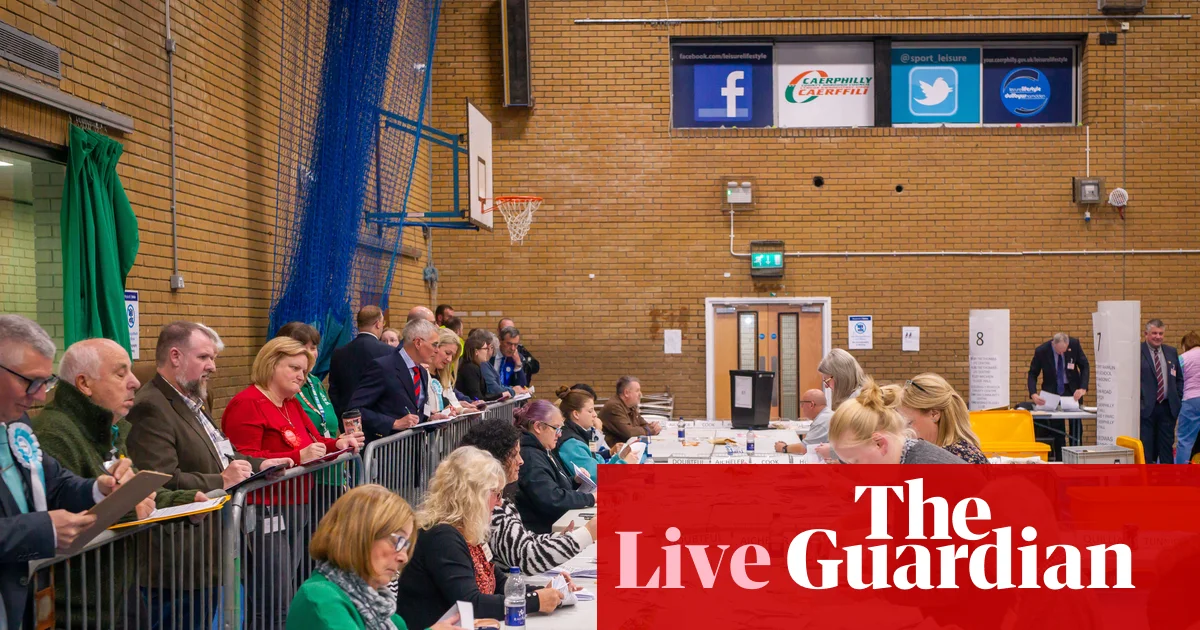
Caerphilly Byelection: Labour, Plaid, and Reform UK clash as key Welsh vote hits the finish line

Caerphilly Byelection Sparks Critical Shifts in Welsh and UK Politics

The Caerphilly byelection, recently concluded with a voter turnout exceeding 50.43%, has captured the world’s attention as a potentially defining moment in Welsh politics. Historically, voter engagement in such devolved elections has been modest, with prior turnouts seldom crossing the 50% threshold, making this election a significant anomaly. Experts note that this heralds an era where direct democratic participation in Wales might be on the rise, thereby intensifying the stakes for political factions vying for influence.

At its core, the outcome of this byelection is seen as a barometer for the larger geopolitical impact on UK politics. The possible loss of the Caerphilly seat by Labour, the longstanding dominant force in Welsh governance since 1999, would not merely be a local concern. It signifies a broader disenchantment with the party’s performance both at Westminster and Cardiff, which has opened space for insurgent parties like Reform UK and Plaid Cymru to challenge the status quo. As analysts warn, if Reform manages to replicate its recent gains, it could destabilize the traditional political landscape, pushing the UK closer to a new, more fractured political era.

Fierce Campaigns Echo Broader Ideological Battles

The election, called due to the death of Hefin Wyn David, underscores the mounting ideological struggle within Wales—between those advocating for continued devolution and independence, and reformers promising constitutional overhaul. Nigel Farage and his Reform UK team invested heavily, pledging to “throw everything” into the contest, notably capitalizing on voter dissatisfaction with established parties. Meanwhile, Plaid Cymru seeks to solidify its claim as the primary nationalist voice, emphasizing their focus on a future independent Wales and presenting themselves as the alternative to what they depict as Labour’s waning influence.

Additionally, the battle witnessed energetic grassroots activism, with Lindsay Whittle of Plaid describing the campaign as “really energetic,” further indicating that the fight over Welsh sovereignty and societal direction is far from settled. Several internationals, including political historians, see this contest as a potential bellwether for the upcoming full Senedd elections, where the real redefinition of Welsh autonomy could crystallize. This contest, therefore, is not merely a local election but a proxy for future societal shifts, impacting the British Isles’ political architecture.

Societal Underpinnings and Future Forecasts

Despite the fierce political rhetoric, some fear that polarization and societal division lie beneath the surface of these electoral battles. The reports of intimidation tactics—such as attacks on Reform UK candidates’ properties—and controversies over campaign rhetoric indicate a volatile atmosphere. Yet, this tumult reflects a deeper undercurrent: a society grappling with change, identity, and the future of its governance. As Sharon Walker, an international political analyst, suggests, the political shift in Caerphilly could serve as a touchstone influencing debates across the UK on national identity, sovereignty, and social cohesion.

The story of this election remains unwritten as vote counting continues and the nation watches with bated breath. If the results favor Plaid Cymru or Reform UK, the landscape of Welsh and UK policy-making may be forever altered, ushering in an unprecedented chapter where allegiance and ideology are re-scribed anew. In this unfolding saga, history is not merely being watched—it’s actively being made, and the world must brace for the seismic implications that are yet to come.

Social Media Auto Publish Powered By : XYZScripts.com



