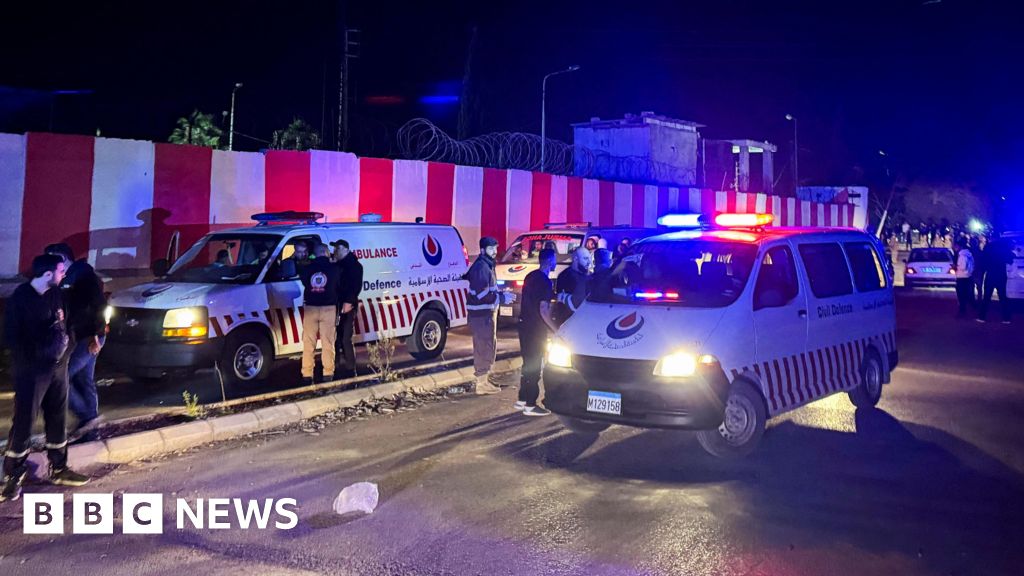

The Middle East remains a flashpoint of conflict, with recent events underscoring the volatility that continues to threaten regional stability and global security. Israel, reiterating its stance against militant groups, launched a strike near the largest Palestinian refugee camp in Lebanon, Ein el-Hilweh. According to Lebanese authorities, at least 13 individuals were killed, with dozens more injured. The Israeli military claimed the target was a Hamas training compound, ostensibly used for planning attacks against Israel, an assertion Hamas vehemently denies, branding it a fabrication and lies. This incident exemplifies how Israel’s technological precision and strategic strikes operate within a complex web of regional alliances and enmities, aiming to weaken militant capabilities while risking civilian casualties.
This violence cannot be viewed in isolation. Since the outbreak of the October 2023 conflict initiated by Hamas’s brutal assault on southern Israel—resulting in approximately 1,200 deaths and multiple hostages—the broader regional picture has deteriorated rapidly. Israel’s military response in Gaza and Lebanon has resulted in devastating civilian tolls, with Palestinian casualties surpassing 69,000, raising alarm among international observers and human rights organizations. Meanwhile, Hezbollah, backed financially and militarily by Iran, intensified its attacks against Israeli targets in a display of solidarity with Palestinians. These actions have pushed the region towards an unstable equilibrium of tit-for-tat violence, with the Lebanese Hezbollah engaging in ongoing hostilities, firing rockets in defense of Gaza, and launching an assault on northern Israel.
Analysts from think tanks and global institutions warn that the geopolitical impact of these escalating conflicts exceeds regional boundaries. They highlight how Iran’s influence and proxy networks have turned Lebanon into a battleground, transforming the Lebanese armed groups into key players in a broader confrontation. The 13-month war culminating in a fierce Israeli offensive in October 2024 has caused the displacement of over 1.2 million Lebanese civilians, sowing chaos and despair. The collapse of Lebanese stability threatens neighboring countries and global markets, especially considering Lebanon’s precarious economic situation. The United Nations and regional powers are calling for restraint, but with conflicting interests and deep-seated hostility, prospects for peace remain distant.
Historian voices and experts warn that decisions made now will carve the contours of future generations’ lives. The ongoing violence—fueling resentment and radicalization—edges the region closer to a broader, perhaps irreversible, rupture. With Israeli officials justifying their strikes as measures to diminish threats, and Hamas and Hezbollah positioning themselves as defenders of Palestinian and Lebanese sovereignty, the battle lines are being redrawn. This relentless cycle of violence exemplifies how international decisions—often made in the shadows—shape societal fate, threatening to plunge the Middle East into deeper chaos. As history unfolds in real-time, it is evident that the weight of these events will be felt long after today’s battles cease, leaving a fractured landscape where hope must fight to survive amidst the wreckage of yesterday’s conflicts.