
Matox News

Truth Over Trends, always!

Green candidate hits London streets after arrest over alleged anti-Semitism allegations

The Green Party Scandal Sparks Political Turmoil Amid Global Shifts

In recent weeks, a controversy involving Green Party candidates in London has escalated into a reflection of larger international concerns about political integrity and extremism. The arrest of Sabine Mairey and Saiqa Ali on charges related to alleged antisemitic social media posts underscores a troubling phenomenon that transcends local politics and raises questions about the effectiveness of political parties international. As Britain grapples with internal divisions, analysts fear that such incidents may amplify existing geopolitical tensions, particularly in a world increasingly fractured by ideological conflicts.

  • Following their arrests, the Green Party faced severe criticism from political opponents, with Labour accusing the party’s leadership of lax oversight and tolerance for extremism.
  • A significant point of concern was the apparent contradiction between the party’s internal rules—whose provisions explicitly prohibit candidates under investigation from campaigning—and Mairey’s visible participation in local events after her arrest.
  • International organizations, such as the United Nations and European Union, have expressed ongoing worries about rising extremism and anti-Semitism within democratic institutions, warnings that such incidents threaten to undermine already fragile alliances.

The Geopolitical Impact of Internal Political Crises

For Britain and its alliances, the scandal feeds into a broader narrative of moral decline and political instability, which global leaders observe with concern. European analysts, including historians like David Runciman, argue that internal conflicts within parties serve as a barometer for wider societal health, hinting at vulnerabilities ripe for exploitation by hostile foreign powers. This is especially pertinent as Russia and China continue to exploit social fissures to weaken Western democracies, casting doubt on Britain’s ability to maintain a unified front in international diplomacy.

The incident also intensifies debates about freedom of speech and political accountability. Critics point out that the backlash against the Green Party exemplifies how identity politics can become a double-edged sword, fueling division rather than promoting unity. Meanwhile, international institutions warn that the erosion of social cohesion in countries like Britain creates a fertile ground for extremist movements to flourish, jeopardizing the stability of the transatlantic alliance.

How Decisions in London Shape Global Dynamics

Although the incident involves local governance, its repercussions reach far beyond London. The decision by the Labour Party and Green Party to confront or tolerate such behavior could influence neighboring European nations and allies across the Atlantic. The case serves as a reminder of the ongoing struggle for values-based governance in an era where identity-based conflicts threaten to undermine centuries-old alliances. As politicians and analysts debate the appropriate response, the shadows of history’s darkest chapters—including intolerance and extremism—loom large over the current political landscape.

In the closing moments of this unfolding drama, the question remains: will the nations of the West recognize the critical importance of defending their core values—freedom, tolerance, and integrity—or will internal divisions deepen, paving the way for a new era of discord and chaos? As history continues to pen its next chapter, the weight of these decisions will resonate through generations, shaping the future of liberal democracies amid an increasingly volatile international arena.
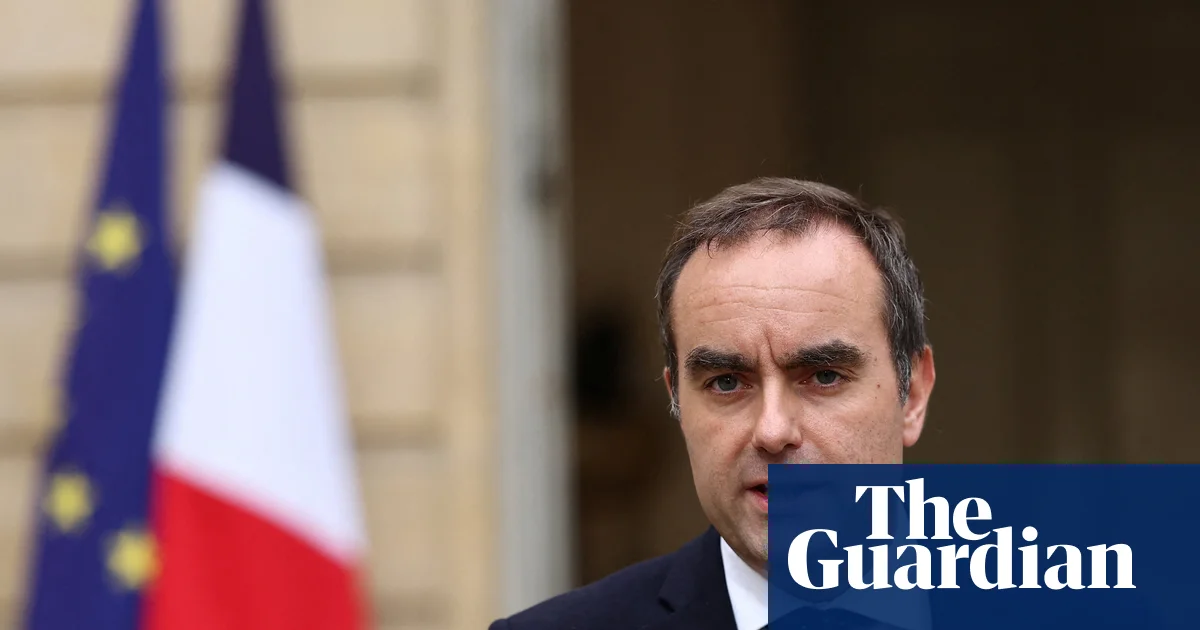

French PM candidate pushes for reforms to prevent snap polls

The recent upheaval in France signals a pivotal moment in European politics, with national stability hanging in the balance amid mounting economic and social tensions. French Prime Minister Laurent Lecornu’s unexpected resignation underscores the deep divisions within a nation battered by internal discord and external pressures. As Lecornu attempted to rally support for Macron’s government, his brief tenure revealed the fragility of the current political landscape—marked by a parliament evenly split among the left, far right, and centrist factions—each vying for influence amidst a state of crisis.
Despite Macron’s re-election in 2022, his mandate has been hamstrung by an unprecedented legislative deadlock stemming from last summer’s snap elections. The resulting hung parliament has made governance an uphill battle, with successive prime ministers unable to command a clear majority for austerity budgets aimed at reining in France’s record-breaking deficit, which this year is expected to surpass 5.5% of GDP—almost double the EU’s allowed limit. These economic strains have fueled societal unrest, with many questioning whether continued austerity is sustainable or merely fueling future instability. International organizations such as the European Union are closely watching France’s struggle, recognizing that a prolonged political deadlock may have broader repercussions, destabilizing regional unity and economic recovery prospects. As analysts warn, France’s internal discord poses a challenge to EU cohesion at a time when unity is vital against mounting external threats, from regional geopolitics to global economic shifts.

Amidst the chaos, Macron’s government is attempting to navigate a complex web of alliances, including negotiations with left-wing parties such as the Socialist Party, Greens, and Communists. These discussions revolve around the crucial question of whether to suspend or revoke unpopular pension reforms enacted in 2023—an issue that has become a litmus test for Macron’s political legitimacy. The Socialist leader, Olivier Faure, has cast doubt on whether Macron’s gestures are genuine or mere political stratagems, but the possibility of a broader left-led coalition emerges as a potential, albeit fragile, solution to the crisis. Such a coalition—supported by Macron’s centrist allies but opposed by the far-right—would signify a major shift in French politics, effectively uniting disparate factions in hopes of steering the nation out of the mire. Nonetheless, critics warn that this new alliance risks fracturing further, especially if pension reforms remain a non-negotiable for the center-right faction, which views these reforms as essential.
Experts warn that this political turbulence is not merely a domestic issue but a reflection of a broader geopolitical impact. France’s internal divisions threaten to weaken the country’s standing within the European Union, making it vulnerable to external influences—ranging from rising Russian influence to rising challenges from China. Historians and analysts observe that such periods of upheaval often precede significant shifts in national trajectories. As President Macron steadfastly refuses to resign before his mandated term concludes in 2027, the specter of a far-right resurgence looms, threatening to upend decades of political stability and reshape Europe’s political landscape. The outcome of these struggles will ultimately determine not only France’s future but also the balance of power shaping the continent’s destiny, leaving history to decide whether this turbulent chapter will be a catalyst for renewal or a descent into further chaos. As the current storm rages, the world watches with bated breath, knowing that the pen of history is yet to be fully written—and its ink is still flowing.

Social Media Auto Publish Powered By : XYZScripts.com


