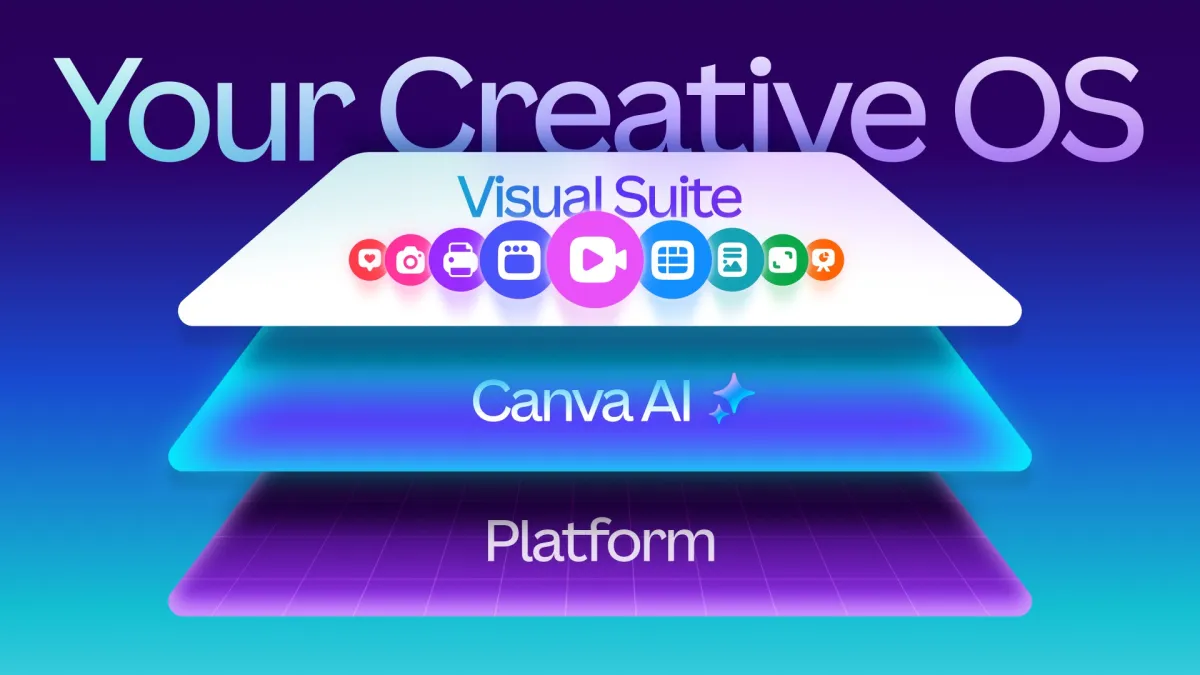

Canva Unveils Revolutionary AI-Powered Design Platform, Signaling Industry Disruption
In a bold move that underscores the rapid acceleration of AI-driven innovation in creative software, Canva announced the launch of its own state-of-the-art foundational AI model on Thursday. Moving beyond the era of simple diffusion-based image generation, Canva’s new model delivers **multi-layer, editable designs**—a game-changer for visual content creation. This strategic development exemplifies how tech disruptors are challenging legacy giants like Adobe and Figma, positioning Canva as a serious contender in the $40 billion creative SaaS industry.
The new model, trained on Canva’s extensive element library, enables users to generate versatile, multi-format designs—from social media posts to full-fledged websites—with the ability to manipulate individual layers and objects. “Where traditional diffusion models produce flat images, ours offers **editable, dynamic compositions**, elevating the user’s ability to iterate seamlessly,” explained Robert Kawalsky, Canva’s global head of product. This evolution aligns with industry analysts’ predictions (Gartner, 2023) that future creative tools will prioritize flexibility and user control, disrupting existing workflows and fostering innovation at an unprecedented pace.
Infusing AI Into the Creative Ecosystem: Business Implications & Future Trends
Canva’s integration of AI further extends into interactive features, such as real-time media suggestions, 3D object generation, and design style replication—saving time and reducing skill barriers for users. The platform’s bond with its recent acquisition, Affinity —a professional-grade design suite—illustrates a clear strategy to bridge casual content creation with high-end professional tools, effectively challenging Adobe’s dominance. Canva’s decision to make Affinity free permanently not only enhances value but signals a disruptive shift in the software licensing paradigm, encouraging broad adoption of high-fidelity, non-destructive editing capabilities.
Additional updates bolster Canva’s position as an integrated ecosystem. The introduction of form creation substitutes *Google Forms* for client input, alongside branded email templates designed with AI assistance, deepening the platform’s value for digital marketing. As MIT’s recent study suggests, such multi-functional platforms are steering the industry toward **ecosystem dominance**, where seamless interoperability between tools becomes essential for staying ahead.
- Innovative features include AI-generated 3D objects and style-mimicry, advancing visual storytelling capabilities.
- The tight integration of Affinity with Canva’s interface unifies vector, pixel, and layout considerations under one roof—streamlining designer workflows.
- The ability to transfer objects between tools and leverage AI within Affinity sets a new standard for professional creative suites, blurring the line between amateur and professional design.
Looking Ahead: A Racedur for Market Leaders & Startups Alike
This advancement reaffirms the narrative that **disruption is not merely about innovation but strategic repositioning**, with Canva challenging entrenched industry incumbents through AI democratization and ecosystem expansion. As Elon Musk’s Neuralink and Peter Thiel’s Palantir have demonstrated, early adoption of scalable, AI-driven platforms can redefine market power and influence. Gartner forecasts that by 2026, over 70% of digital content will be AI-enhanced, emphasizing the urgent need for industry players to innovate or face obsolescence.
In a landscape where rapid technological shifts are defining winners from the rest, Canva’s convergence of AI, professional-grade tools, and ecosystem integration signals a clear message: the future belongs to those who can harness disruption as a strategic advantage. Companies and creators alike must adapt swiftly, as the next wave of radical innovation is set to reshape how visual content is designed, understood, and monetized—making it imperative for industry stakeholders to stay alert, agile, and prepared for the inescapable march of AI-driven transformation.