
Matox News

Truth Over Trends, always!

Beirut Evacuees Forced to Sleep in Tents and Cars Amid Crisis

The ongoing confrontation in the Middle East has once again exposed the fragile geopolitical stability of the region, with Lebanon and Israel at its heart. Recently, residents in the southern Beirut suburb of Dahieh, a known Hezbollah stronghold, have been forced to abandon their homes following escalated air strikes by Israel. Reports from BBC Arabic’s Carine Torbey depict a scene of chaos, with displaced civilians taking refuge in makeshift shelters—tents and cars—highlighting the human toll of this conflict. This latest wave of violence underlines how regional tensions threaten to spiral into a broader conflict with devastating consequences for the Lebanese society and beyond.

The escalation in Lebanon represents a pivotal point amid ongoing regional instability. Hezbollah, backed by Iran and considered a formidable militant organization, maintains an influential presence in Lebanon’s political landscape. Its involvement has long complicated efforts toward peace and stability in the Levant, often drawing Israel into dangerous confrontations. Historically, analysts like Middle East expert Dr. Jonathan Spyer warn that any military escalation risks transforming into a wider regional conflict, especially given the fragile balance of power among global actors. The recent strikes, reportedly targeting missile caches and militant infrastructure, exemplify Israel’s strategic aim to weaken Hezbollah’s operational capabilities—yet, this approach risks igniting a larger, unpredictable conflagration.

International institutions and governments are watching with grave concern. The United Nations has issued cautious statements, urging restraint but offering little to prevent the mounting violence. Meanwhile, regional powers such as Iran and Saudi Arabia navigate their own interests—balancing support for allies with the urgent need to prevent full-scale war. The escalation in Dahieh not only reflects localized tensions but also signals the potential for broader upheaval across the Levant, where history repeatedly reminds us that conflicts here have long-reaching repercussions. European and American policymakers are urged by security analysts to prepare for the possibility that these clashes could destabilize markets, refugee flows, and diplomatic efforts for years to come.

As the dawn breaks over Beirut, the human cost continues to mount, while geopolitical chess moves unfold behind the scenes. History has repeatedly shown that moments of unchecked conflict can spiral into unstoppable forces, reshaping nations and defining eras. The fate of Lebanon and the broader Middle East now hangs in the balance—an unfolding narrative of resistance, resilience, and the relentless pursuit of peace amid chaos. The weight of history presses down, reminding the world that the decisions made today will echo through generations, shaping the course of history in ways yet to be revealed. The sands of the Levant run deep with the blood of those caught in its storm, and as events unfold, it becomes painfully clear: the world watches, waiting for what may come next in this ongoing saga of conflict and hope.
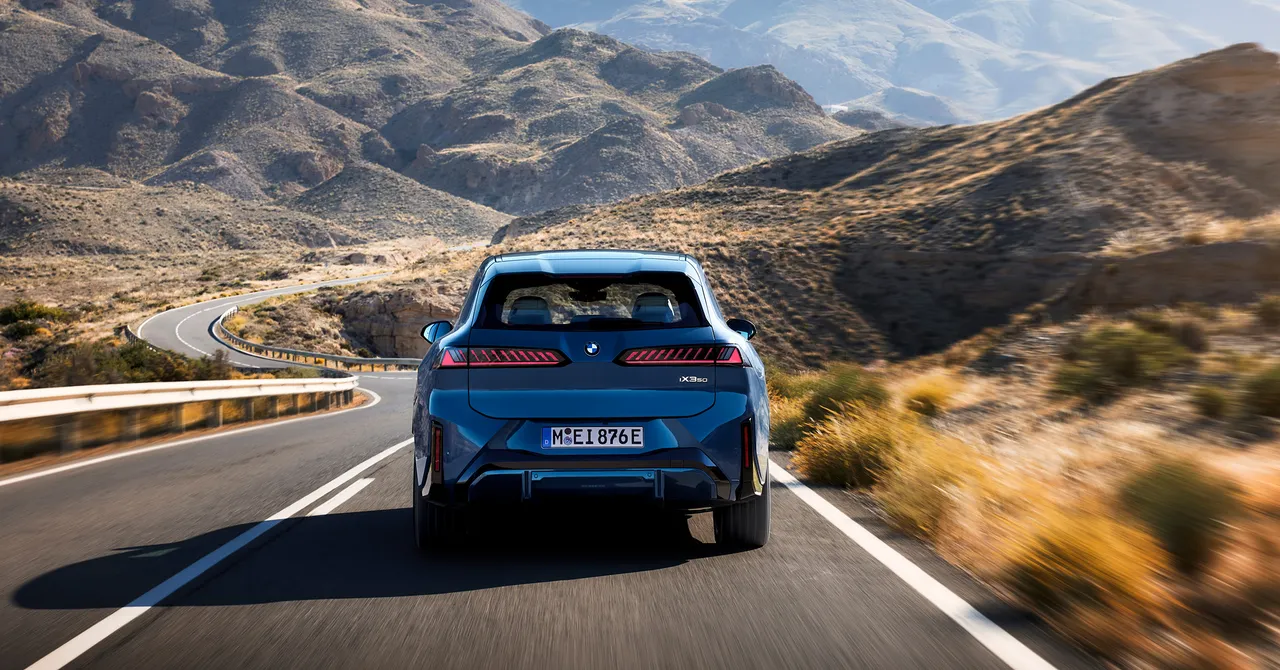
BMW iX3 2026 Unveiled: Specs, Price, When to Get Yours

BMW Unveils First EV on Revolutionary Platform Amid Global Car Industry Disruption

In a landmark milestone for European automaker BMW, the company’s inaugural electric vehicle (EV) utilizing its innovative new platform has officially arrived on the market. This launch signals a strategic pivot toward disruption in the automotive industry, where traditional giants are racing to out-innovate domestic and international competitors, especially China’s rapidly expanding EV ecosystem. BMW’s entry aims to combine cutting-edge battery technology, high-performance charging infrastructure, and a newly developed driving intelligence system to deliver an unparalleled driving experience.

The new model centers on a set of features designed to challenge the supremacy of Chinese EV manufacturers, who are swiftly gaining ground both in innovation and market share. With a range exceeding industry expectations, rapid charging capabilities—achieving a significant charge within minutes—and an AI-driven driver assistance system, BMW is positioning itself as a serious contender in the global EV race. Industry analysts from Gartner and MIT emphasize that these innovations are critical to capturing the market’s future, where disruption is driven by relentless advancements in battery tech, AI, and charging infrastructure. As Peter Thiel and Elon Musk have repeatedly warned, the race for technological dominance in EVs is fundamentally a strategic battleground that will determine the economic winners of tomorrow.

Corporate strategists highlight that BMW’s new electric platform is not merely incremental; it represents a paradigm shift in manufacturing and vehicle performance. The platform is built to be highly scalable and adaptable to new technological innovations, such as solid-state batteries and autonomous driving systems. Not only does this reflect BMW’s commitment to innovative disruption, but it also signals a broader industry shift towards software-defined vehicles—a domain where tech-savvy competitors, particularly Chinese firms, are making massive strides. BMW’s challenge is to leverage this technical edge while navigating the complex geopolitical and market dynamics that favor rapid innovation and aggressive market entry.

From a business perspective, the launch underscores a new era of competition and innovation in the EV space, with potential ramifications for supply chains, global manufacturing hubs, and automotive leadership. Industry insiders note that market shifts towards EVs are accelerating faster than traditional automakers anticipated, driven by consumer demand for sustainability and technological prowess. The key question is whether BMW’s focus on long-range capabilities and advanced charging tech will be enough to outpace Chinese and American rivals, who often benefit from state-backed R&D and aggressive subsidies. The company’s strategy also entails bolstering its ecosystem around the new platform—integrating charging networks, AI-driven features, and next-generation batteries—creating a moat that could redefine premium EV offerings.

Looking ahead, the automotive industry stands at a pivotal juncture where technological innovation, geopolitical considerations, and consumer preferences weave a complex tapestry of competition. As the market evolves rapidly, factors such as battery innovation, AI sophistication, and charging infrastructure will determine which players dominate the landscape. The arrival of BMW’s first EV on its revolutionary platform exemplifies a broader global shift: traditional automakers are no longer merely playing catch-up, but are actively redefining the rules of the game. In this fiercely competitive environment, timing, strategic investment, and relentless innovation will be the new currencies of success—and those who fail to adapt risk being left behind in the dust of disruptive change.

Social Media Auto Publish Powered By : XYZScripts.com



