
Matox News

Truth Over Trends, always!

Iranians defy online censorship to stay connected with loved ones abroad

Recent developments in Iran continue to inject instability into the already volatile geopolitical landscape of the Middle East. The deadly anti-government protests in January, which have claimed numerous lives and caused widespread unrest, highlight the persistent undercurrent of dissent within the nation. For many outside Iran, these events underscore the fragile hold that Tehran maintains on power, especially amid the backdrop of economic sanctions, internal repression, and regional rivalries. Analysts warn that the unrest signals not just a domestic crisis but a potential ripple effect that could reshape alliances and power balances throughout the region.

Meanwhile, the international community watches with cautious concern, as Iran continues to assert its sovereignty amid mounting pressure. The United Nations and various human rights organizations have condemned the violence and called for accountability, yet the underlying grievances remain unresolved. Some Western nations see this as an opportunity to leverage diplomatic channels, but persistent U.S. sanctions and regional tensions complicate efforts toward meaningful dialogue. Iran’s leadership navigates this environment with calculated resilience, often framing protests as foreign-influenced instabilities, intensifying accusations of external meddling and undermining internal reforms. Historically, similar crackdowns have only postponed larger upheavals, a pattern that regional and global analysts remain wary of repeating.

For Iranians abroad, such as Soraya, a young woman living in Toronto, Canada, the unrest hits close to home. She describes phone calls with her family on the ground, where moments of reassurance are often overshadowed by fear. “My family tells me they are managing to make short calls,” she explains, “but I know how dangerous things are, and I worry about their safety.” These personal stories bring a human dimension to the geopolitical commentary, exposing how decisions made in distant capitals influence the lives of millions. As international organizations call for restraint, the real impact on societies is often overlooked in diplomatic rhetoric. The challenge remains for the global community to balance pressure and diplomacy, aiming to support the Iranian people’s quest for greater freedoms without further fueling unrest.

The stakes are high, with regional alliances and global power dynamics hanging in the balance. The United States and its allies see Iran’s internal struggles as an opportunity to increase diplomatic and economic leverage, but also risk escalating tensions if missteps occur. Conversely, China and Russia have maintained more nuanced stances, emphasizing sovereignty and opposing what they deem unwarranted interference. This multifaceted geopolitical chess game underscores how the decisions made during this period could reverberate for decades. According to international security analysts, the forthcoming months are critical—each event could tilt the scales toward either open conflict or renewed diplomacy, shaping the future of the Middle East and beyond.

As history unfolds, the shadows of past uprisings and diplomatic failures loom large over this chapter. The world watches as Iran stands at a crossroads—either to succumb to the cycles of repression and unrest or to find a path toward reform, which remains uncertain. The testimonies of families like Negar’s and Soraya’s serve as poignant reminders that the true cost of geopolitical upheavals is carried by ordinary citizens. In the grand tapestry of global history, this moment may prove to be a turning point—one that could either reaffirm the resilience of a nation or propel it into uncharted chaos. Only time will reveal whether diplomacy or conflict will define the course of a nation that remains a pivotal player on the international stage.
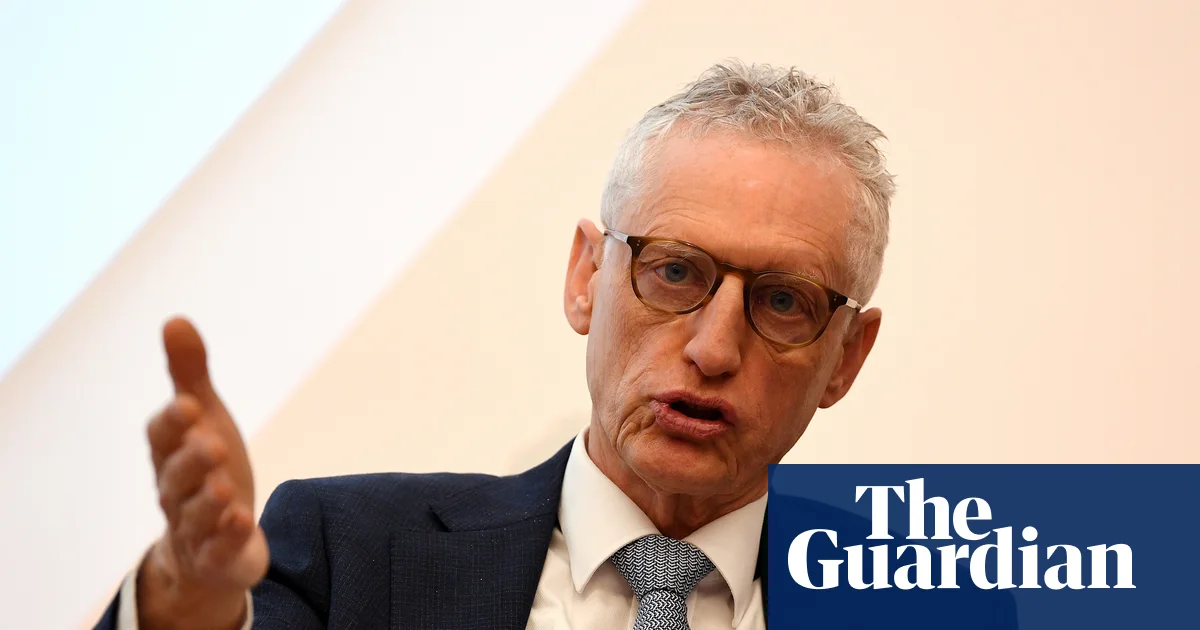

ABS Chief Pushes Back on Far-Right ‘Mass Migration’ Claims Amid Censorship Concerns

Data Integrity and Political Warfare: Australia’s Steadfast Stand Amid Global Disinformation

In an era where mis- and disinformation spread faster than ever, Australia has recently taken a decisive stand to defend the integrity of its national data. The Australian Bureau of Statistics (ABS), under the leadership of David Gruen, publicly refuted false claims made by right-wing factions about mass migration. The controversy erupted following an episode where these groups misused official figures to support inflated migration claims, despite the data showing a clear downward trend. Gruen emphasized that reliance on accurate, independent data is fundamental to a functioning democracy, warning that undermining statistical independence risks degrading democratic governance itself.

This development is not isolated; it exemplifies a broader global pattern of information warfare. Countries like China and Russia have long manipulated official data for political ends, but recent U.S. political upheavals, notably Donald Trump’s administration’s disruption of American statistical institutions, have underscored the fragile nature of data sovereignty. Across the international landscape, analysts from think tanks and organizations such as the OECD warn that the weaponization of data can distort the political discourse, influence migration debates, and sway public opinion to serve particular agendas—often at the expense of truth.

Political Battles Over Data and the Consequences for Society

  • On 22 August, ABS issued a public statement to counter claims that misrepresented migration figures, explicitly clarifying that inflows do not necessarily equate to increased population—highlighting a crucial distinction often exploited in political rhetoric.
  • The Institute of Public Affairs (IPA), a prominent right-wing think tank, accused the Albanese government of “weaponizing” the ABS, implying partisan censorship. Gruen dismissed these accusations, asserting that data is objectively presented and only contextually explained to prevent misinterpretation.
  • Universal concerns over the independence of statistical agencies reveal how deeply data integrity intertwines with national sovereignty and societal trust, especially amid rising populist movements and international misinformation campaigns.

Historians and political analysts warn that such battles over data are more than mere fights over numbers; they symbolize a larger struggle for geopolitical influence. As nations deliberate whether to tighten control over their own statistical data or to allow external voices, the decision impacts flooding to societal trust, international reputation, and the stability of governance structures. The incident in Australia reflects a turning point where independent agencies are compelled, under pressure, to defend not just data but the very foundations of democratic debate. Today’s decisions in Canberra could echo across the globe, shaping the future trajectory of how nations preserve truth amidst an onslaught of manipulated narratives.

In the Shadows of the Future

As the international community wrestles with the consequences of information distortion, one thing remains clear: the battlefield is shifting from traditional arenas into the realm of data and perception. With global institutions warning of a new age of information warfare, the resilience of independent statistical agencies becomes paramount. The unfolding debates and confrontations over data sovereignty signal an era where truth itself is a strategic asset—one that, if lost, could plunge nations into chaos, eroding trust and inciting societal fractures. With history still in the making, the weight of these decisions will resonate for generations, shaping whether societies will succumb to manipulation or stand firm on the pillars of transparency and truth.

Social Media Auto Publish Powered By : XYZScripts.com


