
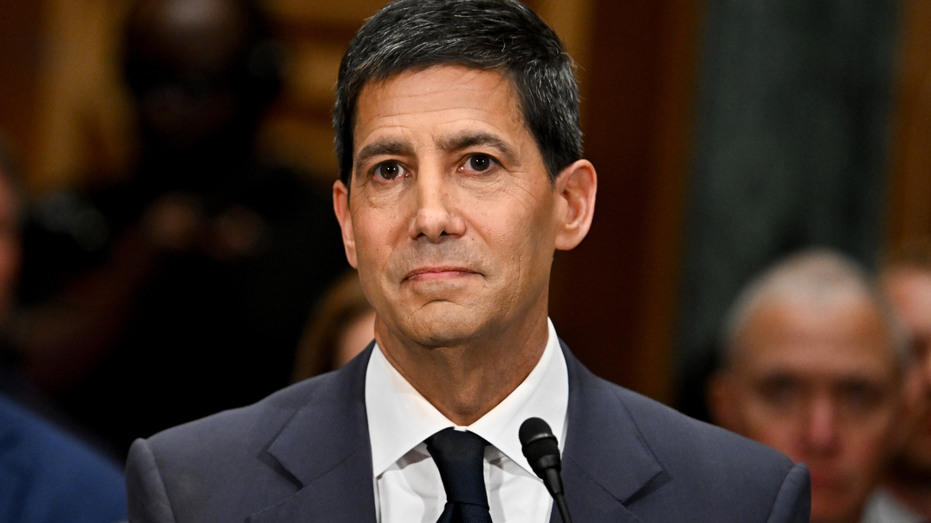

The United States Senate has taken a decisive step towards shaping the future of the nation’s financial landscape, confirming Kevin Warsh to the Federal Reserve Board of Governors. This crucial test vote advances President Donald Trump’s preferred nominee to potentially lead the central bank, a development that follows months of intense political and legal wrangling. The move signals a victory for the administration in its long-standing efforts to influence the institution responsible for monetary policy.
A Pivotal Confirmation on Capitol Hill
The Senate’s successful test vote for Kevin Warsh marks a significant milestone in a nomination process once thought to be in jeopardy. Warsh, who previously served on the Federal Reserve’s main governing body nearly two decades ago, is now on a clear path towards full confirmation as the next Chair. This development comes just as current Chair Jerome Powell’s term is set to expire on May 15, creating an urgent need for leadership stability at the nation’s central bank. The confirmation process, anticipated to conclude swiftly, represents a quieter resolution compared to the high-stakes drama that preceded it.
Overcoming Political Hurdles and Legal Disputes
For months, the nomination of President Trump’s handpicked successor faced considerable uncertainty. A significant barrier emerged in the form of Senator Thom Tillis (R-N.C.), who had publicly vowed to obstruct any replacement for Powell until the Department of Justice concluded its criminal investigation into the outgoing Chair. Recent reporting from News Desk highlighted how this probe, which centered on alleged mismanagement of renovation funds for the Federal Reserve’s Washington, D.C. headquarters, cast a shadow over the confirmation process. The investigation concluded late last month, reportedly under pressure from senior Senate Republicans, clearing the path for Warsh’s advancement. Speculation had been rife that the probe was a retaliatory measure against Powell, who had resisted the administration’s calls for sharply lower interest rates.
The Federal Reserve’s Crucial Role and Warsh’s Potential Impact
The Federal Reserve stands as the cornerstone of America’s financial stability, dictating monetary policy that impacts everything from inflation and employment to interest rates and economic growth. The incoming leadership will confront a complex economic environment, requiring steady hands and clear vision. Kevin Warsh’s prior experience on the Board of Governors provides him with an intimate understanding of the institution’s operations and challenges. His potential chairmanship could usher in a new era for the central bank, aligning its strategies more closely with the economic philosophy championed by the Trump administration.
- The Federal Reserve’s dual mandate includes maximizing employment and maintaining price stability.
- It sets the federal funds rate, influencing borrowing costs across the economy.
- It supervises and regulates banks, ensuring the stability of the financial system.
- It provides financial services to depository institutions, the U.S. government, and foreign official institutions.
This new appointment is expected to be closely watched by markets and policymakers alike, as it could signal a shift in the central bank’s approach to key economic indicators.
The Senate’s confirmation of Kevin Warsh represents a crucial pivot point for the nation’s monetary policy, potentially recalibrating the Federal Reserve’s direction amidst complex economic challenges.
With the Senate poised to finalize Warsh’s confirmation, the focus now shifts to the implications of his leadership for the Federal Reserve and the broader economy. This outcome underscores the administration’s persistent efforts to exert influence over independent institutions and shape the nation’s economic future. The resolution of this high-profile nomination saga demonstrates the intricate interplay between executive power, legislative oversight, and the critical role of the central bank in maintaining stability and fostering growth. As the new leadership prepares to take the helm, all eyes will be on how the Federal Reserve navigates the evolving economic landscape under its renewed direction.






