
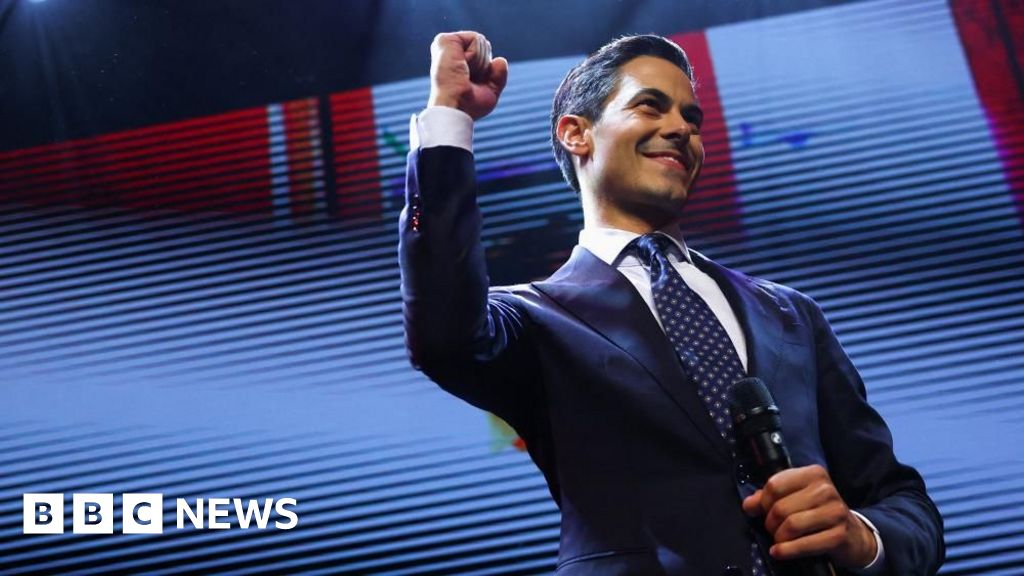

The recent Dutch parliamentary elections have charted an intriguing course in European politics, illustrating a significant shift that could ripple across the geopolitical fabric of the continent. Rob Jetten’s centrist liberals, under the banner of Democrats 66 (D66), have unexpectedly overtaken traditional political heavyweights, including Geert Wilders’ PVV and established left-wing parties. This electoral upheaval, characterized by the projected victory of Jetten’s campaign, underscores a rising public desire for pragmatic leadership and national unity amid persistent crises—chiefly housing shortages, migration concerns, and economic stability.
Historically, Netherlands has been viewed as a cornerstone of stability within the European Union. Yet, recent trends reveal a society eager to embrace change, as evidenced by Jetten’s rapid political ascendancy. Once languishing in fifth place, his party is now poised to hold 27 seats, just ahead of Wilders’ populist faction, which conceded defeat. The significance extends beyond electoral numbers; the shift signals a broader discontent with the stagnation and negativity perceived in recent years’ politics. Experts from the European Policy Institute argue that this election presents a turning point, emphasizing how societal frustrations with migration policies, housing demand, and economic strife are steering voters away from populist rhetoric towards centrist, constructive alternatives.
Meanwhile, how these decisions affect nations and societies cannot be understated. The expansion of Jetten’s coalition plans, including commitments to build ten new cities to combat housing shortages, delineates a future where national policy leans toward active social restructuring. This has profound geopolitical impact, as the Netherlands’ leadership style and policies influence broader European stability and cooperation. The UK’s House of Commons and the German Bundestag watch keenly, recognizing that shifts in Dutch politics could inspire similar realignments in other EU nations, especially as issues of migration and economic resilience dominate the continent’s agenda. The European Council itself is weighing the implications of a more centrist, pragmatist Netherlands—potentially steering EU policies toward more effective, unified responses to shared challenges.
The election results reveal a society at a crossroads, with Wilders’ debate-shown influence waning, despite his proudly bullish stance: “You won’t be rid of me until I’m 80.” The enduring question remains whether this new political climate will translate into lasting change or serve as a fleeting reaction to the ongoing crises. Nonetheless, the message is clear: the Dutch electorate is signaling a desire for a decisive break from the polarization of the past, indicating a readiness to embrace a future defined by pragmatic progress rather than populist grievances. This pivot bears a significant message for international observers—the age of reactive politics may be waning, heralding instead a period where nations prioritize stability and strategic unity.
As history continues to unfold in the quiet yet consequential corridors of Amsterdam and The Hague, the coming months will reveal whether Jetten’s vision of a rejuvenated Netherlands can serve as a beacon for Europe’s future. In a world gripped by turmoil—be it economic instability, migration waves, or geopolitical tensions—the decisions taken on this small but influential stage could echo loudly through history’s unfolding narrative. The challenge remains: can a society ravaged by decades of stagnation forge a new path forward, or will the specter of discontent cast long shadows over the Dutch horizon? The answer may determine not just the fate of an island nation but the very direction of European stability in these uncertain times.





