
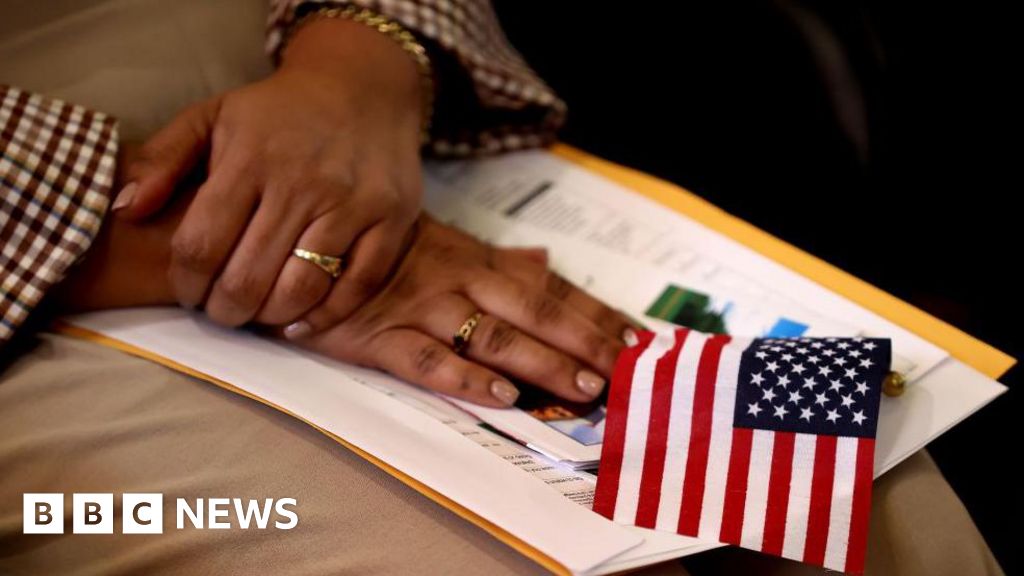

In what can only be described as a stark illustration of political paralysis impacting the lives of millions, a recent government shutdown in the United States has temporarily halted vital immigration services, leaving aspiring citizens in limbo. Amidst ongoing internal political deadlock in Washington, over 700,000 federal workers are now on unpaid leave, and the shutdown’s ripple effects threaten to undermine the integrity of America’s immigration system. This scenario underscores the profound geopolitical impact of internal divisions in one of the world’s leading powers, demonstrating how internal policy fractures have tangible consequences on individuals’ destinies and national reputation.
With the deadline for government funding having expired on October 1, lawmakers have been deadlocked in an increasingly bitter confrontation that exposes deep partisan fissures. The inability to reach a consensus has led to the shutdown, affecting core government functions. Notably, the U.S. Citizenship and Immigration Services (USCIS), although typically resilient due to funding through application fees, faced disruptions in services that are critical to those seeking U.S. citizenship and new opportunities on American soil. This disruption manifests not only as inconvenience but as a major setback for countless hopeful immigrants, many of whom have invested years, even decades, of effort in pursuit of the American dream. The shutdown accentuates a broader narrative of Washington’s failing governance, where ideological disputes threaten the fabric of social mobility and national integration.
Internationally, analysts and historians have pointed to this shutdown as a symptom of a shifting global order—one where internal discord in superpowers like the U.S. might dampen their ability to lead on the world stage. Countries in Asia, Europe, and elsewhere watch nervously as recent US policies reveal a nation grappling with its internal divisions. As political scientists warn, such internal crises could weaken U.S. soft power, embolden rivals, and fuel regional instability. Moreover, the decision to delay or cancel naturalization ceremonies—though seemingly administrative—carries symbolic weight, signaling to both allies and adversaries that America’s own governance is under strain. In a world of rising powers, where China and Russia challenge the rules of the international order, the internal disarray within the U.S. diminishes its moral authority and strategic influence.
Despite promises from officials that services will resume once a budget agreement is reached, the uncertainty continues. As the ongoing stalemate prolongs, critics argue that this exposes a fragile democracy in distress, where partisan conflicts threaten to erode institutional trust and undermine societal stability. Many experts, including prominent historians and policy analysts, warn that such internal discord could have long-lasting effects—shaping the future narrative of a nation still struggling to reconcile its ideals with political realities. Meanwhile, those caught in the crossfire remain anxious, faced with an uncertain horizon where their hopes for a new life hinge on the fragile pause of a government unable to function.
As the world watches, a profound question lingers: will this internal crisis serve as a turning point—a moment of reckoning for a nation that once projected strength and resolve—or will it mark the beginning of a period of enduring decline? History continues to unfold in the shadows of political impasse, echoing with the weight of American promises and the promise of global futures yet to be written.





