
Matox News

Truth Over Trends, always!

Client Challenges Drive Innovative Solutions

As the global economy navigates a period of significant turbulence, markets worldwide are experiencing a spectrum of shocks that threaten both short-term stability and long-term growth trajectories. Recent reports indicate a marked slowdown in manufacturing and consumer confidence, driven by persistent inflationary pressures coupled with geopolitical uncertainties. Economists from institutions like the International Monetary Fund warn that the economic landscape remains precariously balanced, with risks tilted towards recession in major economies. Investors are reacting swiftly, repositioning portfolios amidst the volatile environment, with some predicting a challenging horizon ahead.

The United States economy, often a bellwether for global trends, shows signs of strain despite resilient employment figures. Consumer spending, historically a cornerstone of growth, is cooling as inflation reduces disposable income. Meanwhile, the European Union faces its own set of hurdles; energy security crises and inflationary spikes threaten to dampen recovery efforts, prompting policymakers to reconsider traditional fiscal responses. In this climate, central banks around the world are caught in a delicate balancing act—tightening monetary policy to combat inflation while avoiding the tipping point that could trigger a recession. The Bank of England has signaled a cautious approach, aiming to control inflation without stifling economic growth, but the path remains fraught.

Market impact is profound:

  • Stock indices in North America and Europe have undergone sharp corrections, encapsulating investor trepidation;
  • Currencies such as the US dollar and Euro experience heightened volatility, reflecting shifts in monetary expectations;
  • The commodity markets see mixed signals—oil prices fluctuate amid supply concerns, while gold retains appeal as a safe haven.

Policy consequences are equally critical. Governments are reassessing stimulus measures and fiscal policies, with some contemplating more aggressive intervention to bolster economies while others emphasize structural reforms to foster resilience. Think tanks like the Council on Foreign Relations underscore the necessity for strategic foresight, cautioning that premature tightening could deepen economic fissures. Meanwhile, the specter of geopolitical conflicts, especially in key regions such as Eastern Europe and East Asia, adds layers of complexity. The overarching narrative suggests that this period is a defining moment—one where economic resilience and adaptive policy will determine the future balance of global power.

Looking ahead, the economic pulse of nations remains a pivotal determinant of global influence, shaping not only material prosperity but also geopolitical strength. As we stand on the cusp of potential upheaval, the resilience of economies and their capacity to innovate amid chaos will serve as the bedrock upon which future power is built. This era underscores the importance of strategic foresight, emphasizing that while markets may falter and policies may shift, the true strength of a nation lies in its ability to adapt and thrive amidst uncertainty. The coming years will reveal whether the global economy can harness this turbulence to forge a new epoch of prosperity or succumb to the shadows of complacency and crisis—either way, history is on the move.
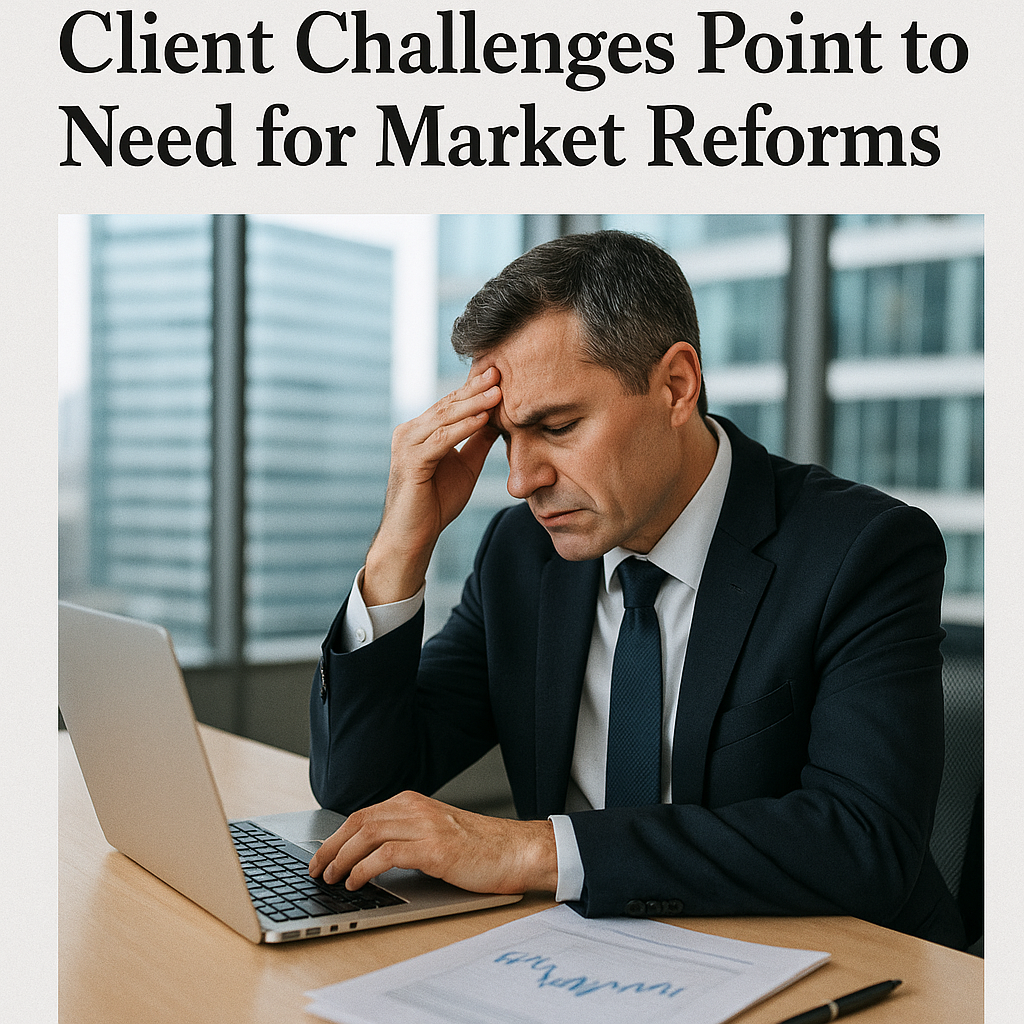

Client Challenges Point to Need for Market Reforms

The international economic landscape is currently experiencing a pivotal phase, marked by mounting volatility and shifting power dynamics. As recent data reveals, the global economy faces multiple headwinds, including inflationary pressures, geopolitical tensions, and unpredictable market shifts. Major economies are recalibrating their strategies to navigate these turbulent waters, with the United States and China at the forefront of this transformation. These developments are not only shaping short-term market impact but are also setting the stage for long-term policy consequences that could redefine global economic order.

One of the most critical indicators remains inflation, which has surged in multiple regions, prompting central banks to tighten monetary policy. The Federal Reserve has signaled an aggressive approach to curb inflation, with rate hikes expected to persist through 2023. Economists such as Mark Zandi of Moody’s Analytics warn that this tightening could usher in a period of slower growth or even recession. Meanwhile, in China, efforts to stabilize the housing market and support manufacturing are underway, yet growth remains fragile amid ongoing geopolitical strain and disruptions in global supply chains. The market impact of these policies has been profound: stock markets fluctuate on central bank signals, currency exchange rates remain volatile, and investor confidence teeters on the edge of volatility.

Furthermore, the rise of geopolitical tensions, especially between the U.S. and China, has triggered a surge in economic nationalism and supply chain reshaping. Countries are increasingly prioritizing self-sufficiency, leading to innovations and investments in emerging sectors such as renewable energy, AI, and advanced manufacturing. Policy consequences are clear: international trade agreements are under reevaluation, and alliances are shifting as nations seek to insulate themselves from potential shocks. Think tanks like the Council on Foreign Relations emphasize that these strategic realignments could either strengthen a multipolar world or spark new conflicts, deeply influencing global market stability. For investors, this environment offers both risks and opportunities—those who adapt swiftly could position themselves at the vanguard of future economic power.

Looking ahead, it is evident that the economy is not merely a reflection of current policies and market behavior but the very **pulse of nations**, a dynamic force that shapes the future of global influence. As technological innovation accelerates and geopolitical boundaries shift, the next era of economic dominance will be forged in the crucible of resilience and adaptation. The stage is set for a future where economic prowess and strategic foresight become the defining elements of national power, echoing through the corridors of history and into the dawn of a new global order.

Client Pushback Challenges Growth

The global economic landscape is once again on the cusp of a pivotal transformation, driven by a confluence of geopolitical shifts, inflationary pressures, and emerging technological opportunities. Major markets are experiencing volatility that reflects deeper structural movements, underscoring the importance for policymakers, investors, and businesses to recalibrate their strategies in this unpredictable environment. According to analysts at the International Monetary Fund, the post-pandemic recovery is stagnating in some regions while accelerating in others, setting the stage for a reconfigured global economic order.

At the heart of this turmoil lies the U.S. dollar, which continues to dominate international trade and finance, but faces mounting pressure from inflation and fiscal policy adjustments. The Federal Reserve’s aggressive rate hikes have sent ripples through the bond markets and triggered concerns about a potential slowdown in economic growth. Meanwhile, prominent economists warn that persistent inflationary pressures could hinder the pace of recovery, risking a stagflationary future that could undermine investor confidence and destabilize markets. Meanwhile, China and Europe grapple with their own challenges—ranging from supply chain disruptions to energy crises—highlighting the fragility that underpins their economic resilience.

In this precarious environment, corporate giants are recalibrating their portfolios and strategic initiatives to stay afloat. A wave of investment shifts is underway, with technology firms and commodity producers poised to capitalize on emerging opportunities. In particular, the push toward green energy and digital transformation represents not just a response to regulatory pressures but a chance to secure long-term competitive advantage. Think tanks such as the American Enterprise Institute suggest that innovative policies fostering private sector agility could stimulate growth and shield economies from shocks. Conversely, rising regulatory risks and geopolitical tensions threaten to stall progress, making it essential for nations to strike a delicate balance between market liberalization and strategic sovereignty.

The market impact of these shifts is profound. Investors are recalibrating risk models, with a focus on sectors poised for accelerated growth amid turbulence. The stock markets remain volatile, yet opportunities are emerging for those willing to navigate the storm, bolstered by a sense of *opportunity amid chaos.* As financial institutions brace for a period of economic recalibration, the importance of agile, forward-looking policy measures becomes ever clearer—measures that could either stabilize or destabilize the global financial ecosystem. The stage is set for a monumental chapter, where economic powerhouses will either adapt and thrive or falter in the face of unprecedented challenges.

Ultimately, the pulse of economies reflects the broader narrative of national resilience and global ambition. As technological innovation and strategic foresight converge, the world’s economic stage transforms into a crucible where future power is forged—not just through wealth, but through the capacity to adapt, innovate, and lead. This period of upheaval holds the potential not only to reshape markets but to redefine the very fabric of global influence, positioning certain nations as the new vanguards of economic dawn. In this epic contest, those who harness the chaos will set the tempo for the future, illustrating that the true strength of an economy lies in its ability to turn crisis into opportunity, forging a resilient path toward a formidable tomorrow.

Boosting Youth Innovation: Overcoming Client Challenges

Emerging Digital Challenges: Navigating Web Accessibility Issues

In an increasingly digital world, web accessibility remains a growing concern for users and developers alike. Recent reports highlight that many individuals are encountering significant barriers when attempting to access vital online resources. This situation prompts critical discussions about both the technical aspects of website functionality and the broader implications for users, particularly younger generations who rely heavily on online platforms for education, communication, and information.

One of the primary issues reported involves websites that are not properly optimized for all users, particularly those barraged with error messages when attempting to access content. For instance, a significant number of users have encountered sites that are non-functional due to JavaScript restrictions or settings, leading to unreliable access to essential services. These technical shortcomings not only frustrate users but also limit equal access to information, drawing attention to the necessity for websites to adhere to established accessibility standards set forth in initiatives like the Web Content Accessibility Guidelines (WCAG).

The repercussions of these challenges extend beyond simple inconvenience. With the rise of remote learning and professional environments dominated by online interaction, the need for accessible websites is imperative, particularly for younger users who are digital natives. Schools and organizations must consider the implications of inaccessible websites on their students’ ability to learn and thrive in a competitive global environment. Failure to address these concerns could lead to a significant divide between those equipped to navigate digital spaces and those left behind due to technological barriers.

In response to mounting criticism, developers and organizations are being urged to prioritize accessibility features during the design and implementation phases of their websites. Young users, in particular, may find that advocating for changes in accessibility not only enhances their own experiences but also contributes to a more equitable digital landscape for all. As digital engagement continues to evolve, the critical need for accessible web solutions will only grow, making it essential for stakeholders to embrace these challenges head-on to foster a more inclusive future.

Social Media Auto Publish Powered By : XYZScripts.com