Matox News

Truth Over Trends, always!

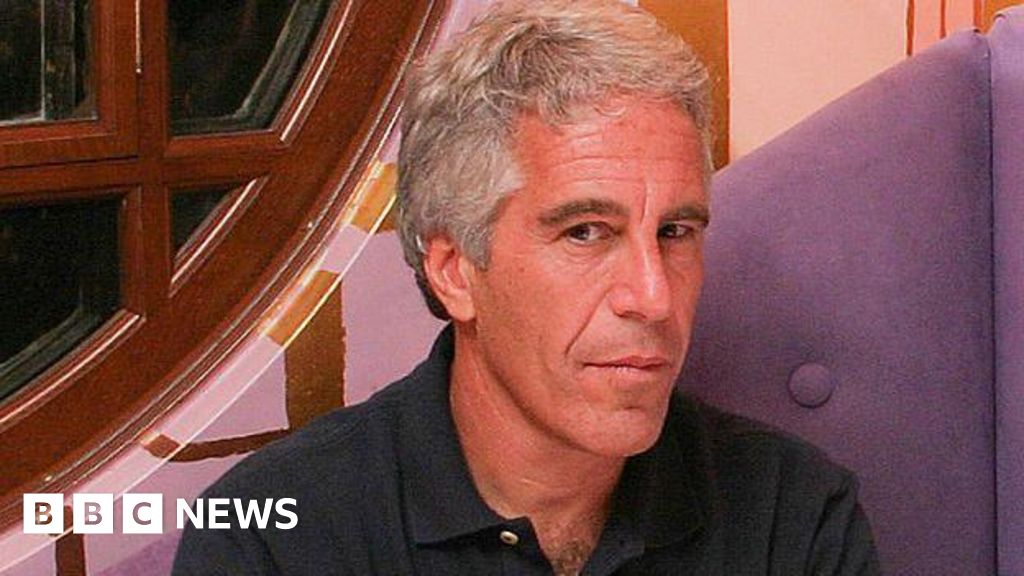
US Justice Department drops Millions of Epstein files, exposing the truth behind a dark chapter

The United States Justice Department has recently publicly dismissed allegations concerning former President Donald Trump, highlighting the political undercurrents that continue to shape American domestic and international landscapes. In a statement, officials emphasized that many of the documents containing *untrue and sensationalist claims* against Trump, submitted to the FBI just prior to the pivotal 2020 election, are fundamentally baseless. “To be clear,” the DOJ declared, “the claims are unfounded and false, and if they have a shred of credibility, they certainly would have been weaponized against President Trump already.” This ongoing narrative underscores the deep political fissures within the US and reveals how internal conflicts influence diplomatic decisions, often with ramifications beyond its borders.

Analysts interpreting this development suggest that domestic political factions have capitalized on the chaos surrounding Trump’s post-presidential investigations to influence global geopolitics. Some experts warn that these internal power struggles have the potential to undermine the coherence of American foreign policy, especially as the nation faces increasing pressure from rising competitors like China and Russia. Historically, by weaponizing legal processes, powerful factions within Washington have sought to weaken political adversaries, exporting this internal strife onto the international stage. International organizations such as the United Nations have repeatedly called for stability, yet the ongoing political chaos in the US threatens to create a vacuum in leadership and global influence.

Furthermore, how decisions made within the US legal and political machinery impact other nations cannot be underestimated. Countries aligned with the US often find their interests swayed or compromised by the shifting priorities and internal unrest in Washington. As the Biden administration navigates these crises, allies and adversaries alike observe with keen interest, questioning whether the US can sustain its role as a global leader amid the turbulence. International historians and geopolitical analysts warn that such internal turmoil risks emboldening rivals, who see opportunities to test American resolve and expand their influence. The narrative of justice, legality, and political neutrality is now intertwined with the larger story of national stability and whether the US can uphold its commitments in a fractured political landscape.

As this saga unfolds, the weight of history presses heavily upon the shoulders of those who shape the future. From the corridors of power in Washington to the chancelleries of Beijing, Moscow, and beyond, the relentless tide of political upheaval continues to redefine the contours of international diplomacy. The question remains: will the internal discord forge a new epoch of decline, or will resilience and reform restore the stability necessary for global leadership? Only time will tell, but one thing is clear: the course of history, once again, hangs in the balance—as the world watches, awaiting the next chapter in this unfolding drama.
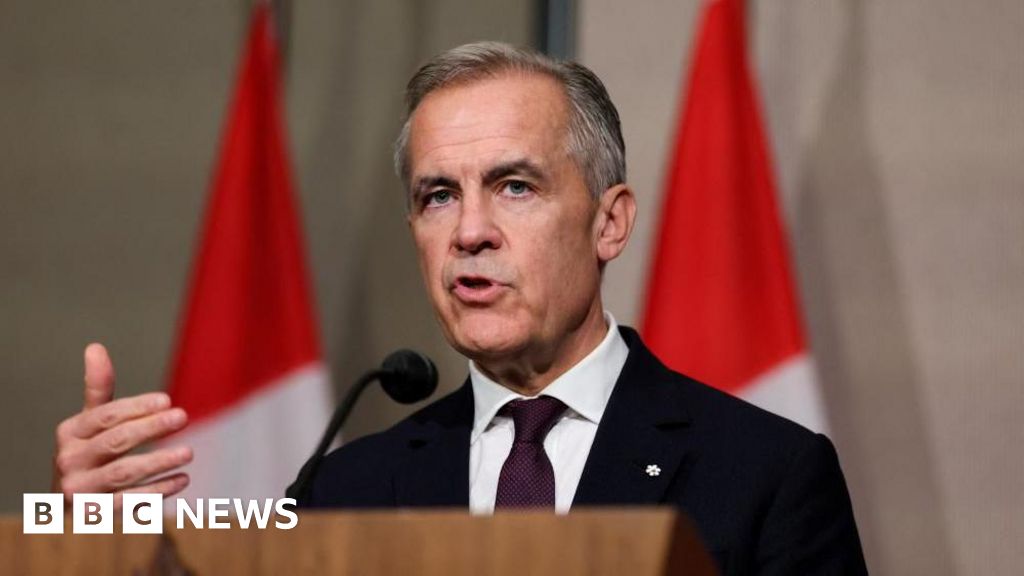
Canada’s Prime Minister Carney heads to China to meet Xi Jinping—a new chapter begins

Canada Eyes New Alliances as China and U.S. Trade Tensions Escalate

In a move that signals a significant shift in its diplomatic calculus, Canada has accepted an invitation to meet with President Xi Jinping. This diplomatic overture, announced after Prime Minister Mark Carney and Xi’s brief 40-minute discussion during the Asia-Pacific Economic Cooperation (APEC) summit, marks a “turning point” in the historically complex relationship between Ottawa and Beijing. The timing is critical: with escalating tensions emanating from ongoing trade disputes and geopolitical row, Canada’s engagement with China underscores a strategic recalibration that could reshape its international alliances.

Since 2018, relations between Canada and China have spiraled downward, culminating in a diplomatic crisis that saw Beijing arrest two Canadian citizens—Michael Spavor and Michael Kovrig—on espionage charges. Their detention closely followed the arrest of Huawei’s CFO, Meng Wanzhou, in Canada at the behest of U.S. authorities; a move that some analysts argue was a tit-for-tat diplomacy that underscored the fragile state of global diplomatic decorum. Despite their eventual release in 2021, tensions persisted, mounting further as Beijing imposed tariffs on vital Canadian exports like canola, while Canadian retaliatory tariffs targeted Chinese electric vehicles and other sectors. The period has thus evidenced what many call a “two-front trade war,” impacting Canadian farmers, especially in Western provinces, and threatening economic stability in sectors vital to national livelihoods.

The geopolitical impact of Canada pivoting towards China and other major economies is profound. As Analysts warn, this strategic move could serve as a blueprint for other Western nations disenchanted with the kinetic and economic warfare of the U.S.-China rivalry, amplifying the contest for influence in the Indo-Pacific and beyond. Decisions to deepen ties with Asian economic giants coincide with American efforts to tighten its grip on Canadian trade, evident in the recent tariff hikes and diplomatic freezes imposed by Washington, notably after the suspension of trade negotiations triggered by a controversial advertisement by Ontario’s Premier. This turns Canada’s international stance into a high-stakes chessboard, where its ability to navigate between the world’s two largest powers will determine its economic standing for decades to come.

Building on recent turning points, China has publicly expressed a willingness to work with Canada, seeking to “push relations back onto a healthy, stable, and sustainable track.” However, the shadows of the past—foreign interference accusations, trade sanctions, and geopolitical confrontations—loom large. Historians and international watchdogs contend that these diplomatic disputes reflect broader strategies, where entrenched national interests often clash beneath diplomatic veneer. The United Nations and major think tanks have warned that such multipolar tensions threaten the stability of global markets, emphasizing that the outcome hinges on the will and wisdom of leaders to prioritize peace over rivalry. Yet, as history illustrates time and again, the sands of international stability are shifting, and the decisions made today will resonate long into the future—when the fog of diplomacy finally clears and history either judges this moment as a smart realignment or a costly misstep.

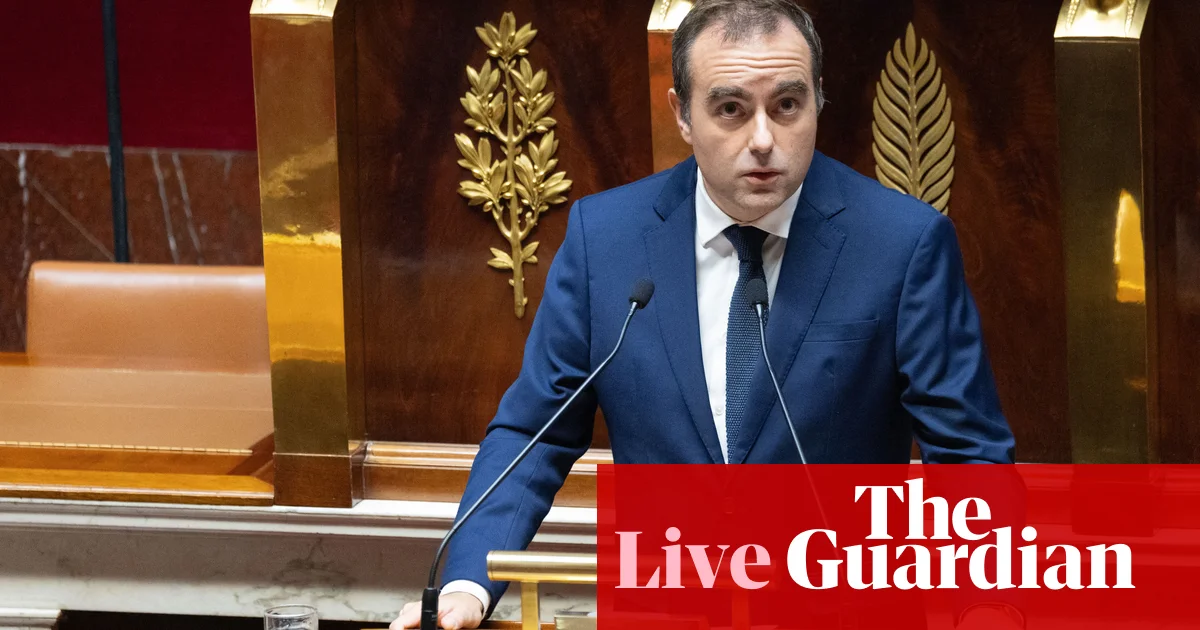
French PM survives no-confidence vote—Europe watches as new chapter begins

France’s Political Turmoil: A Look at Yesterday’s No-Confidence Votes

In a tumultuous turn for France, the government narrowly escaped a series of high-stakes no-confidence votes that threaten the stability of Emmanuel Macron’s leadership amid unprecedented legislative fragmentation. The recent votes in the French parliament highlighted a nation grappling with deep ideological divides and a strained economic landscape, with the veteran president’s political legacy hanging in the balance. The episode underscores geopolitical impact not just domestically but across Europe, as the continent watches a proud democracy teeter on the brink of upheaval.

Yesterday’s no-confidence votes—initiated by opposing factions—brought to light an intense confrontation between Macron’s centrist policies and the fragmented opposition bloc. A total of 271 MPs voted to topple the government, falling short of the required majority of 289. Notably, Sébastien Lecornu, Macron’s prime minister, faced potential resignation but survived narrowly after he proposed delaying a cornerstone pension reform that would raise France’s retirement age to 64. This move was a calculated attempt to buy time amid a crisis rooted in the nation’s perennial resistance to reforms that threaten the social safety net cherished by many citizens. Such decisions have profound societal consequences, affecting the collective well-being and shaping future policies that will decide the country’s direction.

Moreover, the political landscape remains fragile. The Socialist Party, despite refusing to support the no-confidence motions directly, is preparing to leverage the upcoming budget debate to push for a “Zucman tax,” a targeted levy on the ultra-rich, aiming to raise revenue from France’s most affluent—affecting a mere 0.01% of taxpayers. Analysts suggest that this reflects a broader strategy by the left to capitalize on Macron’s economic challenges, including a $30 billion squeeze involving tax reforms and social welfare adjustments. On the other flank, Marine Le Pen’s National Rally has struggled legally, with her legal challenges to electoral rules decisively rejected by France’s highest administrative court. With a conviction and subsequent ban on running for office, her capacity to lead the far-right in the 2027 presidential race remains uncertain—yet her rhetoric and support base continue to influence the political discourse, adding layers of complexity to France’s impending leadership choices.

The international ramifications of France’s internal crisis are manifold. As historians and international agencies warn, political instability in France ripples through the European Union, potentially undermining markets and amplifying regional geopolitical uncertainties. Since Macron’s controversial decision to dissolve parliament amidst the crisis, the country faces a constitutional „permacrisis“, marked by a dangerous stalemate over budget and policy reforms. Meanwhile, France’s neighbors—Poland, Estonia, Germany, and Denmark—have recorded incidents of breaches and drone activity, underscoring that the continent’s peace is increasingly fragile amidst rising tensions between NATO and Russia. This upheaval occurs at a critical juncture, as global powers navigate conflicts and alliances, with European stability vital for broader geopolitical balance.

History is watching, and the course of France’s future remains unpredictable. As political leaders scramble for control and societal factions clash over reforms and ideology, France’s destiny seems poised on a knife’s edge, as the weight of history presses upon the nation’s shoulders. In this unfolding saga, each parliamentary vote, legal decision, and policy debate not only shapes France’s future, but also echoes across a geopolitically sensitive world where the tides of democracy and authoritarianism collide—reminding us all that, in politics, as in history, the only certainty is uncertainty.

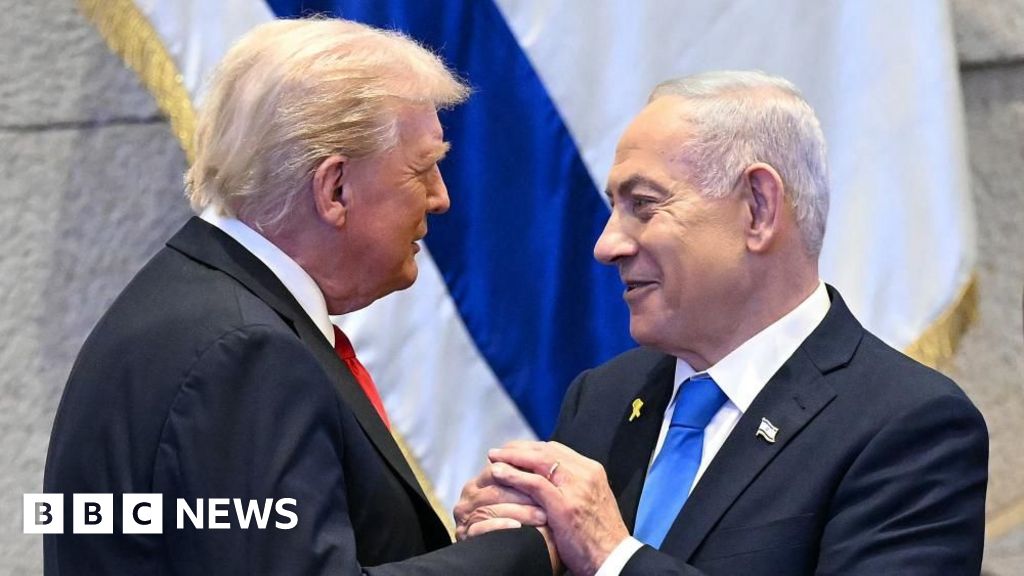
Trump announces promising new chapter for Middle East during Israeli parliament speech

In a remarkable turn of events, President Donald Trump emerged as a central figure in shaping the recent developments in the Middle East. His visit to Israel and subsequent declaration that “the war is over” in Gaza signals an unprecedented diplomatic shift after over two years of brutal conflict. Trump’s role in brokering a ceasefire between Israel and Hamas not only underscores his influence but also sets the stage for a potential reconfiguration of regional alliances. His assertion that this marks the “start of a new Middle East” underscores the geopolitical stakes involved—an era where the influence of the US might return to a more assertive, peace-promoting posture, or so the narrative suggests.

  • Trump’s participation in a peace summit alongside Egyptian President Abdel Fattah al-Sisi and other world leaders emphasizes the scaling of US engagement into a broader regional diplomacy. His presentation at the Knesset, where he was hailed as “the greatest friend Israel ever had,” reflects not only his personal diplomacy but potentially a larger strategic aim: consolidating anti-Iranian alliances and strengthening Israel’s security narrative. Many analysts, including historians tracking US foreign-policy shifts, warn that such moves could recalibrate traditional regional balances, possibly sidelining factions opposed to peace accords or regional stability.

But beneath the jubilant rhetoric lies the complex, often fragile fabric of international diplomacy. Trump’s claims of having secured the release of the last 20 hostages and facilitating the initial stages of peace through a 20-point plan represent highly delicate diplomatic achievements. While some world organizations have celebrated these breakthroughs, critics underscore the *precariousness* of the ceasefire, emphasizing that “the next phases are yet to be negotiated.” This underscores a crucial point: lasting peace depends on sustained commitment and regional cooperation, factors that historically prove difficult to maintain in such a volatile landscape. International security analysts warn that these “initial successes” may not symbolize the end of hostilities but rather a brief pause in a larger, unresolved conflict that could reignite at any moment.

The decision by Israel to release 250 Palestinian prisoners, alongside the withdrawal of over 1,700 detainees, signals a recognition of the importance of confidence-building measures. Yet, it also raises questions about the broader geopolitical impact—how will these gestures influence the long-term prospects for peace, and what are the implications for Palestinian societal stability? Historians like Rashid Khalidi and analysts from institutions such as the United Nations argue that such gestures, while significant, cannot substitute comprehensive solutions rooted in justice and territorial sovereignty. As the world watches the region’s fragile ceasefire, the question remains: how lasting can a peace that emerges amidst geopolitical expediency truly be? The potential for upheaval hangs over the process, with many considering the current developments as merely a chapter—an echo of a still-unfolding saga that will shape history’s judgment.»

As the shadows of this historic moment deepen, one cannot ignore the enduring weight of history still unmade. The corridors of power whisper of a new dawn, yet beneath these bright promises lie the enduring scars of centuries of conflict. The geopolitical calculus pivoting around Jerusalem and the wider Middle East teeters on a knife’s edge. Will this be the start of a genuine era of peace, or merely a respite before the storm resumes? The unfolding narrative remains a reminder that, in the chess game of nations, every move echoes through history, and often, it is the silent, unseen forces that hold the greatest sway over the destiny of peoples.

Social Media Auto Publish Powered By : XYZScripts.com