Matox News

Truth Over Trends, always!

Roblox rolls out live AI chat to shut down banned language, keeping gameplay clean and cool

Roblox Leads the Charge with Next-Generation AI-Powered Chat Moderation

In a move signaling a new era of disruption within online gaming and social platforms, Roblox has announced the rollout of a revolutionary real-time, AI-powered chat rephrasing feature. This innovation aims to combat toxic language while preserving the fluidity of user interaction, marking a significant step forward in community safety and user engagement. As digital communities grapple with maintaining civility amid rising concerns over safety and moderation, Roblox’s approach exemplifies how strategic AI deployment can redefine industry standards and create competitive advantages against rivals.

Traditional content moderation systems on platforms like Roblox relied heavily on keyword filters that often resulted in clunky, disruptive user experiences. When a banned word was detected, the message was replaced with a string of hash symbols, disrupting conversations and sometimes fueling user frustration. Now, according to the company announced, the new AI feature rephrases inappropriate language into respectful and contextually appropriate alternatives. This not only maintains conversational flow but also fosters a more positive environment—a critical factor in maintaining user retention among younger demographics.

Moreover, Roblox is enhancing its detection capabilities, employing machine learning models that identify variations of banned language, such as leetspeak and other sophisticated bypass tactics. The platform reports a >20x reduction in false negatives related to sensitive information sharing, underscoring the impact of these technological advancements. Industry analysts from Gartner highlight that these developments aim to balance real-time interaction with robust safety measures, a dual challenge in digital community management. Roblox’s move exemplifies how AI, when strategically deployed, can disrupt longstanding moderation paradigms and establish new industry benchmarks.

Supporting this shift is Roblox’s recent implementation of mandatory facial verification for chat access, a response to mounting lawsuits and concerns over child safety. Critics argue that such measures reflect a broader industry trend—where safeguarding young users becomes intertwined with technological innovation. This proactive stance positions Roblox as a market leader tackling social responsibility head-on, which could attract a broader user base and solidify its market dominance amid increasing regulation and scrutiny. As pioneers like Elon Musk and Peter Thiel suggest, embracing disruptive innovation today is essential for future industry resilience, and Roblox’s integrated approach underscores this philosophy.

Looking ahead, Roblox’s strategic investments in AI-driven moderation tools demonstrate that the industry must evolve rapidly to meet the dual demands of user engagement and safety. The integration of real-time rephrasing, sophisticated language detection, and biometric safeguards indicates a move toward an ecosystem where disruption isn’t merely about technology—it’s about redefining community standards and business models. With competitors observing closely, Roblox’s innovations could set the template for a new era of safer, more engaging digital playgrounds—an imperative for all platforms seeking relevance in an increasingly regulated landscape. As the digital frontier continues to expand, those who harness the power of AI-driven moderation will lead the charge into a future where community, safety, and innovation go hand in hand.


India’s Sarvam Boosts the Game with Indus AI Chat App Amid Growing Rivals

India’s Sarvam Launches Indus: Disrupting the AI Landscape with Localized Innovation

In a strategic move emblematic of regional innovation disrupting global dominance, Indian AI startup Sarvam has announced the launch of its Indus chat app for both web and mobile platforms. This development arrives amidst a fiercely competitive landscape, where international giants like OpenAI, Anthropic, and Google continue to lead the generative AI revolution. Sarvam’s entry signals a pivotal shift, emphasizing localization, digital sovereignty, and tailored solutions for India’s unique linguistic and cultural landscape.

Innovation in Context: Building AI for India’s Market

The app is powered by Sarvam’s 105-billion-parameter large language model (LLM), labeled Sarvam 105B, an ambitious undertaking that reflects advanced innovation and a disruptive approach to AI development. Alongside its 30B model, Sarvam’s models aim to democratize AI, making sophisticated language processing accessible to India’s diverse linguistic demographics. Launched just days after unveiling its models at the India AI Impact Summit, Sarvam’s initiative exemplifies how disruption is no longer confined to Silicon Valley but now thrives in emerging markets.

  • Focus on local languages and dialects for better user engagement
  • Strategic partnerships, including collaborations with HMD for AI-enabled Nokia feature phones and Bosch for automotive AI applications
  • Expanding hardware capabilities and enterprise solutions tailored for India’s burgeoning digital economy

As analysts from Gartner and academic institutions like MIT emphasize, AI models trained on localized data are key to disrupting the global AI paradigm, shifting power towards regions like India capable of fostering innovation on their own terms. This signals not just technical progress but a strategic realignment that challenges the hegemony of Western AI giants.

Business Implications and Industry Impact

The launch of Indus is more than just a new app; it signifies a strategic attempt by Sarvam to carve out a dominant foothold in a market accustomed to global giants. With initial restrictions, such as limited compute capacity and the absence of certain user controls—features expected to evolve—Sarvam aims to attract feedback while gradually expanding access. The company’s recent $41 million funding round, led by prominent investors such as Lightspeed Venture Partners and Khosla Ventures, underscores confidence in its disruptive potential. This infusion of capital positions Sarvam to scale rapidly, pushing the boundaries of what AI can achieve within India’s unique language, cultural, and regulatory context.

Industry leaders and investors are watching closely, especially as India’s AI adoption accelerates, with OpenAI’s Sam Altman reporting over 100 million weekly active ChatGPT users in India—a clear indicator of the market’s vast potential. The question now is: which regional players will leverage local innovation to disrupt this crowded space?

The Road Ahead: Urgency in a Rapidly Evolving Landscape

The emergence of Sarvam’s Indus app and its formidable models marks a turning point, highlighting both the opportunity and the necessity for regional actors to innovate rapidly. The AI industry’s trajectory is increasingly characterized by disruption fueled by localized solutions, high investment, and strategic partnerships. With India positioned as a vital AI market for the future, global competitors must adapt quickly or risk losing influence. As industry analysts warn, continued innovation and control over AI infrastructure will determine economic and strategic dominance in the coming decade.

In this rapidly evolving landscape, Sarvam’s push into the AI arena exemplifies the urgency for emerging markets to develop homegrown tech solutions that not only challenge global incumbents but also redefine industry norms. Stakeholders worldwide must prepare for a future where localized, innovative AI is at the forefront of technological progress, shaping the global digital economy for decades to come.

Global ‘Super App’ Debuts with Crypto Payments and Private Chat Features for the Next Generation

Revolutionizing Digital Identity and Payments: Tools for Humanity Launches Next-Gen World App

The digital landscape is entering a new era of security, authenticity, and decentralization, driven by Tools for Humanity‘s innovative World App—marketed as a “super app” with disruptive potential for social interaction and financial services. Launched by the startup in 2023, this platform is positioning itself at the forefront of the identity verification and cryptocurrency integration revolution, directly challenging marquis players like WhatsApp and PayPal by integrating web3 principles into everyday social and financial activities. In a time when AI-generated disinformation and digital fakery threaten online authenticity, the company’s core mission—creating verifiable “proof of human” — signals a shift toward a more trustworthy, privacy-preserving digital future.

The latest iteration of the World App introduces groundbreaking features designed to disrupt the status quo. At the heart of this innovation is the verification network, which leverages a proprietary iris-scanning system called the Orb. This biometric verification technique produces a highly secure, encrypted unique digital identity—the verified World ID. As AI-driven misinformation proliferates, this behind-the-scenes cryptographic shield aims to establish a trusted digital ecosystem where users can distinguish genuine humans from bots with ease. During a recent event in San Francisco, Altman explained that the company’s vision centers on balancing privacy with identification, creating a new economic model based on web3 principles that could redefine online interactions.

The app’s new World Chat feature exemplifies this approach, providing end-to-end encrypted messaging comparable to Signal, while offering color-coded speech bubbles to verify user identity visually and intuitively. Designed to foster social connectivity, it aims to fill a critical market gap for secure, social communication. In addition, the platform’s expanded digital payment capabilities integrate cryptocurrencies directly into users’ virtual wallets, enabling peer-to-peer transactions, salary deposits, and seamless bank account integration—regardless of verification status. Such features signal a disruptive move toward financial sovereignty and peer-based economies, aligning with industry forecasts highlighted by institutions like Gartner, which emphasize AI and blockchain as the twin pillars of tomorrow’s tech ecosystem.

Industry analysts such as MIT’s Kevin Esvelt and venture capitalists like Peter Thiel are paying close attention. They see Tools for Humanity’s model as a blueprint for a future where *digital trust* is anchored in cryptographic verification—a crucial component often missed in traditional social and financial platforms. While critics warn of privacy concerns, the company emphasizes that its encryption standards match or exceed industry leaders like Signal. The key business implication is clear: disruption is underway, and existing giants that rely on opaque verification methods risk obsolescence. The integration of biometric identity with decentralized finance creates a formidable competitive advantage, especially for startups and incumbents who overlook the urgency of evolving trust and security in digital spheres.

Looking forward, the rapid advancement of AI, blockchain, and biometric verification points to an increasingly dynamic and competitive landscape. Time is of the essence for traditional players to innovate beyond outdated KYC systems and siloed social platforms. As user demand for privacy and authenticity grows, and regulatory frameworks evolve, companies like Tools for Humanity are positioned to lead a fundamental shift in digital identity and commerce. The question remains: who will seize this disruptive wave and shape the future, or be left behind in the wake of rapid technological evolution? The spotlight is on innovators to accelerate the deployment of trustworthy, privacy-centric platforms that could redefine human interaction in the digital age.

Healthify Supercharges Ria AI with Real-Time Chat Power for a Smarter Future

Healthify’s Revolutionary Upgrade Sets New Standard in Personalized Healthcare

In a bold move that underscores the accelerating pace of innovation in digital health, Healthify, a startup backed by Vinod Khosla, has launched an advanced iteration of its AI health assistant, Ria. This new version integrates voice interaction, real-time camera input, and persistent memory features designed to redefine how users engage with health data. At a time when disruption in healthcare technology is critical, Healthify’s latest innovations exemplify the push toward seamless, AI-driven health management, with implications stretching across markets and platforms.

The upgraded Ria demonstrates a significant leap forward in conversational AI technology. Incorporating live voice interactions and camera-based food logging — using devices like Meta’s Ray-Ban smart glasses — it fosters a more intuitive, human-like engagement. The company’s goal is to create an ecosystem where users can effortlessly access insights, generate tailored exercise plans, or log goals, all within a single session. This move away from traditional apps toward conversational interfaces positions Healthify as a disruptor, pushing the boundaries of what AI can achieve in real-world health applications. As Tushar Vashisht, CEO of Healthify, explained, the team trained Ria on years of conversational data, ensuring grounded, actionable advice grounded in real interaction history.

The implications extend beyond just individual health tracking. By integrating AI deeply into user onboarding and long-term memory, the company is positioning itself to deliver hyper-personalized recommendations that evolve with users’ health journey. Looking ahead, the prospects for AI in healthcare extend into strategic partnerships, with Healthify aiming to collaborate with device manufacturers for data integration and to develop GLP-1-based weight-loss programs. As Peter Thiel and other tech visionaries have argued, the next wave of innovation will heavily rely on bridging unstructured health data and providing personalized, context-aware insights at scale, which Healthify appears poised to capitalize on.

Additionally, the company is enhancing collaborative features by enabling its assistant to function within conversations with health professionals, including voice transcription and data retrieval. This not only increases efficiency but also disrupts traditional consulting models, enabling real-time data sharing and analysis. By developing a persistent memory layer atop OpenAI’s models, the startup aims to give its AI an almost long-term cognitive makeup, which could revolutionize patient-provider interactions, making them more continuous and integrated. With more than 45 million registered users and several million active monthly participants, the scale and ambition suggest a future where AI-driven health ecosystems are the new norm, forcing traditional healthcare providers and tech giants alike to adapt swiftly.

As the industry moves into this new era marked by AI-driven personalization, the urgency for startups and established players to innovate or be left behind becomes clear. Healthify’s aggressive expansion plans, including a $20/month AI-powered plan and forthcoming partnerships, demonstrate that the market’s trajectory is unmistakable. This technological disruption compels competitors to re-evaluate their strategies and accelerates the push toward an integrated, AI-enabled health infrastructure. In an environment where data privacy, accuracy, and seamless user experience are paramount, the stakes have never been higher. Industry watchers and investors alike must recognize that the race for dominance in this space is now in full throttle, with the winners set to shape the future of healthcare for decades. The window to lead this transformative wave is closing fast — those who act decisively will determine the next chapter of digital health innovation.

Trump just confirmed a recent chat with Maduro—what’s really going on?

The recent developments in Venezuela signal a pivotal shift in international relations and regional stability. President Donald Trump publicly confirmed his communication with Venezuelan President Nicolás Maduro, although details remain scant. This clandestine interaction marks a notable departure from previous US policies that predominantly isolated Maduro’s government, emphasizing potential shifts toward diplomacy amidst ongoing tensions. While Trump’s comments downplay the nature of the conversation as “just a phone call,” analysts worldwide acknowledge the significance of such a dialogue, especially in the context of escalating US measures against Caracas.

For months, U.S. policy has oscillated between aggressive unilateral actions and cautious overtures. The recent naval and airspace maneuvers—such as closing off Venezuelan airspace and contemplating military strikes—reveal a strategy rooted in maximum pressure. However, the fact that Trump entertained discussions with Maduro fuels speculation about a potential pivot. Prominent geopolitical experts, including analysts at the Council on Foreign Relations, argue that this engagement could be a response to expanding US fears over regional influence. It signals a broader geopolitical calculus—one that recognizes Caracas as a vital pawn in the chess game of US and Russian interests in Latin America.

The US’s hardline stance is driven by concerns over Venezuela’s alleged role in illegal drug trafficking, which Washington claims fuels the deadly opioid crisis back home. Despite these claims, Maduro vehemently denies links to drug trade, asserting that accusations serve as pretexts for regime change. The ongoing military buildup, including strikes on suspected drug trafficking boats, raises profound questions about respect for international law and sovereignty. Critics, including human rights organizations, decry the strikes as potential extrajudicial killings, further complicating the US’s moral and strategic standing. The looming threat of military intervention—coupled with diplomatic overtures—embeds Venezuela as a volatile hotspot, with its geopolitical impact resonating throughout the Americas.

Historian and international analyst Dr. Maria Lopez emphasizes that this phase of US policy reflects a fundamental shift: “We are witnessing a fusion of threat and diplomacy that may redefine the region’s political landscape,” she states. How the Biden administration, or future US leadership, navigates this delicate balance could determine whether Venezuela spirals into open conflict or slowly transitions toward negotiations. Meanwhile, Latin American nations invested in regional stability are watching with mounting concern, aware that any miscalculation could ignite a wider crisis. Neighboring countries, some sympathetic to Maduro, insist that international law requires dialogue over force, yet the US appears ready to escalate.

As history continues to unfold, the weight of these decisions hangs heavily over the Caribbean and beyond. The decisions made today—whether through war, peace, or strategic diplomacy—will craft the narrative of an era marked by global shifting alliances and enduring struggles for sovereignty. The curtain has been raised on what could be the defining chapter of the 21st century’s geopolitical saga, leaving philosophers and statesmen alike pondering: are we witnessing the birth of a new Cold War, or merely a temporary upheaval in Latin America’s tumultuous history? Only time will tell, but one truth remains certain: the story of Venezuela, and indeed the world, is far from over.

Character.AI Debuts “Stories” for Teens After Chat Ban

Character.AI Unveils Enhanced AI Storytelling Platform Amid Youth Safety Initiatives

The AI landscape continues to evolve at a rapid pace, with Character.AI leading the charge in redefining interactive entertainment through innovative storytelling technology. Recently, the company announced the release of its latest feature, accessible to all users but specifically targeted at augmenting engagement for under-18 audiences. This move underscores a broader industry shift towards immersive, multimodal AI experiences that blend narrative, visuals, and user agency. By allowing users to select AI characters, genres, and influence story progression through active choices, Character.AI exemplifies disruption in the interactive entertainment space. Analysts from institutions like Gartner highlight that such narratives can significantly boost user engagement, fostering deeper emotional investment and new revenue streams.

The platform’s new story mode—dubbed Stories—complements its existing suite of AI functionalities by integrating AI-generated images and promising richer multimodal elements soon to be rolled out. This innovative approach aims to bring a more visceral and engaging experience, tapping into the trend of immersive content as predicted by industry leaders such as Elon Musk and Peter Thiel. As AI-driven content becomes commonplace, the ability to create personalized, dynamic stories could reshape how younger audiences consume entertainment, potentially disrupting traditional media and gaming models. However, this rapid expansion also raises questions about content moderation and safety, especially given recent policy shifts aimed at protecting minors.

In response to emerging concerns regarding youth safety and appropriate AI interactions, Character.AI announced plans to refine its policies, including the temporary shutdown of chats involving users under 18. The company is developing an age assurance feature that will automatically redirect underage users into “more conservative” AI chats. This adaptive approach reflects a broader industry trend towards responsible AI deployment, driven by regulatory scrutiny and heightened public awareness about potential risks associated with AI interactions involving minors. While such measures may slow immediate growth, they are essential for ensuring long-term sustainability and trust in AI ecosystems, particularly as governments increasingly craft policies to manage AI’s societal impact.

Looking ahead, the implications for businesses are profound. Innovative AI-powered storytelling platforms like Character.AI are not just shaping entertainment—they’re setting new standards for human-machine interaction, blending creativity with responsibility. As the industry accelerates towards richer, more human-like AI companions and storytellers, timing is critical: doubling down on safety, transparency, and user-centric design will be vital to capitalize on these disruptive trends. Companies that fail to adapt risk falling behind in a highly competitive landscape where technology and social expectations evolve at breakneck speed. With next-generation AI tools poised to redefine engagement, only those willing to navigate this complex intersection of innovation and ethics will seize the opportunities ahead.

In conclusion, the future of AI in interactive experiences is both exciting and fraught with challenges. As Character.AI exemplifies, the strategic fusion of cutting-edge technology with ethical safeguards can lead to a new era of storytelling and user engagement. The rapid pace of innovation demands that industry leaders remain vigilant and proactive, ensuring that technological disruption benefits society while mitigating risks. The next phase of AI-driven entertainment promises not just deeper immersion but also a reexamination of how digital narratives shape human interaction—an urgency that should inspire action today.

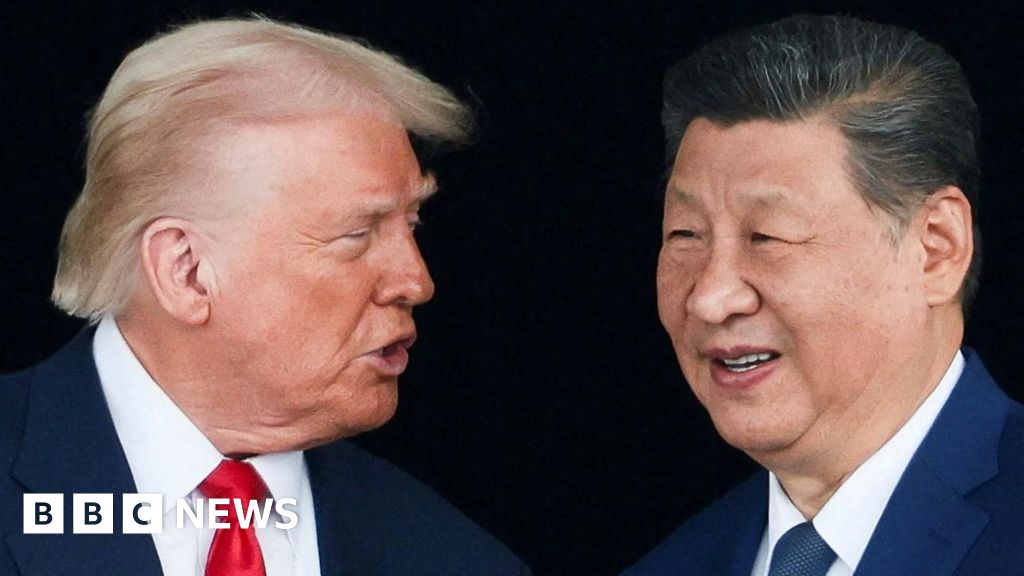
Trump praises 'strong' chat with Xi in South Korea
Trump praises ‘strong’ chat with Xi in South Korea

In an era defined by intense geopolitical competition and shifting alliances, the recent meeting between US President Donald Trump and Chinese President Xi Jinping marks a pivotal moment that may signal a tide of strategic recalibration. After a six-year hiatus, the leaders finally convened in South Korea, an event laden with implications for the delicate balance of power on the international stage. While not an outright treaty or comprehensive agreement, the summit has stirred hopes for a de-escalation of trade tensions that have gripped the global economy, revealing how individual decisions at the highest levels can ripple across nations and societies worldwide.

Although the talks did not produce a formal accord, they laid down a strategic framework that analysts and historians are already interpreting as a potential turning point in US-China relations. A key victory for President Trump was China’s agreement to suspend export controls on rare earths—crucial materials that power modern technology, from smartphones to advanced military hardware. The significance of this move cannot be understated; it demonstrates China’s recognition of its leverage and a shift toward engaging more constructively in global trade. Concurrently, Beijing committed to increasing purchases of U.S. farm exports, specifically soybeans, which had been a flashpoint due to retaliatory tariffs. This gesture, lauded by Trump as a major breakthrough, exemplifies how economic incentives and strategic negotiations intertwine to shaping the future geopolitical landscape.

Yet, beneath the surface, the complex chess game between two superpowers reveals entrenched interests and unresolved conflicts. Notably absent from the accord was progress on regulations surrounding TikTok, where U.S. authorities continue to push for extracting the app’s U.S. operations from Chinese ownership—an issue strongly tied to national security concerns. Moreover, the U.S. announced plans to relax tariffs on ingredients used in fentanyl manufacturing, a key issue in the ongoing fight over drug smuggling that has affected American communities and politics. Nevertheless, the continued presence of tariffs exceeding 40% on Chinese imports underscores how unresolved economic tensions remain core to the broader competition. Highlighting the strategic deadlock, Beijing’s permission for Trump to visit China in April symbolizes a cautious thaw, but also a reminder of the fragile diplomacy prevailing between the world’s two giants.

From the vantage point of global analysts and organizations like the International Monetary Fund, this summit is recognized as a critical juncture where decisions made today will ripple through the fabric of international society. China’s leadership, well aware of its strengthened position, entered the negotiations with a tone of measured restraint, clearly knowing its strategic advantage— having learned from previous confrontations, it has diversified its trade partnerships and leveraged its chokehold on rare earths. Meanwhile, Trump’s approach was more unpredictable, marked by tactical concessions and starkly different diplomatic styles, encapsulating the ongoing ideological and strategic contest that dominates the US-China relationship. As world history’s pages turn, the outcome of this diplomatic engagement, seemingly tentative yet undeniably consequential, promises to shape how nations navigate the complexities of global power for generations to come, leaving the informed observer to ponder: how much of the future is truly in our hands, and how much is being written by the strings of geopolitics beyond our control?

Social Media Auto Publish Powered By : XYZScripts.com