Matox News

Truth Over Trends, always!

Chicago Mayor demands probe into suspected illegal ICE operations in the city

Chicago’s Bold Stand: A Microcosm of the U.S. Immigration and Federal Power Battle

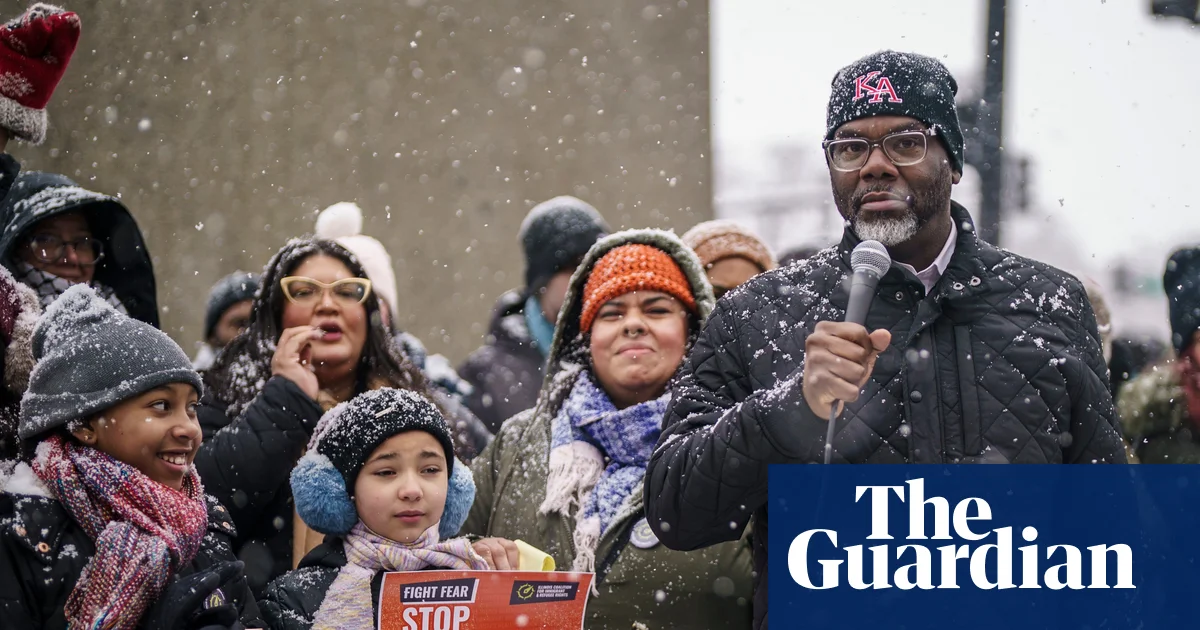
In a move that underscores the escalating tensions between local authority and federal enforcement, Chicago’s mayor Brandon Johnson has launched a direct challenge against the federal government by instructing police to investigate and document alleged illegal activities by ICE agents within the city. This decision, encapsulated in the order titled ICE on Notice, positions Chicago as a leader among American cities resisting what many analysts characterize as overreach by federal immigration authorities. The mayor’s declaration that “nobody is above the law” underscores a broader pushback against federal statutes perceived as infringing on local sovereignty — a confrontation that resonates across the United States and signals a potential realignment of power dynamics within the nation’s federal system.

This local initiative arrives amid profound judicial and political currents. Just days prior, a federal judge rejected Minnesota’s attempt to block continuing immigration crackdowns, dismissing arguments that such initiatives violate the 10th Amendment— a landmark ruling reinforcing federal supremacy over state powers in immigration enforcement. The federal government maintains that immigration is a matter under its exclusive jurisdiction, often citing national security and border integrity. Yet, Chicago’s stance exemplifies a rapidly growing resistance from cities that believe their political and social fabric cannot be compromised by federal incursions. With activists and local officials asserting that federal operations have violated rights and destabilized communities, Chicago’s move is likely to inspire similar measures nationwide, sparking a new chapter in the ongoing debate over sovereignty and law enforcement authority.

Engineering a New Geopolitical Battlefield

  • Chicago’s executive order aims to formalize police procedures for monitoring and potentially challenging federal agents engaging in operations deemed illegal or excessive.
  • It underscores the importance of local oversight in an arena traditionally dominated by federal agencies, such as ICE and CBP.
  • Officials argue that federal immigration operations have infringed on community rights and have been shielded from accountability — unleashing a wave of protests and legal battles that further complicate the fabric of American federalism.

International scholars and think tanks now watch this dynamic with heavy interest, as such local crises threaten to reshape the geopolitical landscape of the United States. Universities like Harvard and analysts from the Council on Foreign Relations have indicated that America’s internal power struggles could weaken the country’s global standing. When local governments challenge federally defined borders of authority, it weakens the perceived stability of the U.S. constitutional order, creating ripples that extend well beyond national borders. With immigration policies at the center of this storm, some international partners and competitors see an opening to question America’s credibility on the world stage, especially as internal divisions deepen and civil unrest simmers.

Implications for Society and Future Governance

At the societal level, Chicago’s move and the broader resistance against federal immigration initiatives symbolize a fierce assertion of local interests and a pushback against perceived federal tyranny. City officials have voiced concerns that increased ICE operations have escalated conflicts, risked constitutional rights, and strained community relations. Their efforts to curb federal overreach by asserting local authority could establish a precedent for other cities, catalyzing a decentralization of immigration enforcement and lawmaking.

Meanwhile, President Biden‘s administration and federal agencies remain committed to asserting federal supremacy, citing the need for uniform national policies. But as politicians on both sides of the aisle debate the constitutional boundaries, the seeds of a constitutional crisis plant themselves deeply within American politics. Historically, such conflicts tend to accelerate societal polarization and threaten the stability of the nation’s constitutional order, especially when key states and cities challenge federal authority. The ongoing power struggle foreshadows a potential transformation of America’s political landscape, where sovereignty is increasingly fragmented, and the global image of a unified nation begins to fracture.

As this narrative unfolds, the underlying questions loom large: Will the tide of decentralization weaken the legal fabric holding the republic together? Or will federal authority tighten its grip, leading to a defining clash for the future of American governance? The echoes of history remind us that moments of profound transition are often marked by chaos and upheaval — a stark reminder that the course of a nation’s destiny is, in many ways, still being written, with each decision leaving an indelible mark on the pages of history.
DHS Hid Chicago Police Data for Months, Flouting Espionage Laws

US Government Accelerates Digital Surveillance Infrastructure, Signaling Major Disruption for Tech and Security Sectors

The recent revelations about the Department of Homeland Security’s (DHS) expanding ambitions highlight an aggressive push towards integrating public safety and commercial data through groundbreaking technological innovations. As DHS’s budget nears $191 billion, its focus on eliminating information silos signals a new era of *disruptive* government-driven data fusion, setting a precedent that could reshape both security operations and industry standards. The March 2025 executive order that urges federal agencies to streamline and consolidate data repositories indicates a strategic move to leverage cutting-edge AI capabilities for enhanced surveillance and enforcement, marking a significant shift in how national security apparatuses operate.

At the heart of these initiatives lies the FBI’s watch-listing system, including the Terrorist Screening Dataset and the Threat Screening Center’s TADP list, which, according to newly obtained records, is evolving beyond its initial scope. While explicitly excluding U.S. citizens and lawful residents, authorities are broadening definitions of threat-related entities—sometimes blurring lines to include individuals with *vague associations* with groups like Latin Kings or drug cartels. This approach harnesses *innovation* in data analytics and AI to connect seemingly disparate information sources—ranging from border crossings to social support networks—creating a comprehensive digital footprint that could revolutionize enforcement strategies but raises serious privacy and civil liberties concerns.

Disrupting Traditional Boundaries in Security and Business

The recent decision by the FBI to expand its TADP list to include the Latin Kings exemplifies the shifting *industry landscape*. The move illustrates a departure from traditional law enforcement boundaries, integrating commercial and public data to facilitate broader targeting mechanisms. This is compounded by the DHS’s ongoing efforts to merge domestic and international data sources, effectively creating a unified, real-time monitoring ecosystem. Such integration not only disrupts legacy security models but also opens new avenues for innovative *private sector* technologies, including advanced AI, real-time analytics, and large-scale data management systems. Industry leaders like Palantir or Darktrace are already positioning themselves as critical enablers of this new intelligence paradigm—offering tools capable of processing vast datasets with unprecedented speed and accuracy.

  • Key features of this digital overhaul:
  • Fusion of sensitive public and commercial data streams for comprehensive surveillance.
  • Implementation of AI-driven watch-list algorithms, with real-time updates and alerts.
  • Expanding scope to include broader definitions of threat entities, blurring conventional lines of suspicion.

This technological disruption signals a potentially **transformative** period for national security, but it also presents *significant risks*. Critics warn that the expansion of surveillance and data aggregation without sufficient oversight may lead to *overreach*—targeting innocent individuals, infringing privacy rights, and undermining constitutional protections. As MIT’s Digital Intelligence Lab advocates for balance, industry giants and policymakers must navigate the fine line between innovation and civil liberties — a challenge that will define the future of American security policy.

Looking Ahead: The Future of Surveillance Innovation and Industry Impact

The rapid integration of AI and big data into federal security efforts underscores an urgent call for strategic adaptation across sectors. With *industry disruptors* poised to capitalize on government contracts and technological advancements, competitive pressure will intensify to develop more sophisticated, yet ethical, data management tools. Inspired by visionaries like Elon Musk and Peter Thiel, the outlook suggests a future where *disruption* becomes an essential element of national security, fostering a high-stakes race to build the next-generation surveillance ecosystem.

As the government accelerates its digital transformation, stakeholders across industry and civil society are compelled to stay vigilant. The path forward involves harnessing *innovation* to bolster security, while safeguarding fundamental freedoms. The stakes have never been higher—timing and strategic foresight will determine whether these technological leaps serve as instruments of protection or tools of unchecked surveillance. The question remains: in this new frontier, who will shape the future, and how quickly will industry adapt to meet the challenge?

Judge orders release of hundreds detained in Chicago immigration crackdown

Legal Ruling Challenges Federal Immigration Policies in Chicago

The recent judicial intervention into President Trump’s controversial immigration raids highlights the ongoing tensions between federal enforcement agencies and judicial oversight. A US district court, presided over by Judge Jeffrey Cummings, has ordered the immediate release of hundreds of individuals detained during what critics call an overreach of federal authority under the guise of immigration enforcement. This case exemplifies how international concerns over sovereignty and law enforcement transparency are increasingly intertwined with domestic policy struggles.

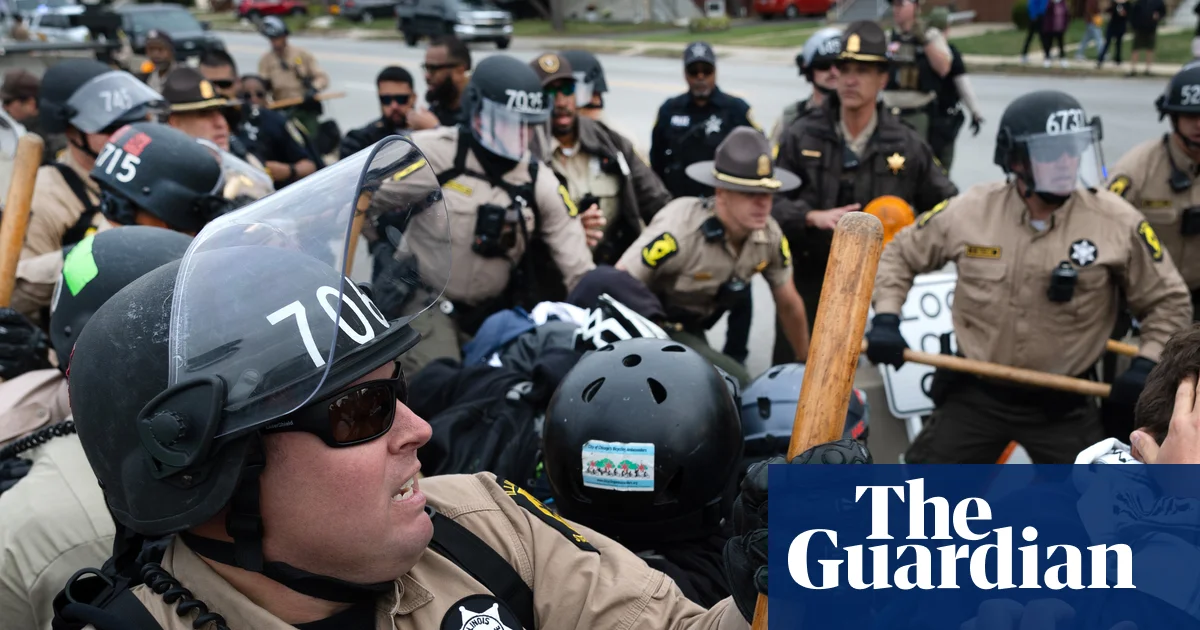
This development follows the aggressive “Operation Midway Blitz,” a series of raids that swept through the Chicago area with claims of crackdown on undocumented migrants. However, widespread accusations have emerged of excessive and even abusive tactics, including the use of tear gas and pepper spray against protesters, raising alarm among human rights advocates and international organizations. The judicial decision to release detainees with minimal bonds, contingent on no criminal record or prior removal orders, underscores a broader debate about the limits of federal authority and the importance of adhering to legal protocols—particularly when rights are at stake.

Legal and Political Ramifications of Federal Immigration Enforcement

  • The court’s orders come amidst a lawsuit filed by the ACLU of Illinois, which claims that the federal agents violated a 2022 consent decree prohibiting warrantless arrests. This legal move signals a crucial battleground in the ongoing debate over state versus federal authority in immigration enforcement, with many interpreting it as a pushback against potential overreach by the Biden administration’s predecessor policies.
  • Federal officials, represented by William Weiland, have pushed for a halt to these releases, citing potential security risks posed by at least 12 individuals under review. The ongoing tension reveals the fragile balance between public safety and individual rights, set against the backdrop of a deeply divided nation where immigration remains a highly politicized issue.
  • The impact of international perspectives on immigration cannot be ignored, especially as global reactions to similar enforcement policies continue to shape public perception. Analysts suggest that such judicial rulings may serve as a precedent for other cities, influencing how federal agencies operate under the rule of law.

How International and National Actors Respond

According to historians and legal analysts, this case reflects a wider paradigm shift where judicial oversight becomes a vital mechanism to check executive power in immigration matters. While critics decry certain federal tactics as infringements on civil liberties, others view these decisions as critical to maintaining democratic accountability in a matter that directly affects societal cohesion. The involvement of organizations like the ACLU and the National Immigrant Justice Center underscores the significance of legal battles in shaping policy outcomes, with the potential to influence legislation and executive action at the highest levels.

As the courts continue to scrutinize these enforcement tactics, history’s pen is poised to record whether this confrontation between law and order will yield a new precedent of accountability or mark a turning point towards more unchecked federal authority. With each ruling, the fabric of a nation built on law and liberty is tested, revealing that the final chapter in this saga remains unwritten, yet undeniably profound in its implications for **geopolitical stability** and how societies worldwide will interpret the rule of law in immigration policies.

Chicago Biz Guide 2025: What Young Professionals Need to Know

Chicago’s Tech Scene: Innovation, Disruption & Business Opportunities

The Windy City, long revered for its cultural and economic vibrancy, is cementing its position as a formidable hub for technological innovation and industry disruption. This shift is driven by a new wave of startups, established giants investing heavily, and forward-thinking institutions like MIT emphasizing practical applications that reshape traditional markets. As global tech giants and local startups converge, Chicago is transforming from a traditional industrial city into a dynamic playground for digital revolution, especially impacting sectors such as fintech, AI, and urban mobility.

Major companies such as Google and Microsoft are expanding their presence in Chicago, leveraging the city’s rich talent pool and strategic location. Meanwhile, emerging players, fueled by innovative startups and venture capital flow, are disrupting legacy industries with AI-driven solutions, autonomous vehicle projects, and scalable fintech platforms. Industry analysts, including Gartner and Boston Dynamics, highlight Chicago’s growing reputation for disruptive innovation within urban infrastructure and enterprise SaaS. The integration of smart city technologies, such as IoT-enabled transportation systems, is poised to redefine urban planning and citizen engagement—aligning perfectly with the city’s commitment to cutting-edge development.

Additionally, Chicago’s flexible co-working spaces, like Art/Work Coworking and Deskpass, exemplify the evolving ecosystem that empowers developers, entrepreneurs, and remote-first teams. These hubs promote a culture of agility and innovation necessary to stay ahead amid rapid market shifts, offering amenities such as fast Wi-Fi, modular meeting rooms, rooftop terraces, and creative labs. Such environments challenge conventional corporate office models, fostering a new business paradigm of decentralization and mobility. This trend underscores the industry’s recognition that adaptive workspaces are foundational to sustained innovation in the post-pandemic era.

  • Emerging tech sectors in Chicago include AI, fintech, and smart city ecosystems.
  • Global giants are expanding local investments, highlighting the city’s strategic importance.
  • Innovative coworking spaces are shaping the future of remote and hybrid work models.
  • City infrastructure is being transformed through IoT and urban mobility projects, attracting investment.

In this climate of relentless disruption, industry leaders like Elon Musk and Peter Thiel underscore the imperative for entrepreneurs and corporations to prioritize innovation and agility. The future of Chicago’s tech economy hinges on its capacity to build infrastructure that supports not only business growth but also societal progress. With China and Silicon Valley racing ahead in key domains, Chicago’s rise signals a pivotal moment—an urgent call for stakeholders to leverage emerging technologies, attract top talent, and sustain competitive advantage. The city’s trajectory suggests that those who invest early in this ecosystem will shape the next generation of urban living, work, and commerce, ultimately dictating the pace of global technological evolution.

As industry watchers anticipate further breakthroughs, the stakes couldn’t be higher. Chicago’s strategic investments in innovation infrastructure and comprehensive tech initiatives are setting a blueprint for others worldwide. With disruptive forces accelerating and market incentives amplifying, the window for bold action is now. For entrepreneurs, investors, and policymakers, ignoring this emerging wave could mean falling behind in an era where disruption is the new status quo. The future of urban innovation is unfolding in real time—those who move swiftly will lead the charge into a smarter, more connected tomorrow.

Chicago TV reporter assaulted and detained during ICE raid

Rising Tensions in Chicago: Immigration Enforcement and Civil Unrest

Recent incidents in Chicago have unleashed a wave of public outrage and international concern over the escalation of immigration enforcement tactics within the United States. The violent arrest of Debbie Brockman, an employee of WGN, captured on numerous videos, exemplifies the increasingly aggressive approach deployed by federal agents under the directives of the Biden administration and in coordination with U.S. Homeland Security. Detained amid protests in the city’s Lincoln Square neighborhood, Brockman’s arrest has ignited debates about civil liberties and the geopolitical implications of domestic law enforcement practices in an era of shifting immigration policies.

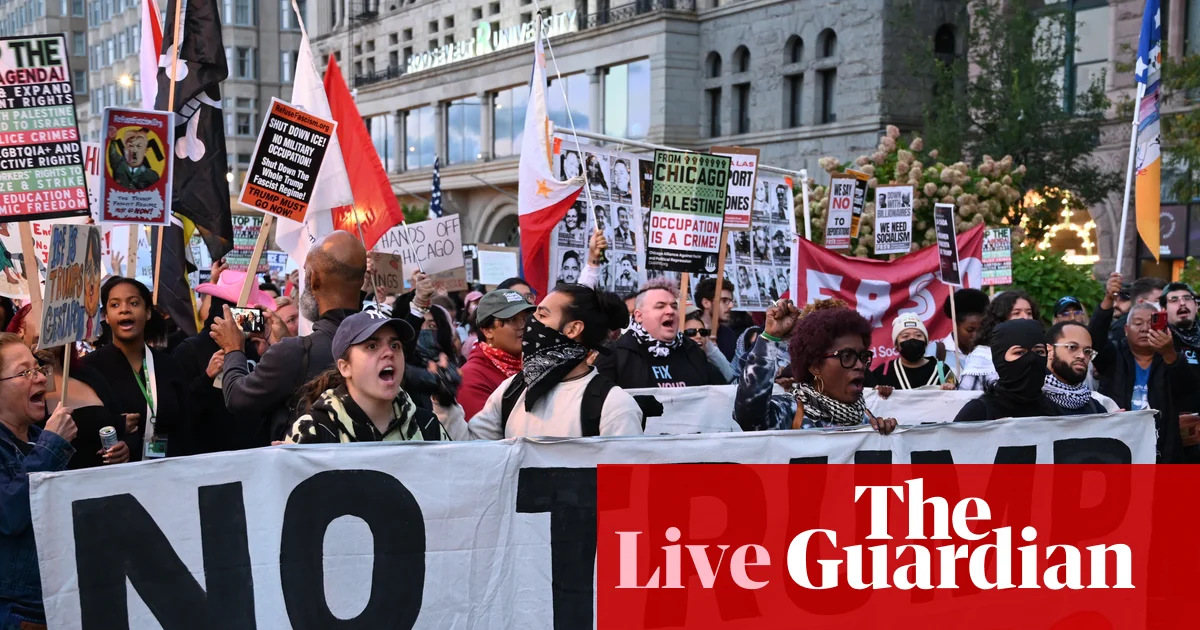
This incident, where bystanders recorded agents forcibly taking Brockman to a van amidst chants condemning their actions, underscores a broader tension over immigration enforcement—particularly the intensified efforts underway since former President Trump’s administration left a lasting impact on immigration policy. Analysts warn that such aggressive tactics risk fueling social divisions, both domestically and internationally. The operation’s perceived overreach has drawn sharp criticism from civil rights groups and local residents, who described it as “horrifying” and “frightening.” These events are symptomatic of a nation grappling with the consequences of politicized border policies—policies that increasingly resemble the hardline stance of Mexico’s neighbors to the south, or even border conflicts seen elsewhere in the world.

While officials from Homeland Security justify their actions by citing claims that Brockman and others posed threats—accusing her of assaulting officers—the broader geopolitical impact extends beyond mere allegations. The incident occurs amidst a climate of heightened tension over immigration, which oscillates between enforcement and accommodation. International observers, including HR organizations, warn that the unchecked use of force on American citizens jeopardizes the country’s reputation as a beacon of liberty and justice. The unusual timing, shortly after prosecutors dropped charges related to protests outside an immigration detention center, signals a possible shift toward more confrontational tactics reminiscent of authoritarian regimes.

  • The U.S. Federal Government intensifies immigration raids, prompting protests and legal challenges.
  • Local communities in Chicago and across the country express fears of civil liberties violations amid broader anti-immigration sentiment.
  • International institutions like Amnesty International and the United Nations observe and critique these developments, warning of potential human rights concerns.

As historians note, these domestic conflicts are not isolated—rather, they reflect a larger geopolitical realignment that will influence global perceptions of American resolve and values. The decision to prioritize harsh enforcement under the guise of national security reveals a nation at a crossroads, where internal social unrest and external diplomatic stability are intertwined. How the United States navigates this turbulent chapter will leave a lasting mark on the fabric of its democracy—either as a proud defender of freedom or a cautionary tale of descent into division and authoritarianism.

In this high-stakes game of geopolitics and internal sovereignty, history is watching. With each detention, protest, and legal challenge, the narrative of nationhood in the 21st century continues to be written—sometimes by the voices of the oppressed, sometimes by the relentless machinery of state power. The world now stands at the edge of a new chapter, where the choices made in Chicago and across the nation will resonate for generations to come, shaping the legacy of a society torn between security and liberty—and the inexorable march of history.

National Guard Deployed to Shield ICE and Federal Sites in Chicago — US Politics Live

Geopolitical Shifts and Domestic Turmoil: The Rising Tide of U.S. Security Interventions

In an unprecedented move that underscores the intensifying internal divisions within the United States, recent reports reveal the deployment of National Guard troops in Chicago and Memphis, tasked with protecting federal property amid mounting violence and political unrest. The Biden administration’s decision to activate approximately 500 troops—200 from Texas and 300 from Illinois—for a 60-day operation signifies a significant escalation in the direct federal intervention in domestic affairs. This deployment, aimed at securing Immigration and Customs Enforcement (ICE) facilities and other federal assets, has ignited a fierce political debate, with critics viewing it as a troubling overreach by federal authorities, while supporters frame it as necessary for national security.

The domestic destabilization has further polarized the political landscape, with figures like former President Donald Trump calling for the imprisonment of Chicago’s mayor Brandon Johnson and Illinois Governor JB Pritzker, accusing them of outright neglect toward law enforcement officers. Trump’s rhetoric, posted on Truth Social, blamed local officials for alleged failures to safeguard ICE personnel, further politicizing what many see as an erosion of state and local autonomy. The deployment of troops despite protestations from Illinois officials raises serious question marks about federal-state relations, highlighting the widening divide in governance philosophies. Historians warn that such actions echo past moribund episodes of federal overreach, threatening the delicate balance that underpins American federalism.

On the international stage, U.S. President Donald Trump announced a “tentative deal” between Hamas and Israel aimed at halting Gaza hostilities and securing the release of prisoners. While praise poured in from Republican lawmakers celebrating a purported breakthrough in Middle Eastern peace efforts—some suggesting Trump’s candidacy for a Nobel Peace Prize—Palestinian Americans and Middle East analysts expressed deep caution. The agreement includes an Israeli withdrawal from Gaza and involves a complex prisoner exchange, but many experts underscore the fragility of such ceasefires, especially without addressing underlying grievances. The Middle East, a geopolitical cauldron, demonstrates the unpredictable consequences of American diplomatic interventions that oscillate between efforts at peace and the risk of reigniting regional conflicts.

Simultaneously, in the hemisphere, Brazilian President Luiz Inácio Lula da Silva revealed that U.S. Secretary of State Marco Rubio contacted Brazil’s foreign minister concerning tariffs—an example of U.S.-Latin America diplomatic maneuvering. Lula’s surprise at the call reflects ongoing tensions over trade policies, highlighting how U.S. economic diplomacy continues to influence Latin American affairs. As the global order faces mounting challenges—from destabilized regions in the Middle East to internal divisions in the U.S.–the ripple effects threaten to reshape alliances, trade, and stability. Historically, international analysts emphasize that these decisive moments in foreign diplomacy cast long shadows on future prospects for peace and power dynamics.

As Congress and courts across the nation grapple with questions about the legality of deploying military personnel domestically, the weight of history presses heavily on the unfolding events. The deployment in Chicago and Memphis signifies a pivotal point—either a step toward restoring order or a warning sign of descending chaos. The decisions made today will reverberate for generations, determining whether the United States remains a nation rooted in constitutional principles or plunges into a conflict fueled by internal discord and external entanglements. The pages of history are turning, and what emerges on the other side will define the destiny of a nation caught between the weight of its ideals and the harsh realities of a fractured society.

Pritzker warns of Trump sending National Guard to Chicago amid shooting incident at border patrol—Youth voice demands action

Unrest and militarization escalate within United States: A nation at a crossroads

The recent decision by President Donald Trump to deploy over 300 federal National Guard troops in Illinois amidst mounting internal conflicts marks a pivotal moment in the history of American sovereignty and civil liberties. This move, announced by Illinois governor JB Pritzker, has ignited a fierce political debate, characterized by allegations of overreach and threats to fundamental constitutional principles. Pritzker’s vehement opposition underscores a broader rift within the country, pitting federal authority against local governance and civil rights.

As the Trump administration intensifies its immigration enforcement, with ICE agents conducting aggressive operations across Chicago, the urban unrest appears to be more than a routine law enforcement campaign. The recent deadly shooting of a woman by federal agents—initially claimed to be *defensive*—raises serious questions about the escalation tactics employed, especially as the woman’s name reportedly appeared in a threat bulletin against ICE. Historians warn that such incidents reflect a dangerous shift toward militarized domestic policing, reminiscent of authoritarian states more than a democratic republic. “This is a turning point where the use of military force within the U.S. is increasingly normalized,” said Dr. Annette Morgan, a political analyst specializing in civil-military relations.

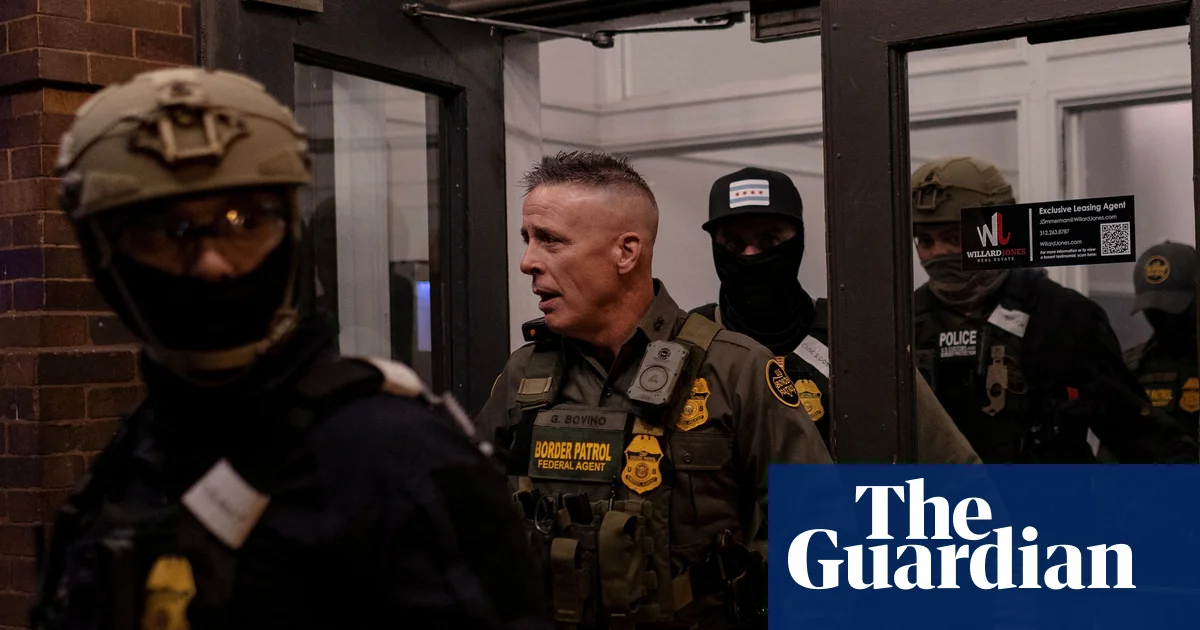
Meanwhile, high-ranking officials like Kristi Noem and Gregory Bovino have announced bolstered troop deployments, framing federal intervention as necessary to control alleged surges in local violence and disorder. Yet, critics argue that much of this narrative is inflated or outright false, aiming to justify an aggressive federal footprint within American cities. The deployment of troops to cities such as Los Angeles and Washington D.C. signals a troubling trend: the encroachment of military authority into realms traditionally reserved for civilian law enforcement. Such actions threaten the very fabric of American constitutional democracy and may set dangerous precedents for future administrations.

Geopolitical Impact and Future Consequences

The international community watches these developments with concern. Many analysts, including top officials at NATO and the United Nations, have issued cautious statements emphasizing respect for national sovereignty and civil liberties. However, China and Russia are observing with strategic interest, eager to exploit perceived internal chaos to undermine the United States’ global influence. The continuous militarization of domestic affairs could weaken America’s image as a beacon of freedom worldwide, transforming its internal conflicts into a potential pretext for external interference or sanctions.

Furthermore, historians warn that this internal strife could have far-reaching consequences for American society. If unchecked, the increased deployment of military force against civilians could erode trust in democratic institutions and pave the way for a government comfortable with authoritarian methods. Such a trajectory risks transforming the United States into a nation where protests are met with suppression rather than dialogue—a dangerous slide toward internal instability that threatens to reshape the global order.

The Weight of History and Humanity’s Unfolding Future

As the United States faces this tumultuous chapter, the weight of history presses heavily on the shoulders of its citizens. Each decision to deploy military force on American soil echoes with echoes from darker chapters—when nations descended into chaos and lost sight of the principles that once made them great. The world watches in tense anticipation, aware that the choices made today may determine the destiny of generations to come. Will the United States reinforce its founding ideals of liberty and justice, or will it succumb to a new era of internal conflict and military dominance? Only time will unveil the next chapter in this unfolding story of power, resistance, and the enduring struggle for a free society.

Social Media Auto Publish Powered By : XYZScripts.com