
Matox News

Truth Over Trends, always!

UK detains three men over suspected Chinese espionage activity

The Metropolitan Police have announced that they are investigating three men suspected of aiding Chinese intelligence services within the United Kingdom. This development marks a significant escalation in concerns over foreign interference in domestic affairs, with implications that stretch across the geopolitical landscape. Authorities believe that these individuals may have facilitated espionage activities, aiming to deepen influence and collect sensitive information, a practice increasingly scrutinized amid escalating tensions between London and Beijing.

The investigation, confirmed by senior officials, underscores a pattern seen in recent years: foreign espionage networks operating covertly on Western soil. Analysts highlight that China’s intelligence apparatus has grown more aggressive, seeking to extend its reach into Western political, economic, and technological spheres. The UK’s intelligence community has consistently raised alarms over the potential threat of such clandestine activities, viewing them as a strategic challenge intertwined with broader geopolitical rivalries. As historian and security analyst Dr. Emily Carter notes, “This isn’t just about a few individuals; it signals an increasingly assertive Chinese effort to influence and gather intelligence in global strategic centers.”

Meanwhile, international organizations such as the United Nations have issued warnings about the growing prevalence of state-sponsored espionage and its implications for sovereignty and national security. The UK’s firm stance demonstrates an intention to *increase resilience*—adopting tighter counterintelligence measures and scrutinizing foreign academic and business networks. Relations with China remain strained, particularly as recent diplomatic disputes surrounding trade, human rights, and technological competition have deepened. This incident adds to the complex tapestry of tensions that could reshape alliances and security policies across the Atlantic and beyond.

As this story unfolds, experts warn that such espionage cases serve as a harsh reminder of the high-stakes nature of 21st-century geopolitics. The decision by the UK authorities to pursue this investigation sends a clear message: nations must safeguard their sovereignty against external threats that threaten their democratic institutions and technological infrastructure. Yet, critics caution that overreach could fuel diplomatic conflicts, risking escalation rather than resolution. The global community watches with bated breath, knowing that the ripple effects of these covert struggles will likely influence international stability long after this chapter is written. In the shadowy dance of espionage and diplomacy, history’s next defining moment waits, silently shaping the future we all share.
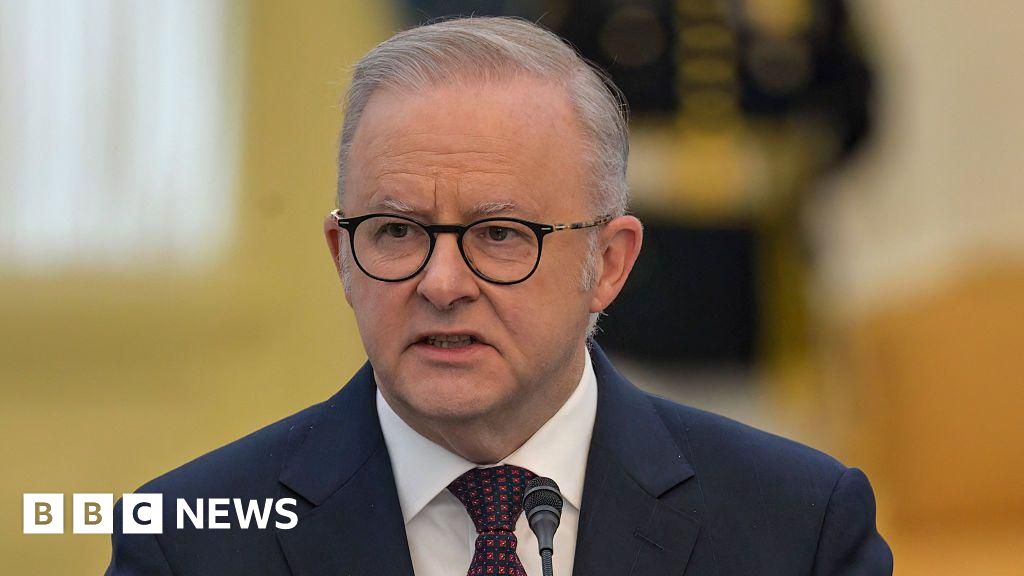

Chinese dance troupe’s Australia tour sparks bomb threat targeting PM

Threats Against Australian Leadership and the Shifting World Order

In a startling escalation of internal security threats, reports have emerged that organizers of a controversial performance were instructed to cancel their events or face far graver consequences — specifically, explosive attacks targeting Prime Minister Anthony Albanese’s residence. This alarming development underscores the persistent volatility in domestic security, as well as the broader implications for international stability and sovereignty. The incident echoes troubling patterns globally, where extremist factions leverage violence to influence political landscapes, often with unintended consequences for national security and diplomatic relations.

Security agencies in Australia have responded swiftly, condemning the threats while reaffirming their commitment to protecting the nation’s leaders. Experts and international observers suggest such threats are symptomatic of broader ideological conflicts fueled by external players seeking to sway political outcomes. Historically, terrorist groups and radical factions have targeted prominent political figures to destabilize governments or send symbolic messages. As noted by regional security analysts, this pattern aligns with recent trends where threats are not merely isolated acts but components of complex geopolitical games involving proxy conflicts, ideological battles, and influence operations. These developments come at a time when Australia finds itself increasingly entangled in global strategic shifts, particularly amidst rising tensions between Western alliances and authoritarian rivals.

The incident also raises concerns about how societal divisions and partisan conflicts can be exploited by extremists to foment unrest. The Australian government’s proactive stance underscores the importance of safeguarding democratic institutions from internal threats masked as ideological expressions. Meanwhile, international organizations, such as INTERPOL, continue to monitor similar threats worldwide, warning that violence against political leaders could escalate if root causes remain unaddressed. Historically, such threats have not only endangered individual lives but also served as catalysts for policy shifts—sometimes leading to harsher security laws or, conversely, societal divisions that threaten cohesion.

The weight of history is clear: when violence targets the core of national leadership, it signals a deeper crisis that reverberates through international borders. As nations grapple with internal radicals, the geopolitical impact inevitably influences diplomatic relationships, especially with allies concerned about regional stability.* The decision by the threat actors to attempt attacks at Albanese’s residence reveals a disturbing intent to send a message—one that echoes through the corridors of power, warning that no leader is immune. In such turbulent times, the world watches as the pages of history are written, ominously reminding us that these moments are more than isolated incidents—they are reflections of a shifting global landscape where the lines between domestic dissent and international chaos blur, leaving societies to grapple with the uncertain future that lies ahead.

Chinese Tourists Skip Japan During Lunar New Year as Tensions Rise

The ongoing diplomatic tensions between Japan and China are unraveling not just regional stability, but also deeply affecting international economic and cultural exchanges. In the context of the broader U.S.-China rivalry and Beijing’s asserted influence in the Indo-Pacific, recent developments suggest a shift that could have long-lasting consequences for global diplomacy. The sharp decline in Chinese tourists visiting Japan, especially during the crucial Lunar New Year period, exemplifies how geopolitical conflicts directly influence societal interactions and economic interests—an observable trend noted by analysts at the International Crisis Group and historians specializing in East Asian geopolitics.

Since the end of last year, Japan’s tourist numbers from China have plummeted, nearly halving compared to previous years, with an estimated 60% decrease during major holiday seasons. This downturn is closely linked to diplomatic spats over Taiwan’s security—a matter Tokyo has publicly linked to potential military support if tensions escalate. Japanese Prime Minister Sanae Takaichi’s explicit remarks about deploying self-defense forces if China attempts to invade Taiwan have elicited angry responses from Beijing, including formal protests and accusations of militarist ambitions. Such exchanges underscore the dangerous escalation in rhetoric that echoes the darker chapters of East Asian history, prompting international observers to warn of the *risks of rekindling old hostilities*.

  • China’s Foreign Minister Wang Yi’s comments at the Munich Security Conference, accusing Japan of attempting to revive militarism and warning of “self-destruction” if Japan persists, exemplify the rising tensions.
  • China’s special representative on Korean affairs, Liu Xiaoming, further fueled fears of regional conflict by referencing Japan’s WWII past and related lessons from history, suggesting the country remains haunted by its militarist legacy.
  • The historic echoes of aggression—visually reinforced by Liu’s mention of Pearl Harbor—serve as stark reminders that the currents of history are never really past, only dormant, and that future conflicts could be a mere spark away.

In economic terms, this diplomatic war is starting to leave an imprint on the global travel scene. While **South Korea** is projected to become the primary destination for Chinese tourists during this travel surge, with an estimated 250,000 travelers—1.5 times the previous year—**Japan** is seeing its share fall sharply. The decline is not isolated; regional countries like **Thailand, Singapore, Vietnam**, and even **Russia** are benefitting from the pull of China’s outbound tourism. The geopolitical impact is clear—when diplomatic relations sour, cultural exchanges and economic benefits follow suit, threatening to reshape regional dynamics and economic interdependence.

The strained geopolitical landscape reveals the harrowing choice faced by many nations: balance national security with economic engagement. Japan has officially stated that its defensive upgrades are in response to an increasingly unstable security environment—not targeted at any specific nation. Yet, the accusations from Beijing and warnings from Chinese officials about dangers in Japan highlight how intertwined security policies and societal perceptions have become. Meanwhile, the international community is watching — with analysts noting that such rhetoric risks unleashing a spiral of mutual distrust that could fuel instability across East Asia’s strategic theater.

As history continues to unfold amidst the shadows cast by ancient conflicts and modern ambitions, the weight of decisions made today will resonate through generations. The world stands at a crossroads—whether this will be a chapter of renewed diplomacy or one of inevitable confrontation remains a question that will border on history’s greatest mysteries, with each step echoing in the corridors of power long after the last words are spoken. The future of East Asia is penned in these tense exchanges, as nations grapple with their legacies and their destinies—each move a stroke on the canvas of history, the final picture yet to be revealed.

Japan Seizes Chinese Vessel in Bold Move Amid Rising Tensions with Beijing

Recently, tensions in the East Asian maritime zone have soared following a provocative act by an unidentified fishing boat that attempted to evade Japanese authorities during a routine inspection inside Japan’s territorial waters. This incident, though seemingly isolated, underscores the growing geopolitical fragility in the region, with Tokyo asserting its resolve to uphold sovereignty amid rising regional disputes. As the fishing vessel made a conscious decision to flee rather than surrender, analysts warn that such acts are emblematic of deeper currents of maritime assertiveness and contestation.

The event has drawn widespread attention from international organizations and regional allies, highlighting the disputes over maritime boundaries that have become a flashpoint for broader geopolitical friction. Japan’s Coast Guard officials reported that the vessel refused to comply with inspection orders, initiating a chase that ultimately ended with the vessel’s capture. Experts note that this act of defiance carries implications far beyond a simple fishing infraction. It raises questions about illegal, unreported, and unregulated (IUU) fishing, which not only threatens Japan’s marine resources but also risks inflaming territorial disputes with neighboring nations, including China and the Republic of Korea.

Within the broader context, such incidents serve as a reminder of the disputed maritime claims that line the Indo-Pacific region and the strategic importance of controlling vital trade routes and natural resources. According to analysts from the International Maritime Organization, these acts of defiance could be precursors to more aggressive behavior, especially if regional powers see opportunities to assert dominance over competitive waters. The incident has also caught the attention of global entities like the United Nations, which stress the importance of adhering to international law, yet recognize that enforcement remains a challenge amid escalating regional nationalism. Historically, maritime conflicts have often served as flashpoints that escalate into broader confrontations, and many fear that unchecked provocations could destabilize the fragile peace established in East Asia since the end of the Cold War.

In response, Tokyo has reaffirmed its commitment to protecting its maritime sovereignty, emphasizing that “any unlawful act against Japan’s security interests will be met with firm measures.” However, critics argue that such incidents should serve as a wake-up call to the global community about the dangers of unresolved territorial disputes and the need for renewed diplomatic engagement. As regional powers like China continue to challenge established borders, the potential for miscalculation—and further confrontations—looms large. The incident, seemingly a minor fishing dispute, epitomizes a larger picture of an evolving geopolitical landscape where sovereignty and resources are battlegrounds frozen in time, yet fiercely contested beneath the surface.

As history continues to unfold on the tumultuous waters of the Pacific, the question remains: will regional diplomacy prevail, or will these aggressive acts ignite a conflict that reshapes international relations? With global nations watching closely and regional actors fortified in their claims, this incident is more than a fleeting maritime disturbance; it is a stark warning of the high stakes involved in controlling the seas—a struggle that could redefine the balance of power for generations to come. The pages of history are turning rapidly, and the world waits to see if diplomacy can quell the rising tide of maritime rivalry, or if the currents of conflict will drown the hopes of peaceful resolution.

Concerns grow as Chinese CCTV cameras surveil Magna Carta—symbol of democracy

Recent revelations about the use of Chinese CCTV technology in sites of historical and symbolic significance across the globe have reignited concerns over the geopolitical influence of China’s technological advancements. Surveillance systems developed by firms such as Dahua Technology and Hikvision, both headquartered in Hangzhou, are now at the center of a growing international controversy. These companies’ hardware is being scrutinized for its alleged associations with China’s brutal repression of Uyghurs in Xinjiang, and its role in aiding Russia’s invasion of Ukraine. The implications are profound: as these firms’ systems are integrated into sites like Salisbury Cathedral and the Parthenon, questions arise about the symbolic sanctity and security of such historic institutions.

The security risks attributed to Dahua and Hikvision extend beyond ethics into strategic vulnerabilities. Campaigners and international watchdogs, including the World Uyghur Congress and the Ukrainian organization Don’t Fund Russian Army, have urged authorities to dismantle or replace these cameras, citing systemic vulnerabilities that have reportedly been exploited by state actors. The UK government responded to these concerns by removing Chinese-made systems from sensitive sites—highlighting a shift towards protecting national security from covert espionage and cyber threats. However, the ongoing presence of these companies’ technology in sites like the Greek Parthenon, and Salisbury Cathedral—home to a historic copy of the Magna Carta—symbolizes a troubling confluence of global history, human rights, and geopolitics.

In the context of growing international tensions, the use of these surveillance tools by China is viewed by analysts as a strategic avenue to extend influence and control well beyond its borders. Historians warn that technology, when used as a tool of surveillance and repression, can serve as a new form of imperialism—a way for China to project power through digital infrastructure. The revelation that Dahua’s cameras helped identify Uyghurs—a minority persecuted under Chinese authorities—and were involved in automated police reports, illustrates a disturbing legacy of repression masked by technological advancement. Moreover, the vulnerability of these systems to hacking—something confirmed by Ukrainian military sources—exposes a dangerous susceptibility that could be exploited in times of conflict, potentially turning symbols of democracy into battlegrounds of espionage.

International organizations and military analysts warn that the decision to allow Chinese surveillance systems in key historical and cultural sites not only compromises security but also symbolizes a shift in the global order. It underscores a broader struggle: the West’s challenge to China’s rise, intertwined with the fight to preserve democratic ideals and historical integrity. As China’s influence expands, especially through shared technology, the future of sovereignty and freedom hinges on whether nations recognize and respond to these insidious threats. Ultimately, the story of these cameras—arrayed around monuments of liberty and justice—is a cautionary tale of how technology, if unchecked, risks transforming the very symbols of human progress into instruments of control. History’s relentless march continues, and the choices made today will resonate in the narrative of freedom or tyranny for generations to come.

Chinese Factory's Childlike Sex Dolls Production Stopped Amid Outcry
Chinese Factory’s Childlike Sex Dolls Production Stopped Amid Outcry

In recent weeks, the international community has witnessed a growing concern over the proliferation of sex dolls and customizable products resembling children circulating on major online platforms. This unsettling trend, primarily driven by Chinese-based e-commerce giants, has ignited diplomatic tensions and raised profound questions about global ethics, regulation, and the influence of communication technology. Countries such as France and Sweden have responded by implementing measures aimed at curbing these disturbing sales, emphasizing a collective responsibility among governments and corporations to prevent the normalization of such products.

The controversy was first brought to broader attention when reports surfaced that AliExpress, a leading Chinese e-commerce platform, was being utilized to sell these problematic items. According to recent investigations, the company claims to have “strengthened its keyword blacklist” in an attempt to prevent the listing of illegal or inappropriate products. Despite these efforts, authorities in France and Sweden have taken decisive actions, with French regulators probing the platform’s compliance and Swedish officials explicitly condemning the online retailing of these controversial dolls. Social Services Minister Camilla Waltersson Gronvall declared that her country was prepared to tighten legislation if e-commerce companies fail to assume their responsibilities, underscoring the growing pressure that regulatory agencies are placing on industry giants to uphold ethical standards in the digital marketplace.

Analysts and international organizations are warning that these developments reflect deeper geopolitical struggles. As China faces increased scrutiny over its role in global commerce and ethics, this controversy intensifies calls for stricter international frameworks governing online sales, especially regarding products with potential to harm societal morals and children’s safety. Historians note that such conflicts over technology and morality are nothing new; however, the escalation in online markets signifies a new frontier in the battle for cultural values and regulatory sovereignty. The European Union and other geopolitical blocs are increasingly debating whether to impose unified standards that could challenge China’s dominance in digital trade, in a bid to shape a future where commerce aligns with broader human rights principles.

As the debate rages on, the fate of these controversial products symbolizes more than just regulation; it embodies a fundamental clash over how societies define morality in the age of emerging technology. The decisions made in the coming months could redefine the boundaries of acceptable online commerce and signal whether the international community will stand united against exploitation or capitulate to the economic powerhouses aiming to shape a new digital order. The weight of history hangs heavy as nations grapple with their response—whether to forge a path of moral clarity or succumb to the shadows of unchecked digital capitalism. The story is far from over, and the world watches with bated breath, caught in a pivotal moment that may well determine the moral direction of the digital age.

Trump’s FCC drops cybersecurity rules amid Chinese hack fears — a bold move for youth, tech, and free markets

FCC’s Cybersecurity Rollback Sparks Industry Disruption and Security Concerns

In a bold move signaling a shift in U.S. telecommunications policy, the Federal Communications Commission (FCC) voted 2-1 along partisan lines to rescind critical cybersecurity regulations previously enacted under the Biden administration. The decision, championed by the FCC’s two Republican commissioners, Brendan Carr and Olivia Trusty, effectively removes mandatory security standards aimed at safeguarding phone and internet networks from unlawful access and cyber threats. This strategic rollback aligns with a broader trend of deregulation in the tech sector, emphasizing market-led resilience over prescriptive government intervention.

The regulatory shift arrives amidst an escalating threat landscape, notably exemplified by the Salt Typhoon hacking campaign attributed to China-backed adversaries. This sophisticated operation compromised over 200 US telecommunications firms, including giants such as AT&T, Verizon, and Lumen. Hackers targeted fundamental infrastructure, including wiretap and surveillance systems mandated for law enforcement, exposing the fragility of existing security protocols. Industry analysts, including Gartner and MIT cybersecurity experts, warn that such vulnerabilities could be exploited further if regulatory oversight diminishes.

Adding complexity to the industry’s response are divergent opinions among policymakers. Democratic FCC commissioner Anna Gomez opposed the rollback, arguing it reverses the only meaningful cybersecurity efforts against nation-state cyber espionage. Critical voices, including Senators Gary Peters and Mark Warner, expressed alarm that deregulation will undermine national security, leaving critical communication channels exposed. Their assertions underscore a persistent industry question: Will market forces alone suffice to defend against increasingly sophisticated cyber threats, or is strategic regulation indispensable? Conversely, the NCTA, representing the telecommunications industry, welcomed the move, asserting that the existing rules were overly prescriptive and hampered innovation.

From a technological perspective, this deregulation potentially signals a disruptive phase for the industry, where innovation, rather than regulation, becomes the primary driver of security advancements. Cutting-edge solutions—such as AI-powered anomaly detection, blockchain-based integrity checks, and decentralized security architectures—are poised to redefine cybersecurity landscapes. Disruption driven by market competition could accelerate the deployment of these technologies, positioning nimble firms as leaders in the new security paradigm. Notable industry figures, including Elon Musk and Peter Thiel, have long championed decentralized innovation—foreshadowing a future where private entities spearhead cybersecurity guardrails, rather than bureaucratic mandates.

Looking forward, the industry faces a pivotal moment: balancing innovation and disruption with the safeguarding of national security interests. Policymakers, industry leaders, and technologists must collaborate to ensure that market-driven solutions do not come at the expense of foundational infrastructure resilience. As hackers refine their methods and geopolitical tensions escalate, the window narrows for meaningful action. The future of U.S. cybersecurity in telecommunications depends on adopting a proactive, forward-thinking approach that leverages technological innovation while maintaining robust safeguards—an urgent call for strategic agility in an increasingly volatile digital landscape. The coming months will determine whether deregulation fosters a pioneering security ecosystem or exposes critical vulnerabilities, with profound implications for the global tech frontier.

Australia News Live: Cash urges PM to condemn Chinese jet clash; Joyce grilled over One Nation shift

In a world continually edging closer to a new era of confrontation and uncertainty, recent developments underscore the volatile geopolitical landscape. From tense military encounters in the South China Sea to political maneuvering in Australia, the global stage is rife with flashpoints that threaten to ignite larger conflicts. Analysts warn that these incidents are more than isolated events—they reflect a broader strategic contest involving China, the United States, and regional powers, with international institutions often unable—or unwilling—to prevent deterioration.

The incident that has drawn significant international attention occurred over the South China Sea, where reports emerged of a Chinese fighter jet releasing flares dangerously close to an Australian surveillance aircraft. Michaelia Cash, Australia’s shadow foreign affairs spokesperson, condemned the act as a “serious escalation” that endangers the lives of Australian defense personnel. The incident marks the third provocation within a year, highlighting China’s provocative posture as it seeks to assert dominance in the strategic maritime region. In response, Cash called upon Prime Minister Anthony Albanese to publicly condemn the action, warning that failure to do so would be a “failure to stand up for Australia’s national interests.” These provocative maneuvers expose a pattern of Chinese military assertiveness that complicates diplomatic efforts and deepens regional tensions.

Meanwhile, within Australia, political dynamics are heating up as key figures like Barnaby Joyce and David Littleproud navigate complex intra-party relationships, with indications of potential shifts towards One Nation. Joyce, the member for New England, remains notably reticent about his political future amid rumors of defecting to the far-right party. Such moves could have profound geopolitical impact by emboldening nationalist sentiments and possibly altering Australia’s traditionally close alignment with the US on defense and foreign policy issues. The political realignments mirror a global trend where nationalist and populist movements threaten to undermine established diplomatic alliances and multilateral efforts to maintain regional stability.

Simultaneously, tensions extend beyond the Pacific with U.S. President Donald Trump and Australian Prime Minister Anthony Albanese engaging in a high-profile meeting at the White House. The visit saw the signing of a significant minerals and strategic partnership deal, signaling a pivot towards greater resource-driven cooperation. However, the broader message remains clouded by diplomatic undercurrents and the looming threat of military escalation. Historian and international security analyst Dr. Richard Martin notes that “these developments are indicative of a world where traditional power balances are shifting rapidly. The risk of miscalculation grows as nations test the limits of their strategic patience.” The risk of misunderstandings escalating into open conflict is heightened as superpowers and regional actors seek to secure their spheres of influence amid weakened international institutions.

As the world’s superpowers jostle for dominance, the flashes of military bravado, political confessions, and international diplomacy reveal a fragile geopolitical order. With Great Power dynamics on a knife’s edge, and regional allies watching nervously, the ongoing story remains one of tension—and opportunity—for those daring enough to shape it. The weight of history is pressing down, reminding us that every decision today writes the prelude to future conflicts. The question remains: how many more incidents of provocation and political upheaval can the global system withstand before shaping a new chapter—one written in the aftermath of chaos, or in the hope of a measured peace? The pages are still being turned; the unfolding drama continues to test humanity’s resolve and strategic wisdom.

Top 32 Chinese Dishes Every Foodie Needs to Savor ASAP!

Embracing China’s Culinary Wonders: A Taste of Tradition and Heritage

The diverse flavors of China are akin to a vast landscape of culinary treasures, each dish telling its own unique story. With an unparalleled selection of gastronomic delights, travelers can find themselves both challenged and exhilarated as they navigate the extensive menu that this country offers. The art of eating well in China isn’t merely about satisfying hunger; it’s a gateway to cultural understanding and historical appreciation.

Those venturing to sample authentic Chinese cuisine must delve into must-try dishes that showcase the depth and richness of its traditions. For starters, Peking Duck stands as a hallmark of Chinese culinary heritage. This dish has enchanted taste buds for over 1,500 years, originally stemming from Nanjing’s royal kitchens. The duck, known for its crisp skin and flavorful meat, is traditionally served with thin pancakes, cut vegetables, and sweet bean sauce. A well-executed Peking Duck experience is much more than a meal; it’s an immersive encounter with history.

Additionally, one cannot overlook the beloved Dan Dan Noodles, named for their origin as street food sold by hawkers. This classic Sichuan dish is a dance of flavors, featuring a mix of spicy, salty, and nutty profiles, often enriched with finely chopped pork. Whether served dry or in savory broth, these noodles illustrate the essence of comfort food in a bustling cityscape.

Essentials for a Culinary Journey

As one embarks on a culinary exploration of China, keep in mind some essential dishes and tips to maximize the experience:

  • Steamed Fish: Master the art of steaming fish—it’s not just a cooking method but a testament to the skill of timing and technique.
  • Sweet and Sour Pork: Light and refreshing, this dish utilizes pineapple and tangy sauce, perfect for summer.
  • Dim Sum: An experience in itself, this serves as a brilliant way to sample a range of flavors in one sitting.

Moreover, specialties like Mapo Tofu and Hot and Sour Soup highlight regional differences that make Chinese cuisine so captivating. Mapo Tofu delivers a punch of spicy, salty flavors that exemplify Sichuan’s reputation for heat, while Hot and Sour Soup warms both body and soul with its balance of flavors, containing elements that are good for health in any season.

Reflecting on Wellness and Lifestyle Shifts

In today’s fast-paced world, embracing a diet inspired by the depth of Chinese cuisine can lead to transformative wellness practices. The incorporation of fresh ingredients, nutrient-dense foods, and balanced meals reflects a shift towards a holistic approach to living well. As culinary offerings adapt to modern health trends, one finds that these age-old recipes provide inspiration for savory solutions to contemporary dining dilemmas.

Ultimately, dining is not merely about consumption; it serves as a chance to embrace life’s journey—celebrating connections with others and fostering cultural appreciation. Whether it’s shared experiences over a steaming platter or a quiet dinner savoring every bite, the essence lies in the underlying concepts of mindfulness and enjoyment in life’s flavors. Every dish carries the invitation to explore and connect—making every meal a stepping stone in the ongoing adventure of discovery.

Social Media Auto Publish Powered By : XYZScripts.com