Matox News

Truth Over Trends, always!

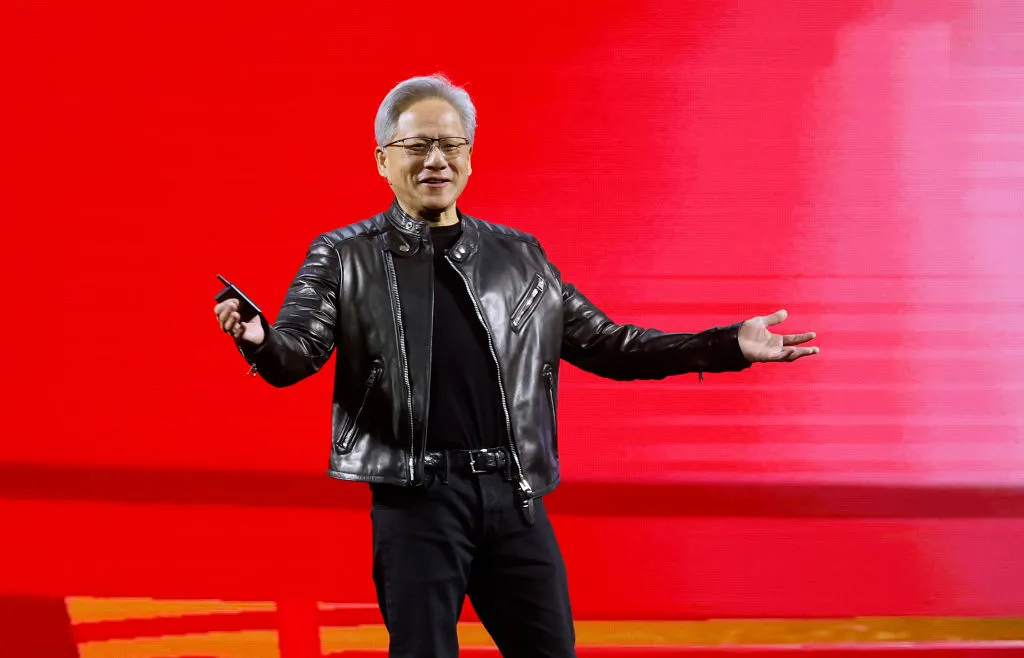
Nvidia’s Jensen Huang: AI isn’t stealing jobs—it’s creating a wave of new opportunities for youth

AI Industry Gains Momentum as Innovation Drives Economic Rebirth

In an era marked by rapid technological upheaval, artificial intelligence continues to redefine the landscape of industry and employment. During a recent high-profile discussion hosted by the Milken Institute, Jensen Huang, CEO of Nvidia, dismissed doomsday scenarios claiming AI will displace millions of jobs. Instead, Huang articulated a compelling vision of AI as a catalyst for industrial re-industrialization and job creation within the United States.

This perspective emphasizes a crucial paradigm shift: AI as an innovation engine rather than a harbinger of economic collapse. Huang highlighted that the hardware manufacturing sector, central to AI infrastructure, is experiencing a renaissance with new factories requiring skilled labor. It signifies a shift towards AI-powered manufacturing and infrastructure, creating opportunities that could revitalise American competitiveness. Financial analysts from institutions like Gartner continually underline this disruptive momentum, forecasting that AI’s integration could generate millions of new jobs, even as it automates others. Such disruption underscores an urgent need for industries and education systems to adapt quickly.

Market Shifts and Industry Dynamics Signal a New Era of Disruption

While concerns loom around job displacement—with estimates suggesting up to 15% of current roles might be affected in the near future—industry leaders like Huang warn against succumbing to fearmongering. He cautioned that exaggerated narratives—often fueled by the AI industry itself—risk discouraging societal engagement with transformative technology. Many critics argue that this hyperbole acts as a marketing gimmick, blinding policy and industry leaders to the genuine potential of AI to bolster productivity and economic resilience.

Key advancements include the acceleration of GPU development and edge AI solutions, fueling innovative applications across sectors. Disruptive startups, backed by industry giants and venture capital, are creating new ecosystems where rapid iteration in AI models directly influences market share and technological dominance. Notably, MIT research and firms like OpenAI are pushing the boundaries, democratizing AI access, and catalyzing industry-wide transformations. This wave of innovation signals a strategic pivot for business leaders seeking to leverage AI for competitive advantage.

The Business Implications and Future Trajectory

As AI continues its ascent, the economic implications are profound. The proliferation of AI hardware, the emergence of new AI-driven business models, and the push for domestic AI manufacturing are setting the stage for a reshaped global economy. Industry insiders and analysts argue that the current trajectory underscores a pivotal moment in history—where American leadership in tech and innovation could determine future competitiveness.

Looking ahead, the upcoming Techcrunch event in San Francisco, October 13-15, 2026, is poised to showcase these breakthroughs and debate policy pathways that enable AI’s growth while safeguarding employment. The pressing task for policymakers, business leaders, and innovators is to grasp this momentum — fueling disruptive innovation and fostering an environment where AI’s benefits outweigh its risks. Urgency is key: the window to shape an AI-driven economy that enhances national strength and preserves stability is rapidly closing. Future success hinges on decisive action today, as the age of AI isn’t just on the horizon—it’s unfolding before our eyes.
Intel’s Panther Lake Chips Crush Apple’s M5—Game Changer for Young Tech Fans

Intel’s Latest Chips Signal a Disruptive Shift in Computing Power and Industry Dynamics

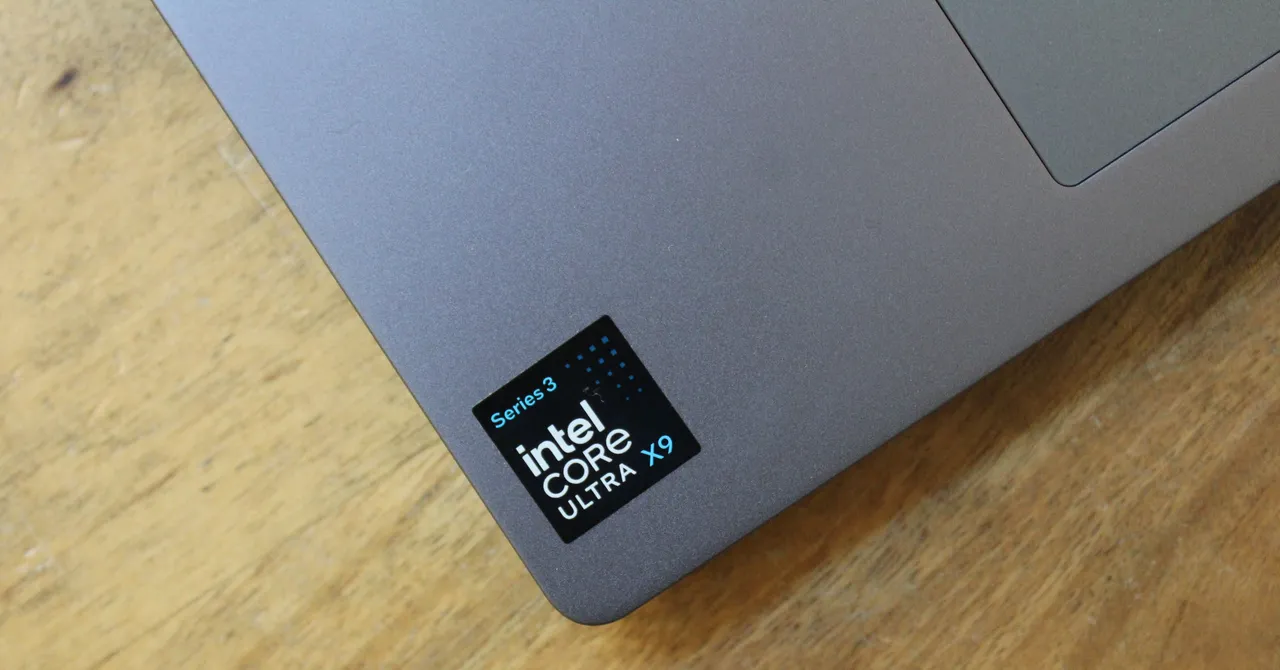
In a remarkable display of hardware innovation, Intel has reasserted itself at the forefront of the tech battlefield with its new generation of chips boasting unprecedented multi-core performance and integrated graphics capabilities. The flagship X9 388H chip, outperforming Apple’s latest M5 by a staggering 33 percent, exemplifies how Intel is strategically disrupting the status quo. This surge is more than a simple technical victory; it signals a potential redefinition of benchmarks in laptop and mobile computing, challenging established industry giants and paving the way for new standards of performance in thin-and-light devices.

Revolutionizing Integrated Graphics and Multi-Core Power

Intel’s Core Ultra 7 258V has delivered a benchmark-defying 52 percent increase in multi-core CPU performance and a 54 percent upgrade in integrated graphics, tested against current-generation competitors such as the M4 MacBook Air. The use of the powerful B390 GPU and 12 Xe cores in the X7 and X9 configurations, with the X9 at the forefront, demonstrates a disruption of traditional discrete GPU reliance—transforming laptops from mere portable tools into powerhouse multi-taskers capable of professional-grade graphics processing.

  • Top-tier multi-core performance surpassing industry expectations
  • Integrated graphics on par with discrete desktop GPUs
  • Significant leaps in AI and video editing capabilities within ultraportables

Analysts from Gartner and industry insiders note that this leap in integrated graphics represents a strategic pivot for Intel, directly challenging the long-held dominance of dedicated desktop GPUs in performance computing. Industry watchers view this as a clear signal that Intel intends to redefine what is possible in portable computing hardware, with implications across gaming, AI inference, and professional content creation sectors.

Market Implications and Industry Disruption

The impact of Intel’s advancements extends beyond mere performance metrics. The industry is witnessing a shifting market dynamic where innovation drives new business models. OEMs are already integrating these chips into ultrathin laptops that balance power with portability, radically shrinking the gap between high-end desktop performance and mobile efficiency. Such innovations threaten to erode the market share of traditional discrete GPU manufacturers, while companies like Apple, AMD, and NVIDIA face a renewed challenge from Intel’s disruptive hardware advances.

Furthermore, this progress demonstrates how disruption in core hardware can accelerate software and ecosystem innovation, prompting developers and businesses to rethink their approach to application design. As noted by industry leaders, the potential for integrating powerful AI operations directly into portable devices could” change the landscape of mobile AI, edge computing, and real-time data processing.

Looking Ahead: A Future Defined by Agility and Power

Intel’s latest chips are not merely an evolution but a revolution in portable computing, an inflection point that demands rapid adaptation from competitors and entrants alike. As Thiel and Musk have historically emphasized, technological progress hinges on relentless innovation and nimbleness. The next phase will see hardware manufacturers pushing these advances further into AI, machine learning, and 5G-enabled computing, making today’s breakthroughs tomorrow’s industry standard. Time is of the essence for competitors who wish to remain relevant in this new era of high-performance, integrated computing.

In conclusion, with such groundbreaking hardware, Intel is signaling a shift that could reshape the entire technology ecosystem—disrupting established players while opening doors for bold new applications. The race for supremacy in integrated, mobile, and AI-powered computing is accelerating, and those who innovate swiftly will lead the charge into a future where hardware and software harness unprecedented levels of power and efficiency.

Trump Paves Path for Nvidia to Export Advanced AI Chips to China

US-China Tech Duel Reshapes Geopolitical Landscape

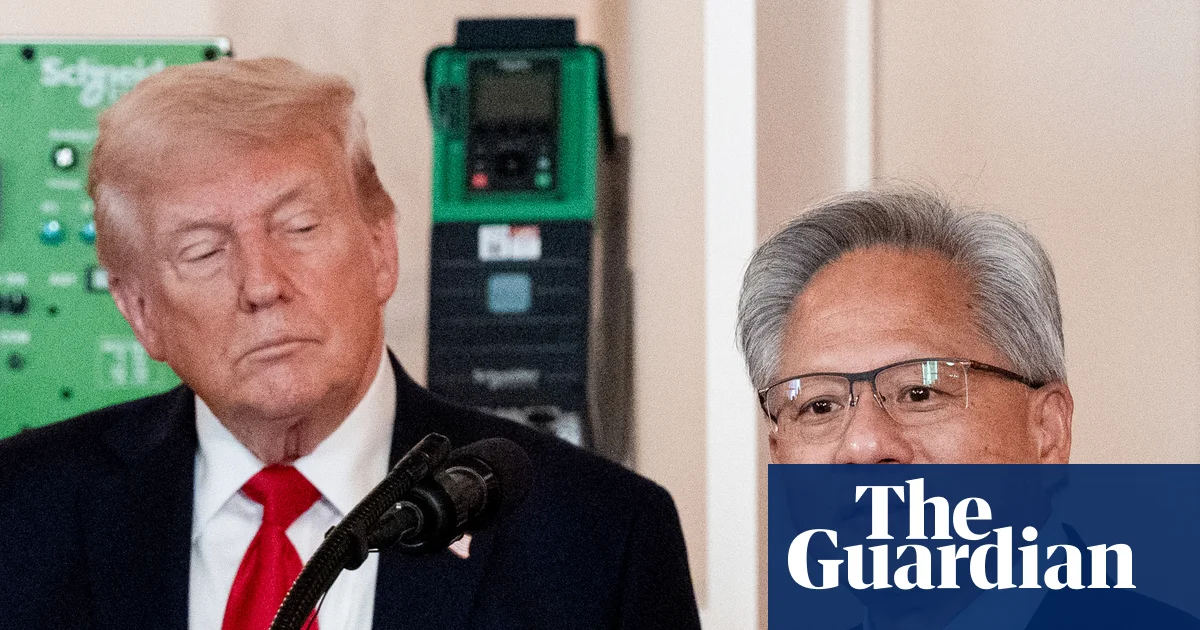
In a dramatic turn of events, former President Donald Trump has authorized Nvidia to resume sales of its advanced AI computer chips to China, breaking decades of strict export controls designed to safeguard US national security interests. This decision marks a significant divergence from previous administrations’ policies, which prioritized technological supremacy and the containment of Chinese technological ambitions. The move was announced via social media, with Trump asserting that the US would “allow NVIDIA to ship its H200 products to approved customers in China, and other Countries,” and emphasizing that the US would retain a 25% share of proceeds—more than the prior 15% agreement. Such a financial arrangement signals a strategic pivot, highlighting the evolving calculus over global technological dominance and economic leverage.

However, this shift isn’t without controversy. Congressional Democrats like Elizabeth Warren and Andy Kim voiced substantial criticism, warning that such sales could empower China’s surveillance, censorship, and military capabilities. Their concerns underscore a broader debate: does the pursuit of economic gains outweigh the risks to security and sovereignty? The reassessment of US-China relations under the shadow of new geopolitical realities is emblematic of a larger struggle—one that involves not only technology but the very fabric of international power. Although Trump’s administration claims these steps bolster US manufacturing and job creation, critics argue that they could inadvertently accelerate China’s technological independence—a development that could have long-lasting destabilizing effects on global balance of power.

Meanwhile, China has responded cautiously, with the foreign ministry noting that “China and the United States can achieve mutual benefit” through “cooperation.” Yet, behind these diplomatic words lies a complex chessboard of strategic calculations. Chinese regulators are reportedly debating whether to curtail or facilitate the import of Nvidia’s chips, an indication that the internal dynamics within Beijing itself remain unsettled. As analysts like Ma Jihua observe, years of restrictive policies have inadvertently created opportunities for China’s burgeoning domestic chip industry. The current liberalization of US exports could thus serve as a catalyst—either as a boon or a challenge. Historically, such decisions ripple across the entire geopolitical fabric—stoking fears of a new class of technological arms race.

The geopolitical impact of this development is profound. By reconfiguring the rules of engagement in AI technology—a sector many analysts call the “new frontier of military and economic power”—the United States has opened a new chapter in the competition for global dominance. The move fuels the ongoing narrative of a great power rivalry, where economic policy intertwines with national security, and technological innovation becomes the battleground for influence. As the world watches, this unfolding saga will determine whether nations can balance progress and security, or whether the chaos of uncontrolled competition will fuel conflicts that threaten the stability of the international order. The choices now being made echo through history, shaping a future where the line between cooperation and confrontation will become increasingly blurred, leaving the course of history suspended in a tense, uncertain horizon.

Social Media Auto Publish Powered By : XYZScripts.com



