
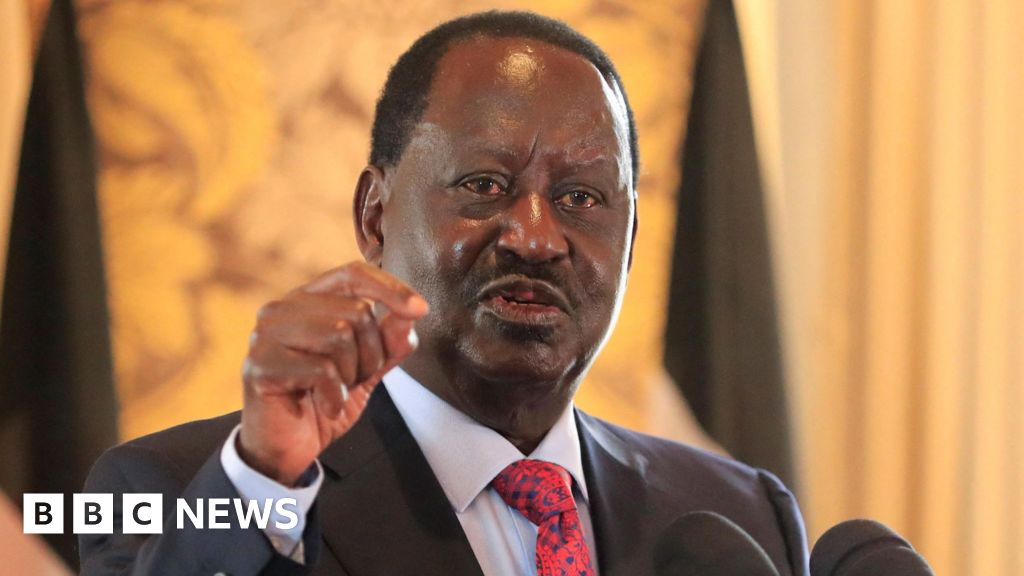

In an event that marks a significant turning point for Kenya and its geopolitical landscape, the death of Raila Odinga, aged 80, signals the end of an era defined by resilient leadership and relentless struggle for democracy. Odinga, once a formidable opposition figure and a symbol of resistance against authoritarianism, succumbed to a cardiac arrest in a hospital in India, drawing widespread international attention to his life’s work. His passing comes after weeks of lingering questions regarding his health, yet tributes from leaders worldwide underscore his towering influence in regional affairs and beyond.
The impact of Odinga’s political journey extends far past Kenyan borders, resonating strongly within the region’s ongoing shifts in governance. His leadership was rooted in advocating for democratic freedoms and fighting against corruption, often positioning himself as the voice of the marginalized. As current President William Ruto declared him a “beacon of courage” and “father of our democracy,” the geopolitical focus sharpens on how Kenya’s future navigates his legacy. In the broader Africa context, analysts from the African Union and international think tanks recognize Odinga’s role as a catalyst for reforms, emphasizing the importance of stability founded on democratic principles, which remain a fragile commodity across the continent.
Odinga’s political life was marked by monumental upheavals—most notably his disputed claims to the presidency in 2007, which spurred violence resulting in over a thousand deaths and displacements — a crisis that left Africa and global governance institutions grappling with the fragility of electoral processes. A landmark intervention by Kofi Annan led to a power-sharing agreement that ultimately mitigated conflict, illustrating how international diplomacy and regional stability are deeply intertwined. Since then, Odinga’s pragmatic alliances—most notably his 2018 decision to reconcile with Uhuru Kenyatta—highlighted his ability to foster consensus amid tumultuous elections. Yet, his political resilience also firmly placed him as a polarizing figure, embodying the tension between reformist ambitions and entrenched interests that continue to shape East Africa’s geopolitical dynamics.
Today, as global powers and regional neighbors observe Kenya’s evolving political landscape, Odinga’s death insinuates a power vacuum and raises urgent questions about succession and the future orientation of Kenyan politics. The regional ramifications extend beyond Kenya’s borders, influencing stability in neighboring countries such as Uganda, Rwanda, and Tanzania. Historians and foreign policy analysts warn that Kenya’s political trajectory in the coming years will hinge on whether Odinga’s enduring legacy can catalyze a new generation committed to democratic reform or whether entrenched corruption and ethnic divisions will deepen. As the nation mourns, the international community watches closely—reminded that history is constantly being written, with today’s foundations shaping tomorrow’s destiny, often in ways no one can predict.





