
Matox News

Truth Over Trends, always!

Roblox rolls out live AI chat to shut down banned language, keeping gameplay clean and cool

Roblox Leads the Charge with Next-Generation AI-Powered Chat Moderation

In a move signaling a new era of disruption within online gaming and social platforms, Roblox has announced the rollout of a revolutionary real-time, AI-powered chat rephrasing feature. This innovation aims to combat toxic language while preserving the fluidity of user interaction, marking a significant step forward in community safety and user engagement. As digital communities grapple with maintaining civility amid rising concerns over safety and moderation, Roblox’s approach exemplifies how strategic AI deployment can redefine industry standards and create competitive advantages against rivals.

Traditional content moderation systems on platforms like Roblox relied heavily on keyword filters that often resulted in clunky, disruptive user experiences. When a banned word was detected, the message was replaced with a string of hash symbols, disrupting conversations and sometimes fueling user frustration. Now, according to the company announced, the new AI feature rephrases inappropriate language into respectful and contextually appropriate alternatives. This not only maintains conversational flow but also fosters a more positive environment—a critical factor in maintaining user retention among younger demographics.

Moreover, Roblox is enhancing its detection capabilities, employing machine learning models that identify variations of banned language, such as leetspeak and other sophisticated bypass tactics. The platform reports a >20x reduction in false negatives related to sensitive information sharing, underscoring the impact of these technological advancements. Industry analysts from Gartner highlight that these developments aim to balance real-time interaction with robust safety measures, a dual challenge in digital community management. Roblox’s move exemplifies how AI, when strategically deployed, can disrupt longstanding moderation paradigms and establish new industry benchmarks.

Supporting this shift is Roblox’s recent implementation of mandatory facial verification for chat access, a response to mounting lawsuits and concerns over child safety. Critics argue that such measures reflect a broader industry trend—where safeguarding young users becomes intertwined with technological innovation. This proactive stance positions Roblox as a market leader tackling social responsibility head-on, which could attract a broader user base and solidify its market dominance amid increasing regulation and scrutiny. As pioneers like Elon Musk and Peter Thiel suggest, embracing disruptive innovation today is essential for future industry resilience, and Roblox’s integrated approach underscores this philosophy.

Looking ahead, Roblox’s strategic investments in AI-driven moderation tools demonstrate that the industry must evolve rapidly to meet the dual demands of user engagement and safety. The integration of real-time rephrasing, sophisticated language detection, and biometric safeguards indicates a move toward an ecosystem where disruption isn’t merely about technology—it’s about redefining community standards and business models. With competitors observing closely, Roblox’s innovations could set the template for a new era of safer, more engaging digital playgrounds—an imperative for all platforms seeking relevance in an increasingly regulated landscape. As the digital frontier continues to expand, those who harness the power of AI-driven moderation will lead the charge into a future where community, safety, and innovation go hand in hand.
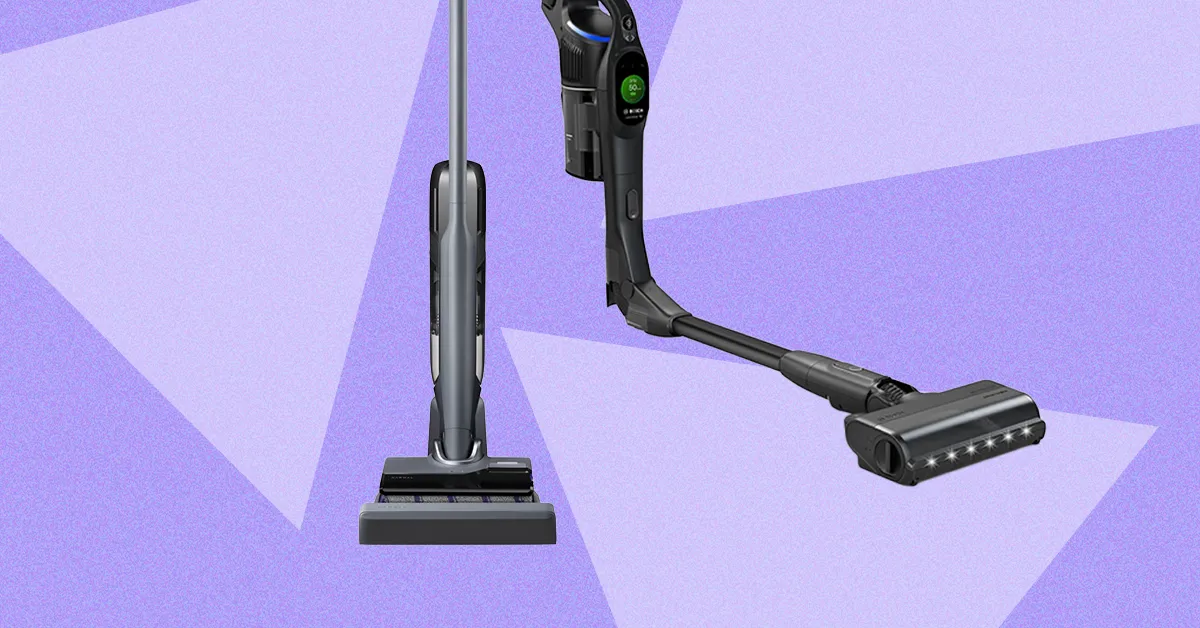

Top Cordless Vacuums for a Clean, Modern Home in 2026

Tech Industry Spotlight: Disruptive Innovations Reshaping Consumer and Business Markets

The landscape of consumer technology continues its relentless evolution, with robotic vacuum cleaners exemplifying how innovation drives industry disruption. Companies like Dyson and Bosch are pushing boundaries with models boasting multi-mode cleaning, cyclonic filtration, and advanced sensors. The emergence of affordable yet capable devices like the Eufy Robot Vacuum signals a seismic shift, making AI-powered cleaning accessible to a broader demographic. Such advances not only elevate consumer convenience but also challenge traditional home-care paradigms, prompting established brands to innovate or risk obsolescence.

In parallel, the business implications of these advances are profound. As market leaders incorporate machine learning and IoT connectivity into everyday appliances, real-time data collection enables manufacturers to optimize product performance, anticipate market demands, and innovate in service models. Industry analysts, such as Gartner, emphasize that the integration of AI and IoT in the appliance sector accelerates the transition from product sales to data-driven services, creating a hybrid revenue stream that can sustain competitive advantage amid fierce market entries.

Beyond cleaning tech, the broader disruption extends to the home and personal gadgets ecosystem. The rise of cordless vacuums like the Worx 20V Stick and premium models such as Dyson’s V12 Detect illustrates a trend toward portability, lightweight design, and heightened user control. Despite some persistent flaws—such as dustbin maintenance or battery longevity—these innovations lay the groundwork for smarter, more adaptive devices. Industry insiders note that the ability to seamlessly integrate AI, robotics, and user feedback into mass-market products will define the next wave of consumer electronics, positioning companies that lead in these domains for aggressive market share gains.

Looking ahead, industry experts like Elon Musk and Peter Thiel warn of the necessity to stay ahead of the disruption curve. The rapid pace of technological leaps demands that businesses not only innovate but also adapt their entire operational models. AI-driven manufacturing, customizable user experiences, and integrated ecosystem services will be critical for sustaining growth in a market increasingly defined by smart, interconnected appliances. As Gartner predicts, those who capitalize on these opportunities early will dominate the digital home landscape, setting a new standard for consumer engagement and business agility. The race is on, and those lagging behind risk becoming relics in the age of technological renewal.

DJI’s Romo Robot Vacuum: The Future of Clean Tech for Next-Gen Homes

DJI Launches Transparent Romo RoboVac: A Landmark in Cleaning Tech Disruption

In an unexpected move that underscores the relentless pace of technological innovation, DJI, the renowned drone and camera manufacturer, has entered the competitive robotic vacuum market with the release of the DJI Romo. Debuting in Europe this week after its initial launch in China, the Romo represents a bold reimagining of home cleaning—fusing drone-level navigation tech with an eye-catching transparent design. This product signals a significant shift, revealing industry ambitions to disrupt traditional appliances with transparency, advanced sensors, and integrated AI, set against a backdrop of mounting market disruption.

The Romo’s release is notable not only for its innovative aesthetics but also for its combination of advanced navigation systems. Utilizing dual fish-eye vision sensors alongside solid-state lidar derived from DJI’s drone lines, it pushes the envelope in ground-based robotics. Vision experts and leading institutions like MIT have long emphasized lidar’s role in improving navigational precision in autonomous systems, and DJI appears committed to setting new standards here. The robot’s capacity to detect objects as thin as a 2mm cable exemplifies hardware engineering that prioritizes meticulous environment mapping, promising to elevate smart home automation to new heights. Its see-through design offers a peek inside the workings—akin to a hardware manifesto emphasizing transparency as a feature, turning a mundane appliance into a statement of tech prowess.

Market implications of DJI’s entry are profound. The Romo line comes in three models, with the flagship Romo P starting at €1,899 (~$2,200). Despite its premium pricing, the device’s disruptive features—such as a self-cleaning dock with a deodorizer slot, high-pressure jet cleaning for mops, and hot air drying—aim to redefine customer expectations for durability, convenience, and luxury in robotic home appliances. Its incorporation of mixed sensory modalities signals an industry-wide shift, challenging established brands like Roborock and IKEA, which have offered less sophisticated navigation tech. This disruption could force competitors to innovate or risk obsolescence, especially as younger consumers increasingly prioritize sophisticated gadgetry integrated seamlessly into their living spaces.

Technology analysts like Gartner and industry veterans warn that such innovation demands rapid adaptation from market players. The Romo’s design, which is substantially larger and heavier to house its advanced sensors, demonstrates DJI’s commitment to pushing technological barriers, bolstering the trend towards fully autonomous, context-aware cleaning solutions. As Peter Thiel and Elon Musk have suggested, the future belongs to firms that leverage cutting-edge sensors and AI to redefine ordinary tasks, transforming them into high-tech experiences. For now, DJI’s entry into this space confirms that the era of ordinary vacuum cleaners is ending, replaced by intelligent, disruptive devices capable of not only cleaning but also enhancing home environments through sophisticated sensors and AI-powered navigation. With no current US release plans, anticipation is high; an industry that once dismissed robotic vacuums as mere gadgets now faces the reality of a high-stakes innovation race.

Gen Z protests push president to clean house—new leadership on the horizon

Madagascar Faces Unrest Amid Economic and Political Turmoil

In an unfolding chapter of geopolitical instability, Madagascar is witnessing its most significant wave of protests in over 15 years, signaling a deepening crisis that could reshape the island nation’s future. This eruption of public dissent was largely sparked by endemic issues such as chronic shortages of basic utilities—power and water—coupled with widespread corruption and deteriorating living conditions. Many Malagasy citizens, particularly young people, are now demanding political accountability, with protests escalating rapidly across multiple cities and threatening the stability of President Andry Rajoelina’s government.

For years, Madagascar’s political landscape has been marred by instability and contentious elections. Rajoelina, who first seized power in 2009 during mass protests that ousted then-President Ravalomanana, was re-elected in 2018 amid accusations of electoral irregularities. His latest reelection in 2023, boycotted by opposition groups, only further intensified political divisions. Now, after the recent crackdown on opposition figures and the dismissal of his government, the nation’s fragile political fabric is under severe strain. Analysts and international observers, including the United Nations, warn that reliance on force to quell dissent could deepen the crisis, risking fragmentation and civil unrest. As historian Jean-Michel Roux notes, Madagascar’s history is punctuated by repeated uprisings, showing a pattern where governance struggles often spiral into broader chaos.

Factors Fueling the Uprising

The immediate trigger of the current unrest was the detention of two prominent political figures in Antananarivo, which civil society activists and youth leaders, especially the grassroots-based Gen Z Mada, blame on the government’s attempts to suppress legitimate grievances. The protests initially centered around persistent service outages—hours-long electricity blackouts and water shortages—that have become symbols of government neglect. Many protesters see these failures as symptomatic of entrenched corruption within state utilities like Jirama, which analysts say have been siphoned off for personal gain by political elites. The widespread frustration over deteriorating living standards—among the 75% of the population living below the poverty line—has turned into a call for fundamental political change. This movement, fueled by social media campaigns and united by a common desire for justice and accountability, has expanded beyond the capital, signaling that the unrest is not just about utilities but a broader rejection of President Rajoelina’s policies.

The unrest’s escalation has prompted heavy security responses. Armed forces have been deployed in urban centers, with reports of violent crackdowns, including tear gas, water cannons, and curfews. The government’s framing of these protests as threats to public order has led to accusations of suppression and human rights violations. Opponents, including opposition leaders and civil society organizations, warn that such tactics risk pushing Madagascar towards political instability or outright civil conflict. Meanwhile, international organizations, including the World Bank, have signaled willingness to fund development projects aimed at restoring basic services, but these measures are seen as insufficient amid escalating unrest.

How international and societal reactions shape Madagascar’s future

The international community watches closely as Madagascar’s crisis unfolds. Political analyst Dr. Claire Martin suggests that Madagascar’s trajectory hinges on whether the government pursues dialogue or opts for repression. The opposition, civil society, and even some former leaders advocate for inclusive talks to prevent the descent into chaos. However, recent actions such as dismissing UN casualty figures and imposing curfews suggest a government wary of outside interference and resistant to accountability. The possibility of military neutrality remains a critical flashpoint; as history has shown, Madagascar’s military has occasionally intervened in politics, and its stance could determine whether the island descends into prolonged unrest or begins a difficult path toward reconciliation.

As the world observes, the question remains whether Madagascar will embrace democratic reform or plunge into deeper turmoil. With each demonstration, each act of repression, and each political decision, the island’s future is being forged—one way or another. The weight of history presses heavily upon this young nation, as its people continue to march for justice and dignity, rewriting the story of a nation caught between the failures of the past and the hopes of a new dawn.

Social Media Auto Publish Powered By : XYZScripts.com