
Matox News

Truth Over Trends, always!

Prosecutor clears Kyle, Jackie O, and Mamamia of contempt in Erin Patterson mushroom trial

Global Ramifications of Media Conduct and Judicial Integrity in High-Profile Crime Cases

Across the international stage, the unfolding of a seemingly isolated criminal trial in Australia echoes beyond its borders, raising critical questions about the influence of media on justice. Recently, the Victorian Office of Public Prosecutions declined to pursue contempt charges against notable media personalities and podcasters involved in a controversial case—highlighting a \_delicate balance between free speech and fair trial integrity. This case centers on Erin Patterson, a woman convicted of a gruesome murder involving deadly mushrooms—a crime that shocked the nation and garnered international interest.

The case’s broader geopolitical impact can be seen in how local judicial decisions influence perceptions of justice worldwide. The decision not to charge Kyle and Jackie O or Mamamia for remarks made during the trial underscores an underlying tension: should the media be restricted to preserve judicial fairness, or should free expression be protected even when potentially prejudicial? International organizations and legal analysts, including those in the United States and European Union, warn that excessive media restrictions can threaten free speech, but unchecked commentary risks corrupting the justice process and undermining public trust in institutions.

Significantly, the Australian judiciary has sharply criticized recent broadcast content and public events linked to the case. During a high-profile court hearing, Justice Christopher Beale emphasized the importance of responsible media conduct, admonishing presenters of the Kyle and Jackie O Show for their on-air remarks. This cautionary stance highlights how international legal standards increasingly scrutinize media’s role in criminal cases. Meanwhile, the Australian Attorney-General’s Department and international legal bodies monitor such cases closely, considering potential reforms to balance free speech with judicial fairness. The global community watches as Australia navigates this volatile intersection, recognizing that the repercussions extend well beyond national borders: they bear on *how societies worldwide calibrate the power of media in shaping justice and public perception.*

Adding to the multilayered landscape, analysts warn that such cases can act as precedents—each media misstep or judicial affirmation influencing international norms. The United Nations calls for clear international guidelines to prevent judicial processes from becoming hostage to sensationalism, but also cautions against overreach that stifles vital media freedom. As the world’s democracies wrestle with these issues, the importance of safeguarding free speech remains intertwined with the necessity of maintaining judicial impartiality. Ultimately, this confluence of justice, media, and geopolitics underscores a evershifting arena—where the decisions made today will echo in history’s halls for decades to come. With each controversy, each legal tussle, humanity stands on the brink of defining what kind of society it strives to become—a society where truth and justice are not sacrificed on the altar of sensationalism, but instead serve as beacons guiding the collective conscience into an uncertain future.
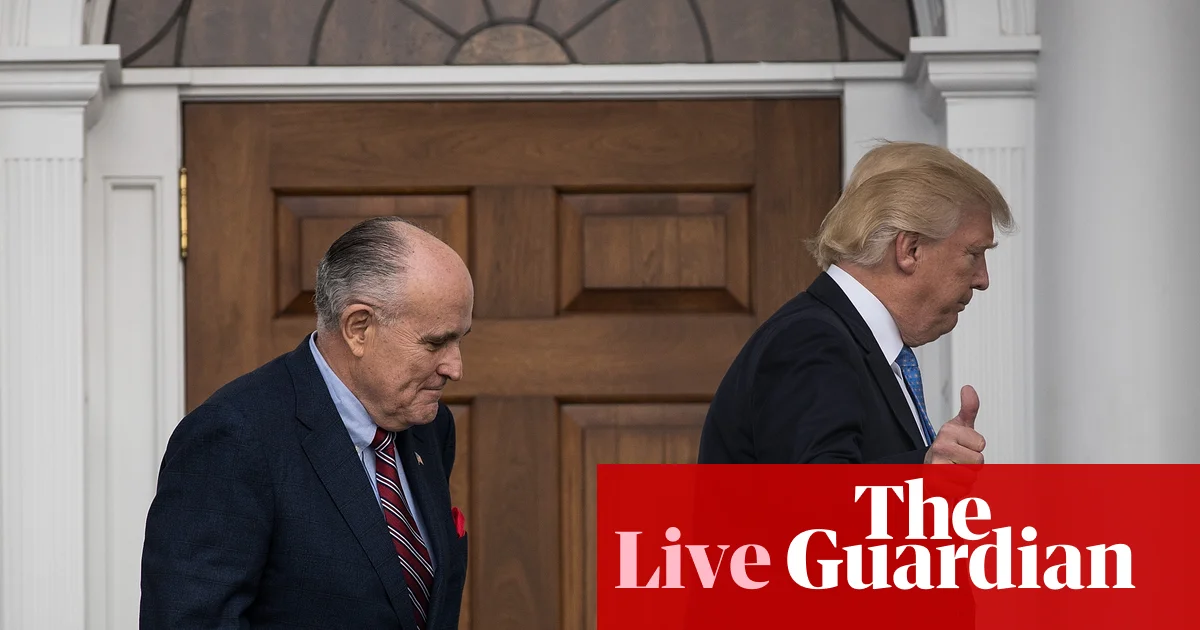
Trump clears Giuliani and allies charged with election interference — latest updates

In recent days, the international stage has witnessed a series of seismic events that underscore the shifting landscape of global power and domestic stability, particularly within the United States. The dramatic pardoning by Donald Trump of his allies linked to efforts to overturn the 2020 election has sent ripples across both U.S. politics and the broader geopolitical arena. The pardons, including high-profile figures such as Rudy Giuliani and Mark Meadows, are viewed by many analysts as a calculated move to reassert influence and weaken institutional accountability, challenging the notions of rule of law and sovereignty. While none of those pardoned faced federal charges, critics argue this controversial decision could usher in a precedent where future administrations find immunity from prosecution, thereby eroding the integrity of the American legal system and emboldening authoritarian tendencies.

Simultaneously, the domestic crisis has been compounded by ongoing government shutdowns— the longest in U.S. history—affecting hundreds of thousands of workers, with flights canceled en masse and essential services disrupted. According to top officials, the shutdown continues due to political gridlock between the Democratic and Republican senators, despite efforts to pass a stopgap measure that would fund the government only until January. This short-term funding, essentially a Band-Aid solution, underscores the deep divisions that threaten the fabric of American governance, with the specter of a prolonged stalemate looming large. Historians warn that such political discord contributes to a climate where societal trust diminishes and chaos undermines the national stability vital to global order.

On the international front, President Trump made headlines with a historic visit to the White House by Syrian President Ahmed al-Sharaa, marking the first such diplomatic engagement since Syria’s independence in 1946. This summit, cloaked in secrecy, signals a potential realignment of American foreign policy amid a broader reshuffling of alliances in the Middle East and beyond. While specifics of discussions remain under wraps, the unspoken message is clear: the U.S. aims to recalibrate its stance on Syria, employing a strategy that includes sanctions and high-stakes diplomatic negotiations. Such diplomatic shifts are likely to recalibrate regional power balances, influencing allies and adversaries alike, especially in an era when assertive national interests are reshaping traditional diplomacy.

Brazilian and Latin American geopolitics are also in flux, with U.S. military operations expanding their reach — striking alleged drug trafficking vessels and known narco-terrorist groups in international waters, according to Pentagon statements. Such actions demonstrate an increasingly assertive U.S. military posture aimed at combating illicit networks that threaten stability beyond American borders, directly impacting regional sovereignty and security frameworks. The use of extrajudicial measures, including lethal strikes, raises concerns among international legal experts about sovereignty and the potential for escalation that could destabilize entire transit routes linking South America and the broader Western Hemisphere. These actions highlight the United States’ willingness to operate unilaterally in the name of national security, often outside traditional legal boundaries—a move with profound geopolitical implications that ripple through international institutions and diplomatic norms.

The entire sequence of events unfolding in Washington and around the globe reveals a pivotal epoch in history—a period where decisions by a single nation threaten to reshape the international order, challenge the rule of law, and redefine the future of liberty and governance. As history continues to be written in the crucible of reckless diplomacy and domestic chaos, the world watches with bated breath, recognizing that these are not mere isolated incidents but the echoes of a larger clash for influence, sovereignty, and the soul of democracy itself.

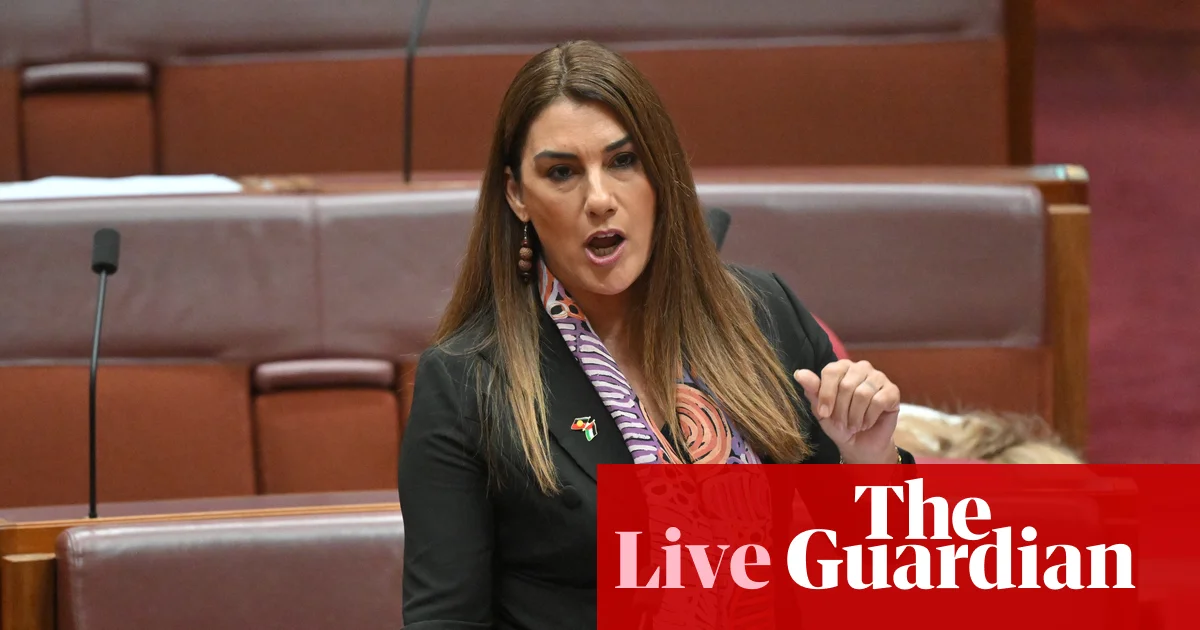
Australia News Live: Thorpe tells Albanese to move past Voice setback after Indigenous treaty clears Victorian parliament

Emerging Shifts in National Commitments and International Tensions Reshape Global Geopolitics

In a landscape steeped in rapid change, recent developments across nations reveal a profound transformation in how countries are engaging with issues of sovereignty, policy independence, and international cooperation. Australia has taken a historic step, passing its first treaty with traditional owners in a move that has sent ripples through geopolitics and Indigenous rights globally. This milestone signifies a break from past colonial frameworks and signals a potential recalibration of national identity and sovereignty. As Lidia Thorpe, a prominent Indigenous senator, asserts, this treaty marks a good start towards “real self-determination”, challenging the long-standing narrative that post-colonial states are resigned to their subordinate roles within global structures.

However, this progressive shift is not happening in isolation; it feeds into a broader contest for national sovereignty witnessed elsewhere. In Victoria, the passage of the Indigenous treaty aligns with a global increase in directly empowering indigenous and local governments—yet, critics warn that such victories could be undermined by overarching international pressures or domestic political stalls. Meanwhile, in Queensland, a tragic incident involving a young girl struck by lightning exemplifies the ongoing domestic crises rooted in local societal challenges—an inward reflection on societal resilience amid external geopolitical turbulence.

The international arena is also seeing strategic realignments. Australia and Papua New Guinea are deepening their security cooperation through new agreements designed to both enhance regional stability and counter transnational crime. These steps are emblematic of a wider surge in regional diplomacy, motivated by rising external threats from expanding powers like China and Russia. Similarly, Australia’s partnership with Papua New Guinea aims to fortify borders against illicit flows, emphasizing the importance of sovereignty while navigating the complex web of international alliances.

Within this context, debates over climate policy reflect a growing divide between economic independence and international commitments. Maria Kovacic and other members of the Liberal faction are grappling with the necessity for a feasible path toward net zero, including potential reliance on nuclear technology—a move that could alter the tectonic plates of global energy politics. Analysts warn that such policy debates are not merely domestic; they are the battlegrounds for influence over energy markets and technological dominances that will define the twenty-first century. Meanwhile, the Australian government faces accusations of opacity, with calls to improve transparency and accountability—an internal struggle that underscores tensions within the fabric of liberal democracies worldwide.

As history accelerates, we are witnessing the dismantling of old paradigms and the rise of new configurations—some peaceful, others fraught with conflict. The passage of treaties, the forging of security alliances, and the internal policy debates reflect a world that is both reshaping and being reshaped. Time will reveal whether these shifts forge a more sovereign, just, and balanced future or plunge nations into deeper crises of identity and trust, echoing the tumult of our most turbulent eras. The pages of history are turning—what will they record about this pivotal decade in global history?

Social Media Auto Publish Powered By : XYZScripts.com



