
Matox News

Truth Over Trends, always!

AWS CEO Matt Garman Pushes to Keep Amazon Ahead in AI-Driven Cloud War

Amazon Accelerates AI Strategy to Secure Cloud Dominance Amid Rising Competition

In the rapidly evolving landscape of artificial intelligence (AI), Amazon Web Services (AWS) is strategically positioning itself to redefine enterprise cloud computing. While the company’s notable $8 billion investment in Anthropic garnered headlines, AWS’s broader initiative—focused on in-house foundation models, innovative chips, expansive data centers, and autonomous agents—is equally poised to disrupt the industry. According to AWS CEO Matt Garman, these cutting-edge offerings aim to cement AWS’s leadership by integrating AI as a core feature within enterprise applications rather than isolated experiments, signaling a transformative shift in how businesses deploy AI-driven solutions.

AWS’s latest innovations, announced at this year’s re:Invent conference in Las Vegas, exemplify a strategic plunge into AI infrastructure and application development. The company unveiled its Nova series of cost-efficient AI models, addressing the pressing demand for affordable yet robust AI solutions. Additionally, new autonomous agents capable of handling sophisticated cybersecurity and software development tasks—truly embodying the disruptive potential of AI—are set to elevate AWS’s value proposition. Moreover, with the launch of Forge, a platform that enables enterprises to train AI models on their proprietary data at reduced costs, AWS is emphasizing a tailored, secure, and economically viable approach to AI integration across industries.

This aggressive push not only underscores AWS’s belief in delivering reliable and affordable AI services but also highlights its strategy to embed AI deeply into enterprise ecosystems. Garman emphasizes that AI is no longer just a stand-alone tool but a pervasive feature embedded within large-scale applications—a trend that analysts like those at Gartner have identified as a pivotal shift towards AI-native software. By providing AI as an integrated, platform-based service, AWS aims to outpace rivals like Microsoft and Google, who are also making heavy bets on AI but often struggle with the same level of cloud-embedded innovation.

Nevertheless, the competitive landscape remains fierce, prompting questions about AWS’s long-term ability to sustain its momentum. Many seasoned industry observers note that Microsoft and Google are not idly watching AWS’s moves; instead, they are rapidly advancing their own AI capabilities. Yet, AWS’s strong third-quarter results signal that its current trajectory is resonating with enterprise clients seeking dependable, scalable, and cost-effective AI solutions. As enterprises increasingly expect AI to work seamlessly within their existing cloud infrastructure, AWS’s integrated approach positions it as a formidable leader. Future industry analysts, including those at MIT and leading tech investors like Peter Thiel, emphasize that this era of cloud-AI convergence is defining a new competitive frontier—where swift, relentless innovation will determine which giants dominate in the next decade.

Looking ahead, the challenge for AWS—and for the entire cloud industry—is to sustain this innovation push and to navigate the profound implications of AI’s integration into everyday business operations. As the AI revolution accelerates, those companies that embed AI deeply within their ecosystems today will likely emerge as the dominant players of tomorrow. The urgency for incumbents like AWS to maintain an aggressive and forward-thinking strategy has never been more critical, as the industry anticipates a future where AI is not just a feature but the foundation of all digital enterprise. As market shifts intensify and the AI arms race heats up, the next few years will undoubtedly be pivotal in determining the true innovator’s crown.
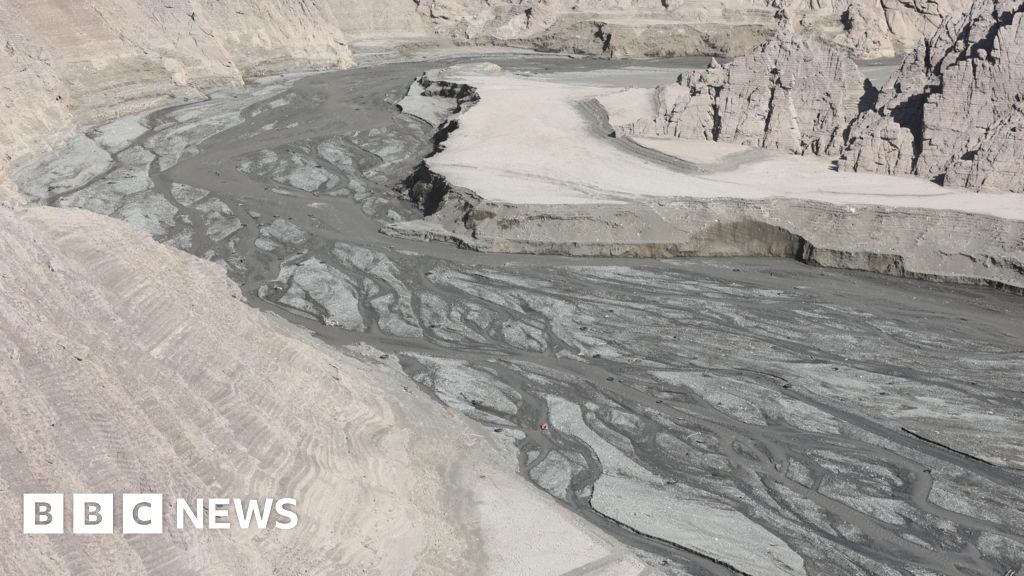
Iran Starts Cloud Seeding Amid Historic Drought Crisis

Iran Confronts Unprecedented Water Crisis

In a stark warning sign for international climate stability, Iran is grappling with its most severe drought in half a century. Authorities report that vital reservoirs, including Urmia Lake—Iran’s largest, have dried to a grim 8% of their capacity amidst record-low rainfall. The crisis has escalated to a point where officials are resorting to controversial measures like cloud seeding—a technique involving chemical agents to artificially induce rain—highlighting the gravity of the situation. This approach, employed over regions like the Urmia basin, exemplifies how nations are increasingly forced to adopt desperate strategies to mitigate environmental collapse. Yet, analysts warn that such measures are only band-aids on a widening wound caused by decades of mismanagement and climate neglect.

Iran’s government has issued stark warnings that the ongoing drought threatens not only water security but also societal stability. Last week, President Masoud Pezeshkian cautioned that without immediate and substantial rainfall, residents of Tehran face possible water rationing and evacuations—an alarming signal for one of the Middle East’s most densely populated capitals. The National Centre for Climate and Drought Crisis Management describes dams in key regions—including West Azerbaijan, East Azerbaijan, and Markazi—as being in a “worrying state,” with water levels dipping into perilously low levels. These developments underscore a broader crisis: a confluence of environmental degradation, water misallocation, and the geopolitical ramifications of a destabilizing climate trend.

Global experts and organizations have underscored that Iran’s plight is emblematic of a wider Mediterranean and Middle Eastern crisis. According to the United Nations, the region is experiencing climate shifts that threaten to drain vital water sources and deepen socio-political tensions. Historically, water scarcity has already fueled conflicts and mass migration, and critics argue that international cooperation remains insufficient to address the root causes of these crises. Meanwhile, the Iranian government’s efforts—such as penalizing excessive water consumption—offer only temporary relief and raise questions about sustainable long-term solutions. As historians and analysts warn, ignoring the mounting environmental warning signs could set the stage for future upheavals with far-reaching consequences.

The current environmental emergency also highlights how a failure to address climate change can exacerbate geopolitical instability. The decision to deploy cloud seeding, while innovative, highlights the desperation of nations trapped between environmental catastrophe and geopolitical limitations. As water reservoirs dwindle and rainfall remains at *record lows*, the weight of history presses down on Iran, serving as a harrowing reminder of the delicate balance between natural resources and national stability. The unfolding story of Iran’s drought serves as a powerful warning that the decisions made—or ignored—today will echo through history, determining whether societies will fall into chaos or find new paths of resilience amid the rising tide of environmental crisis. In this age of shifting climates, the struggle for water may define the next chapter of global conflict—or cooperation—marked indelibly by the choices made in the drought-stricken landscapes of Iran.

Digital Decluttering: The Swedish Death Cleaning Trend for Teens and Beyond

Innovative Strategies Transform Digital Legacy Management in End-of-Life Planning

As the digital age accelerates, a critical yet often overlooked frontier is digital estate management—the methodical organization of personal data for end-of-life scenarios. The recent case involving Adam Liljenberg’s family highlights a burgeoning industry shift: technology firms and service providers are stepping in to revolutionize the way our digital legacies are handled. From malware-laden phones to complex, multi-layered data silos, the challenges facing heirs and executors demand innovative solutions that go beyond traditional physical estate planning.

Disruption and Innovation Fueling Digital Death Cleaning

The concept of Swedish death cleaning, long favored for organizing physical belongings, is now gaining momentum in the digital realm. Companies like Stow & Behold and other emerging startups are deploying intelligent software and AI-driven tools to automate digital asset management. These platforms are designed to facilitate tasks such as scanning physical documents, organizing photos, and encrypting sensitive information to prevent leaks—anticipating a future where digital inheritance management is seamlessly integrated into estate planning.

  • Automation of digital inventory logging
  • Advanced encryption and privacy controls
  • Cloud-based access for authorized heirs
  • AI-driven categorization and contextual tagging

This disruption is not happening in isolation. Think tanks such as Gartner and MIT are emphasizing the strategic importance of digital resilience and cybersecurity in personal data management. As Elon Musk and Peter Thiel warn about the vulnerabilities in our digital footprints, industry leaders recognize that a proactive approach to digital estate planning could be a significant business opportunity with profound societal impacts.

Business Implications and Future Trajectory

The shift towards comprehensive digital estate solutions signals a broader transformation in how businesses approach data security and user experience. By integrating digital death cleaning into mainstream estate planning, companies can position themselves as essential intermediaries in a highly sensitive market—one that combines personal data, privacy concerns, and technology. This trend not only opens doors for new business models but also compels legacy firms to innovate rapidly, adopting SaaS platforms, AI, and blockchain for secure data transfer and ownership verification.

Moreover, the industry is responding to a rising demand for personalized digital care. For example, the emphasis on safeguarding sensitive content—be it memories, financial records, or private correspondence—underscores the importance of customizable privacy settings. Such features are critical in avoiding situations where unexpected data leaks cause emotional distress or legal complications for heirs. Innovations like these also underscore a broader push: the digital estate industry is not just about logistics but an ethical imperative to protect personal dignity and privacy at life’s end.

The Urgency of Embracing Digital Estate Management

As digital assets expand exponentially, the imperative for comprehensive, secure, and user-friendly digital estate management solutions becomes undeniable. Industry experts from institutions like Gartner forecast that by 2025, over 60% of digital heirs will rely on specialized platforms to manage their inherited data, up from negligible figures today. This prodigious growth underscores the necessity for early adoption—both from individual users aiming to secure their digital legacy and businesses poised to lead this disruptive wave.

In this rapidly evolving landscape, those who ignore the importance of digital death planning risk being left behind. With technology advancing at breakneck speed, organizations that leverage innovation—be it AI, blockchain, or cloud computing—will shape the next chapter of personal data management. The message is clear: the future belongs to those who act now, integrating digital estate solutions into the core of estate planning and cybersecurity strategy.

Social Media Auto Publish Powered By : XYZScripts.com