Matox News

Truth Over Trends, always!

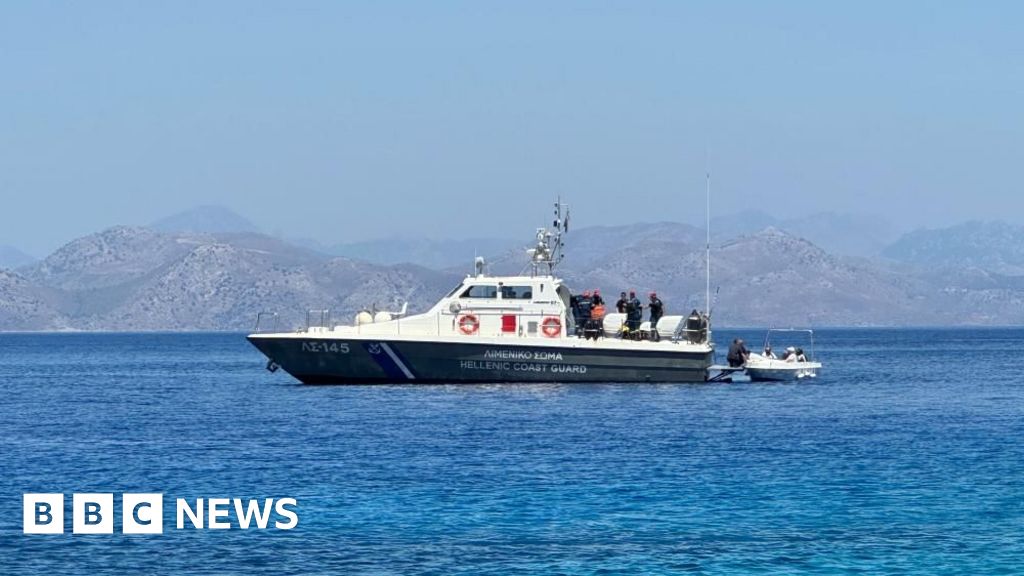
Greek Coast Guard clash kills 15 migrants, sparking outrage

The recent collision near the island of Chios, reportedly during a Coastguard pursuit, underscores the escalating tension in the Mediterranean region—a zone increasingly torn between humanitarian concerns and national security interests. The incident, which involved a pursuit preceding the collision, points to a broader pattern of confrontations between local authorities and migrant vessels attempting to cross from Turkey into the European Union. As reports emerge that a chase was underway at the time of the incident, international observers emphasize that this event is more than a local tragedy; it is a signal of the mounting geopolitical volatility fueling the migration crisis.

The mediterranean migration crisis remains one of the most complex and volatile challenges confronting Europe. The EU’s border agencies have been engaged in relentless efforts to curb irregular crossings, often resulting in high-stakes pursuits in dangerous waters. Experts argue that such pursuits, while aimed at enforcing border sovereignty, also heighten risks for migrants and local coastguards alike. In this tense atmosphere, the collision near Chios exemplifies the dangerous cat-and-mouse game played out daily in this strategic but volatile theater. International organizations such as the United Nations and European Border and Coast Guard Agency have long warned that aggressive policing in this region could escalate into more tragedies if not managed with a nuanced approach that balances security and humanitarian responsibilities.

The geopolitical impact of such incidents extends well beyond immediate rescue operations. Turkey continues to be a pivotal actor in this crisis, with its facilitation or suppression of migration flows deeply influencing European security and diplomatic relations. Recent statements from analysts and historians indicate that these confrontations are symptomatic of a fragile regional equilibrium, with Russia and NATO geopolitical strategies subtly shaping the narrative. The incident at Chios thus becomes a microcosm of larger international fissures, as nations weigh their interests amidst the chaos of migration, security, and sovereignty.

Furthermore, the fallout from such events fuels ongoing debates within European nations over immigration policies and national security. The event also reaffirms the urgent need for a coordinated international approach, as emphasized by the International Crisis Group, which warns that failure to address root causes—conflict in originating regions, economic instability, and weak border management—could see this crisis intensify. As European leaders grapple with this mounting challenge, the incident near Chios serves as a stark reminder that each collision, pursuit, or tragedy shapes the course of history in the making. With the Mediterranean increasingly seen as a battleground of competing interests, the outcome of these events will resonate for generations, echoing in the corridors of power and in the stories of countless lives caught in Europe’s shifting tides—forever etched into the unfolding narrative of our troubled times.
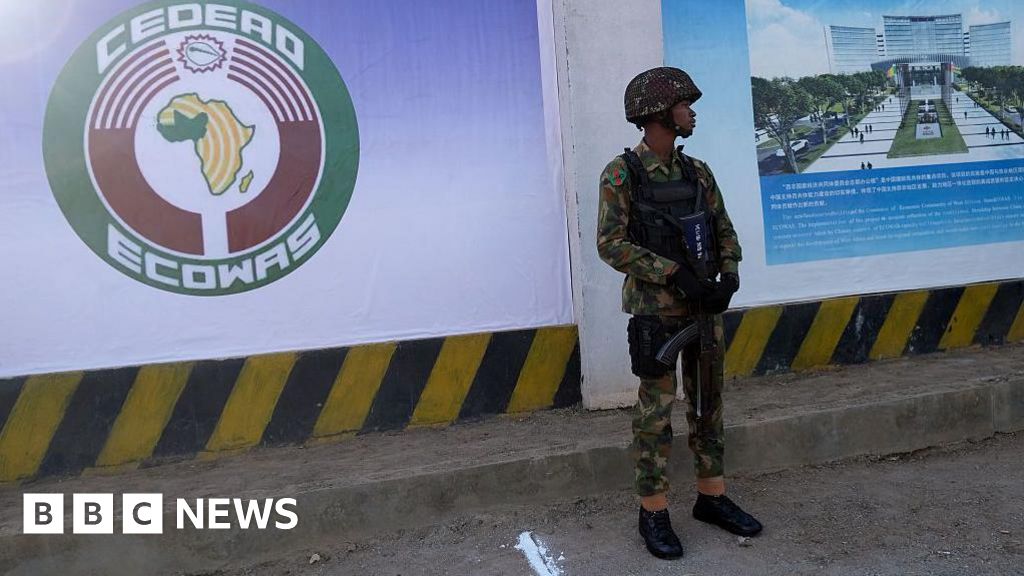

Nigeria, Ivory Coast Deploy 200 Troops for Major Clean-Up Operation

West Africa’s Turbulence: Regional Forces Foil Coup in Benin

In a decisive move that underscores the escalating instability in West Africa, Benin faced a thwarted coup attempt last Sunday, prompting a swift regional military response. Approximately 200 soldiers from Nigeria, Ivory Coast, and other regional allies were deployed to stabilize the fragile security landscape, revealing an increasing reliance on international intervention to preserve democracy in the face of growing militancy and political unrest. Nigerian fighter jets played a prominent role in repelling the mutineers from key targets, such as the military base and state television headquarters—an unmistakable message that regional powers will not tolerate unconstitutional seizures of government.

Beyond the immediate crisis, this event exposes the fragile state of regional security architecture and the concerted efforts of international institutions like ECOWAS to protect democratic processes. The regional bloc’s deployment of troops from Nigeria, Ghana, Sierra Leone, and Ivory Coast signals a clear shift: West Africa no longer stands idly by as coups become commonplace. Analysts argue that these actions are a strategic move designed to deter future attempts and to uphold the rule of law amid widespread accusations of mismanagement and rising jihadist threats. The complex interplay of military intervention and diplomacy demonstrates a nuanced recognition: regional stability hinges on preventing further chaos and safeguarding democratic institutions.

Critical to understanding this incident is the backdrop of increasing security challenges, particularly along Benin’s northern borders with insurgency-plagued Niger and Burkina Faso. The spread of jihadist groups linked to Islamic State and al-Qaeda has destabilized the region, fueling grievances and broadening the scope of conflict. According to prominent historians and security analysts, such as Dr. Jean-Luc Leblanc of the International Security Institute, these militant networks exploit weak governance and social discontent, threatening to engulf entire societies in cycles of violence. As Benin’s government, led by President Patrice Talon, prepares for next year’s elections, the ongoing unrest underscores the *urgent need for international cooperation and nuanced military strategy* that balances repression with respect for sovereignty.

Despite the victorious efforts to suppress the coup, questions remain about the long-term impact of regional intervention and the ongoing influence of external actors, including France, whose special forces are believed to have supported loyalist troops. The situation’s *turning point* will undoubtedly influence the future of West Africa’s political landscape, as governments navigate the thin line between democracy and authoritarian retreat. The events in Benin are more than isolated incidents—they are symptomatic of a broader geopolitical shift. **As history continues to unfold**, regional players and global allies must confront the undeniable reality: The resilience of democracies in West Africa depends on their ability to adapt, unite, and oppose forces that threaten to undo the liberties hard-won over decades.

Thousands of sea cucumbers wash up along Oregon coast, raising concerns about nature's chaos
Thousands of sea cucumbers wash up along Oregon coast, raising concerns about nature’s chaos

Environmental Phenomenon Strikes Oregon Coast: Thousands of Sea Cucumbers Wash Ashore

In a rare and striking display of nature’s unpredictability, Seaside, Oregon, has recently become the staging ground for an unusual marine event. Thousands of Leptosynapta clarki, or skin-breathing sea cucumbers, have been washed onto the beach following a combination of heavy surf and low tide. This event, which spans over an astonishing 2 miles of coastline, underscores the complex interactions within marine ecosystems and highlights the vulnerability of specific marine species to shifting oceanic conditions. As tourists and locals alike observe this bizarre spectacle, it is vital to understand the broader geopolitical implications linked to marine environmental shifts and the warning signs they present for future ecological stability.

Marine biologists and environmental analysts suggest that such phenomena occur sporadically, often triggered by specific confluence of surf and tide conditions. Dr. Michelle Yang, a marine ecologist at the National Oceanic and Atmospheric Administration (NOAA), pointed out that while these events can happen a few times a year or even less frequently, their scale and timing might be indicative of broader environmental stressors, including climate change and oceanic acidification. The sea cucumbers themselves, typically inhabiting the sand from northern California to the Gulf of Alaska, are incapable of returning to their preferred habitat after such displacements, leading to their eventual death and decomposition on the shore. This creates a temporary, yet significant, nutrient source for local invertebrates, which further alters the seaside’s delicate food chain.

Analysts warn that these increasingly frequent and widespread occurrences could have ramifications beyond local ecosystems—they are potential indicator signals of deeper, global marine disruptions. Many international experts warn that as ocean temperatures rise and weather patterns become more volatile due to climate change, similar incidents might become more common, affecting fisheries, coastal economies, and regional stability. The event in Oregon echoes past concerns expressed by organizations such as the United Nations’ Intergovernmental Panel on Climate Change (IPCC), which predicts that marine biodiversity could face unprecedented challenges in upcoming decades. This phenomenon might not only be an ecological anomaly but a harbinger of broader uprising shifts disrupting the relationship between nature and human progress.

Historian and geopolitical analyst Dr. Marcus Keller emphasizes that such marine disturbances serve as stark reminders of the interconnectedness of environmental health and international security. As nations grapple with climate policies and maritime disputes, the health of our oceans becomes an integral component of geopolitical stability. The deteriorating state of marine ecosystems, evidenced by events like the sea cucumber influx, underscores the urgency of global cooperation over environmental governance. The crisis in the Oregon coast exemplifies how localized natural events can reflect and influence international debates on environmental responsibility, resource management, and climate resilience. As history continues to unfold in the shifting tides of our planet, it remains clear that the choices made today about how we treat our oceans will echo in the halls of history—either as part of a sustainable future or as a chapter of neglect and loss.

In the end, the sea’s silent upheaval reminds us that nature’s fury and resilience are boundless, leaving humanity to ponder whether we are merely spectators or active participants in this unfolding story of planetary destiny.

Ouattara’s bid for a fourth term sparks youth-led tensions in Ivory Coast

The recent developments in Ivory Coast reveal a nation at a crossroads, where progressive infrastructure projects clash with mounting political unrest, exposing the undercurrent of underlying societal discontent. President Alassane Ouattara has long championed a narrative of growth and stability. In 2023, he proudly inaugurated a bridge named after himself in Abidjan, proclaiming it a symbol of modernity and national revival. However, beneath these achievements lies a volatile political landscape, with protests escalating and dissent brewing among the youth and opposition factions. Analysts warn that such conflicts threaten the very fabric of future stability in the country, which is already grappling with numerous socioeconomic challenges.

A Nation Divided by Politics and History

Since taking office in 2011, Ouattara has presided over rapid economic growth, built prominent infrastructure, and sought to leave behind the violent crises that once plagued the nation. Yet, his decision to run for a controversial fourth term has ignited fierce opposition, with protests turning increasingly intense. Over the past month, more than 200 protesters have been teargassed and detained, revealing a government that appears more intent on quelling dissent than addressing its root causes. Opposition leaders, including the historic figure Simone Gbagbo, have denounced the electoral process, claiming that the disqualification of candidates like Tidjane Thiam and the sidelining of figures such as Laurent Gbagbo demonstrate a descent into exclusionary politics. For many, the events echo past political upheavals—where the specter of civil conflict has loomed large—casting a shadow over recent progress.

Geopolitical Echoes and Disinformation Strategies

The internal strife within Ivory Coast is compounded by what international observers describe as a deliberate campaign of disinformation. A rising tide of fake news, often traced to pro-Russian, anti-France sources based in neighboring Burkina Faso, seeks to discredit Western influence and exacerbate divisions. As Vanessa Manessong of the African Digital Democracy Observatory notes, this information warfare aims to undermine traditional alliances, deepen suspicion, and destabilize democratic processes. Such tactics are not new; history shows how misinformation can serve as a tool of foreign actors to exploit internal vulnerabilities, especially in fragile democracies. The ongoing crisis in Mali and the chaos in eastern Burkina Faso serve as cautionary tales, illustrating how regional instability can easily spill into neighboring nations, transforming internal dissent into a broader geopolitical contest.

Decisions that Reshape Societies and the Path Forward

The choices made in Abidjan now carry profound consequences for the nation’sfuture trajectory. Domestically, economic development is undermined by rising inequality, soaring living costs, and a life expectancy that lingers at just 59 years. The government’s narrative of rural electrification and poverty reduction faces skepticism amidst reports of disenfranchised youth and widespread disillusionment. International organizations, including the United Nations, warn that suppressed dissent could ignite violence, while traditional diplomatic alliances are tested by the internal divisions and rising populist rhetoric. With over 44,000 security personnel deployed to safeguard the electoral process, and opposition factions demanding reforms, the country stands on the brink of a pivotal moment—where the actions of political leaders may either forge a resilient democracy or plunge the nation into chaos.

As the world watches, history’s pen continues to carve its narrative—its pages inscribed with the hopes and struggles of a society caught between progress and upheaval. The coming days may reveal whether Ivory Coast will forge a new path rooted in legitimacy and unity or succumb to the turbulence of unresolved grievances. The weight of history presses down, reminding us that the decisions made now are not merely about an election—they are about the very soul of a nation, and how it will be remembered in the vast story of the African continent’s unfolding story.

East Coast heads for heat surge following Western Australia’s record October temperatures

The recent surge of unprecedented October heat across Australia highlights the growing severity of climate change and its disruptive impact on global weather patterns. Meteorologists report that record-breaking temperatures are sweeping through states like South Australia, Queensland, and New South Wales, with Sydney and Brisbane facing high 30s—signaling a dangerous escalation in extreme weather events. According to Dean Narramore, senior meteorologist at the Bureau of Meteorology, the conditions represent “a very big day of weather,” with the potential for widespread record-breaking heat and destructive thunderstorms. These developments are not isolated anomalies but are consistent with a disturbing trend of rising temperatures—Australia’s land surface having warmed by 1.5°C since 1910, a trajectory that international climate experts warn could lead to even more catastrophic events in the future.

Over the weekend, the thermometer soared to alarming levels in Western Australia and South Australia, with locations like Telfer reaching a scorching 44.3°C. These temperatures are not only startling in isolation but serve as grim indicators of how climate crises exacerbate the severity and frequency of forest fires, heatwaves, and severe thunderstorms. As analysts from various international organizations emphasize, such extreme weather events threaten not only the environment but also the safety and socio-economic stability of nations. Experts warn that many regions could see temperatures between 10 to 16°C above normal, with some areas potentially exceeding 18°C—an indication that the resilience of societies will be tested as never before. The increasing frequency of these events underscores a stark reality: decisive global action on climate change is no longer optional but an urgent necessity.

The geopolitical impact of these climate-induced shocks is profound. Australian authorities are signaling a worsening fire danger, with models forecasting “extreme fire dangers” across multiple states, including parts of metropolitan Sydney and regional Queensland. Historically, such conditions have led to devastating wildfires, which displace communities, destroy ecosystems, and strain emergency services. This pattern is a stark reminder to international observers that climate change is no longer an abstract threat—it’s an immediate crisis capable of destabilizing entire regions. The significance extends beyond Australia; as global climate systems become increasingly volatile, nations must confront the reality that unchecked emissions contribute to a world where extreme weather is the new normal. International commentary concurs that geopolitics will increasingly revolve around climate resilience, resource management, and adaptation strategies.

As the weather worsens, the bleak horizon of climate diplomacy looms large. Critics argue that successive United Nations climate accords have failed to deliver meaningful reductions in greenhouse gases, thus amplifying the frequency of such catastrophic events. Some analysts suggest that the world is entering a new era—“where weather becomes the battleground for global power and stability.” This phrase encapsulates the notion that nations with the capacity for resilience and adaptation may gain an advantage, while others buckle under the weight of climate-induced turmoil. Historian and climate analyst Dr. Helen Roberts warns that the current trajectory risks a future where society’s most vulnerable face the brunt of environmental chaos—adversely impacting social cohesion and economic security. As the nations of the world continue to grapple with these unfolding realities, one thing remains clear: the clock is ticking, and the pages of history await the decisive chapters that will determine humanity’s fate amid the dawn of a new climate epoch.

Amazfit T-Rex 3 Pro: Tough Outdoor Gear That Just Doesn’t Coast

Tech Disruption Continues: Amazfit TRex 3 Pro Fails to Meet Expectations in Market-Defining Wearable Segment

In the rapidly evolving world of wearable technology, innovation is often touted as the main driver of competitiveness. However, recent reviews of the Amazfit TRex 3 Pro reveal that despite its promising feature set, the device struggles with implementation, casting a shadow over the company’s perceived market leadership in outdoor and sports watches. While touted for offline routing and outdoor activity metrics, user experiences highlight significant shortcomings that threaten its disruptive potential in this segment. Analysts note that this underscores a broader industry trend — rapid feature proliferation without ensuring core functionality, leading to consumer skepticism and operational risks, especially as competitors like Garmin and Apple refine their offerings.

The device’s offline routing capability epitomizes the gaming industry’s push towards seamless, high-precision navigation tools for adventure-seekers and fitness enthusiasts alike. However, the reality falls short of expectations. Reviewers detail persistent failures in route creation—often limited to short distances—and bizarre recommendations such as running on one of the country’s busiest highways, Interstate 405. This exposes a critical gap in disruption-driven innovation—the promise of smart features that integrate smoothly with user needs remains unfulfilled. For industries betting on the next wave of wearable tech, such gaps may deter early adopters, risking market share erosion when competitors deliver truly reliable solutions.

Beyond navigation, the device faces industry-wide challenges related to software completeness and interface polish. Despite the hype around fitness and activity tracking, features such as strength training recognition remain unreliable, as surfacing issues highlight a disconnect between R&D ambitions and product execution.

  • Incomplete translation and interface bugs
  • Limited activity recognition
  • Questionable usability in real-world scenarios

These shortcomings come at a crucial time when market leaders like Samsung and Fitbit continue to push comprehensive, integrated platforms that combine hardware prowess with enhanced AI-driven insights. The lesson for emerging players: innovation alone cannot substitute for meticulous testing and user-centered design. Disruption only occurs if new entrants can deliver on their promises without compromise.

Nevertheless, not all is lost for the Amazfit brand in this segment. Notable features such as an LED flashlight, basic notification display, and quick-response messaging for Android users highlight that the company is attuned to evolving consumer needs. Experts from MIT and industry analysts like Peter Thiel suggest that a strategic focus on niche, high-impact innovations—such as durable ruggedness and advanced battery life—may yet carve a competitive edge. The key takeaway for the youth market and innovators is the emphasis on “finish the job”: iteration, testing, and aligning features with genuine user needs — crucial for disrupting entrenched giants.

Looking ahead, this case exemplifies a broader market imperative: the race to redefine what wearables can do is far from over. As Elon Musk frequently warns, “speed isn’t enough; reliability is everything.” The future belongs to those who can marry cutting-edge features with rock-solid dependability, all while disrupting traditional paradigms. For the tech-savvy youth and fast-moving startups alike, the message is clear—disruption demands more than buzzwords and early prototypes. It requires relentless execution, user trust, and a keen eye on practical utility. As industry giants continue to innovate, those who master the fine balance between innovation and execution will ultimately dictate the future landscape of wearable technology. Time is of the essence; the next leap forward is just around the corner.

Social Media Auto Publish Powered By : XYZScripts.com