Matox News

Truth Over Trends, always!

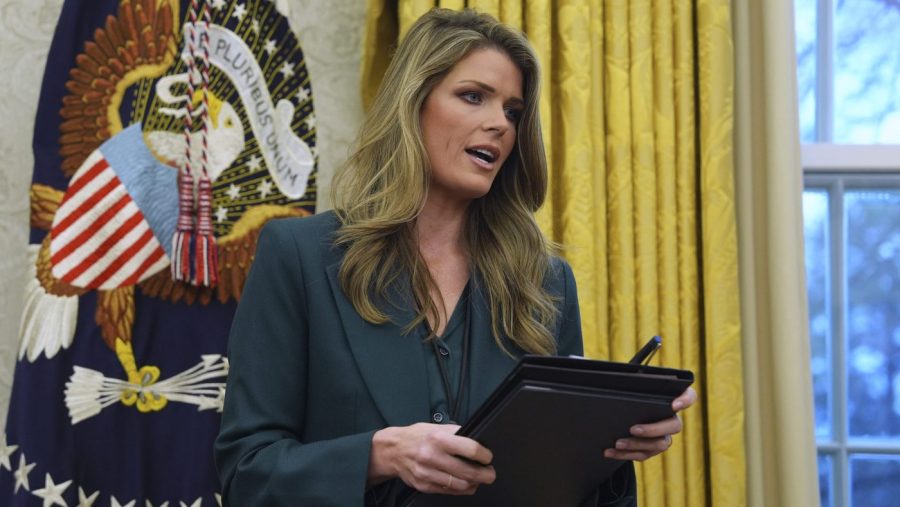
Who is Lindsey Halligan, the Trump appointee overseeing the Comey case?
Who’s Lindsey Halligan? Trump’s appointee leading the Comey investigation.

Power Plays and Political Stakes: The Case of Lindsey Halligan

In the rapidly shifting landscape of American politics, few events exemplify the ongoing power struggles that define this era like the recent rise of Lindsey Halligan. From relative obscurity to the forefront of national attention within days, Halligan’s appointment as the *top prosecutor* in the case against former FBI Director James Comey signals more than a candid legal pursuit—it unveils a broader battle for control over the narrative, institutions, and the very fabric of American law and order. Her trajectory, marked by close ties to  President Donald Trump—having served as his personal lawyer and a White House official—attests to a crucial shift: the intertwining of legal challenges with partisan strategy, where decisions ripple out to shape the political terrain for generations.

Halligan’s swift ascendance reveals an underlying conflict of authority—a challenge to entrenched bureaucracies and the establishment’s hold over government agencies. Her role in pursuing Comey, a figure once revered within the Democratic establishment, exemplifies a broader *uprising* aimed at reasserting executive influence and accountability. Such legal pursuits are not merely about justice; they are about asserting power dynamics that threaten to redraw the boundaries of institutional independence. The decision to elevate Halligan, a figure connected intimately to Trump’s inner circle, underscores the ideological and strategic battles that threaten to redefine the American legal state—a state no longer purely apolitical but increasingly infused with partisan energy.

This shifting paradigm resonates with historical echoes of constitutional confrontation—from Jefferson versus Adams to the tumult of Civil War-era disputes over federal vs. states’ rights. Today, critics argue that decisions like these threaten to derail the ‘separation of powers’—central to American constitutional design—and place an emphasis on *power consolidation*. The escalation of these conflicts reveals how political actors are harnessing legal mechanisms not just for justice but as tools for control, revealing a deep-seated truth: that in politics, law is often the battleground where the future’s fate is penned, often in ink darker than the truth itself.

Looking ahead, the outcome of this high-stakes legal chess game portends even greater power struggles. As experts—ranging from constitutional scholars to political theorists—scrutinize each move, one fact remains clear: these decisions are sculpting a new political order where the line between legal authority and political dominance blurs. The question persists—will Justice be the guiding principle, or will it be weaponized as a strategic asset in the relentless pursuit of power? As history unfurls, the spectacle underscores that politics is not merely about policy but a grand, unending script where the fate of nations is written in the ink of determination and rivalry, etched on the pages of influence and authority. In this stage of relentless contestation, the only certainty is this: as long as power struggles persist, the destiny of America will be inscribed by those daring enough to shape the rules of the game.
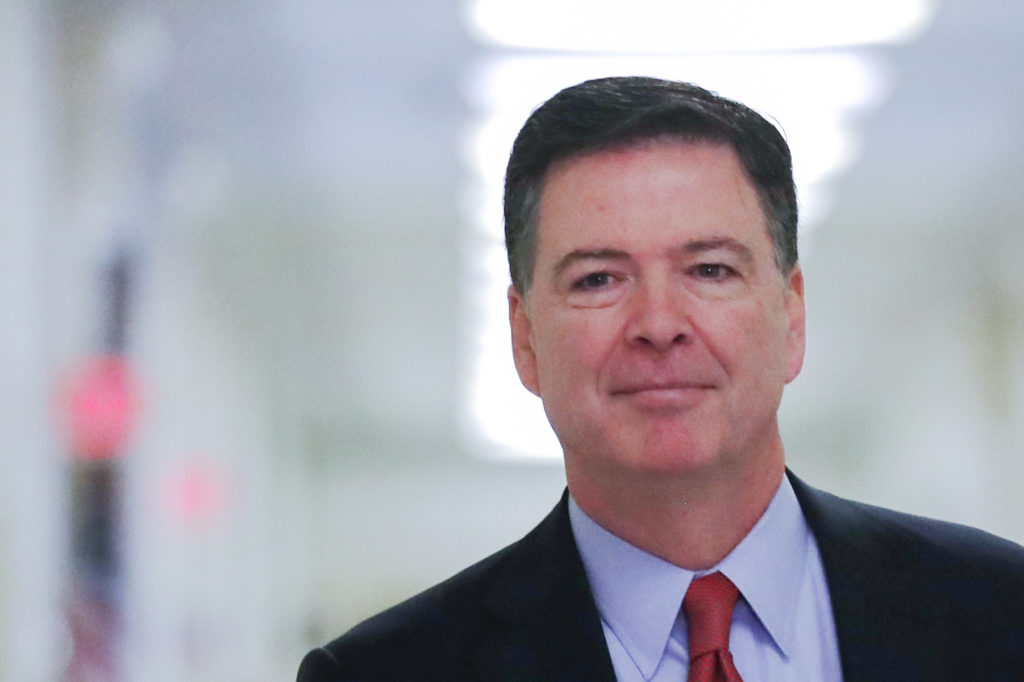
U.S. former FBI Director Comey arrives to give closed-door testimony to the House Oversight and House Judiciary committees...
Trump’s team releases detailed indictment of FBI’s Comey, revealing new insight

The latest chapter in the ongoing saga of American political power struggles unfolded as the Department of Justice, under the influence of President Donald Trump, initiated unprecedented legal actions against the former FBI Director, James Comey. This development signals more than mere legal proceedings; it exemplifies how the battle for control over narratives and institutions defines the current political landscape, with profound implications for the direction of the nation.

Trump’s aggressive retribution campaign against perceived enemies, once dismissed by critics as vindictive, is now manifesting in tangible actions that reshape the boundaries of executive authority. The decision to press criminal charges against Comey is emblematic of a broader strategy to reassert dominance over the so-called “Deep State,” framing these legal maneuvers as a fight against entrenched bureaucratic interests hostile to populist reforms. Historically, this echoes moments like the erosion of Congress’s authority during the Jacksonian era, where executive overreach challenged established norms. Today, these moves challenge the traditional notion of separation of powers, raising critical questions about the balance between legal accountability and political vendettas.

Legal scholars and constitutional experts debate whether the justice served under this new regime constitutes a genuine effort to uphold the rule of law or if it is a strategic tool in the power struggle. The decision to target figures like Comey — once seen as custodians of justice — can be viewed as a deliberate attempt to discredit institutions that could constrain presidential authority. Decisions such as these echo the words of political theorists like Carl Schmitt, who argued that sovereignty lies with the one who decides on the exception. Consequently, the unfolding events emphasize that in this era, political power is increasingly contested not just in legislative halls but within the very fabric of judicial and bureaucratic institutions, which are being reshaped to serve new ideological aims.

As history shows, if these trends continue, the power dynamics redefine what it means for the government to serve the people. When the stakes are no longer limited to policy but extend to control over the state’s core mechanisms, the condition of American democracy becomes a battlefield for alternatives — either a return to foundational principles or the consolidation of a new, executive-centric order. Much like the tumultuous constitutional conflicts during the founding era and subsequent crises, today’s developments reveal that politics is less about policy and more about destiny. The choices made now — whether in arrests or pardons, in laws passed or ignored — will determine which version of America will emerge, for better or worse, as history continues to be written on the stage where power is contested and sovereignty is claimed.”

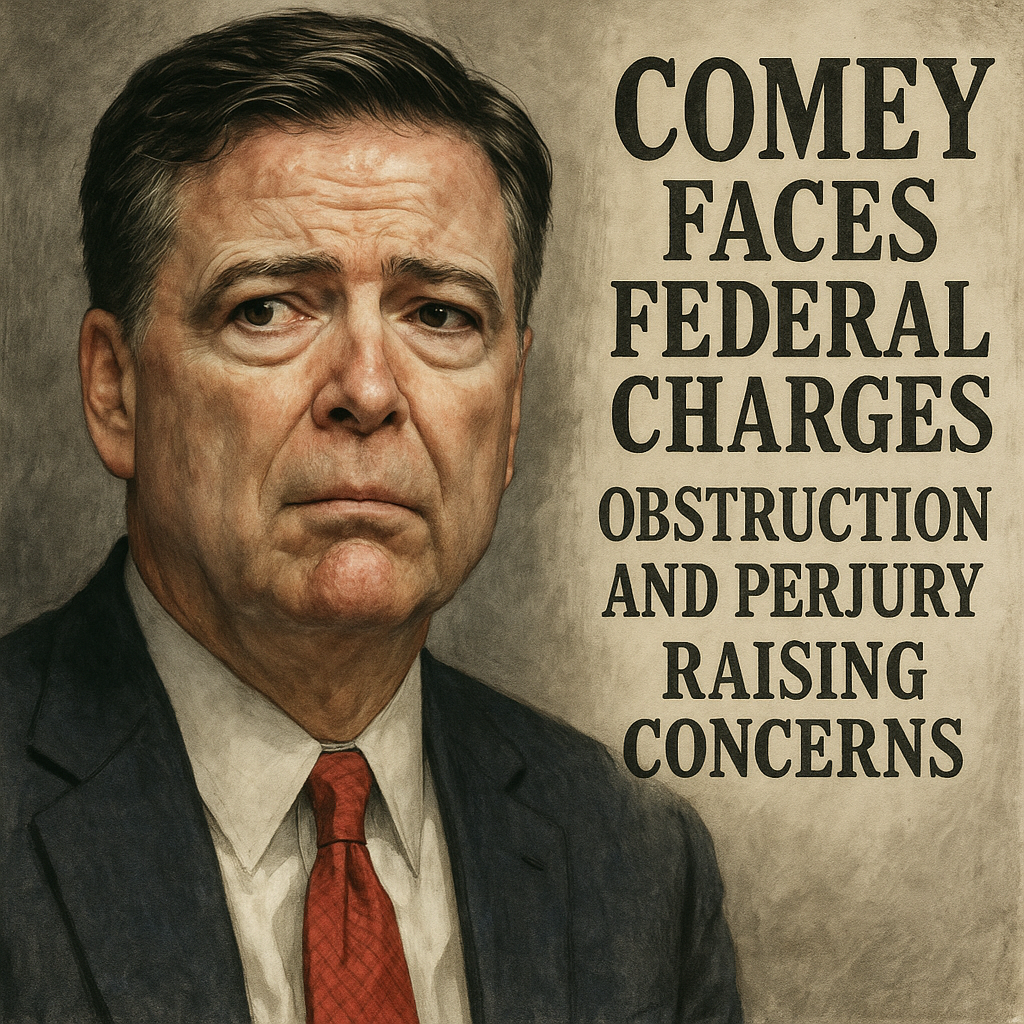
James Comey faces federal charges of obstruction and perjury, raising concerns

The recent indictment of former FBI Director James Comey by a federal grand jury marks a pivotal moment in the ongoing power struggles within the American political landscape. This development, coming on the heels of President Donald Trump’s calls for accountability, underscores the relentless battle over control of institutions and narrative. Comey, once a cornerstone of the FBI’s leadership, now faces charges including making a false statement and obstruction—charges that transcend mere legal accusations, embodying the ideological clash between those seeking to maintain law and order versus those striving for accountability in the face of perceived corruption.

From a historical perspective, this move echoes classic political dramas where the machinery of justice becomes a tool in the broader power struggle. The timing, just days after Trump’s public insistence on prosecuting Comey, amplifies the notion that decisions within the justice system are becoming increasingly intertwined with partisan interests. Experts in constitutional law note that such indictments, especially against figures once considered within the security state establishment, reflect a turbulent shift—possibly a redefinition of the boundaries of executive authority and oversight. This is reminiscent of earlier eras of political upheaval, where legal actions against high-ranking officials signal whether a nation is on a path toward justice or chaos.

Critics argue that the charges are emblematic of a broader trend where political factions leverage legal mechanisms to settle scores or shape public perception. Supporters, however, contend that no public servant is immune to scrutiny, regardless of stature. As constitutional theorists remind us, the rule of law must be protected against the temptation of political vendettas, lest the very fabric of constitutional governance frays. The charges also serve to remind citizens that, in a constitutional republic, power is mortal and fleeting; institutions exist to keep it in check, but they are also vulnerable to manipulation.

Ultimately, these events underscore that politics is less about personalities and more about the battle for the soul of the nation. Decisions made today will ripple through history, shaping not just legal precedents but the societal fabric itself. As political strategist and thinker Leo Strauss might suggest, in this realm of relentless power struggles, the future remains unwritten—destiny is proclaimed on the stage of battles that test the limits of authority and justice. In this unfolding narrative, the true victors are those who shape the rules of the game—and, perhaps, who decide the very course of national destiny.

Social Media Auto Publish Powered By : XYZScripts.com



