
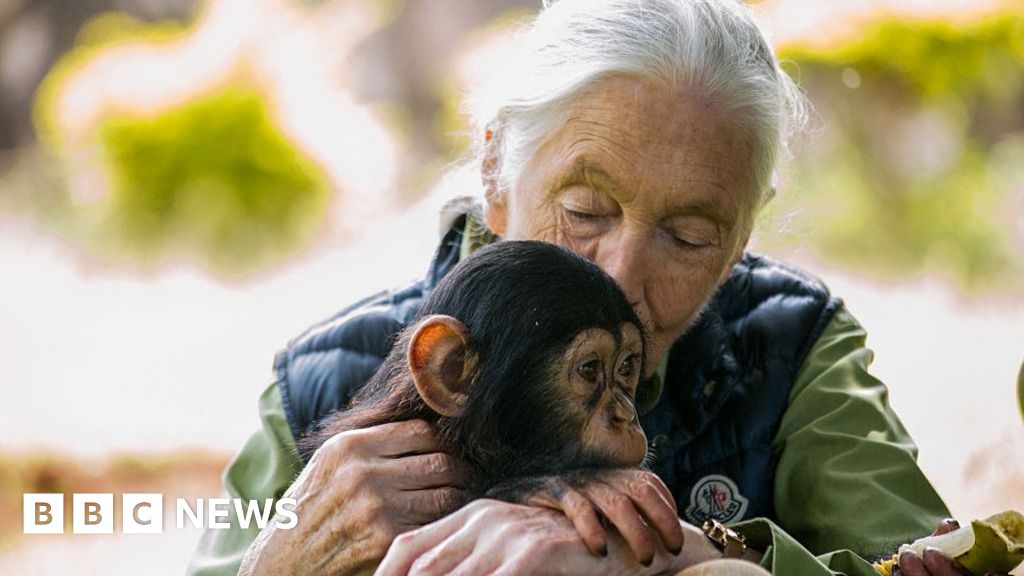

In a moment that resonates across the international community, the passing of Dr. Jane Goodall, the pioneering conservationist and primatologist, marks not just the end of an era but a profound warning about the urgent need for global ecological responsibility. At 91, her death from natural causes in California coincides with a period of increasing environmental crises—habitat destruction, climate change, and a relentless push by some nations to prioritize economic growth over sustainability. Her legacy, rooted in decades of relentless fieldwork and advocacy, underscores the crucial significance of individual and collective action in shaping the future of humanity and the natural world.
- Her work began in 1960, challenging conventional science by documenting chimpanzees using tools—a trait previously attributed solely to humans, thereby revolutionizing evolutionary science.
- Her observations on chimpanzee social structures unveiled complex family bonds and territorial conflicts, reshaping the understanding of animal intelligence.
- Her foundation, established in 1977, has contributed significantly to conserving chimpanzees and advocating for environmental policies worldwide.
Global institutions like the United Nations and Greenpeace have lauded her lifelong dedication, emphasizing that her discoveries and advocacy efforts laid a foundation for a more informed and conscientious international environmental movement. She was recognized with numerous accolades, including a Damehood in 2003 and the US Presidential Medal of Freedom in 2025, signaling the broad consensus around her influence. Yet, her story is more than just scientific breakthrough; it is a narrative of activism that highlights how bold decisions in the global arena—such as the push for habitat restoration—can influence both policy and society’s perception of nature.
Analysts and historians point to her groundbreaking approach—associating closely with her subjects while advocating for their protection—as a pivotal moment that challenged the male-dominated scientific establishment. Her efforts to rescue chimpanzees from captivity and her persistent calls for action on climate change brought new urgency to conservation discussions, positioning her as a formidable voice in how nations address ecological and ethical responsibilities. As climate and environmental protests grow worldwide, her work underscores that the decisions made today reflect the trajectory of future generations. The ongoing debates around international treaties and conservation strategies demonstrate how her legacy continues to influence policy, demanding a renewed commitment to restoring and protecting biodiversity.
As the world witnesses the unfolding chapter of her life’s work, one must reflect that history is still being written. The torch she carried—of advocacy, science, and hope—remains alive in the countless projects and policies inspired by her vision. The weight of her legacy presses upon leaders and communities alike, reminding us that while individual contributions are remarkable, the true power lies in collective action. With each initiative to safeguard habitats and promote sustainable living, humanity stands at a crossroads, where the choices made will define the course of life on Earth, etching her lifetime of dedication into the annals of history—an enduring call to action amidst the chaos of the modern age.





