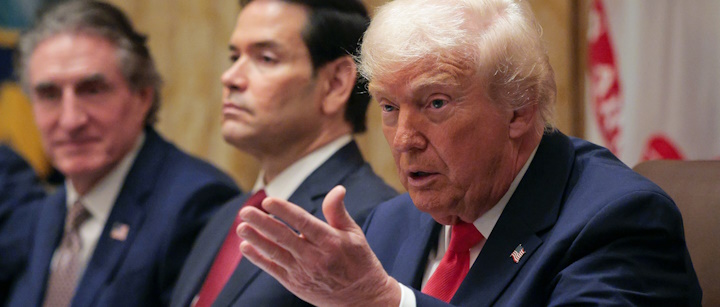

Investigating the Truth Behind President Trump’s Remarks on Somali Immigrants and Welfare
Recently, former President Donald Trump made inflammatory claims about Somalia and its immigrant population, alleging that Somali Americans “ripped off” Minnesota “billions of dollars” every year and suggesting that “like 88%” of Somalis receive welfare benefits. Such assertions demand closer scrutiny, particularly as they fuel divisive narratives and influence public opinion about immigration. An examination of the available data and official reports reveals a complex reality that starkly contrasts with these sweeping allegations.
Analyzing the Fraud Cases in Minnesota
Trump’s remarks appear to be linked to ongoing investigations into fraud schemes involving social service programs in Minnesota, particularly targeting the Somali community. Specifically, federal and state authorities have identified several cases involving fraudulent claims—most notably in programs like the federally funded Child Nutrition Program and Medicaid-related housing services. As of late 2025, prosecutors had filed charges against dozens of individuals, with reports indicating that the alleged fraud amounts range from hundreds of millions to over a billion dollars. However, the Minnesota Star Tribune reported that, based on court documents reviewed to date, the confirmed fraudulent amounts are closer to $152 million, though investigations continue and the total could potentially increase.
- Federal allegations include schemes where fake food sites and shell companies submitted inflated invoices for millions of meals under the Child Nutrition Program.
- The feeding program, operated by Feeding Our Future, reportedly disbursed over $240 million in fraudulent claims, with some of the money allegedly used for personal gain.
- The housing program fraud involved enrollment of individuals and misappropriation of funds intended for housing assistance, with the program’s costs skyrocketing from $21 million in 2021 to over $104 million in 2024 due to suspected fraud.
While these cases are serious, they do not justify the broad and inaccurate claims of billions stolen annually from Minnesota or the entire U.S. economy by Somali communities as Trump stated. The actual numbers, based on current investigations, are significantly lower, and investigations are still underway to determine the full scope.
Welfare and Somali Communities: The Data
One of the central claims made by Trump was that “88%” of Somalis receive welfare benefits. Our review shows that the White House did not provide evidence to support this figure. In response to our inquiry, the Center for Immigration Studies (CIS), which advocates for lower immigration levels, reported that 81% of Somali immigrant households in Minnesota receive “some form of welfare,” including assistance programs like Medicaid and food aid, based on data from the American Community Survey spanning 2014 to 2023. It’s important to note that this figure encompasses various assistance types and is not directly comparable to the claim of “88%” receiving welfare.
According to Minnesota’s state demographer, Susan Brower, from 2019 to 2023, approximately 8% of people of Somali descent in Minnesota reported receiving specific forms of “public assistance income”—which includes programs like the Minnesota Family Investment Program, General Assistance, and Supplemental Security Income (SSI). This percentage is derived from the Census Bureau’s data, with a margin of sampling error making the true figure likely fall between 6.3% and 10.1%.
Furthermore, the broader statistic Trump cited—most U.S. immigrants relying heavily on welfare—has been partially supported by newer reports. The CIS’s 2023 study indicated that 54% of immigrant-headed households used at least one major welfare program, considered to include assistance like SNAP (food stamps), Medicaid, and TANF. Conversely, the libertarian Cato Institute’s 2022 analysis suggested that immigrants consume 21% less welfare per capita than native-born Americans when considering a broader set of programs, including entitlement benefits such as Social Security and Medicare.
The Broader Context and Responsible Citizenship
While higher poverty rates among Somali populations in Minnesota explain why they may access specific social programs at higher rates, these numbers do not support the claim of widespread theft or dependency. The figures are nuanced, and conflating them with exaggerated claims only fuels misinformation. It’s vital for responsible citizens and policymakers to distinguish between isolated criminal cases and the overarching contributions of immigrant communities—many of whom are U.S. citizens, with 95% of Somalis in Minnesota being citizens and over half born in the U.S.
Ultimately, honest, evidence-based dialogue around immigration and social safety nets is essential for a healthy democracy. Senators, community leaders, and citizens must demand transparency and refuse to accept raw demagoguery that distorts facts for political gain. The future of responsible citizenship depends on our collective ability to pursue truth and uphold the integrity of our democratic institutions.