
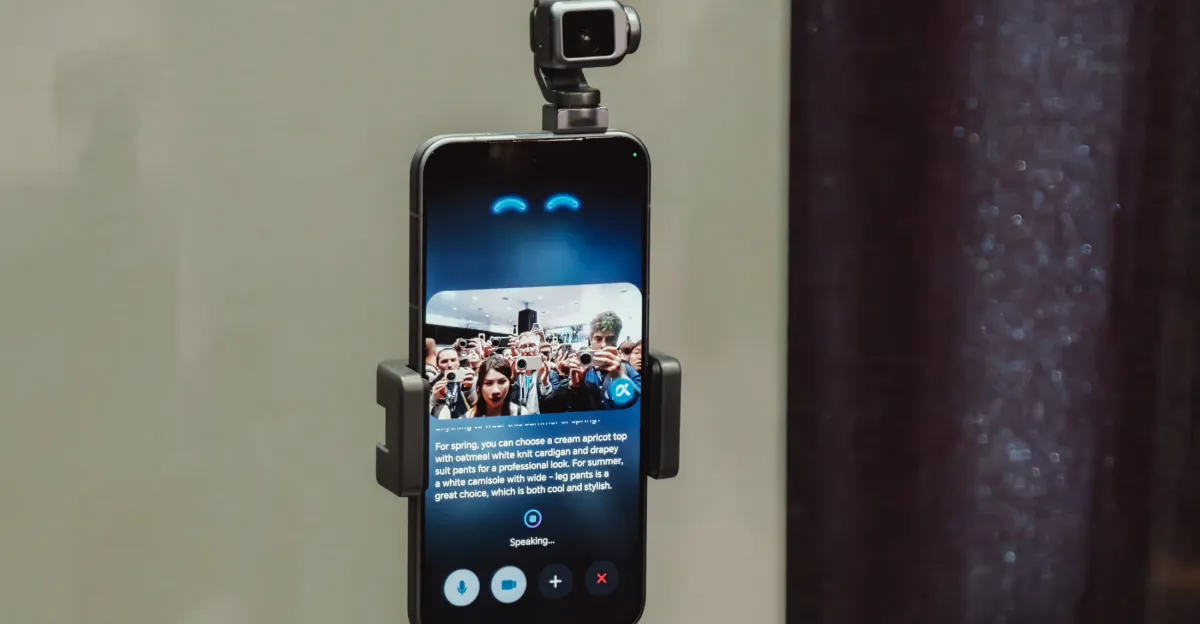

Honor Unveils Robot Phone and humanoid robots at MWC 2026: A Disruptive Leap in Tech Innovation
The Mobile World Congress 2026 in Barcelona marked a significant milestone as Honor announced and demonstrated its pioneering efforts in robotics and mobile technology with the debut of the so-called Robot Phone. While details remain scant, the showcased device signifies a bold step toward integrating advanced AI and robotics into consumer electronics, signaling a potential shift in how technology interacts with everyday users. The demonstration featured a working prototype capable of holding AI-enabled conversations, movably folding back, and mimicking human gestures—hallmarks of disruptive innovation aimed at positioning Honor firmly in the forefront of next-generation device development.
During the event, Honor also exhibited a humanoid robot, which impressed spectators with its agility, including dance routines and backflips—albeit with some ambiguity about whether the robot was remotely teleoperated or acting autonomously. Demonstrations of the robot haltingly waving and shaking hands hinted at rapid advancements in robotics behavior, but also highlighted lingering questions about the maturity and reliability of such machines in real-world applications. This dual showcase underscores a broader industry trend toward integrating autonomous robotics into consumer platforms, promising to redefine service, security, and entertainment sectors. Notably, Honor’s willingness to reveal these prototypes signals an industry-wide pivot toward robotics as a core strategic area, with the potential to challenge incumbent tech giants entrenched in mobile and AI markets.
Market analysts and industry leaders, including Gartner and MIT researchers, underscore the business implications of these developments. The convergence of AI-enabled smartphones and humanoid robotics is poised to accelerate the disruption of traditional industries, from customer support to personal assistants. Honor’s pivot into robotics — coupled with the planned release of the Robot Phone expected in China later this year — exemplifies how innovative companies are leveraging rapid technological advances to carve out unique market niches. This strategic move could catalyze a new era of integrated AI ecosystems, where devices are not just tools but partners capable of complex interactions and autonomous functions.
As the industry hurtles toward this future, stakeholders face the dual challenge of harnessing the immense potential of robotics and AI while managing the risks associated with interoperability, safety, and ethical deployment. Experts like Elon Musk and Peter Thiel emphasize that the coming decade will be pivotal; failure to adapt quickly to the disruptive wave of AI and robotics could render current market leaders obsolete. With Honor’s latest prototypes nudging the boundaries of what’s technologically feasible, it is clear that the race for control of this new frontier is intensifying. The urgency for established corporations and startups alike to innovate at breakneck speed has never been greater. The industry’s trajectory suggests that those who lead in AI-powered robotics and ubiquitous intelligent devices will dominate the next wave of global tech dominance, making the immediate future one of unparalleled opportunity and strategic risk. The clock is ticking — the future belongs to the bold, the innovative, and those willing to disrupt.”





