
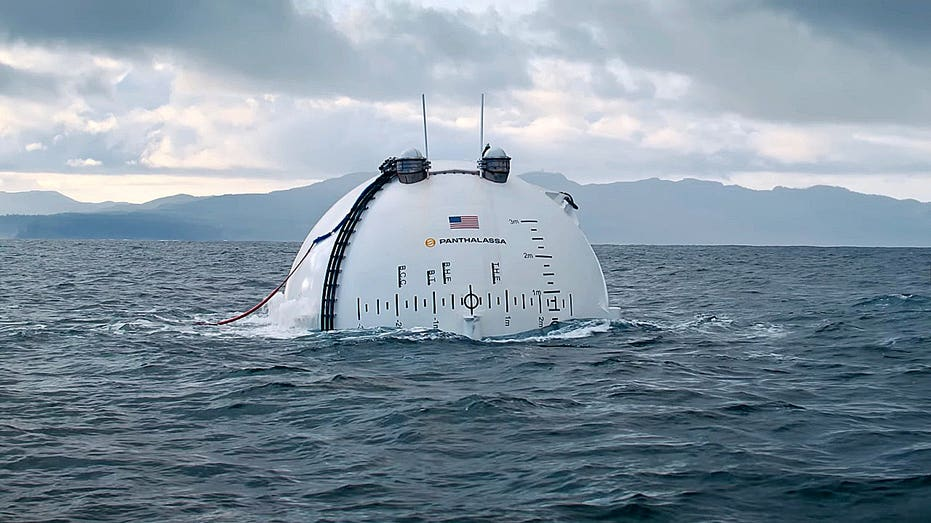

The relentless expansion of artificial intelligence demands ever-increasing computational power, posing significant challenges for energy consumption and cooling. A bold new initiative, however, aims to address these issues by taking the very infrastructure of AI out to sea. Panthalassa, a pioneering company, has successfully raised substantial capital to develop and deploy autonomous floating AI data centers, harnessing the vast resources of the ocean.
The Maritime Shift for AI Infrastructure
Traditional land-based data centers require immense plots of land, significant energy grids, and vast amounts of fresh water for cooling, leading to escalating operational costs and environmental concerns. Panthalassa’s vision offers a compelling alternative: relocate these high-demand computing nodes to the open ocean. This strategic shift is designed to capitalize on the inherent advantages of the marine environment, providing a scalable and potentially more sustainable solution for the future of AI. Key benefits include:
- Renewable Power: Utilizing perpetual ocean wave motion for electricity generation.
- Natural Cooling: Leveraging abundant cold seawater to efficiently cool high-performance computing chips.
- Reduced Land Footprint: Eliminating the need for large terrestrial land acquisitions and associated infrastructure.
- Remote Deployment: Enabling strategic placement of computing power closer to data sources or in areas with optimal environmental conditions.
This innovative model promises a significant reduction in the environmental impact and operational expenditures typically associated with conventional AI infrastructure.
Ocean Waves: A Renewable Powerhouse for Computing
At the heart of Panthalassa’s innovation is the ingenious utilization of ocean waves for electricity generation. Each floating node is conceived as a self-sufficient power station, where the kinetic energy of wave motion is converted into reliable electricity to feed onboard AI hardware. Complementing this, the abundant cold seawater provides a natural and efficient medium for cooling the intensive computing chips, drastically reducing the energy footprint typically associated with thermal management in data centers. The company has dedicated a decade to refining its power generation and autonomous operational technologies, with successful tests of its Ocean-1, Ocean-2, and Wavehopper prototypes in recent years, as reported by Fox News.
Significant Investment Fuels Pioneering Development
The ambitious scope of Panthalassa’s project has attracted significant investor confidence. The company recently closed a Series B funding round, securing $140 million, bringing its total capital raised to an impressive $210 million. This substantial backing underscores the serious market potential seen in ocean-based AI solutions. Noteworthy investors, including Palantir co-founder Peter Thiel, are spearheading this financial commitment. The newly acquired funds are earmarked for completing a pilot manufacturing facility near Portland, Oregon, and crucially, for deploying the Ocean-3 pilot node series in the northern Pacific Ocean later in 2026. This deployment represents a critical step towards validating the commercial viability and operational efficiency of these novel floating AI data centers.
Instead of building another giant AI data center on land, Panthalassa wants to place computing power out at sea.
As artificial intelligence continues its rapid integration into every facet of modern life, the demand for robust, efficient, and environmentally responsible computing infrastructure will only intensify. Panthalassa’s innovative approach to floating AI data centers presents a fascinating prospect for meeting these future needs. By transforming the ocean into a platform for sustainable AI development, this venture not only addresses critical energy and cooling challenges but also paves the way for a new era of technological innovation that aligns with principles of resourcefulness and long-term sustainability. The successful deployment and operation of these oceanic nodes could redefine the landscape of global AI infrastructure, offering a testament to human ingenuity in adapting to and harnessing natural forces for progress.







