Matox News

Truth Over Trends, always!

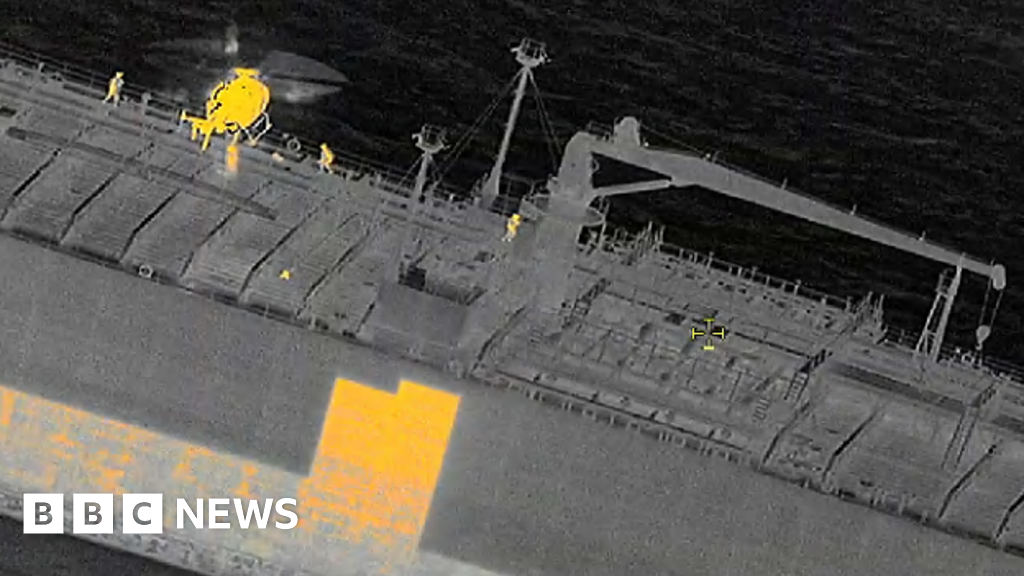
Sweden captures captain of suspected Russian covert fleet ship

In a concerning development that could ripple across maritime security and international law, it has emerged that the skipper of the vessel Sea Owl One is suspected of producing forged documents during a recent boarding by coast guard authorities. This incident, seemingly isolated at first glance, underscores the broader vulnerabilities in maritime border control and the ongoing geopolitical contest for influence over vital sea lanes. As nations enhance their maritime patrols and security protocols, the discovery of forged documents raises serious questions about the prevalence of illicit activities in contested waters and the potential for diplomatic tensions to escalate.

Experts caution that such acts of document forgery are often tied to larger networks engaged in illegal trade, smuggling, or even terrorist activities. The International Maritime Organization (IMO) and other global watchdogs have long warned about the increasing sophistication of these schemes, which threaten the stability of international shipping routes. The incident involving Sea Owl One specifically highlights a pressing challenge: how to effectively enforce maritime law amid the complex web of international jurisdiction. As analysts from various think tanks point out, the forgery not only complicates the enforcement process but also undermines trust in maritime documentation—an essential component of global commerce.

From a geopolitical perspective, the event resonates far beyond the immediate region. Countries bordering strategic chokepoints such as the Strait of Malacca, the Strait of Gibraltar, or the Bab el-Mandeb are increasingly vigilant as maritime security operates at the intersection of national interests and international cooperation. The incident serves as a stark warning to maritime nations about the potential for covert activities to threaten broader security architectures. Historically, maritime disputes have often escalated when trust erodes, prompting international institutions like the United Nations to call for tighter regulations and intelligence sharing to prevent such occurrences from spiraling into conflict.

While the authorities have yet to release a comprehensive statement, the incident underscores the fragile nature of maritime sovereignty in an era marked by epochal shifts—such as the rise of China’s maritime ambitions and the strategic recalibration of Russia in global waterways. How nations choose to respond—whether through hardened security measures or diplomatic negotiations—will likely influence the course of regional stability for years to come. As history keeps its relentless march forward, this seemingly small breach could foreshadow larger power struggles that threaten to reshape the maritime geopolitical map and redefine the balance of influence for a new generation.

France probes oil tanker linked to Russia’s covert fleet

Shadow Fleet and Drone Incursions Highlight Europe’s Geopolitical Tensions

Recent investigations by French authorities into a suspect oil tanker reveal a disturbing layer of hybrid warfare that threatens the stability of Europe. The vessel, known as Boracay, which was flagged in Benin and previously operated under the name Pushpa, is suspected of being part of Russia’s clandestine shadow fleet. This fleet is often used by Moscow to circumvent international sanctions by employing vessels whose ownership and operations are deliberately obscured. As European countries face a series of unexplained drone flights and airspace violations, the incident underscores the intensifying struggle for control over critical maritime and aerial domains, an unprecedented battlefield in modern geopolitics.

The drone sightings over Denmark in September, leading to airport closures in Copenhagen and Aalborg, mark a clear escalation in what officials now term a hybrid war. These drones—likely launched from ships in close proximity—were almost certainly larger, fixed-wing or delta craft that require substantial launch platforms, pointing to a sophisticated level of planning and resource deployment. Denmark’s Prime Minister, Mette Frederiksen, publicly accused Russia of threatening European security, framing the incident as part of Moscow’s broader strategy to destabilize the continent. Meanwhile, NATO and European allies have responded by deploying anti-drone defenses, and upcoming EU summits are now focusing on countermeasures such as the development of a “drone wall” to deter future incursions, revealing a shift toward militarizing new technological threats.

As investigations unfold, the shadow fleet emerges as a key element—one that significantly impacts global oil markets and international sanctions enforcement. The UK, the EU, and other nations have identified vessels like Boracay as integral to clandestine oil trafficking routes that skirt sanctions. The vessel’s history is emblematic: from being detained by Estonian authorities as Kiwala earlier this year, over uncertainty about its registry, to a recent transfer to the Russian fleet, the vessel signifies how Russia’s economic war efforts rely on deceptive shipping practices. Analysts warn that such fleets enable Moscow to evade sanctions, maintain its oil revenues, and fund military operations, thereby challenging Western efforts to isolate Russia economically.

The geopolitical impact of these developments extends beyond immediate security concerns. They highlight a shifting balance where maritime and aerial domains become new theaters for geopolitical competition, with Russia actively testing Western defenses and probing the vulnerabilities of allied nations. The example of vessels like Astrol-1 docking in St. Petersburg or the Oslo Carrier-3 carrying steel from Germany to Lithuania illustrates a complex web of economic and military signals. International organizations, including NATO, are now warning that these covert activities could escalate into open conflict if not decisively countered, creating a tense atmosphere reminiscent of Cold War stratagems but in the age of advanced technology. As history continues to unfold on this shadowy stage, it remains undetermined how long Europe’s resolve can withstand the relentless pressure and deception embedded in Russia’s hybrid tactics, leaving the world poised on the brink of a new era of unconventional warfare where the rules are continually rewritten.

Social Media Auto Publish Powered By : XYZScripts.com


