Matox News

Truth Over Trends, always!

US and Ecuador crack down on drug traffickers in major new operation

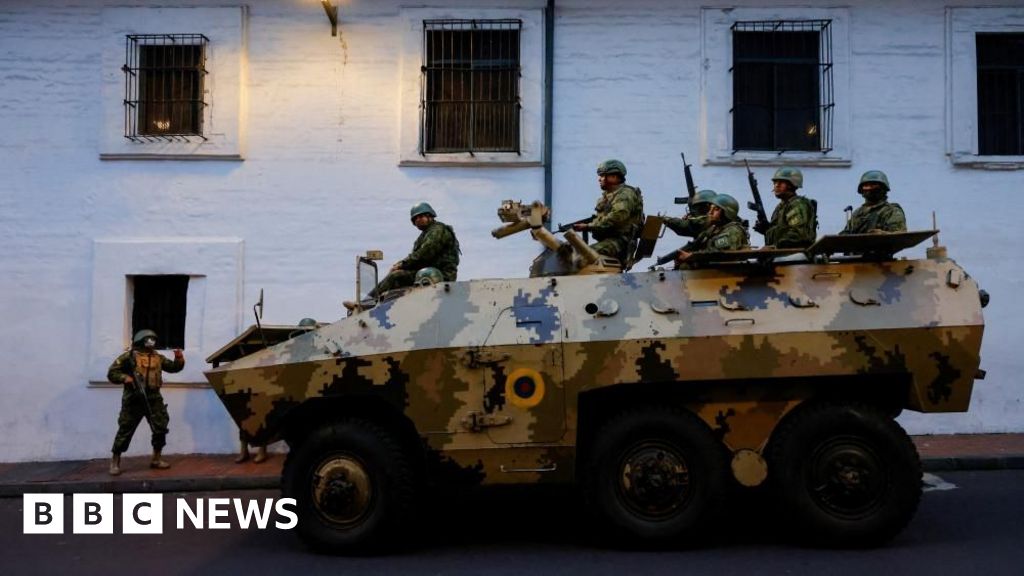
Recent statements from Washington reveal a concerted effort to combat what it describes as ‘designated terrorist organizations’ operating within Ecuador. This development signals a significant escalation in regional security dynamics, with broad geopolitical implications extending well beyond South America. The United States’ involvement underscores a broader strategy to contain extremist elements that threaten not only regional stability but also international security, as global powers seek to project influence amid shifting alliances and rising threats.

Analysts point out that the uprising of terrorist groups in the region signals a troubling trend, with insurgent groups leveraging Ecuador’s geographic and political vulnerabilities. Historically, Ecuador has remained relatively insulated from the turmoil that has plagued neighboring countries, but recent years have witnessed increased infiltration by various militant factions. According to reports from international organizations such as the United Nations, these groups have posed threats not only to Ecuador’s internal security but also to global efforts to destabilize fragile governments. Washington’s assertions suggest a desire to prevent these entities from establishing sanctuary on the continent, which could facilitate transnational operations, drug trafficking, and illicit arms smuggling.

In response, Ecuador’s government has reaffirmed its commitment to joint operations with the United States and regional allies, exemplifying what some analysts describe as a pivot toward stronger security cooperation. The move comes amid ongoing debates about sovereignty versus the need for international assistance in combating extremism. Historians emphasize that such cooperation often marks a pivotal shift in a country’s foreign policy, reflecting the increasing importance of security alliances in a world where traditional borders are increasingly porous. Yet, critics caution that such interventions could also fuel anti-Western sentiments, complicating diplomatic relations and potentially destabilizing the region further.

This unfolding scenario exemplifies the delicate balance of power in the 21st century, where the fight against terrorism serves as a proxy for broader geopolitical strategies. As global leaders deliberate the next moves, the international community must reckon with how these decisions will shape the societal fabric of Ecuador and neighboring nations. The echoes of history warn us that, often, the true cost of such interventions is paid in the long run—by innocent civilians caught in the crossfire and by nations entangled in the shifting tides of global conflict. As the world watches, the pages of history continue to be written, with each chapter potentially determining the future stability of a continent whose every move resonates far beyond its borders.

Italian cops crack down on protesters in Milan ahead of Olympics

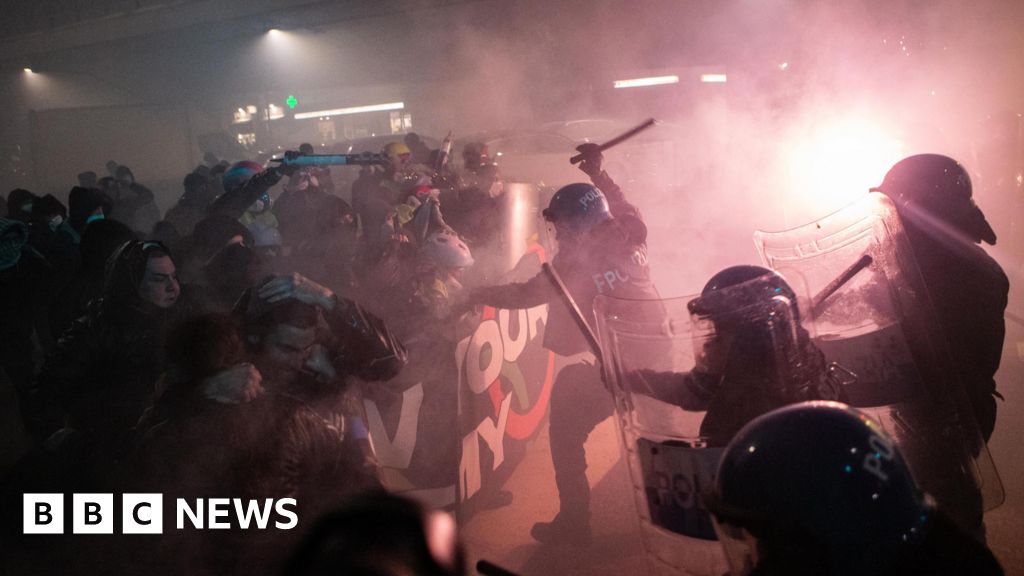
In an unfolding development that underscores the persistent volatility of civil unrest across Europe, authorities in Italy have reported the detention of at least six individuals following a recent demonstration in Turin. This protest, initially intended as a rally for economic reform and social justice, swiftly escalated into violence, raising alarm across both national and international spheres. Such incidents highlight the fragile state of social cohesion in parts of the continent and draw renewed scrutiny on the government’s approach to civil dissent.

The violence erupted unexpectedly amidst a context of mounting economic pressures and political discontent, which have been vastly magnified by global uncertainties. The Ufficials confirmed that the unrest in Turin was not an isolated event but part of a broader wave of demonstrations sweeping through parts of Europe, fueled by frustration over rising inflation, unemployment, and perceived government indifference. Analysts from international think tanks are warning that these tensions may escalate if the underlying issues are not addressed, potentially destabilizing long-standing social contracts within European nations.

International organizations, such as the European Union and the United Nations, have issued cautious statements underscoring the importance of dialogue and restraint. However, the recent arrests in Italy serve as a stark reminder of how fragile the situation remains. Despite the government’s efforts to quell unrest, critics argue that heavy-handed security measures risk alienating the very populations they aim to pacify, potentially fueling further unrest. How this delicate balance will unfold could reshape the social fabric of the region for years to come.

Historians and geopolitical analysts increasingly warn that incidents like the Turin demonstrations are more than isolated clashes—they are emblematic of deeper, systemic shifts within the European order. As nations grapple with rapid economic and demographic changes, the decisions made today will determine the future of governance and social stability. Governments are under mounting pressure to find effective, just solutions that respect civil liberties while maintaining law and order.

As the world watches, the *story of Turin* continues to unfold, a powerful reminder that history is always in motion—each protest, each arrest, shaping the narrative of a continent at a crossroads. The tension in Italy echoes across borders, a stark warning that if policymakers do not heed the underlying issues, the consequences could ripple outward, threatening the very foundations of democracy and social harmony. The weight of history presses heavily, and the future remains uncertain, written in the choices made in these critical moments.

China strikes again: Executes four Myanmar mafia members to crack down on crime

In a dramatic move with significant geopolitical repercussions, China has publicly executed four members of the notorious Bai family mafia, a criminal syndicate responsible for running widespread scam centers across Myanmar. This decisive action signals a clear stance from Beijing against transnational organized crime and underscores the country’s broader efforts to consolidate control over regional stability.

The Bai family’s criminal enterprise, according to official reports, operated a vast network engaged in advanced financial scams, leveraging Myanmar’s relative legal and political ambiguities. These scam centers targeted vulnerable populations across Southeast Asia and beyond, draining billions of dollars from unsuspecting victims. The crackdown, culminating in the execution, illustrates how China is stepping up its law enforcement outreach beyond its borders, aiming not only to dismantle criminal syndicates but also to project strength within the strategic corridors of Southeast Asia.

International analysts, including specialists at the South China Sea Policy Institute and global crime watchdogs, interpret this move as part of a broader strategy to safeguard China’s economic interests and regional influence. By explicitly targeting this notable criminal organization, Beijing seeks to present itself as the defender of stability and order in a volatile neighborhood. The Chinese government has indicated that such actions align with its commitments to regional peace and the fight against transnational crime—an assertion underscored by recent joint operations with Myanmar authorities.

Yet, the decision to execute members of the Bai family mafia also raises critical questions about international law and human rights standards. Critics argue that capital punishment, especially in high-profile cases involving foreign criminal syndicates, risks escalating tensions and complicating diplomatic relations. Nevertheless, advocates within China and aligned allies contend that firm measures are essential to counter organized crime’s corrosive influence on society and sovereignty.

Looking ahead, this bold move from Beijing exemplifies how national security and legal sovereignty are increasingly intertwined with global regional stability. The ramifications extend far beyond the immediate crackdown, shaping China’s reputation as a law-and-order power while also resonating through the corridors of international diplomacy. As the dust settles over this high-profile execution, the story of the Bai mafia’s fall is just another chapter in the unfolding narrative of a nation eager to redefine its role in the global order, with history watching intently at the perilous crossroads of power and justice.

Australia News Live: ACT Shuts 71 Schools Over Sand Scare, NSW Police Crack Down on Domestic Violence—Protecting Our Communities

The geopolitical landscape is perpetually shifting, often influenced by key domestic decisions made within sovereign nations. Recently, Australia exemplifies this pattern through a series of dramatic developments that signal both internal challenges and external strategic recalibrations. The recent closure of 71 public schools in the ACT over fears of asbestos-laden children’s sand, alongside ongoing debates over immigration and energy policies, underscore how internal domestic issues can ripple outward, affecting international perceptions and alliances.

Meanwhile, in the wider global arena, significant shifts have occurred, notably with U.S. President Donald Trump signing an executive order easing tariffs on food imports, including beef and bananas. This move reflects a nuanced strategy aimed at addressing inflationary pressures domestically, but it also signals a broader tendency towards protectionism that could strain international trade networks. Patrolling these trade corridors, Australia’s Prime Minister Anthony Albanese reasserts the importance of global trade, framing it as a “bulwark against conflict”. Analysts from think tanks suggest that such rhetoric not only emphasizes economic cooperation but also highlights how trust in international partners can serve as a foundation for diplomacy, promising a buffer in times of crises.

Yet, Australia’s internal struggles — from the asbestos fears leading to school closures to contentious debates over immigration levels—a clear reflection of how decisions at home wield profound consequences for societal stability and international standing. Sussan Ley, the opposition leader, openly advocates for a reduction in immigration, citing community challenges such as transportation and infrastructure strains. Their stance, though controversial, reveals a broader tension on the alliance between open borders and national security, echoing concerns raised by historians and policy analysts who warn that unchecked demographic shifts can challenge social cohesion and political stability. Meanwhile, government funding for climate resilience projects across Australian states underscores a dual narrative: managing environmental threats while navigating economic constraints, as seen in the proposed $200 million investment in weather-resistant infrastructure.

Externally, unresolved conflicts and international economic policies intertwine with national strategies. With Australia poised at the crossroads—balancing energy independence, climate commitments, and economic revival—its path forward will inevitably influence regional stability and global alliances. The decision to support, or oppose, transitioning toward renewable energy sources and industrial resilience could determine whether Australia becomes a reliable partner or an unpredictable actor on the world stage. Historic analysts warn that in a world where “trust” is becoming a scarce commodity, the decisions of now will shape the geopolitical order of decades to come, a story still being written with each policy choice and international shift.

Multiple injured as driver recklessly hits 10 on Ile d’Oléron—authorities crack down on rising dangers

The quiet beauty of Ile d’Oléron, a renowned holiday haven off the west coast of France, was shattered by a shocking act of violence that has sent ripples through the international community. In an incident that authorities suspect may have terrorist undertones, a local man in his mid-30s deliberately drove into pedestrians and cyclists, critically injuring four individuals, including a young girl. The attacker, identified as a resident of the island, was eventually subdued and arrested following a dramatic confrontation, highlighting concerns about emerging threats not only in France but across Europe.

According to reports, the suspect drove through the villages of Dolus d’Oléron and Saint-Pierre-d’Oléron, deliberately targeting civilians in a disturbing display of violence. After the assault, he abandoned his vehicle and set it ablaze, an act that prompted an immediate response from local authorities. The suspect reportedly shouted “Allahu Akbar” during his arrest, raising alarms over potential connections to extremist ideologies, although France’s anti-terror agencies have thus far declined to take charge of the investigation. Still, the fact that the man was known to police raises pressing questions about the efficacy of security systems and early warning procedures in borderless Europe. This incident underscores an ominous trend: how individual grievances or ideological radicalization can manifest in unprecedented acts of terror, threatening societal stability and international security.

Globally, this event resonates within a broader context of rising geopolitical tension. European nations, grappling with complex issues of integration, cultural identity, and security, are increasingly vulnerable to lone-wolf attacks that exploit societal fractures. Analysts from EU security agencies warn that such incidents are not isolated but symptomatic of a global push by extremist groups to destabilize Western democracies. Their impact extends far beyond the immediate victims, fostering a climate of fear that can be manipulated to justify authoritarian measures—an unsettling evolution in the war against terror. Furthermore, the incident on Ile d’Oléron places under question the resilience of small, popular tourist destinations—which, due to their economic dependence on flow of visitors, are now potential targets, shifting the geopolitical landscape of security.

Prominent historians and international security experts emphasize that the ongoing threat in Europe is a critical turning point in the struggle to defend shared values. Many argue that without strengthened intelligence cooperation and community engagement, such tragedies could become more frequent and more devastating, affecting nations and societies at their very core. As France faces this new reality, the incident leaves an indelible mark—reminding us that history is still writing itself, and that the battle for the soul of the West is far from over. With each new act of violence, the world witnesses how fragile the veneer of safety truly is, prompting a sobering reflection: in the ongoing contest of ideas, will civilization prevail against those who seek to sow chaos?

Epping sex offender rearrested after wrongful release, authorities crack down

In a striking display of systemic failure, Britain faces a moment of reckoning as a convicted sexual offender, Hadush Gerberslasie Kebatu, mistakenly released from prison, is now in custody and faces imminent deportation. This incident underscores a broader geopolitical impact that resonates beyond national borders, raising questions about border security, immigration policies, and the effectiveness of justice systems amid Britain’s ongoing political and social upheaval. As Prime Minister Rishi Sunak and senior ministers publicly denounce this failure, international observers scrutinize whether the UK’s fragile immigration frameworks are equipped to prevent such disasters from recurring.

On a closer examination, the incident reveals a troubling portrait of how decisions impact society, especially for victims of crime and marginalized communities. The wrongful release of Kebatu, who was convicted for multiple offenses just days after arriving in the UK via small boat, highlights the dangerous intersections of immigration, security, and justice. Analysts and historians warn that such lapses risk undermining public confidence and embolden extremist narratives that advocate for stricter borders and sovereign control. The incident’s ripple effects threaten to accelerate debates on the effectiveness of the UK’s border enforcement, especially amidst the contentious post-Brexit climate where sovereignty and national security are at the forefront.

  • The prison error, caused by human oversight amidst an overwhelmed system, led to Kebatu’s questionable release, despite clear warnings of his dangerous behavior.
  • His subsequent roaming through London, aiming to return to prison or seek assistance, exemplifies the chaos unleashed by administrative negligence.
  • Politicians and security officials have vowed to conduct an urgent investigation, with some calling for immediate deportation and others raising alarms about the vulnerabilities in the chain of custody.

Experts from organizations like the International Crisis Group warn that such incidents expose not only the failures of a specific nation’s justice system but also highlight the broader risks of uncoordinated immigration practices affecting the stability of European nations. The incident also sparks outcry from conservative voices who argue that lax immigration oversight and bureaucratic incompetence threaten societal safety. As Britain grapples with this controversy, the question remains: how do these internal failures influence the country’s international reputation and its capacity to control its borders amidst a global landscape fraught with migration and security challenges?

Ultimately, Kebatu’s escape and reapprehension serve as a stark warning, one that echoes across nations where border security has become a fierce political battleground. The decision to release him, and the subsequent chaos that ensued, is a microcosm of a world where sovereignty is increasingly challenged by porous borders and ineffective institutions. With Britain now under renewed pressure to overhaul its immigration and criminal justice systems, the unfolding story of Kebatu’s case remains a poignant reminder of how the choices made today shape the course of history. As history continues to be written in these turbulent times, the true impact of this crisis will be felt in the coming years—and it leaves the world watching, waiting for the next chapter in this ongoing saga of security, sovereignty, and societal resilience.

Police Crack Down on Jewel Theft at Louvre, Youths Behind Bars

Heist at Paris Louvre: A Crossroads of Security and Reputation

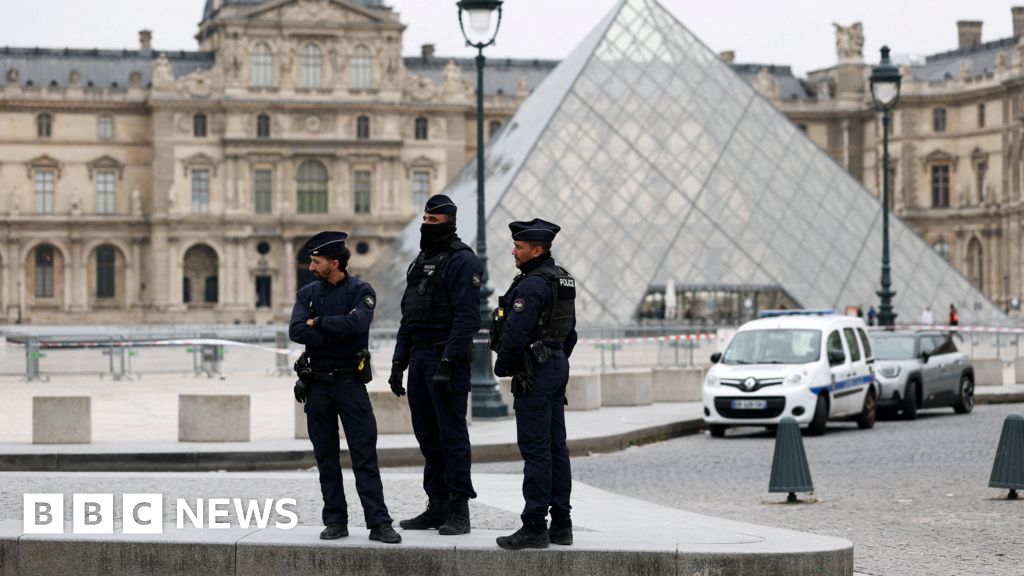
The recent daring theft of €88 million worth of crown jewels from the Paris Louvre signals a stark warning to the international community about the vulnerabilities of cultural institutions amidst rising global unrest. The audacious daylight raid, carried out by a gang wielding power tools and using a vehicle-mounted lift to breach the historic museum’s defenses, has exposed glaring gaps in security protocols that could have profound geopolitical consequences. French authorities have confirmed the apprehension of two suspects, but the incident serves as a broader reflection of how states are increasingly vulnerable to well-coordinated, high-profile crimes that threaten national prestige and cultural sovereignty.

According to the Paris prosecutor’s office, the suspects were apprehended amid a swift investigation, which revealed troubling lapses in security, notably the absence of CCTV coverage in critical areas. The prosecutor’s statement indirectly underscores the weaknesses in France’s safeguard of its cultural heritage, forcing officials to admit that “security protocols failed” — a candid acknowledgment that may deepen political pressure on successor administrations. The incident has sparked a heated debate, not only about security failures but also about the fragile state of cultural diplomacy in a world rife with geopolitical tension. Historically, the Louvre’s priceless artifacts are symbols of France’s enduring cultural legacy; now, they have momentarily become pawns in a larger chess game of international image and influence.

Strategic analyst Dr. Stephen Grant states that such brazen thefts are “not merely opportunistic crimes but deliberate acts designed to send political or economic signals.” In an era where nations are vying for dominance or influence, the loss of iconic symbols can serve as a warning sign of declining security and confidence. Other nations are watching closely, realizing that a breach at one of Europe’s most iconic landmarks signifies vulnerability that could have wider repercussions, especially if such lapses occur at other cultural or critical infrastructure sites. UNESCO and other international institutions are now under renewed pressure to develop cohesive security strategies that go beyond superficial protections, emphasizing the critical importance of safeguarding the tangible symbols of world heritage.

As France scrambles to recover the stolen artifacts and restore faith in its security apparatus, the incident’s implications extend beyond national borders. The event has become a case study in the stark reality that even the most celebrated cultural institutions are not immune to international crime networks and audacious attacks. Historians and security experts warn that the current trend reflects a wider crisis of societal resilience, where the erosion of traditional safeguards leaves societies exposed to narratives of vulnerability. The incident leaves global observers with a sobering reminder: the unfolding story of this theft is just one chapter in a larger, ongoing narrative of security, diplomacy, and the enduring human desire to preserve the past amidst a turbulent present.

Starbase teams up with Cameron County to tighten security and crack down on lawbreakers

Starbase Emerges as a Pioneering Model in Autonomous Urban Development

In a bold move that signals a transformative shift in urban governance and corporate influence, Starbase, a city built around SpaceX’s bustling rocket operations, has officially transitioned into a unique hybrid jurisdiction. Less than a year after its residents voted for incorporation, the city has struck formal agreements with Cameron County to provide essential services, including law enforcement. This arrangement exemplifies the disruptive potential of corporate-driven urban development, blurring the traditional lines separating municipality from enterprise.

While many emerging-tech hubs emphasize innovation and technological disruption, Starbase’s governance model underscores a broader trend—the rise of company towns that operate with minimal local government intervention. The interlocal deals entail Cameron County dedicating eight deputies to city security, with only a fraction on duty at any time, effectively outsourcing public safety. This model allows rapid scaling of municipal functions without the need to establish full bureaucratic infrastructures—a feat made possible by strategic legal agreements and a tightly integrated corporate-community ecosystem.

Innovation in Public Safety and Business Implications

Highlights of the Starbase model include:

  • Delegation of law enforcement to county authorities, ensuring legal consistency and resource efficiency
  • Flexible law enforcement deployment—only two deputies patrol at a time, optimizing operational costs
  • Retention of public records with county agencies—maintaining transparency while protecting corporate interests
  • Provision for special event policing, enabling rapid response to episodic needs—an essential feature for a facility focused on frequent Rocket launches

This innovative governance approach signals a new era where corporate innovation extends beyond product development into the realm of urban administration. Elon Musk’s vision of building a self-sustaining city around space tech is increasingly feasible, disrupting traditional notions of municipal boundaries and public safety. Industry analysts note that such models could revolutionize how future spaceports and high-tech hubs operate, attracting investors by reducing bureaucratic overhead and accelerating project timelines.

Business Disruption and Future Trajectories

The business implications are profound. By establishing a controlled but flexible local governance framework, SpaceX can focus on core activities—rocket manufacturing, testing, and launches—while external entities handle compliance and safety. This arrangement could serve as a precedent for other sectors—such as renewable energy or biotech—where corporate innovation demands a specialized governance paradigm.

Technology giants and startups alike are watching this experiment closely. Industry leaders and think tanks like MIT and Gartner predict a future where private enterprise could effectively operate entire cities, especially in niche domains like space exploration and sustainable infrastructure. Such developments are likely to catalyze a wave of entrepreneurial urbanism, emphasizing speed, efficiency, and adaptability over traditional bureaucratic channels.

Looking Ahead: An Urgent Call for Strategic Adaptation

As this disruptive model gains momentum, stakeholders—regulators, investors, and residents—must adapt quickly to the shifting landscape of governance and business. The success of Starbase could accelerate a trend toward decentralized, corporate-led metropolitan areas—challenging existing political paradigms and redefining urban development in the 21st century. The urgency for policymakers to craft flexible, forward-thinking regulations has never been greater, especially as technology continues to outpace traditional governance structures. The era of company towns is upon us, and those who anticipate this shift now will lead the future of innovation-driven urban landscapes.

Social Media Auto Publish Powered By : XYZScripts.com