Matox News

Truth Over Trends, always!

Crypto bill’s Congressional push hits a wall—Youth tech still waiting for breakthroughs

Crypto Industry Faces Disruption as U.S. Policy Gridlock Intensifies

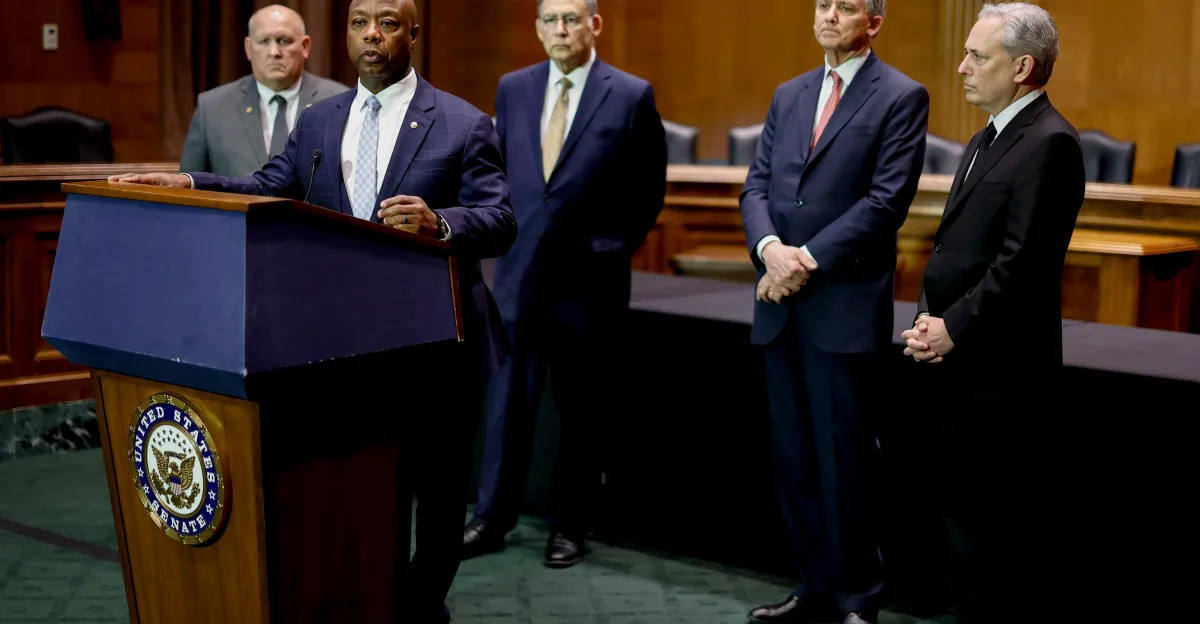
Innovation and disruption are constants in the fast-evolving landscape of blockchain technology and cryptocurrencies, but recent developments in Washington threaten to stall vital progress. Major players like Coinbase are closely watching legislative maneuvers that could redefine the regulatory framework for digital assets. As the U.S. Congress nears a pivotal juncture, the industry stands at a crossroads where political partisanship and industry priorities collide, potentially shaping the future of finance for years to come.

At the center of this turbulent scene is the contentious Clarity Act, which aims to establish clear regulatory guidelines for the burgeoning stablecoin sector. Innovation in stablecoins—cryptocurrencies pegged to traditional mediums like the US dollar—has been a turbocharged driver of adoption, with Coinbase offering 3.5% rewards on USDC holdings—a rate vastly eclipsing traditional bank interest. Such rewards act as powerful incentives for retail and institutional holders, hinting at a future where stablecoins could be central to mainstream financial daily routines. However, the banking lobby perceives these rewards as loopholes that could undermine traditional deposit-based models, lobbying hard to limit or prohibit such yields, which delays crucial market structure legislation. If the bill passes, Coinbase anticipates a significant business impact, with stablecoin rewards potentially curtailed, thereby limiting their competitive edge and the transformative potential of DeFi solutions.

The business implications extend beyond Coinbase alone. Industry analysts from institutions like Gartner and think tanks like MIT warn that the ongoing legislative gridlock could disrupt innovation pipelines and slow the adoption of crypto-based financial products. The political battleground is heated, especially with upcoming midterm elections which threaten to bring partisan polarization into even sharper focus. Democrats and Republicans are at loggerheads over the broader market regulation, with Democrats generally more skeptical of crypto’s risks, while Republicans tend to favor the industry’s potential to disrupt traditional financial institutions. The political calculus becomes increasingly complex as key figures—such as Sen. Elizabeth Warren or Maxine Waters—oppose industry-friendly policies, driven by fears of destabilization and concerns over banking incumbents’ dominance. Meanwhile, industry lobbyists are emphasizing crypto’s voter base; crypto holders are seen as highly motivated, single-issue voters whose wallets significantly influence election outcomes.

The industry’s future hinges on strategic legislative momentum. The Senate Agriculture Committee is scheduled for a crucial markup, but hope dims as bipartisan unity frays. As Cody Carbone, CEO of The Digital Chamber, notes, “The longer the partisan battle persists, the more likely crypto will be sidelined in favor of entrenched bank interests. If Democrats control both chambers, legislative prospects dim further, with prominent committee chairs signaling a focus on enforcement over adoption for crypto.” Such a scenario could result in a policy deadlock that stifles innovation and allows entrenched interests to maintain control. However, industry insiders remain cautiously optimistic if bipartisan support can be rekindled swiftly, as crypto advocates argue their voter base is more influential than assumptions suggest. The upcoming weeks are critical—stakeholders must navigate an urgent landscape where policy, business, and politics intertwine to decide whether the next wave of financial disruption will be unleashed or stymied by congressional gridlock.

With the trajectory of crypto regulation hanging in the balance, the industry faces a stark reality: delay breeds risk. As Peter Thiel and Elon Musk warn about the necessity of proactive innovation, the urgency to push forward legislation that fosters disruptive technologies becomes undeniable. The next legislative cycle could either accelerate America’s leadership in digital finance or cede that ground to emerging global competitors. For entrepreneurs, investors, and consumers alike, understanding this high-stakes game isn’t just advisable—it’s essential. The clock is ticking, and the future of financial innovation depends on decisive action now.


Global ‘Super App’ Debuts with Crypto Payments and Private Chat Features for the Next Generation

Revolutionizing Digital Identity and Payments: Tools for Humanity Launches Next-Gen World App

The digital landscape is entering a new era of security, authenticity, and decentralization, driven by Tools for Humanity‘s innovative World App—marketed as a “super app” with disruptive potential for social interaction and financial services. Launched by the startup in 2023, this platform is positioning itself at the forefront of the identity verification and cryptocurrency integration revolution, directly challenging marquis players like WhatsApp and PayPal by integrating web3 principles into everyday social and financial activities. In a time when AI-generated disinformation and digital fakery threaten online authenticity, the company’s core mission—creating verifiable “proof of human” — signals a shift toward a more trustworthy, privacy-preserving digital future.

The latest iteration of the World App introduces groundbreaking features designed to disrupt the status quo. At the heart of this innovation is the verification network, which leverages a proprietary iris-scanning system called the Orb. This biometric verification technique produces a highly secure, encrypted unique digital identity—the verified World ID. As AI-driven misinformation proliferates, this behind-the-scenes cryptographic shield aims to establish a trusted digital ecosystem where users can distinguish genuine humans from bots with ease. During a recent event in San Francisco, Altman explained that the company’s vision centers on balancing privacy with identification, creating a new economic model based on web3 principles that could redefine online interactions.

The app’s new World Chat feature exemplifies this approach, providing end-to-end encrypted messaging comparable to Signal, while offering color-coded speech bubbles to verify user identity visually and intuitively. Designed to foster social connectivity, it aims to fill a critical market gap for secure, social communication. In addition, the platform’s expanded digital payment capabilities integrate cryptocurrencies directly into users’ virtual wallets, enabling peer-to-peer transactions, salary deposits, and seamless bank account integration—regardless of verification status. Such features signal a disruptive move toward financial sovereignty and peer-based economies, aligning with industry forecasts highlighted by institutions like Gartner, which emphasize AI and blockchain as the twin pillars of tomorrow’s tech ecosystem.

Industry analysts such as MIT’s Kevin Esvelt and venture capitalists like Peter Thiel are paying close attention. They see Tools for Humanity’s model as a blueprint for a future where *digital trust* is anchored in cryptographic verification—a crucial component often missed in traditional social and financial platforms. While critics warn of privacy concerns, the company emphasizes that its encryption standards match or exceed industry leaders like Signal. The key business implication is clear: disruption is underway, and existing giants that rely on opaque verification methods risk obsolescence. The integration of biometric identity with decentralized finance creates a formidable competitive advantage, especially for startups and incumbents who overlook the urgency of evolving trust and security in digital spheres.

Looking forward, the rapid advancement of AI, blockchain, and biometric verification points to an increasingly dynamic and competitive landscape. Time is of the essence for traditional players to innovate beyond outdated KYC systems and siloed social platforms. As user demand for privacy and authenticity grows, and regulatory frameworks evolve, companies like Tools for Humanity are positioned to lead a fundamental shift in digital identity and commerce. The question remains: who will seize this disruptive wave and shape the future, or be left behind in the wake of rapid technological evolution? The spotlight is on innovators to accelerate the deployment of trustworthy, privacy-centric platforms that could redefine human interaction in the digital age.

Crypto mogul Do Kwon gets 15 years behind bars—big win for accountability

South Korean Crypto Entrepreneur Do Kwon Sentenced to 15 Years in U.S. Court Amid Industry Disruption

In a landmark ruling that underscores the high-stakes nature of cryptocurrency innovation and the risks tied to speculative assets, Do Kwon, the South Korean crypto pioneer and founder of Terraform Labs, was sentenced to 15 years in prison by a U.S. federal court in Manhattan. This case not only marks a significant legal milestone but also signals a stern warning to emerging disruptive financial technologies that threaten to reshape traditional markets. Kwon’s conviction was rooted in the collapse of TerraUSD (UST), a supposedly algorithm-backed stablecoin that aimed to revolutionize digital finance but ultimately became a cautionary tale of overconfidence in unregulated innovation.

The fallout from the breakup of TerraUSD in May 2022 was catastrophic—wiping out an estimated $40 billion from the crypto ecosystem and destabilizing numerous startups and investors worldwide. Kwon’s aggressive marketing of UST, a stablecoin purportedly pegged to the U.S. dollar via a complex algorithm involving the LUNA token, exemplifies what industry analysts describe as the misplaced trust in algorithmic financial mechanisms. By offering a supposedly tamper-proof peg, Terraform Labs promised a new frontier of stable digital assets. Instead, the system’s failure exposed vulnerabilities inherent in decentralized finance (DeFi), revealing the hazards of unchecked entrepreneurial zeal.

  • Disrupted Market Dynamics: The collapse led to market panic, triggering a cascade that affected dozens of crypto firms and investors.
  • Regulatory Clarity: The case marks a pivotal step towards more rigorous oversight, as authorities aim to curb fraud and promote responsible innovation.
  • Innovation vs. Risk: The incident emphasizes the importance of balancing disruptive advancements with sustainable, transparent frameworks—an area where industry leaders like Elon Musk advise caution.

Among industry observers, analysts at Gartner and MIT emphasize that this high-profile case could accelerate regulatory actions worldwide, compelling blockchain developers to adopt more rigorous security standards and compliance protocols. The case also ignites a broader debate on the future of stablecoins, which are seen as vital for mainstream adoption of digital currencies and decentralized financial services. However, critics warn that the reliance on complex algorithms without adequate safeguards can lead to systemic failures, threatening the integrity and sustainability of the crypto economy.

The sentencing underscores a challenging but inevitable trajectory for crypto innovators—those who push the boundaries of digital finance must now reconcile with growing regulatory scrutiny and the imperative for sound risk management. The industry’s future hinges on the ability of entrepreneurs and institutions to learn from these failures, fostering innovation that not only disrupts but also endures. As the sector heads into a new era marked by increased oversight and technological maturation, stakeholders are urged to act swiftly—those who adapt and innovate responsibly will lead the next wave of digital transformation, while complacency risks catastrophic fallout. The next chapter in crypto innovation will be shaped by how the ecosystem responds to this historic judgment, with urgency and strategic foresight taking center stage.

Bored Ape Yacht Club Returns Bigger in the Metaverse Revival

Yuga Labs Unveils the Future of Virtual Worlds with the Upcoming Otherside Launch

The landscape of digital innovation is rapidly evolving, and NFT pioneer Yuga Labs is positioning itself at the forefront with the upcoming launch of Otherside, a metaverse project that promises to redefine immersive digital experiences. Behind a history rooted in viral NFT collections like Bored Ape Yacht Club (BAYC), Yuga Labs is betting heavily on creating a decentralized, interoperable space that blurs the lines between gaming, social interaction, and blockchain technology. Announced at their ApeFest event in Las Vegas, the rollout of Otherside is poised to disrupt traditional virtual worlds by embedding blockchain assets and crypto functionalities directly into user experiences, emphasizing innovation and business disruption.

With a $450 million funding infusion in 2022, Yuga Labs signaled its ambitious vision for a metaverse that is fundamentally different from platforms such as Fortnite, Roblox, or Minecraft. According to Michael Figge, Yuga’s Chief Product Officer, Otherside aspires to be one of the most groundbreaking projects in the blockchain and gaming space. The platform aims to foster a creator ecosystem where digital assets—NFT avatars, virtual land plots, and blockchain-based currency—are not confined within its environment but remain portable and cross-compatible across other platforms. This innovative approach potentially paves the way for a new wave of digital ownership, giving users more control, while enabling creators and businesses to capitalize on the fast-scaling virtual economy.

The technological core of Otherside is poised to be highly disruptive. Built on blockchain principles, it emphasizes *interoperability*, *decentralization*, and *gamification*. While early alpha tests hinted at a vibrant, crypto-rich environment, skepticism remains about the platform’s ability to sustain user engagement at scale. Critics and industry experts warn that the blockchain-centric approach, though innovative, introduces complexities and barriers—such as technical literacy and regulatory uncertainties—that could hamper mass adoption. Nevertheless, companies like Amazon are already partnering with Yuga Labs, exemplifying how traditional giants are positioning themselves to leverage the potential of blockchain-anchored virtual worlds.

Market Shifts and Industry Impact

The launch of Otherside signals a transformative market shift toward decentralized virtual environments. As pioneers like Elon Musk and Peter Thiel advocate for blockchain’s disruptive potential, the metaverse industry is witnessing a paradigm shift—moving from isolated gaming ecosystems to interconnected, user-controlled digital worlds. Gartner’s recent research underscores this trend: *blockchain integration in virtual environments* is set to be a major driver of growth over the next decade, urging existing platforms to innovate or risk obsolescence. The emphasis on asset portability and creator empowerment suggests a future where the value lies less in platform control and more in the underlying blockchain infrastructure—a move that could redefine digital economies and creator ecosystems alike.

Despite the buzz, the industry must grapple with the complexities of mainstream adoption. Many experts warn of *technological hurdles, regulatory risks, and user experience challenges*. Still, the stakes are high, and the opportunity for disruption is immense. As MIT researchers and leading analysts increasingly highlight, those who effectively harness blockchain, AI, and immersive tech will lead the next wave of digital revolution. Companies that innovate today, like Yuga Labs, can set the standards and command significant market share in what is shaping up to be the most transformative era in digital history.

Looking Ahead

The countdown to Otherside’s full launch on November 12th marks a pivotal moment for the industry. As developers and entrepreneurs race to unlock its potential, the world watches closely—recognizing that this isn’t just another game or social platform. The future of the metaverse hinges on whether Yuga Labs’ bold vision will translate into widespread adoption or fade into the background amid skepticism and technical challenges. For young innovators and investors, the message is clear: embrace the disruption, master the innovation, and prepare for a digital frontier that will reshape economic and social paradigms in profound ways.

Social Media Auto Publish Powered By : XYZScripts.com