Matox News

Truth Over Trends, always!

FTC stands firm: Stalkerware pioneer Scott Zuckerman banned, tech watchdogs celebrate

The Federal Trade Commission (FTC) has decisively upheld its 2021 ban against Scott Zuckerman, the controversial founder behind Support King and its associated stalkerware products. This move underscores the ongoing clash between relentless disruption of traditional privacy norms and regulatory measures aimed at protecting consumers and vulnerable individuals from invasive surveillance technology. The FTC’s stance remains firm despite Zuckerman’s recent petition to revoke or modify the ban, citing mounting financial and operational burdens.

At the heart of this controversy lies the alarming pattern of innovation in illicit surveillance. When it first enacted the ban, authorities highlighted that Zuckerman’s product SpyFone facilitated stalking by secretly monitoring personal devices, exposing users’ most sensitive data. A major breach in 2018, involving over 3,600 phones, revealed that the company had left sensitive content—including selfies, messages, and audio recordings—vulnerable online due to extremely lax security protocols. This incident not only exposed personal information but also exposed the inherent risks of disruptive business models built around invasive monitoring.

  • Innovative breach exploitation exposed vulnerabilities in stalkerware security.
  • Demonstrated the potential for hackers to hijack sensitive personal data stored by these apps.
  • Highlighted the failure of regulatory frameworks to keep pace with rapidly evolving surveillance tech.

The case reveals a disturbing trend: repeat offenders attempting to circumvent regulation through clandestine operations. Less than a year after the FTC ban, evidence suggested Zuckerman’s team was running a clandestine secondary operation, SpyTrac, with ties back to the original Support King empire. Leaked data showed direct links to SpyFone and access keys to OneClickMonitor, raising questions about whether regulatory crackdowns can truly contain such disruptive entrepreneurs whose innovations push legal boundaries. Experts like MIT’s cybersecurity researchers warn that these activities threaten to erode privacy standards, fueling a clandestine market that’s difficult to regulate.

Industry analysts such as Gartner warn that the continued proliferation of such invasive technologies signals a need for robust enforcement and innovative reforms. The implications extend beyond individual privacy; they threaten to reshape the competitive landscape, driving legitimate tech firms to innovate smarter security and privacy solutions. As Peter Thiel and others argue, disruption in the surveillance tech realm could redefine the boundaries of personal liberty and corporate responsibility. The FTC’s refusal to relax the ban is a statement: regulation must evolve in tandem with innovation—crucial for safeguarding future technological progress.

Looking ahead, this high-stakes case serves as a stark warning to entrepreneurs and investors betting on disruptive tech: without strong ethical boundaries and regulatory compliance, even the most innovative ideas risk becoming regulatory casualties. As the industry braces for a wave of new innovations, the importance of urgently establishing clear legal and ethical frameworks will determine which companies lead the next revolution and which fall by the wayside. The future of technology rests on striking the right balance—fostering innovation while fiercely defending individual rights against invasive surveillance. Time remains of the essence; the clock is ticking for regulators and entrepreneurs alike to shape a secure, responsible digital frontier that can withstand the disruptive forces at play.


US Banks Scramble to Secure Data After Hack Hits Financial Tech Firm

Cyber Breach at SitusAMC Sparks Industry-Wide Concerns Over Data Security and Disruption

In a rapid display of the evolving cybersecurity landscape, SitusAMC, a prominent provider of financial technology solutions to over a thousand commercial and real estate lenders, confirmed a significant data breach earlier this month. This incident underscores the escalating sophistication and audacity of cybercriminals targeting vital infrastructure within the financial sector. The breach, identified on November 12, involves the exfiltration of sensitive corporate data, including banking client information, legal agreements, and accounting records, which could have far-reaching implications for the stability and privacy of major financial institutions. The breach’s discovery has triggered a swift response from industry giants, including JPMorgan Chase, Citigroup, and Morgan Stanley, emphasizing how vulnerabilities in third-party technology providers can cascade across the financial ecosystem.

This incident illustrates a broader trend where disruption comes not only from emerging fintech innovations but also from the vulnerabilities they introduce. As SitusAMC processes billions of documents annually, its role as a critical intermediary in real estate and commercial financing has positioned it as a high-value target for hackers. The attack’s modus operandi indicates an intent focused on data exfiltration rather than destruction, as no encrypting malware was reported—highlighting a strategic shift towards covert data theft that could facilitate future financial fraud or blackmail scenarios. Industry analysts, including those from Gartner, warn of a “strategic gap” in cybersecurity defenses, especially among firms relying heavily on third-party vendors for core operations.

The strategic implications for financial institutions are profound. This breach exposes critical vulnerabilities that threaten the integrity of customer data and challenge the notion that current blockchain and encryption technologies alone can guarantee safety. Fintech disruptors and traditional banks alike are under rising pressure to implement comprehensive, proactive security measures. The incident serves as a stark warning: the future of fintech innovation depends heavily on disrupting accepted cybersecurity paradigms and investing in next-generation solutions. Institutions involved in this ecosystem must re-examine their risk models, as well as their reliance on external vendors, to prevent catastrophic breaches that could diminish consumer trust and regulatory approval—elements crucial for future growth.

Looking ahead, experts including Elon Musk and Peter Thiel emphasize that rapid technological advancements demand equally rapid innovation in security infrastructure. As AI-driven threat detection matures, the businesses that focus on disrupting traditional cybersecurity models now will be tomorrow’s leaders. The interconnectedness of financial technology, legal compliance, and data privacy dictates an urgent race to outpace hackers. The FBI’s ongoing investigation underscores the seriousness of these threats, and the industry must respond with greater urgency given the increasing frequency and sophistication of cyberattacks. It is clear that an era of robust, resilient, and disruptive cybersecurity measures is imminent—those who lead this charge will shape the future of financial innovation and maintain global market stability amidst an increasingly hostile digital battleground.

Trump’s FCC drops cybersecurity rules amid Chinese hack fears — a bold move for youth, tech, and free markets

FCC’s Cybersecurity Rollback Sparks Industry Disruption and Security Concerns

In a bold move signaling a shift in U.S. telecommunications policy, the Federal Communications Commission (FCC) voted 2-1 along partisan lines to rescind critical cybersecurity regulations previously enacted under the Biden administration. The decision, championed by the FCC’s two Republican commissioners, Brendan Carr and Olivia Trusty, effectively removes mandatory security standards aimed at safeguarding phone and internet networks from unlawful access and cyber threats. This strategic rollback aligns with a broader trend of deregulation in the tech sector, emphasizing market-led resilience over prescriptive government intervention.

The regulatory shift arrives amidst an escalating threat landscape, notably exemplified by the Salt Typhoon hacking campaign attributed to China-backed adversaries. This sophisticated operation compromised over 200 US telecommunications firms, including giants such as AT&T, Verizon, and Lumen. Hackers targeted fundamental infrastructure, including wiretap and surveillance systems mandated for law enforcement, exposing the fragility of existing security protocols. Industry analysts, including Gartner and MIT cybersecurity experts, warn that such vulnerabilities could be exploited further if regulatory oversight diminishes.

Adding complexity to the industry’s response are divergent opinions among policymakers. Democratic FCC commissioner Anna Gomez opposed the rollback, arguing it reverses the only meaningful cybersecurity efforts against nation-state cyber espionage. Critical voices, including Senators Gary Peters and Mark Warner, expressed alarm that deregulation will undermine national security, leaving critical communication channels exposed. Their assertions underscore a persistent industry question: Will market forces alone suffice to defend against increasingly sophisticated cyber threats, or is strategic regulation indispensable? Conversely, the NCTA, representing the telecommunications industry, welcomed the move, asserting that the existing rules were overly prescriptive and hampered innovation.

From a technological perspective, this deregulation potentially signals a disruptive phase for the industry, where innovation, rather than regulation, becomes the primary driver of security advancements. Cutting-edge solutions—such as AI-powered anomaly detection, blockchain-based integrity checks, and decentralized security architectures—are poised to redefine cybersecurity landscapes. Disruption driven by market competition could accelerate the deployment of these technologies, positioning nimble firms as leaders in the new security paradigm. Notable industry figures, including Elon Musk and Peter Thiel, have long championed decentralized innovation—foreshadowing a future where private entities spearhead cybersecurity guardrails, rather than bureaucratic mandates.

Looking forward, the industry faces a pivotal moment: balancing innovation and disruption with the safeguarding of national security interests. Policymakers, industry leaders, and technologists must collaborate to ensure that market-driven solutions do not come at the expense of foundational infrastructure resilience. As hackers refine their methods and geopolitical tensions escalate, the window narrows for meaningful action. The future of U.S. cybersecurity in telecommunications depends on adopting a proactive, forward-thinking approach that leverages technological innovation while maintaining robust safeguards—an urgent call for strategic agility in an increasingly volatile digital landscape. The coming months will determine whether deregulation fosters a pioneering security ecosystem or exposes critical vulnerabilities, with profound implications for the global tech frontier.

Guardio Secures $80M from ION Crossover to Boost Cybersecurity for the Next Generation

Guardio Emerges as Pioneering Force in Securing AI-Generated Web Content

The rapid proliferation of vibe coding tools has sparked a paradigm shift in the web development landscape, unleashing unprecedented innovation but also exposing critical security vulnerabilities. As startups and corporations race to capitalize on AI-driven code generation, the industry now faces a looming threat: malicious actors leveraging these same tools for cybercrime. Guardio, a cybersecurity innovator founded in 2018, is positioning itself at the forefront of this disruption, developing groundbreaking solutions that address the emergent blind spots in vibe-coded web applications.

Disrupting Traditional Security Models with AI-Focused Threat Detection

Unlike conventional cybersecurity approaches that rely on static signatures or reactive scans, Guardio harnesses its extensive expertise in detecting malicious sites and phishing campaigns to target AI-authored malicious code. The company’s latest initiative is a specialized tool that examines artifacts in vibe-coded sites and codebases, seeking signs of nefarious activity embedded within AI-generated content. This move signifies a paradigm shift: security now must evolve from perimeter defense to proactive threat identification in dynamic, AI-enhanced ecosystems.

  • Innovation in code artifact analysis tailored to AI-generated content
  • Real-time scanning integrated into browser extensions and mobile apps
  • Partnerships to embed security directly into AI development platforms

Its collaboration with Lovable, a platform that develops vibe-coded websites, exemplifies this shift. After reports of security gaps in sites built on Lovable, Guardio’s comprehensive scanning infrastructure is now used to weed out malicious or vulnerable sites preemptively, thereby disrupting the typical reactive cycle of cybersecurity.

Business Implications and Market Disruption

Guardio’s recent $80 million funding round, led by ION Crossover Partners, underscores a broader investor recognition: cybersecurity intertwined with disruptive AI-driven web development is a fast-growing market. The company’s valuation has tripled since its previous fundraising, reflecting confidence in its ability to innovate and scale. With over 500,000 paying users and reaching $100 million in annual recurring revenue, Guardio’s trajectory highlights a significant market shift: security solutions are now central to the future of AI-generated content and web development platforms. This evolution threatens incumbents unprepared for the rapid pace of change, creating lucrative opportunities for agile disruptors.

  • Disruption of legacy security models that lack AI-specific threat detection capabilities
  • New revenue streams from integrated security tools embedded within AI coding environments
  • Potential industry-wide pivot towards proactive, integrated cybersecurity in AI ecosystems

As Gilad Shany of ION Crossover notes, Guardio’s convergence of consumer market experience with top-tier cyber innovation presents a unique competitive edge. Its focus on embedding security directly into the development pipeline signals a forward-looking strategic play for tech giants and startups alike.

Future Outlook: Urgency for Security in the AI-Driven Web Era

The critical takeaway for industry leaders, developers, and policymakers is clear: the era of unchecked AI-driven code creation is over. Guardio’s aggressive innovation not only disrupts existing cybersecurity paradigms but also signals that the future of web development will be inseparable from robust, intelligent security measures. As AI continues to accelerate innovation, the threat landscape will expand exponentially, demanding a proactive, disruptive approach to cybersecurity. Industry experts, taking cues from institutions like MIT and thought leaders such as Elon Musk, emphasize that those who outpace security threats today will dominate the digital economy of tomorrow. The urgency is undeniable: the race to secure AI-empowered web environments is on, and the stakes could not be higher.

Deepwatch trims staff as it turbocharges AI push to stay ahead

Disruption in Cybersecurity: Deepwatch’s AI-Driven Layoffs Signal Industry Shift

The cybersecurity landscape is undergoing a seismic shift driven by cutting-edge AI technology. Deepwatch, a prominent player renowned for its AI-powered detection and response platform, recently announced layoffs affecting between 60 and 80 staff members—roughly one-third of its workforce. CEO John DiLullo explained that the company’s restructuring aligns with a strategic push to accelerate investments in AI and automation, underscoring a broader industry trend where innovation is often accompanied by significant operational upheaval. This move not only exemplifies the rapid integration of AI into core security functions but also signals a broader disruption impacting the entire cybersecurity sector.

In context, Deepwatch’s layoffs are not isolated but part of a larger pattern in cybersecurity. Earlier this year, industry heavyweight CrowdStrike eliminated approximately 500 jobs—around 5% of its workforce—even amid record-breaking financial performance, including a cash flow of $1.38 billion. Other firms such as Deep Instinct, Otorio, ActiveFence, and SkyBox Security have also conducted layoffs, reflecting a sector-wide recalibration driven by emerging AI capabilities and shifting market demands. These workforce reductions highlight how disruptive AI technology is transforming traditional business models and operational paradigms, compelling companies to rethink talent deployment and strategic focus.

Experts like those at Gartner emphasize that AI-driven cybersecurity solutions are poised to redefine industry standards, with innovations in real-time threat detection and autonomous response systems. This disruption brings a dual-edged promise: unmatched efficiency and operational excellence, but also the risk of upheaving existing job structures and market stability. As Peter Thiel and Elon Musk have warned, embracing transformative AI is essential to maintaining competitive advantage, yet it demands a readiness to navigate complex ethical, technical, and workforce challenges. The rapid adoption of AI not only accelerates innovation but also creates a pressing sense of urgency for cybersecurity firms to adapt swiftly or face obsolescence.

The implications for the business ecosystem are profound. Companies that successfully integrate AI-driven solutions can unlock new revenue streams—offering enhanced threat detection, incident response, and predictive analytics—while those lagging behind risk losing market relevance. As industry leaders gear up for the upcoming TechCrunch event in San Francisco (October 13-15, 2026), the message is clear: the next wave of cybersecurity innovation is here—and it is fueled by AI’s relentless advance. For forward-thinking organizations and entrepreneurs, the call to action is urgent: innovate now or be left behind in a rapidly evolving digital battleground.

Ultimately, the current layoffs at Deepwatch serve as a stark reminder that disruption in cybersecurity is accelerating, demanding unprecedented agility from industry players. The fusion of AI and automation promises to revolutionize threat mitigation, but it also mandates a proactive stance—embracing innovation while managing the risks inherent in upheaval. As the industry stands on the cusp of this new era, the future belongs to those who recognize the strategic imperative of leveraging AI for competitive advantage, setting the stage for a transformative decade in cybersecurity and beyond.

Government Shutdown Sparks Urgent Cybersecurity Risks for the Future

US Government Faces Cybersecurity Breach During Ongoing Shutdown, Highlighting Industry Vulnerabilities

The recent six-week-long US government shutdown has unexpectedly exposed critical vulnerabilities within federal digital infrastructure. The Congressional Budget Office (CBO), tasked with providing unbiased economic data to policy makers, confirmed it suffered a cyber breach attributed to a suspected foreign actor. This event underscores a broader trend: even during periods of political paralysis, cyber threats to vital national security and economic data continue unabated, leveraging the digital systems that underpin government functions.

Disruption & Innovation in Federal Cybersecurity

  • Despite the shutdown, many federal agencies, including the CBO, maintain operational cloud infrastructures, illustrating a shift towards resilient, cloud-based security architectures.
  • In response to the breach, CBO has implemented enhanced security measures, including advanced monitoring tools and new controls.
  • However, cybersecurity experts warn that relying on cloud infrastructure, especially during operational disruptions, can be a double-edged sword, exposing vulnerabilities if not managed properly.

Industry leaders and analysts, citing research from institutions such as MIT and firms like Gartner, emphasize that government agencies and private corporations alike must prioritize disruptive cybersecurity innovation. Traditional perimeter security models are no longer sufficient in the face of sophisticated threat actors, and this breach epitomizes the critical need to adopt adaptive, AI-powered defenses that can react in real time to emerging dangers.

Business Implications & Broader Industry Impact

The breach at the CBO illustrates industry-wide vulnerabilities, reinforcing the importance for innovative cybersecurity solutions that blend automation, threat intelligence sharing, and resilience. As Peter Thiel and Elon Musk have long warned, “security is a competitive advantage in the digital age”, and the failure to innovate rapidly can spell disaster for both public institutions and private enterprise.

Moreover, the incident signals a paradigm shift in how government and business protect sensitive data: disruption in cybersecurity defenses during crises is unacceptable. Organizations must now view security as an ongoing battle, integrating next-generation AI, blockchain, and zero-trust architectures to outpace threat actors.

Looking Forward: The Urgency of Next-Gen Cybersecurity

Industry observers and government officials agree that the current breach is likely a wake-up call, stressing the necessity of proactive, innovative security strategies. As _cyberthreats continue to evolve_, companies and agencies must accelerate investments in disruptive technologies to safeguard critical infrastructure and maintain trust. The government’s ongoing shutdown underscores a fragile moment for national security, with industry pioneers poised to lead the charge in redefining cybersecurity resilience.

In this rapidly shifting landscape, the future will belong to those who innovate aggressively, disrupting old paradigms before they are exploited. The clock is ticking, and the stakes have never been higher for tech leaders to step into this digital frontier with urgency and foresight—because the next attack could be just one breakthrough away.

‘Landfall’ spyware exploits zero-day to target Samsung Galaxy devices

Emerging Threats in Mobile Security: The Landfall Android Spyware Disrupts Samsung Galaxy Ecosystem

In a significant development that underscores the vulnerabilities inherent in mobile hardware manufacturing and software ecosystems, security researchers at Palo Alto Networks’ Unit 42 have uncovered a sophisticated Android spyware named Landfall. This spyware, which targeted Samsung Galaxy phones in an extensive, nearly year-long hacking campaign, highlights the rapid pace of cyber-attack innovation and the critical importance of proactive security measures in the tech industry. The discovery points to the ongoing disruption within the mobile security landscape, with potential implications for global markets and enterprise security frameworks.

The Landfall spyware operated by exploiting a previously unknown security flaw in Samsung’s Android software—classified as a zero-day vulnerability—identified as CVE-2025-21042. Zero-day exploits are notorious for their ability to bypass traditional defenses because they leverage vulnerabilities that even the manufacturer is unaware of until they are actively exploited. The fact that Samsung did not have prior knowledge of the flaw until this threat emerged raises questions about the robustness of its security architecture, especially in an era where rapid patching is critical for maintaining consumer trust and product integrity. Although Samsung issued a patch in April 2025, the damage caused during the window of exposure exemplifies the risks associated with complex software supply chains and the need for advanced detection strategies.

What makes Landfall particularly disruptive is its geopolitical footprint, with infection samples uploaded from regions including Morocco, Iran, Iraq, and Turkey, which underscores the escalating nexus between cyber espionage and global geo-politics. The Turkish national cyber readiness team, USOM, identified suspicious activity stemming from associated IP addresses, suggesting targeted operations against specific populations or organizations. Moreover, the spyware’s code revealed targets within the Galaxy S22, S23, S24, and Z model series, spanning Android versions 13 through 15—indicative of an expansive vulnerability that affects a broad range of flagship devices. This targeted disruption signals a new wave of cyber actors leveraging zero-day flaws not just for espionage but potentially for more malicious intents such as data exfiltration or sabotage.

From a broader business and industry perspective, this incident underscores the urgent need for hardware manufacturers, software developers, and cybersecurity firms to innovate faster and implement disruptive security paradigms. Industry experts, including Gartner analysts and MIT cybersecurity scholars, stress that the traditional reactive approach to security vulnerabilities is no longer sufficient in a landscape dominated by sophisticated threat actors. This incident exemplifies a fundamental industry’s shift towards proactive, AI-driven, and disruption-ready cybersecurity solutions. Tech companies must integrate continuous monitoring, automated patching, and resilient architecture designs to disrupt emerging threats before they can exploit vulnerabilities at scale.

As global markets and consumers become increasingly dependent on mobile technology for critical operations, the security of devices like Samsung’s Galaxy series transforms from a technical detail into a strategic imperative. The Landfall espionage campaign offers a compelling warning: in an environment of relentless technological disruption, those who fail to innovate risk being left behind in the dust of cyber adversaries outpacing traditional defenses. Moving forward, industry leaders must prioritize revolutionary security strategies to safeguard their innovation pipelines and preserve user trust—because the future belongs to those who act with urgency and foresight in the face of an evolving cyber threat landscape.

DOJ: U.S. ransomware negotiators allegedly behind their own attacks—big questions for the industry

Rogue Employees Disrupt Cybersecurity Industry with Alleged Ransomware Attacks

Recent indictments by U.S. prosecutors have exposed a disturbing trend impacting the cybersecurity landscape: inside jobs turning rogue employees into threats rather than safeguards. Kevin Tyler Martin, an alleged former employee of DigitalMint, along with an unnamed colleague and ex-Sygnia incident response manager Ryan Clifford Goldberg, are accused of orchestrating sophisticated ransomware attacks against multiple U.S. companies. These developments underscore a critical need to reevaluate internal security protocols across the sector, emphasizing that even trusted personnel can become vectors for disruptive cyber threats. The indictment, first reported by The Chicago Sun-Times, highlights that cybersecurity firms aren’t immune from becoming unwitting accomplices in cybercrime.

What makes this scandal particularly disruptive is the involvement of the notorious ALPHV/BlackCat ransomware-as-a-service gang. Operating under a highly scalable, affiliate-driven model, the gang develops the malware that encrypts victims’ data, while its internal paramilitary units—the rogue employees—execute attacks on target companies. This division of labor democratizes cyberattack infrastructure and is reminiscent of how tech giants like Microsoft or Google have revolutionized software delivery—except in this case, the disruption is malicious. The scheme’s sophistication illustrates a broader trend where illicit groups leverage the same platforms and techniques used by legitimate tech firms, blurring the lines between innovation and criminal enterprise. According to an FBI affidavit, the rogue employees received more than $1.2 million in ransom payments from a Florida medical device manufacturer alone, suggesting lucrative possibilities for insider threats in the lucrative ransomware economy.

The business implications are profound. As cybercriminal business models become increasingly decentralized and affiliate-driven, the potential for disruptive disruptions increases exponentially. Cybersecurity companies like Sygnia and DigitalMint face mounting internal security challenges, with insiders potentially wielding significant damage. Sygnia CEO Guy Segal confirmed Goldberg’s termination after learning of his alleged involvement, signaling that the industry is beginning to take internal threats seriously—yet, many experts warn that traditional defenses are insufficient. Cybersecurity analyst firms such as Gartner emphasize the need for continuous behavioral monitoring and zero-trust architectures to combat insider threats effectively. Moreover, the fact that these rogue employees did not just steal data but actively executed the ransomware underscores an urgent shift toward inside-out disruption, transforming employees into attack vectors.

Looking ahead, the incident signals that the pace of innovation in cyber defense must accelerate to counter equally innovative threats from within. The rise of ransomware-as-a-service platforms |\has created a marketplace for malicious actors, akin to Silicon Valley’s bustling startup ecosystem but driven by crime. Tech leaders and policymakers must now focus on disrupting the cybercrime supply chain from both ends—strengthening internal security and dismantling illicit networks. Failure to do so risks an increasingly unstable cybersecurity environment where insider threats could cripple critical infrastructure and erode public trust in digital transformation. As MIT cybersecurity experts warn, we stand at a crossroads where only proactive, disruptive measures will prevent malicious insiders from becoming the next catastrophic security breach. The future of cybersecurity hinges on our capacity to innovate faster than the adversaries and shield the backbone of our digital economy before disruptive threats morph into systemic crises.

F5 Hack Sparks Urgent Alert: Thousands of Networks at Risk

Nation-State Hackers Exploit F5 Software in Major Cybersecurity Breach

In an alarming development for both government agencies and Fortune 500 corporations, F5 Networks, a leading provider of networking and cybersecurity solutions headquartered in Seattle, has disclosed a significant breach indicating an advanced persistent threat (APT) campaign. According to federal government officials, hundreds of networks remain vulnerable to breaches by nation-state hacking groups. This incident underscores the growing threat landscape targeting critical infrastructure and enterprise systems, with potential disruptive implications for global digital ecosystems.

F5’s breach reveals an unprecedented level of threat sophistication, with hackers working for an undisclosed nation-state maintaining long-term access within the company’s internal network. The group had surreptitiously infiltrated the infrastructure overseeing updates for F5’s flagship product, BIG-IP, which is used by 48 of the world’s top 50 corporations for load balancing, security, and data management. The hackers exploited this position, downloading proprietary source code, including vulnerabilities that had yet to be publicly patched. This revelation signals a fundamental disruption in the traditional cybersecurity paradigm, as adversaries gain access to the very building blocks of network security—potentially enabling supply-chain attacks of a scale previously deemed unlikely.

The implications extend beyond F5’s immediate client base. By obtaining configuration details and source code, threat actors now wield a level of control and insight capable of orchestrating exploitative supply-chain compromises. Such breaches could enable the suppression or manipulation of traffic, data exfiltration, or even deployment of malicious firmware—posing grave concerns for critical infrastructure, financial institutions, and government networks. Security analysts highlight this as a stark warning: the vulnerabilities at the network’s edge—particularly those tied to sophisticated management systems—are high-value targets that can destabilize entire industries. As Peter Thiel and Elon Musk have long emphasized, technological dominance hinges on securing these crucial nodes before adversaries can establish footholds.

In the aftermath, F5 has responded by rolling out critical updates for its affected products, including BIG-IP, F5OS, BIG-IQ, and APM. Despite the company’s assurances of thorough investigations—coordinated with firms like IOActive and NCC Group—no evidence surfaced of data exfiltration or modifications to the system’s source code. Nevertheless, this incident has highlighted a pressing need for organizations to rethink cybersecurity strategies centered around disruption-resistant architectures and zero-trust frameworks. The breach’s strategic implications reinforce that disruption is no longer a future concern but an immediate reality; the next frontier of cybersecurity must prioritize resilience and rapid detection.

Looking to the future, industry analysts and security firms concur that we are standing on the brink of a new era. Major corporations and government agencies alike must accelerate efforts to adopt innovative safeguards, including real-time threat intelligence, AI-powered anomaly detection, and proactive threat hunting. As experts from MIT and Gartner warn, the cyberarms race is intensifying, and falling behind now will have catastrophic consequences. This breach serves as a stark reminder: the battle for digital dominance is being waged at the very core of our most vital networks. In this landscape of relentless disruption, rapid adaptation is the only way to defend the future of our interconnected world.

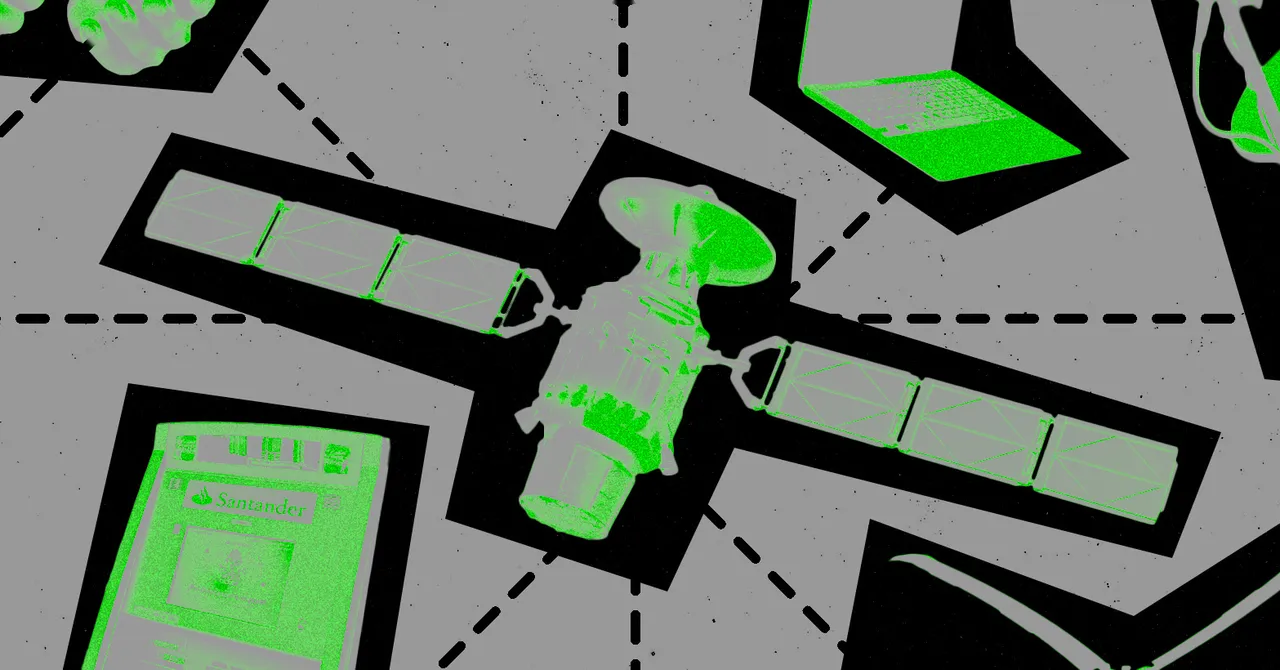
Satellites Spill the Secrets: Your Calls, Texts, and Data on the Open Sky

Satellite Communications Under Scrutiny: A Disruptive Wave for Global Security

In an era defined by technological innovation and unprecedented connectivity, recent findings have cast a spotlight on the vulnerabilities within satellite communication networks, signaling a profound shift in the landscape of digital security. SES, a dominant player in satellite services and parent company of Intelsat, has underscored a complex reality: users can often select their own encryption methods tailored to specific needs. This flexibility, while empowering, exposes a potential chink in the armor, especially on public Wi-Fi networks akin to those found in coffee shops or hotels. When such networks are compromised, malicious actors could potentially infiltrate sensitive satellite data, raising alarming questions about security protocols in this high-stakes domain.

Recent investigations have revealed disturbing lapses in satellite communication security, particularly involving Mexican government and affiliated organizations. Data collected by researchers using advanced satellite dishes—covering roughly 15 percent of global transponder communications—indicates significant unencrypted transmissions in Western US and Mexican airspace. These findings are not mere technical anomalies; they represent a disruptive breach that could undermine trusted satellite operations. Industry insiders, including Tom Stroup, president of the Satellite Industry Association, emphasize that such exposures threaten the integrity of critical infrastructure, prompting calls for enhanced vigilance and international cooperation to prevent further breaches.

The business implications of these security breaches are seismic. For satellite providers like SES and affiliated service firms such as Grupo Financiero Banorte, maintaining credibility in a fiercely competitive market hinges on robust, transparent security measures. Yet, the current landscape reveals a critical vulnerability—an open invitation for cyber disruptions that could affect everything from financial transactions to national security. Analysts from Gartner and MIT warn that disruption in satellite security could accelerate a shift toward new, more resilient architectures—like quantum-encrypted satellites and decentralized communication networks—that could redefine the industry horizon. Companies that fail to adapt risk falling behind as the demand for secure, disruption-proof satellite communications surges amidst geopolitical tensions and rapid technological evolution.

Looking Ahead: The Future of Satellite Security and Innovation

As the satellite industry confronts these mounting challenges, innovation emerges as the essential solution. The development and deployment of next-generation encryption technologies, coupled with international standards for satellite security, are becoming non-negotiable. Industry leaders like Elon Musk’s Starlink are already exploring scalable, ultra-secure communication platforms to outpace malicious actors. Meanwhile, MIT researchers and global agencies advocate for a paradigm shift: integrating AI-powered security systems and resilient satellite architectures that can withstand cyber-physical threats.

The industry stands at a crossroads—an inflection point driven by disruptive technologies and an urgent need for security vigilance. The next decade will determine whether satellite communication can uphold the promise of a hyper-connected future or succumb to vulnerabilities exploited by increasingly sophisticated adversaries. As Peter Thiel and other tech visionaries warn, those who fail to innovate rapidly may find themselves obsolete in a digital war where security is the new frontier. The race is on—an era of transformative innovation beckons for those willing to lead, disrupt, and redefine the future of global connectivity.

Social Media Auto Publish Powered By : XYZScripts.com