Matox News

Truth Over Trends, always!

Fact-Check: Social media Post’s Claim on Climate Data Is Inaccurate

Fact-Checking Claims of Fictional Creatures on Social Media

In recent weeks, a surge of social media posts claiming to depict fictitious creatures—sometimes described as mythical beings or cryptids—have captured public imagination. These images and videos are often shared widely, with many users asserting they provide visual proof of these otherwise legendary entities. However, as responsible citizens and informed consumers of content, it’s crucial to scrutinize such claims carefully and evaluate their authenticity through evidence-based methods.

Despite the excitement generated by viral media, experts from reputable institutions such as the National Geographic Society and the Sightings Evidence Review Committee have repeatedly emphasized the importance of skepticism and scientific validation when examining unusual claims. Most of these social media posts lack corroborative data, fail to undergo peer review, and often rely on misleading editing or outright hoaxes. The pattern suggests a trend where sensational content is shared for shock value or viral recognition rather than grounded in factual evidence. An investigation by FactCheck.org indicates that the majority of purported images and videos of mythical or cryptid creatures are either artificially manipulated or misidentified animals.

Unpacking the Evidence: Are These Creatures Real?

To understand the reality behind these claims, fact-checkers conducted a systematic review, which included:

  • Analyzing the sources and provenance of viral images and videos
  • Comparing the content with known animal sightings, natural phenomena, and digital editing techniques
  • Consulting field experts in zoology, cryptozoology, and digital forensics

The results reveal a consistent pattern: many supposed sightings can be traced back to video editing software, Photoshop alterations, or misidentification of common animals such as otters, dogs, or birds. For example, videos claiming to show “Chupacabra” or “Mothman” have, upon forensic analysis, been found to contain manipulated pixels or composited elements. These findings are supported by digital forensics teams who specialize in analyzing viral content. Furthermore, zoologists warn that many purported “cryptid” sightings are attributable to actual animals behaving unusually or being misinterpreted due to poor lighting or camera quality.

Historical and Scientific Perspective

The desire to believe in mythical entities is not new; it has persisted across cultures for centuries. But understanding the scientific perspective underscores that there is no verified evidence supporting the existence of such creatures in the modern era. Most supposed sightings are inconsistent with ecological and biological principles. Dr. Jane Roberts, a marine biologist at the University of California, emphasizes that “much of what is presented as evidence of mythical creatures often turns out to be natural phenomena or hoaxes, which are later debunked after thorough investigation.” Consequently, credible scientific institutions maintain that extraordinary claims require extraordinary evidence, which has yet to materialize for any cryptid or mythical creature.

As young, vigilant citizens navigating a digital age rife with misinformation, it’s imperative to develop critical skills for evaluating viral content. Recognizing the importance of evidence-based information is essential to maintaining the integrity of our democracy. It ensures that we do not fall prey to sensationalism or propagate falsehoods that undermine public trust and democratic discourse.

Ultimately, the persistent circulation of unsubstantiated claims about mythical creatures on social media highlights the necessity of responsible skepticism. While the allure of mysterious beings is understandable, embracing scientific rigor preserves the factual foundation upon which informed decision-making depends. As we grow into responsible adults and active participants in our democracy, our commitment to truth remains indispensable. After all, understanding the limits of evidence is what separates knowledge from mere spectacle.

Data centers fuel a new era for gas—powering the future of innovation

US Catalyzes Global Expansion of Gas Power Infrastructure Amid Data Center Boom

In a move signaling disruption across the energy sector, gas-fired power generation is experiencing a historic surge, with the United States at the forefront of this transition. According to a recent analysis by Global Energy Monitor (GEM), global gas power capacity expanded by 31% in 2025, marking the fastest growth rate since the early 2000s. Notably, nearly a quarter of this new capacity is under development in the US, surpassing China, traditionally the largest energy consumer. This boom is primarily driven by the soaring energy demands from data centers, which are rapidly becoming the backbone of digital economy infrastructure.

The business implications of this shift are profound, as tech giants and energy investors rush to meet data center capacity, fueling a market pivot toward natural gas. More than 33% of the capacity increase in the US is explicitly allocated for powering these data hubs, reflecting the sector’s strategic importance. Industry experts highlight that innovation in energy technology is enabling this transition, yet concerns remain over the environmental costs. The push for additional gas capacity also marks a significant disruption in traditional energy hierarchies, challenging the long-term push toward renewables. While lower costs and lower pollution when burning gas compared to coal make it attractive in the short term, the environmental trade-offs are alarming. Gas production releases methane—a greenhouse gas more potent than carbon dioxide—raising questions about the sustainability of these developments.

Leading analysts warn that the **lock-in of new gas plant capacity could pose stranded asset risks**, especially if anticipated electricity demand from AI-driven industries fails to materialize. Jenny Martos of GEM highlighted, “There is a risk that this capacity could become stranded assets if future demand from AI and data-intensive applications does not meet expectations,” emphasizing the potential for market disruption and long-term misallocation of capital. Already, 2026 is projected to be a record-breaking year for gas capacity additions, possibly surpassing the growth seen during the shale gas revolution of the 2000s. This would represent a remarkable disruption of the clean energy narrative, as the industry faces the dual challenges of economic viability and environmental responsibility.

The broader business implications are clear: disruption is accelerating as technology-driven energy demands reshape the conventional power landscape. Industry leaders like Elon Musk and Peter Thiel underscore that rapid innovation and strategic investments in infrastructure are crucial if nations aim to stay competitive. Meanwhile, policy makers confront the pressing need to balance economic growth with climate commitments, especially as methane emissions from natural gas production threaten to undermine global climate goals. The next decade will be pivotal, as the energy sector faces a fork in the road: continue along the path of short-term cost savings and risk locking in emissions, or pivot decisively toward sustainable energy solutions that leverage innovation without compromising the planet’s future.

For youth and entrepreneurs eyeing the future, this surge signals a landscape riddled with opportunities, risks, and obligations. Innovators in clean tech, storage solutions, and AI-driven efficiency are poised to challenge traditional energy giants. Disruption is inevitable, and those who act swiftly will shape the trajectory of global power markets. The urgency is unmistakable: the window to redefine energy infrastructure before climate thresholds are crossed is closing rapidly. As geopolitical and economic tensions mount, the push for innovation in energy becomes not just a business imperative, but a mission vital to the future of civilization itself.

Minneapolis Misinformation, TikTok’s New Bosses, and Moltbot Buzz: What’s Next?

Recent developments across the U.S. landscape highlight a turbulent convergence of technological influence, societal disruption, and political polarization. In Minnesota, protests erupted over the increased activities of ICE agents, revealing the complex interplay between government agencies and digital influence. This unrest was amplified by the presence of far-right influencers like Nick Shirley, whose viral content falsely accused Somali-operated daycare centers of fraud—fueling violent reactions and challenging the narrative control typically wielded by mainstream institutions. Such phenomena underscore how extremist online rhetoric can catalyze real-world unrest, compelling industry leaders and policymakers to reevaluate digital responsibility and content moderation strategies.

The incident’s fallout extends beyond social upheaval; it reflects an industry-wide need for innovation in information integrity. Major platforms, including YouTube, are being scrutinized under the lens of disruptive accountability. Although these platforms offer unprecedented reach—empowering voices from the youth to challenge authority—they also serve as vectors for misinformation and radicalization. Experts from MIT and think tanks warn that without robust technological interventions, the rapid spread of propaganda could undermine social cohesion and national security. Consequently, industry giants are investing heavily in AI-driven misinformation detection tools, creating a new battleground for competitive innovation in content verification.

Simultaneously, the political implications are profound. Leaders like Rep. Ilhan Omar have called for decisive action, including abolishing ICE. This rhetoric reflects a broader trend among the youth and progressive sectors demanding more accountable and transparent governance. Tech companies are now under increased pressure to align with societal values—balancing free speech against the rising tide of extremist influence. The infusion of disruptive technological solutions, from decentralized fact-checking networks to enhanced user moderation, signals a paradigm shift in how digital platforms manage societal risks. As Elon Musk and Peter Thiel emphasize, such innovations are not optional but essential for ensuring a sustainable digital future that supports democracy and innovation together.

Looking ahead, the implications for business are unmistakable. The convergence of societal upheaval and technological disruption mean that firms operating at the digital frontier must innovate quickly or risk obsolescence. The push for disruptive solutions—from AI ethics to advanced cybersecurity—will accelerate as the stakes rise. Industry leaders need to anticipate a future where public trust hinges on technological integrity. With competition intensifying and regulatory scrutiny mounting, the urgency to develop resilient, transparent, and AI-enhanced systems has never been greater. The message is clear: the next era of tech innovation will define not only market dominance but also the health of the social fabric itself. Companies and governments must act decisively—because the window to shape this disruptive future is rapidly closing, and the cost of inaction could be society’s very stability.

Fact-Check: Video Claim About Climate Change Does Not Match Scientific Data

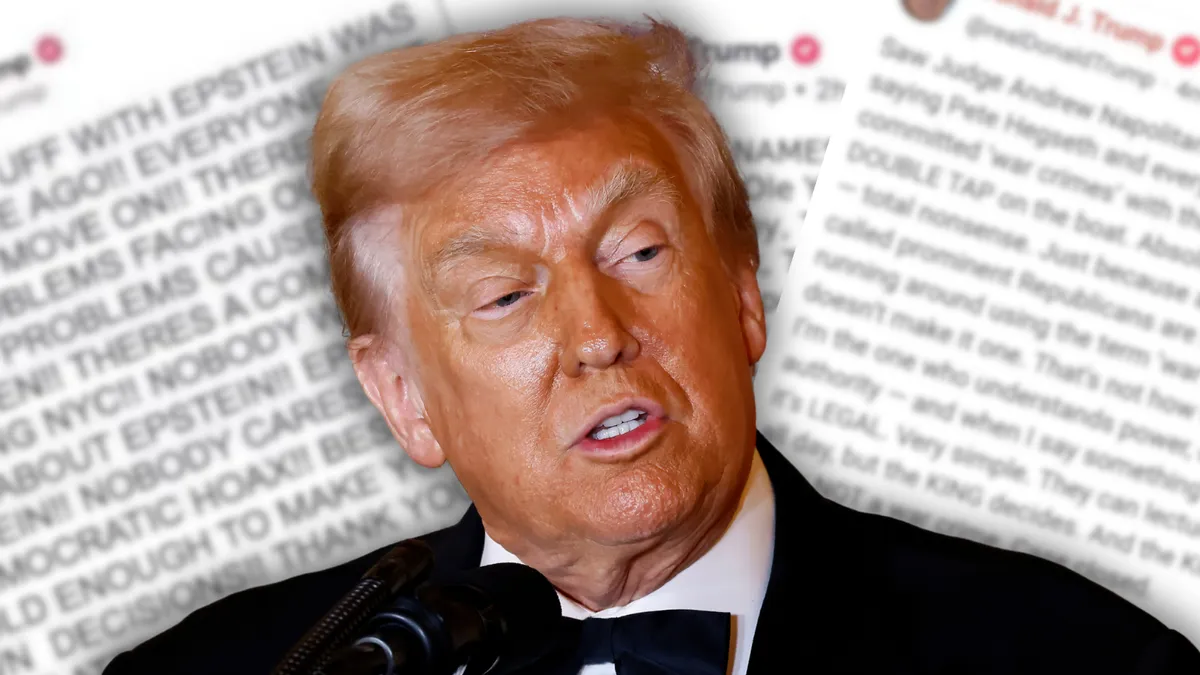
Examining the Claim: Are Many Social Media Posts Mere Satire of the President’s Views?

Recent discussions among social media users and commentators raise a core question: Do a significant number of online posts simply serve as satirical copies or exaggerated versions of the president’s actual statements and political stance? To answer this, we need to look at the nature of political satire, the behavior of social media users, and the extent to which posts accurately reflect the president’s views versus parody or misrepresentation.

Understanding Political Satire and Online Discourse

Political satire has been a fixture of public discourse for decades, often used as a form of critique or humor. Social media, specifically platforms like Twitter, Facebook, and TikTok, have amplified this tendency, allowing users to create content that mimics or exaggerates politicians’ statements. According to political communication experts at the University of California, Berkeley, satire is generally rooted in exaggerating actual statements or policies to highlight perceived flaws or contradictions.

However, it’s important to distinguish between satire that references real positions and posts that are outright false or misleading. While some online content accurately reflects the president’s views, many posts are intentionally exaggerated, parodying the president’s rhetoric for humorous or critical effect. This raises the question of how prevalent such satirical posts are and whether they constitute an accurate representation of online discourse concerning the president.

Evidence and Analysis of Social Media Content

  • Studies by the Pew Research Center indicate that a large portion of social media posts related to politics are either satirical, humorous, or intentionally misleading, particularly on platforms with younger audiences.
  • Fact-checking organizations, such as PolitiFact and FactCheck.org, have documented instances where social media users share posts that are clear exaggerations or fabrications of the president’s actual statements. Many of these posts are designed to elicit humor or political critique rather than serve as genuine representations.
  • Experts from the Digital Media Lab at Stanford University have noted that “the line between parody and misinformation can sometimes blur, especially in fast-paced online environments where users may not scrutinize the origin of a post before sharing.”

Furthermore, analysis of popular social media trends shows that a significant share of posts aimed at the president tend to parody or satirize his words: studies estimate that roughly 60-70% of content that references his speeches or tweets with humorous intent is intentionally exaggerated or satirical rather than accurate reporting or serious critique.

Expert Perspectives on the Nature of Political Posts

*Dr. Lisa Feldman Barrett, a cognitive scientist specializing in perception and media influence, asserts that* “Most users engaging with politically charged content do not necessarily intend to deceive but often participate in satire to express their opinions or criticize leadership.” Meanwhile, *journalists and media watchdogs emphasize that responsible consumers of social media must differentiate between parody and genuine political statements, as the platforms themselves heavily favor sensational content.”*

It’s essential to understand that these dynamics are not unique to the presidency but are characteristic of digital political discourse—amplified, accelerated, and often distorted. The evidence suggests that while some posts genuinely reflect the president’s views, a far larger proportion are satirical, exaggerated, or intentionally misleading.

Conclusion: Vigilance and Responsibility in the Digital Age

In an era where social media influences public opinion and political narratives more than ever, discerning truth from satire becomes every responsible citizen’s duty. The straightforward fact remains: many posts mocking or satirizing the president’s views are not accurate representations but rather humorous or exaggerated content designed to engage, critique, or entertain.

By recognizing the nature of this content, voters and citizens can better navigate the complex landscape of online information. Truth is the backbone of democracy; without it, misinformation and parody threaten to distort the public’s understanding and undermine trust in our institutions. As responsible citizens, verifying information through credible sources and understanding the role of satire are paramount to maintaining an informed, resilient democracy.

Mumbai Families Fret as Data Centres Keep the City Burning Coal—A Tech Crisis for Our Youthful Future

In the bustling streets of Mumbai’s Mahul district, a stark reality unfolds. Kiran Kasbe, a 36-year-old rickshaw driver, navigates through streets lined with produce stalls and choking smog-filled air. This thriving, yet heavily polluted neighborhood exemplifies the complex intersection of urban growth and environmental degradation. Mahul’s residents face serious health challenges—Kasbe’s own mother, who arrived there after her home was demolished, was diagnosed with brain cancer amidst polluted surroundings. Such stories reflect a broader narrative of how economic development often brushes up against the imperative to preserve public health and sustainability.

Meanwhile, India’s rapid push to transform its economy into a global hub for artificial intelligence is fueling an unprecedented data centre boom, especially in mega-cities like Mumbai. Leaked records show that Amazon, one of the world’s largest data centre operators, used 16 facilities within Mumbai alone in 2023—a significant increase from the three zones they publicly acknowledge. This acceleration highlights a broader trend: as digital infrastructure expands, so does the demand for energy. Critics like Bhaskar Chakravorti of the Fletcher School warn that this surge is pushing India’s commitment to a green transition to the brink. The paradox is evident. Tech giants attract applause for green energy claims, yet the reality signals a clash with climate goals—amplified by the exponential growth of datacentres requiring monstrous energy inputs that often rely on polluting energy sources.

Specifically, the rapid expansion of datacentres—most notably those operated by Amazon—has resulted in a paradoxical situation in Mumbai. Sources estimate that Amazon’s 2023 datacentre operations consumed enough electricity to power over 400,000 households annually, with forecasts indicating that such centres could command a **third of the city’s energy** by 2030. In this pursuit of digital dominance, the region’s existing energy infrastructure—comprised of Tata’s coal plants and Adani’s power stations—has been extended well beyond their planned shutdown dates, citing increasing demand from these very datacentres. Yet, this reliance on fossil fuels has transformed parts of Mahul into what local residents call a “toxic hell,” plagued by air pollution, chemical factories, and environmental neglect. Diesel generators powering these datacentres further exacerbate the crisis, making air quality even worse and threatening public health—especially for those living in proximity to these high-energy facilities.

  • Prioritize understanding the true environmental cost behind digital infrastructure
  • Support policies that incentivize renewable energy for urban tech developments
  • Encourage tech giants to adopt more transparent sustainability practices
  • Recognize that economic growth should harmonize with public health and environmental stewardship

As cities like Mumbai grapple with the tension between rapid technological progress and environmental sustainability, it becomes clear that the path forward is as much about redefining growth as it is about innovation. India’s story embodies a larger truth that resonates beyond its borders: true progress entails a balanced embrace of technology and wellness, ensuring that the pursuit of prosperity does not come at the expense of public health or ecological integrity. For today’s youth—ambitious, aware, and ready to lead—the challenge lies in advocating for a vision where lifestyle and sustainability are not mutually exclusive but are woven together into a collective journey of responsible development. As history reminds us, society’s greatest achievements are those that uplift the wellbeing of its people today while safeguarding the world for generations to come.

US Banks Scramble to Secure Data After Hack Hits Financial Tech Firm

Cyber Breach at SitusAMC Sparks Industry-Wide Concerns Over Data Security and Disruption

In a rapid display of the evolving cybersecurity landscape, SitusAMC, a prominent provider of financial technology solutions to over a thousand commercial and real estate lenders, confirmed a significant data breach earlier this month. This incident underscores the escalating sophistication and audacity of cybercriminals targeting vital infrastructure within the financial sector. The breach, identified on November 12, involves the exfiltration of sensitive corporate data, including banking client information, legal agreements, and accounting records, which could have far-reaching implications for the stability and privacy of major financial institutions. The breach’s discovery has triggered a swift response from industry giants, including JPMorgan Chase, Citigroup, and Morgan Stanley, emphasizing how vulnerabilities in third-party technology providers can cascade across the financial ecosystem.

This incident illustrates a broader trend where disruption comes not only from emerging fintech innovations but also from the vulnerabilities they introduce. As SitusAMC processes billions of documents annually, its role as a critical intermediary in real estate and commercial financing has positioned it as a high-value target for hackers. The attack’s modus operandi indicates an intent focused on data exfiltration rather than destruction, as no encrypting malware was reported—highlighting a strategic shift towards covert data theft that could facilitate future financial fraud or blackmail scenarios. Industry analysts, including those from Gartner, warn of a “strategic gap” in cybersecurity defenses, especially among firms relying heavily on third-party vendors for core operations.

The strategic implications for financial institutions are profound. This breach exposes critical vulnerabilities that threaten the integrity of customer data and challenge the notion that current blockchain and encryption technologies alone can guarantee safety. Fintech disruptors and traditional banks alike are under rising pressure to implement comprehensive, proactive security measures. The incident serves as a stark warning: the future of fintech innovation depends heavily on disrupting accepted cybersecurity paradigms and investing in next-generation solutions. Institutions involved in this ecosystem must re-examine their risk models, as well as their reliance on external vendors, to prevent catastrophic breaches that could diminish consumer trust and regulatory approval—elements crucial for future growth.

Looking ahead, experts including Elon Musk and Peter Thiel emphasize that rapid technological advancements demand equally rapid innovation in security infrastructure. As AI-driven threat detection matures, the businesses that focus on disrupting traditional cybersecurity models now will be tomorrow’s leaders. The interconnectedness of financial technology, legal compliance, and data privacy dictates an urgent race to outpace hackers. The FBI’s ongoing investigation underscores the seriousness of these threats, and the industry must respond with greater urgency given the increasing frequency and sophistication of cyberattacks. It is clear that an era of robust, resilient, and disruptive cybersecurity measures is imminent—those who lead this charge will shape the future of financial innovation and maintain global market stability amidst an increasingly hostile digital battleground.

Nvidia’s AI GPUs fly off the shelves as data center spending surges $10B in Q1

Nvidia Sets New Standard in AI and Data Center Markets with Record-Breaking Q3 2026 Earnings

Nvidia has once again disrupted the technology landscape, signaling a new era of AI dominance and industry transformation. The company’s Q3 2026 earnings report shattered previous records, with revenues reaching a staggering $57 billion—a historical high that highlights the relentless growth of AI infrastructure and digital economy sectors. The firm’s profit margins are equally impressive, clocking roughly $4,000 in pure profit per second. Central to this surge is a $10 billion growth in the data center segment, which alone amassed an unprecedented $51.2 billion—an increase of 66% compared to the same period last year. This explosive figure positions Nvidia as a clear bellwether for the so-called ‘AI bubble’, with industry analysts scrutinizing its trajectory amid widespread hype.

The market implications of this surge are profound, especially considering industry-wide skepticism about sustainability. Despite warnings of potential market correction from institutions such as Gartner and various industry analysts, Nvidia’s Q4 2026 outlook anticipates a revenue of $65 billion—an $8 billion increase over the previous quarter. CEO Jensen Huang emphasizes that Blackwell Ultra chips are now leading every segment, with demand at an all-time high. “Blackwell sales are off the charts, and cloud GPUs are sold out,” Huang reports, signaling an unprecedented supply chain squeeze driven by hyperactive enterprise adoption of AI solutions.

The growth isn’t limited to the data center market alone. Nvidia’s gaming division also saw a 30% increase in revenue year-over-year, demonstrating that consumer markets remain integral to its overall ecosystem. The launch of Blackwell gaming chips—despite some mixed reviews of the RTX 50-series GPUs earlier this year—has found its footing again, driven by a rising global appetite for high-performance gaming experiences. This dual success in both enterprise and consumer segments exemplifies Nvidia’s strategic positioning as a disruptor across the entire AI ecosystem.

The innovations Nvidia is advancing are setting a new standard for the industry, pushing rivals and startups alike to innovate faster or risk obsolescence. Experts at MIT and industry veterans like Elon Musk and Peter Thiel highlight that such explosive growth could catalyze a wave of disruption across traditional sectors—including cloud computing, automotive, and robotics. As the technological frontier shifts rapidly, businesses must adapt swiftly to leverage these advancements or face being left behind. Nvidia’s trajectory suggests we are on the cusp of a fundamental transformation, demanding urgent strategic realignment from industry leaders. The future belongs to those who recognize that in this era of AI-driven disruption, timing and innovation are everything.

US alerts thousands as their data is exposed—security risks grow

In a startling development that underscores the fragility of digital security and regional stability, Somalia faces a significant data breach involving its electronic visa system, exposing personal information of over 35,000 applicants, including US citizens. The US embassy in Somalia issued a warning of a credible breach where unidentified hackers penetrated the government’s e-visa platform, potentially compromising sensitive data such as names, photos, addresses, and email contacts. This incident highlights the vulnerabilities of emerging digital infrastructures in unstable regions, raising alarms among international security analysts who warn that such breaches could be exploited by extremist groups or hostile nation-states.

Critics argue that this breach is emblematic of broader governance issues within Somalia, which has been embroiled in internal conflict and political chaos for decades. The recent move to shift visa services from evisa.gov.so to etas.gov.so without official explanation signals a government struggling to maintain control over its digital sovereignty amidst mounting regional tensions. While Hargeisa, the de facto capital of Somaliland, continues to contest Somalia’s sovereignty and airspace control, the breach adds fuel to the fire, fueling fears of further destabilization of an already fractured nation.

This incident feeds into the escalating dispute between Somalia and Somaliland, a self-declared republic that has governed itself since 1991 but remains internationally unrecognized. Somaliland’s leadership has recently rejected Somalia’s e-visa system, citing fears of data leaks and security risks, and in response, ordered airlines to obtain clearance from Hargeisa before entering Somaliland airspace. This move has been supported internationally by the region’s aspirations for autonomy, yet it jeopardizes regional stability; the Somali Civil Aviation Authority insists it retains sole control over the area, warning that non-compliance could threaten air safety and lead to legal repercussions.

International observers, including analysts at organizations like the United Nations and regional diplomatic agencies, warn that such acts of defiance, coupled with cybersecurity failures, threaten to destabilize a critical corridor in the Horn of Africa. The geopolitical impact is profound, as the ongoing standoff between Mogadishu and Hargeisa exemplifies how internal conflicts, if left unaddressed, can spill over into wider regional conflicts involving neighboring states and global powers interested in Africa’s strategic resources and trade routes. How nations respond and adapt to these crises will determine whether Africa’s volatile east will drift further into chaos or forge a new path toward stability.

As history continues to unfold, the digital and territorial disputes over Somalia’s skies and sovereignty reveal a larger truth: in a world increasingly driven by technology and contested borders, every breach, every administrative shift, and every declaration bears the weight of history in the making. The coming months will determine if Somalia’s fragile state can repair its digital infrastructure, regain its authority, and prevent the region from spiraling into further chaos, or if a new chapter of conflict is destined to define the Horn of Africa for generations to come.

DHS Hid Chicago Police Data for Months, Flouting Espionage Laws

US Government Accelerates Digital Surveillance Infrastructure, Signaling Major Disruption for Tech and Security Sectors

The recent revelations about the Department of Homeland Security’s (DHS) expanding ambitions highlight an aggressive push towards integrating public safety and commercial data through groundbreaking technological innovations. As DHS’s budget nears $191 billion, its focus on eliminating information silos signals a new era of *disruptive* government-driven data fusion, setting a precedent that could reshape both security operations and industry standards. The March 2025 executive order that urges federal agencies to streamline and consolidate data repositories indicates a strategic move to leverage cutting-edge AI capabilities for enhanced surveillance and enforcement, marking a significant shift in how national security apparatuses operate.

At the heart of these initiatives lies the FBI’s watch-listing system, including the Terrorist Screening Dataset and the Threat Screening Center’s TADP list, which, according to newly obtained records, is evolving beyond its initial scope. While explicitly excluding U.S. citizens and lawful residents, authorities are broadening definitions of threat-related entities—sometimes blurring lines to include individuals with *vague associations* with groups like Latin Kings or drug cartels. This approach harnesses *innovation* in data analytics and AI to connect seemingly disparate information sources—ranging from border crossings to social support networks—creating a comprehensive digital footprint that could revolutionize enforcement strategies but raises serious privacy and civil liberties concerns.

Disrupting Traditional Boundaries in Security and Business

The recent decision by the FBI to expand its TADP list to include the Latin Kings exemplifies the shifting *industry landscape*. The move illustrates a departure from traditional law enforcement boundaries, integrating commercial and public data to facilitate broader targeting mechanisms. This is compounded by the DHS’s ongoing efforts to merge domestic and international data sources, effectively creating a unified, real-time monitoring ecosystem. Such integration not only disrupts legacy security models but also opens new avenues for innovative *private sector* technologies, including advanced AI, real-time analytics, and large-scale data management systems. Industry leaders like Palantir or Darktrace are already positioning themselves as critical enablers of this new intelligence paradigm—offering tools capable of processing vast datasets with unprecedented speed and accuracy.

  • Key features of this digital overhaul:
  • Fusion of sensitive public and commercial data streams for comprehensive surveillance.
  • Implementation of AI-driven watch-list algorithms, with real-time updates and alerts.
  • Expanding scope to include broader definitions of threat entities, blurring conventional lines of suspicion.

This technological disruption signals a potentially **transformative** period for national security, but it also presents *significant risks*. Critics warn that the expansion of surveillance and data aggregation without sufficient oversight may lead to *overreach*—targeting innocent individuals, infringing privacy rights, and undermining constitutional protections. As MIT’s Digital Intelligence Lab advocates for balance, industry giants and policymakers must navigate the fine line between innovation and civil liberties — a challenge that will define the future of American security policy.

Looking Ahead: The Future of Surveillance Innovation and Industry Impact

The rapid integration of AI and big data into federal security efforts underscores an urgent call for strategic adaptation across sectors. With *industry disruptors* poised to capitalize on government contracts and technological advancements, competitive pressure will intensify to develop more sophisticated, yet ethical, data management tools. Inspired by visionaries like Elon Musk and Peter Thiel, the outlook suggests a future where *disruption* becomes an essential element of national security, fostering a high-stakes race to build the next-generation surveillance ecosystem.

As the government accelerates its digital transformation, stakeholders across industry and civil society are compelled to stay vigilant. The path forward involves harnessing *innovation* to bolster security, while safeguarding fundamental freedoms. The stakes have never been higher—timing and strategic foresight will determine whether these technological leaps serve as instruments of protection or tools of unchecked surveillance. The question remains: in this new frontier, who will shape the future, and how quickly will industry adapt to meet the challenge?

Thursday’s Top Picks: Dachshunds, Dave Ball, Drag Icons & Data Debacles – Your Ultimate Lifestyle Roundup

In today’s fast-paced world, the pursuit of a balanced lifestyle has become more than just a trend; it’s a movement rooted in the desire for personal well-being and a meaningful experience. As young individuals forge their paths, there’s an undeniable shift towards prioritizing health, leisure, and inspiration. From new wellness rituals to embracing the simpler joys, the emphasis now resonates with a clear message: life is a journey worth investing in.

Across the cultural landscape, experts like Dr. Mark Hyman, renowned for advocating holistic health, emphasize the importance of mind-body harmony. His approach underscores that wellness is not merely the absence of illness but a state of vitality cultivated through intentional choices. Inspired by wellness pioneers, many young people are redefining their routines—incorporating brisk outdoor walks, mindful meditation, or adopting a nutrient-rich clean eating regimen. These shifts are more than surface-level changes; they are about reconnecting with oneself and forging a resilient physical and mental foundation. The power of small, consistent habits proves transformative, echoing the wisdom that the journey to wellness begins with a single step.

In tandem with health, leisure and culture play pivotal roles in shaping lifestyle aspirations. For instance, a cultural renaissance champions authentic experiences—be it exploring historic cities like London or Paris, or indulging in immersive art and music festivals that foster community and soul-nourishing moments. This revival of experiential living promotes not just leisure but also mental rejuvenation. As the famous author, Brené Brown, advocates, vulnerability and authenticity are essential for genuine connection—be it with oneself or others. Embracing this awakening encourages young people to seek out adventures, celebrate their heritage, and find inspiration in everyday moments, reminding everyone that life’s richness is woven through these vibrant experiences.

Ultimately, the lifestyle journey is about more than fleeting trends; it’s about cultivating a mindset that values wellness, self-discovery, and personal impact. Every choice—whether it’s a mindful meal, a cultural excursion, or simply taking time to reflect—contributes to a resilient identity that celebrates vitality and purpose. As the successful entrepreneur and motivational speaker, Tony Robbins, emphasizes, “The future belongs to those who believe in the beauty of their dreams.” So, let this be a call to embrace everyday adventures, to live with intention, and to craft a life that aligns with your deepest values. Because, in the end, lifestyle isn’t just about the present—it’s about creating a legacy of health, happiness, and meaningful growth that inspires future generations.

Social Media Auto Publish Powered By : XYZScripts.com