
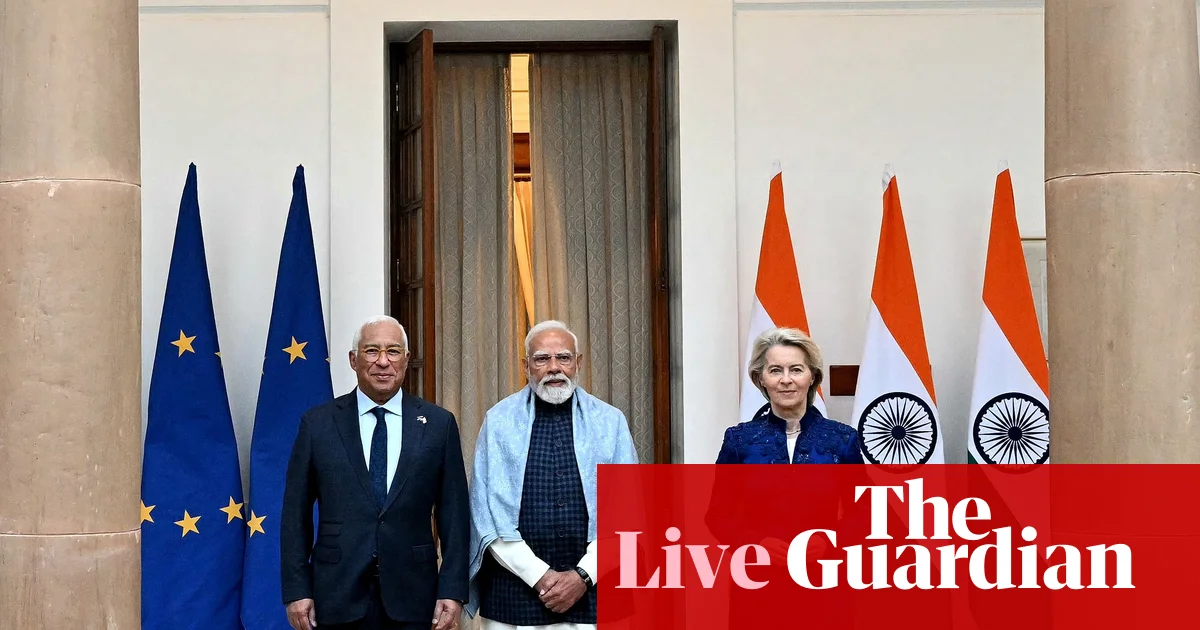

The European Union has recently cemented a landmark victory in global trade negotiations by finalizing a comprehensive agreement with India. This deal, heralded as “the mother of all trade deals” by Ursula von der Leyen and praised by Prime Minister Narendra Modi for its historic scale, marks a pivotal moment in the shifting landscape of international commerce. With tariffs on cars set to plummet from as high as 110% to just 10% over five years, the accord opens up India’s protected market, promising a lucrative channel for EU exports worth over €180bn annually, and supporting nearly 800,000 European jobs. It is a testament to how geopolitical and economic considerations have converged at a defining juncture, with the EU seeking diversification amid strained relations with the United States and uncertain global trade dynamics.
Importantly, the significance of this agreement transcends mere tariffs. It embodies a strategic pivot by the European Union to strengthen alliances with emerging economic powerhouses at a time when global order is under redefinition. Analysts and historians emphasize that such a move signals a powerful shift toward multi-polarity, reducing reliance on traditionally dominant economies.
- The accord connects more than 2 billion people into a single market, a rise in regional economic connectivity that could ripple across the globe}
- It underscores Europe’s strategic effort to counterbalance the monopsony power of China and the unpredictability of the US under tariffs-driven policies
- Historically, trade deals like this—long in the making—are often seen as precursors to broader geopolitical alliances
The broader geopolitical impact of operationalizing this deal cannot be understated. It sends a clear message to the world: as the global order is “being fundamentally reshaped,” Western powers are actively creating new blocs and partnerships that challenge the old hierarchy. Recent weeks have seen the EU sign a deal with Mercosur, after two and a half decades of negotiations, further illustrating a pattern of diversification away from US-centric trade reliance. Economists warn that such measures could deepen divides, foster new alliances, and ignite competition on a scale that history has rarely seen. Especially noteworthy is how Europe’s renewed engagement with India aligns with strategic interests beyond commerce, including security, defense, and geopolitical influence, in a period marked by rising tensions in Ukraine and disputes over Greenland’s strategic resources.
Finally, as the global chessboard continues to shift, the significance of these negotiations remains clear. They are not merely economic transactions but are cornerstones in the construction of a new geopolitical architecture. The decisions made today will set the tone for decades to come, echoing through history as pivotal moments where old world order gave way to new alliances and rivalries. The narrative of this era is still unfolding—each trade agreement, each diplomatic handshake, a page in the vast and complicated story of global power—leaving the modern world poised on the precipice of a new chapter that may redefine the very fabric of international society.





