
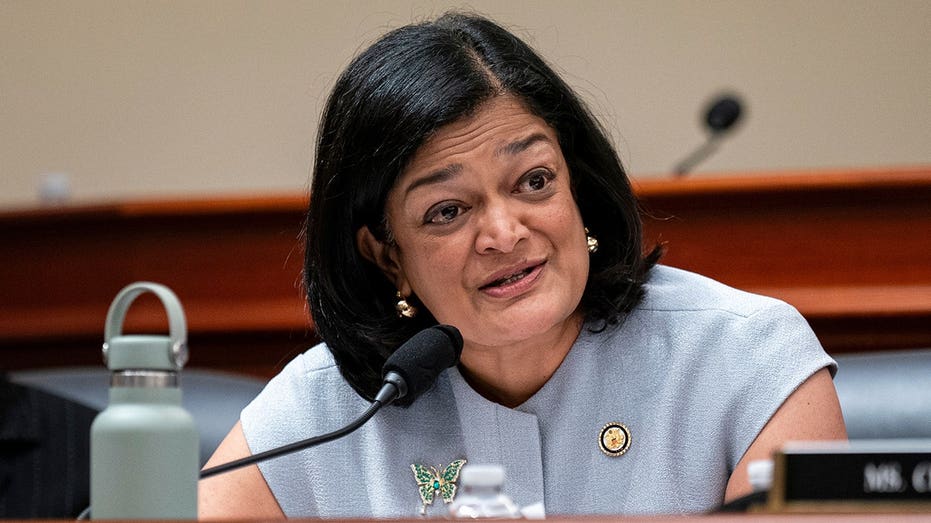

Washington Democrat Representative Pramila Jayapal is facing intense scrutiny and severe backlash, including death threats, following her controversial congressional visit to Cuba. Her meetings with Cuban President Miguel Díaz-Canel and various foreign diplomats have ignited a firestorm of criticism, with opponents alleging her actions undermine U.S. policy and national security.
During a recent congressional trip to Cuba, Representative Pramila Jayapal, D-Wash., engaged in discussions with high-ranking Cuban officials and foreign ambassadors. This congressional Cuba engagement, which she described as part of her duties to assess the island’s crisis and the impact of U.S. sanctions, has provoked a significant outcry. The progressive lawmaker revealed on Wednesday that she has received death threats, with some critics labeling her a ‘traitor’ for her diplomatic outreach.
Congressional Diplomacy Under Scrutiny
Representative Jayapal defended her actions, asserting that meeting with foreign ambassadors to understand the effects of U.S. policy is standard practice for members of Congress. She explained that her discussions focused on Cuba’s severe fuel shortages and the broader implications of U.S. sanctions, which have been in place for over six decades. According to Jayapal, these sanctions have not been effective, and she advocates for direct diplomatic negotiations as a path forward.
During her visit alongside Representative Jonathan Jackson, D-Ill., Jayapal met with a diverse group including President Díaz-Canel, senior government officials, political dissidents, and various civil society organizations. Her comments at a Seattle briefing, where she acknowledged these meetings, quickly gained traction online, fueling the ongoing debate.
Allegations of Undermining U.S. Interests
The nature of Jayapal’s interactions with Cuban leadership and foreign diplomats has drawn sharp condemnation from conservative circles. Critics argue that such engagement with a regime hostile to U.S. interests, particularly without clear State Department guidance or as part of a broader, unified foreign policy strategy, could be perceived as undermining American diplomatic efforts. Accusations of ‘conspiring against the U.S.’ have circulated, contributing to the hostile environment that led to the death threats against the congresswoman.
The controversy highlights a persistent tension regarding the appropriate scope of individual congressional members’ foreign policy initiatives, especially when they diverge from established U.S. positions. The debate centers on whether such direct engagement risks legitimizing adversarial governments or if it offers a pragmatic avenue for understanding complex international issues.
“People are calling for me to be shot, and it’s just a fabrication. It is what’s wrong with so much of the work that we do.”
Protecting Lawmakers Amidst Political Division
The alarming surge in threats against public officials, exemplified by the calls for violence against Representative Jayapal, underscores a concerning trend in contemporary American politics. While vigorous debate and scrutiny of elected officials’ actions are vital for a healthy democracy, resorting to intimidation and threats of harm is unequivocally unacceptable and antithetical to civil discourse. This incident, reported by Fox News Digital, adds to a growing list of vulnerabilities faced by lawmakers on Capitol Hill and beyond.
Institutions must uphold the rule of law and protect those who serve, ensuring that policy discussions, even highly contentious ones, can proceed without fear of violence. Simultaneously, elected officials bear a responsibility to conduct their duties in a manner that maintains public trust and avoids actions that could be misconstrued as detrimental to national security, especially when engaging with foreign adversaries.
The Broader Context of U.S.-Cuba Relations
The long-standing U.S. embargo against Cuba, a policy in effect for over 60 years, remains a highly contentious issue. Proponents argue it is a necessary tool to pressure the communist regime, while critics, including Representative Jayapal, contend it has failed to achieve its objectives and instead exacerbates humanitarian crises on the island. Jayapal’s advocacy for direct diplomatic negotiation reflects a perspective that seeks to normalize relations and find alternative solutions to the island’s challenges.
This incident reignites the debate over America’s approach to Cuba and the role of individual lawmakers in shaping foreign policy. It forces a critical examination of how congressional delegations interact with foreign powers, particularly those with strained relationships with the United States, and the potential implications for national unity and security.






