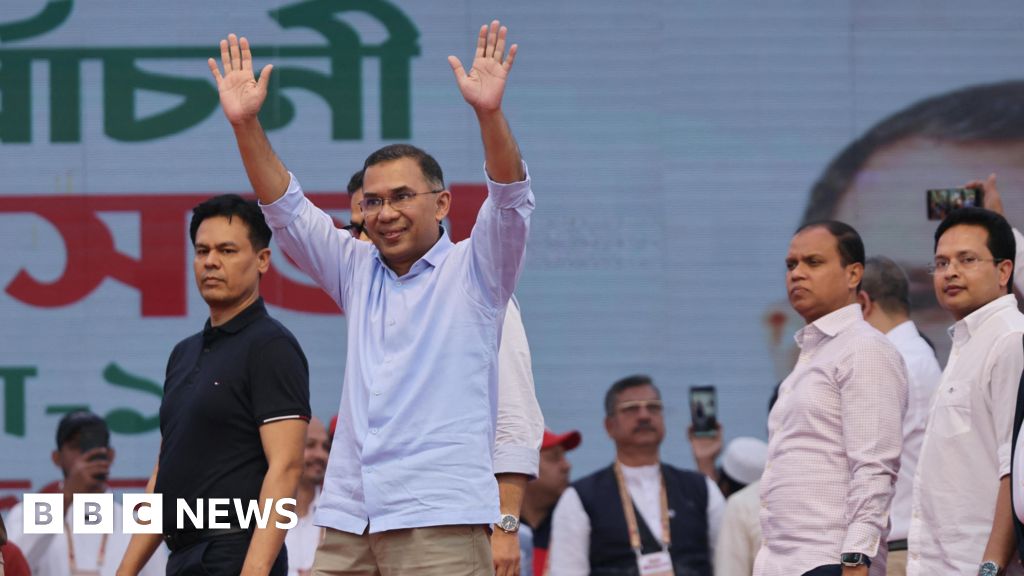

In a significant development unfolding in Bangladesh, Tarique Rahman is poised to assume the position of prime minister, just 18 months after a wave of mass protests led to the ousting of the nation’s longest-serving leader. This political shift signals not only a change in leadership but also a potential realignment of regional influence and domestic policy direction, with profound geopolitical implications for South Asia. As analysts scrutinize the unfolding scenario, the global community observes with cautious interest, knowing that such leadership transitions can define a nation’s trajectory for decades to come.
Rahman’s impending ascension comes after tumultuous protests that challenged the established political order. Many see this as the culmination of persistent calls for reform, yet it raises questions about the broader stability of Bangladesh. Historically, Rahman, son of influential political figure Begum Khaleda Zia, has been a controversial figure, both revered by supporters and criticized by opponents for his association with past political conflicts. International political analysts such as those at the Council on Foreign Relations have emphasized that Rahman’s rise could herald a new chapter — one that might either stabilize or further polarize a nation already grappling with economic and social issues.
The geopolitical impact of this transition extends beyond Bangladesh, affecting regional relations with neighboring India, China, and the broader Indo-Pacific. As the country re-enters a phase of political redefinition, the influence of China and India looms large—each vying for strategic leverage in the world’s eighth most populous nation. The prospective leadership of Rahman could influence Bangladesh’s foreign policy stance, with potential shifts toward aligning more closely with China’s Belt and Road Initiative or reaffirming ties with India, considering its strategic importance and shared borders. This political recalibration is being closely monitored by international bodies like the United Nations and ASEAN, which emphasize stability in South Asia as critical to regional peace.
However, historical voices warn that such rapid political shifts often carry risks. Renowned historians and geopolitical analysts have noted that leaderships emerging from unrest sometimes face legitimacy challenges, internal divisions, and external pressures. The current upheaval in Bangladesh underscores the fragile balance between reform and chaos, reminding the global audience that decisions made today can reverberate across generations. As the country moves forward with Tarique Rahman at its helm, the weight of history seems to hang thick in the air — a testament to the fact that in the dance of nations, the steps taken now will shape the world order tomorrow. In the unfolding chapters of this story, the true impact of this leadership transition remains to be written, but its echoes will undoubtedly resonate far beyond the shores of Bangladesh.