Matox News

Truth Over Trends, always!

Congressional Democrats Promise Justice for Americans Hurt by Immigration Agents: “You Deserve Peace” | US Congress

The recent congressional hearings in the United States have thrown a stark spotlight on the ongoing controversy surrounding the federal government’s aggressive immigration enforcement policies. Witnesses, including family members of victims and victims themselves, recounted harrowing encounters with federal agents, raising serious questions about the human rights abuses and accountability failures of agencies like Immigration and Customs Enforcement (ICE) and Border Patrol. This unflinching testimony reveals a deeply troubling picture: a government-authorized crackdown that has, in numerous cases, turned deadly, exposing the darker consequences of unchecked federal power. Such revelations have ignited a fierce debate about the geopolitical and social impact of U.S. immigration policies, with critics warning that these actions threaten to harm American societal fabric and international standing.

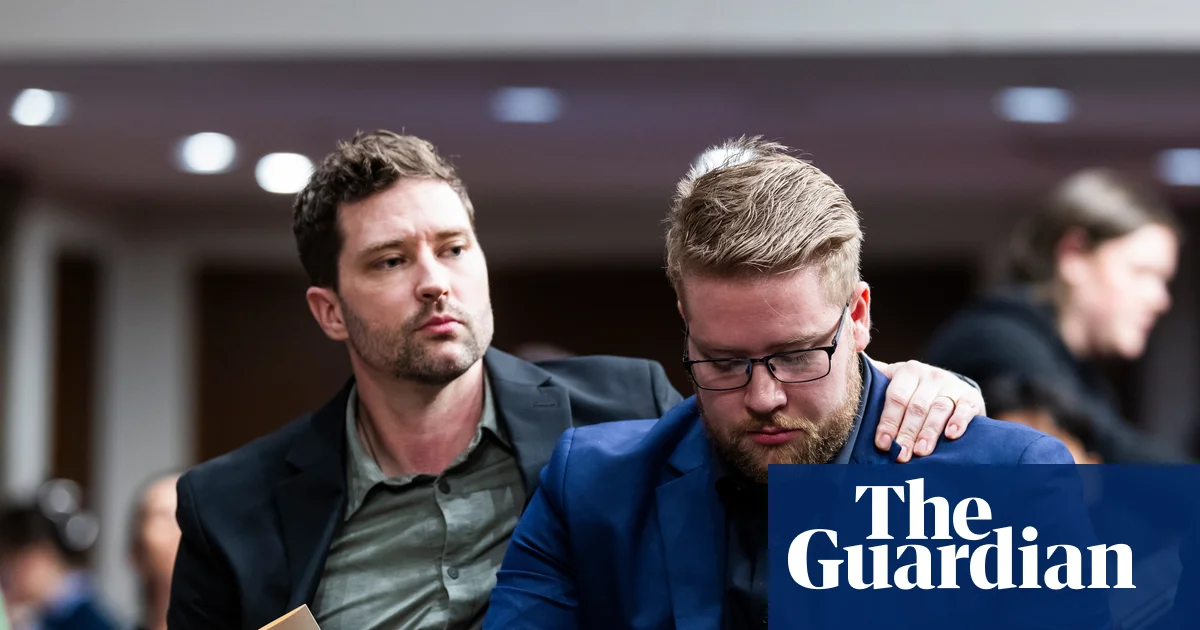
Key to the hearings was the emotional testimony of families who have lost loved ones in encounters with federal agents. Brothers Luke and Brent Ganger vividly described the death of their sister, Renee Good, shot by ICE officers during a routine traffic incident. Their grief was compounded by reports of further violence, including the fatal shooting of protester Alex Pretti by border patrol agents. These stories underscore a troubling pattern: federal agents engaging in violence with impunity, often with little oversight or accountability. Critics, including prominent analysts and international organizations, argue such conduct damages the credibility of the U.S. on the global stage, where it claims to champion human rights and the rule of law. Moreover, these incidents have far-reaching implications, fueling societal divisions and eroding faith in institutions meant to protect citizens and non-citizens alike.

The hearing also brought to light stories of trauma inflicted on ordinary Americans, such as Marimar Martinez and Aliya Rahman. Martinez, a Chicago native, was shot five times by a border patrol agent who later circulated her gruesome hospital images as trophies — an act exposing a culture of misconduct that seems embedded within certain enforcement arms. Meanwhile, Rahman, who suffers from autism and traumatic brain injury, was forcibly removed from her vehicle while trying to access medical care, with agents referencing her as a mere “body.” Her account highlights the dangers faced by vulnerable populations caught in the crossfire of national security policies. Such practices, often carried out with little regard for due process or human dignity, threaten to alienate communities, spread fear, and deepen societal fractures—facts acknowledged by many international watchdogs.

These revelations have stirred a powerful call for reform, with many voices from the political realm demanding justice. Richard Blumenthal, a senator from Connecticut, framed the testimonies as a “defining moral moment,” questioning the moral integrity of those responsible. Meanwhile, Alex Padilla pointed out the absence of Republican engagement, emphasizing the partisan divide that hampers bipartisan oversight of such crises. Critics argue that this political inaction emboldens agencies to operate above scrutiny, thus risking the destabilization of American values and the erosion of international credibility. As these stories unfold, historians and analysts warn that America faces a pivotal reckoning: whether to uphold its founding ideals of justice and human rights or to succumb to policies that, in the name of security, violate the very principles that underpin the nation’s identity. The weight of this moment falls heavily on the shoulders of policymakers — for the tide of history remains uncertain, yet undeniable: the choices made today will echo through generations, shaping the face of the nation and the global order for decades to come.

UK taxpayers deserve answers: Will they recover £122m from PPE Medpro? | Michelle Mone

In the wake of a high-profile court ruling exposing the mishandling of pandemic resource procurement, families, education, and local communities are increasingly feeling the ripple effects of systemic social issues rooted in privilege, corruption, and a breakdown of moral accountability. The recent judgment against PPE Medpro, a company linked to the wife of a prominent conservative peer, highlights how intertwined issues of social class, political influence, and economic exploitation have become. While the court demanded that £122 million be returned to the public coffers, the reality is stark: the company has been declared insolvent, and the very individuals who profited from the crisis remain shielded behind complex legal barriers. This situation underscores a societal divide where **those with wealth and influence often escape justice**, leaving ordinary citizens questioning the fairness of a system rigged in favor of the privileged.

At its core, this scandal exposes a troubling cultural shift—one where ethics are sidelined in pursuit of profit, especially during times of national crisis. Notably, the procurement process, which was allegedly prioritized for politically connected individuals via the so-called “VIP lane,” reflects a departure from transparent, merit-based systems. Sociologists like Oliver James argue that such practices foster a sense of disillusionment and betrayal within communities, eroding trust in institutions that are supposed to serve the public interest. For families struggling to access quality healthcare or facing the economic fallout of failed policies, the misconduct of a few exemplifies a larger societal failure: the neglect of moral responsibility in favor of greed and self-interest. This gap between political elites and everyday citizens fuels *a social tension* that threatens the fabric of shared community bonds.

Furthermore, the impact on education and future generations cannot be understated. When government resources are diverted or lost through corrupt arrangements, schools and social programs suffer—further widening the demographic and cultural divides. As social commentator Frank Furedi suggests, a society that tolerates such blatant misconduct risks cultivating a cynical attitude among youth, undermining civic engagement and ethical standards. The emerging narrative challenges *young people* to reconsider their role amid a landscape marred by inequality. Yet, there remains a hopeful contrast—the potential for reform invoked by dedicated watchdogs and civic groups who continue to emphasize accountability. With ongoing investigations into criminal offenses linked to pandemic procurement, society stands at a crossroads: will it choose to rebuild trust through genuine transparency, or allow the pervasive influence of privileged networks to perpetuate injustice?

As the story unfolds, the question lingers: can society truly heal from this breach of public trust? The moral challenge lies in fostering a culture where integrity, fairness, and moral responsibility are restored as societal cornerstones. In this landscape of complexities, hope emerges in the form of collective resilience and the emerging voices demanding genuine change. Society’s strength is found not in the wealth of a few, but in the unity of communities committed to holding power accountable. Perhaps, amidst the echoes of legal battles, a new era beckons—one where the fabric of our society is mended with patches of integrity, woven through the collective effort of families, educators, and leaders dedicated to a future where justice is not just an aspiration, but a living reality.

Parents deserve real support — Why is free 30-hour childcare still out of reach?

In recent years, the landscape of childcare in the United Kingdom has undergone significant shifts, reflecting broader societal transformations and underlying social tensions. The expansion of government-funded childcare hours represents a conscious effort by policymakers to bolster family stability and support working parents. As of 2025, working parents with children aged nine months to four years can access 30 hours per week of funded childcare during term time—an increase from previous provisions and an acknowledgment of the critical role early childhood education plays in society’s fabric. However, beneath these policy initiatives lies a complex reality for families and communities, shaped by economic pressures, staffing shortages, and regional disparities.

While the scheme has benefitted approximately 530,000 more children since its expansion, the challenges are evident. The high costs of childcare remain a major societal concern, with the average full-time nursery place costing £12,425 annually for children under two — a figure that has declined by 22% following recent policy implementation. Yet, affordability is not evenly distributed across the nation. Wales, for instance, witnesses the highest average costs at £15,038, while Northern Ireland reports monthly expenses around £520 for infants. For working families, the financial burden of early childhood care can hinder employment prospects and economic independence, especially in social strata where household incomes are lower and “childcare deserts” are more prevalent, according to Ofsted. 

The quality and accessibility of early years education are further compromised by systemic issues. The decrease in the number of childminders—as fewer providers operate in private homes—exacerbates regional inequalities, creating disparities that sociologists like David H. Shonnard have identified as deeper manifestations of *social stratification*. The government’s promise to add 100,000 new childcare places and foster more nurseries could help bridge the gap, but the distribution remains unequal, with disadvantaged communities disproportionately impacted. Many children from these backgrounds are now receiving fewer free hours—nor is there clear evidence that current efforts sufficiently reach the most vulnerable families.

The moral question at the core of this social issue revolves around the societal responsibility to nurture equitable childhood development and empower families. Early childhood sociologists like Katherine Levine Einstein emphasize that investing in affordable, accessible quality care is not merely a family issue but a societal imperative. As policymakers debate funding rates and regulations, the human cost of inaction endures in communities where parental employment hinges on unreliable or prohibitively expensive childcare. With the societal fabric stretched thin, the hope remains that continuous reform, combined with community-driven solutions, can transform these challenges into opportunities. Society’s true resilience lies in its capacity to adapt, to believe in a future where every child, regardless of social standing, begins life on an equal footing—so that society as a whole can thrive in the face of longstanding social tensions and economic uncertainties.

Social Media Auto Publish Powered By : XYZScripts.com