
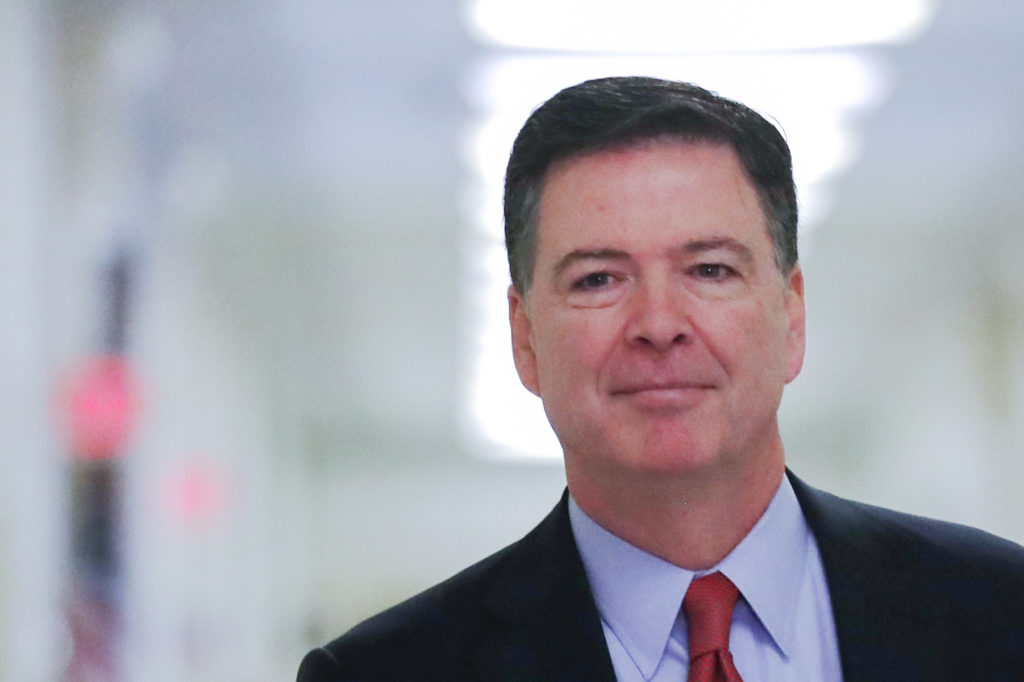

The latest chapter in the ongoing saga of American political power struggles unfolded as the Department of Justice, under the influence of President Donald Trump, initiated unprecedented legal actions against the former FBI Director, James Comey. This development signals more than mere legal proceedings; it exemplifies how the battle for control over narratives and institutions defines the current political landscape, with profound implications for the direction of the nation.
Trump’s aggressive retribution campaign against perceived enemies, once dismissed by critics as vindictive, is now manifesting in tangible actions that reshape the boundaries of executive authority. The decision to press criminal charges against Comey is emblematic of a broader strategy to reassert dominance over the so-called “Deep State,” framing these legal maneuvers as a fight against entrenched bureaucratic interests hostile to populist reforms. Historically, this echoes moments like the erosion of Congress’s authority during the Jacksonian era, where executive overreach challenged established norms. Today, these moves challenge the traditional notion of separation of powers, raising critical questions about the balance between legal accountability and political vendettas.
Legal scholars and constitutional experts debate whether the justice served under this new regime constitutes a genuine effort to uphold the rule of law or if it is a strategic tool in the power struggle. The decision to target figures like Comey — once seen as custodians of justice — can be viewed as a deliberate attempt to discredit institutions that could constrain presidential authority. Decisions such as these echo the words of political theorists like Carl Schmitt, who argued that sovereignty lies with the one who decides on the exception. Consequently, the unfolding events emphasize that in this era, political power is increasingly contested not just in legislative halls but within the very fabric of judicial and bureaucratic institutions, which are being reshaped to serve new ideological aims.
As history shows, if these trends continue, the power dynamics redefine what it means for the government to serve the people. When the stakes are no longer limited to policy but extend to control over the state’s core mechanisms, the condition of American democracy becomes a battlefield for alternatives — either a return to foundational principles or the consolidation of a new, executive-centric order. Much like the tumultuous constitutional conflicts during the founding era and subsequent crises, today’s developments reveal that politics is less about policy and more about destiny. The choices made now — whether in arrests or pardons, in laws passed or ignored — will determine which version of America will emerge, for better or worse, as history continues to be written on the stage where power is contested and sovereignty is claimed.”





