
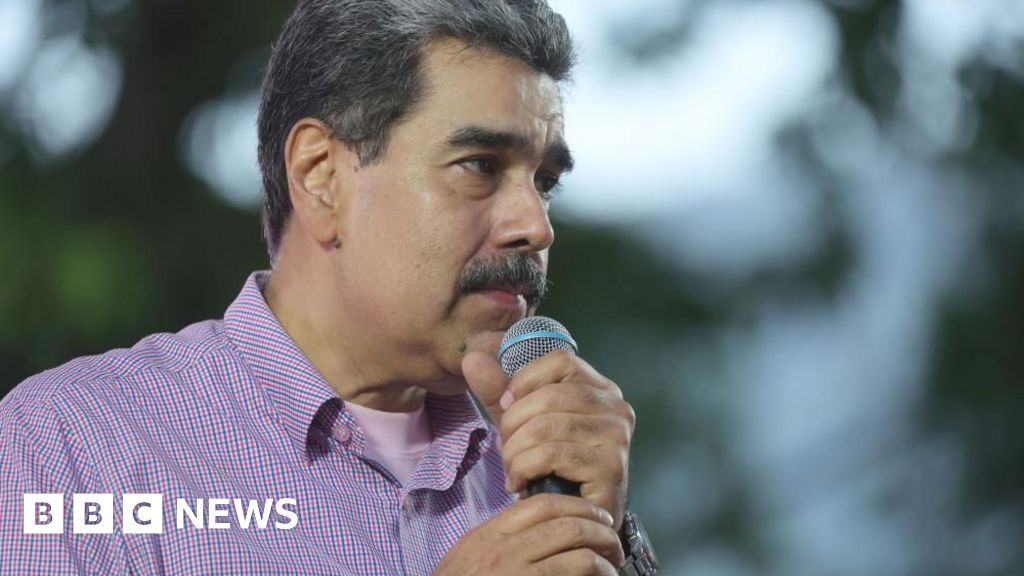

In an unmistakable sign of the escalating crisis in Venezuela, the country’s leader, Nicolás Maduro, has publicly expressed willingness to engage in direct talks with representatives of the Trump administration. This development comes amid intensifying international pressure, while Washington’s rhetoric and military maneuvers suggest a broader strategic aim beyond mere diplomacy. Just hours before Maduro’s announcement, President Donald Trump had not ruled out deploying ground forces to the South American nation, igniting fears of an outright conflict. The United States, through its actions and statements, appears to be pushing toward a decisive intervention—yet the question remains: is this for regime change or strategic control over Venezuela’s vast oil reserves?
The US government’s aggressive policies have shown few signs of backing down. Since Trump’s second term began, Washington has doubled its bounty on Maduro, offering up to $50 million for information leading to his capture, and launched a counternarcotics operation targeting vessels crossing Caribbean waters. These strikes, conducted under the guise of removing “narcoterrorists,” have resulted in over 80 fatalities, igniting a debate about their legality and effectiveness. Critics, including legal experts and international analysts, argue that no concrete evidence has been provided linking these vessels to drug trafficking. The strikes, primarily in the Caribbean and Pacific, underscore a broader strategy: to sow chaos within Venezuela’s borders and weaken Maduro’s hold on power. Meanwhile, the presence of the US Navy’s largest aircraft carrier, the USS Gerald Ford, signals that Washington’s military posture may be more than a bluff; some interpret it as a veiled threat to remove Maduro forcibly.
Simultaneously, diplomatic signals fluctuate. Trump’s contradictory statements—initially denying the possibility of war, then leaving open the option of military action—are read as a warning to Maduro: enter negotiations or face harsher measures. The State Department’s decision to delay labeling the alleged Venezuelan drug cartel, Cartel de los Soles, as a Foreign Terrorist Organization until late November, appears to be a calculated move. Experts suggest that this delay is a strategic ultimatum: engage in dialogue or face intensified sanctions and military pressure. The designation, if enacted, would criminalize any American support for the cartel, bolstering the US’s legal basis for further action. As President Trump wavers, some analysts see this as part of a broader tactic—an attempt to reinforce the narrative that Maduro’s regime is a significant threat to regional stability and US security.
Within Venezuela, Maduro’s approach openly contrasts with US escalation. The leader, who has once even sung in English during public addresses, is calling for dialogue and peace. Addressing the American people directly, he underscores his readiness for face-to-face talks—yet, past negotiations mediated by the Vatican and Norway have collapsed. Meanwhile, opposition figure and Nobel laureate María Corina Machado is actively urging the military to defect, framing Maduro’s regime as a “criminal structure” responsible for “crimes against humanity.” Her “freedom manifesto” highlights the stakes—an impending epoch where “our natural rights will prevail,” but only if Venezuelans unite against what she describes as a dictatorial tyranny. The ongoing internal struggle echoes the larger geopolitical tension: a nation on the brink, caught between authoritarian repression and external intervention—whose fate remains suspended between history’s relentless march and the unpredictable tides of geopolitics.
The weight of this unfolding crisis leaves the international community pondering the future of Venezuela, as the echoes of history ring louder than ever. Will diplomacy prevail, or will this simmering conflict ignite into another chapter of regional upheaval? With each tug of geopolitics, entire societies are caught in the crossfire, and the world watches as the pages of history turn—unfolding a saga of power, resistance, and the quest for sovereignty that may yet reshape the very fabric of South America. The question lingers: how much longer can this fragile balance be maintained, before the next chapter of conflict is written in blood and fire?




