
Matox News

Truth Over Trends, always!

DJI Gives $30K to Man Who Unintentionally Hacked 7,000 Romo Robots

In a decisive move reflecting industry-wide shifts toward security and transparency, DJI, the global leader in consumer drone technology, has announced significant upgrades to the security of its DJI Romo platform following recent vulnerabilities exposed by independent researchers. This development underscores a broader trend toward disruption in the way tech giants handle security risks—a necessary evolution in an era where interconnected devices dominate our daily lives. The incident, sparked by security researcher Sammy Azdoufal’s discovery of backdoor access to hundreds of DJI robots, serves as a wake-up call for both manufacturers and consumers, highlighting the critical need for proactive security measures.

Industry experts like Gartner and MIT’s Cybersecurity Lab have long emphasized the importance of continuous security validation and collaborations with the security research community as essential pillars for safeguarding IoT and AI-driven products. DJI’s recent responses showcase a fundamental shift: the company is now not only patching vulnerabilities but also fostering a more open, partnership-oriented approach to cybersecurity. According to DJI’s official statements, they’ve already addressed the flaw allowing unauthorized viewing of video streams—another step towards restoring consumer confidence. Yet, concerns remain regarding whether such certifications—like ETSI, EU, and UL—are enough to prevent future exploits, especially considering the scale and sophistication of today’s threat landscape.

Disruption in the business model is evident as DJI commits to a comprehensive upgrade of its systems, with the company pledging to roll out iterative updates over the next month. This proactive stance indicates a strategic pivot: moving from a reactive to a proactive stance in security innovation. Moreover, DJI’s plans to enhance engagement with independent research entities—incorporating formal collaboration channels—are expected to set a new industry standard. As Peter Thiel has observed, fostering a community of transparency and innovation creates a moat that can outpace competitors relying solely on traditional security measures. This approach may not only mitigate risks but also serve as a competitive advantage in a crowded market increasingly driven by trust and technological resilience.

This recent episode of security scrutiny and response has broad implications for the future of disruptive innovation in connected devices. As drones, robots, and AI-enabled products become embedded into everyday life, the pressure mounts on manufacturers to prioritize security-led design. The incident also accentuates the pressing need for swift, transparent communication and collaboration with cybersecurity communities to stay ahead of malicious actors. Industry watchers must now evaluate whether DJI’s efforts will serve as a model for others or if more daring, innovative approaches are required to truly secure the next generation of technology. For investors and startup founders alike, this signals a critical truth: the future belongs to those who prioritize innovation not only in features but also in the security infrastructure underpinning their products. As the race to dominate the IoT and AI frontier accelerates, the ability to quickly adapt, patch vulnerabilities, and build resilient systems will decisively determine market leaders in the years to come.
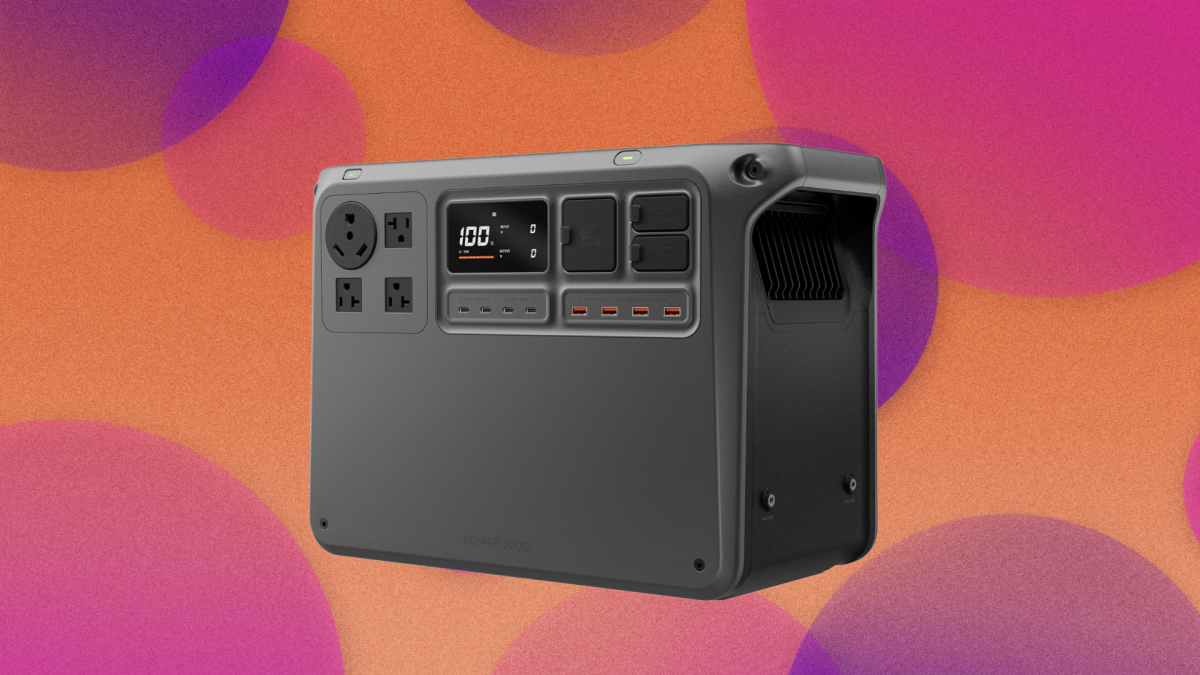
Grab the DJI Power 2000 Portable Power Station — Now 46% Off This Weekend!

In an era where **technology** and **urban resilience** are shaping the *lifestyle fabric* of youth culture, a surge in demand for *portable power solutions* is redefining what it means to be prepared and independent. Recently, Amazon announced a striking deal on the DJI Power 2000 portable power station, slashing its price from $1,299 to just $699—an eye-catching 46% discount that’s capturing the attention of young entrepreneurs, digital nomads, and outdoor enthusiasts alike. With this shift, we are witnessing the emergence of a *cultural paradigm*: the quest for uninterrupted energy in a society that thrives on mobility and instant connectivity.

The DJI Power 2000 isn’t just a bulky backup; it’s a symbol of a broader **societal shift**. Known globally for their innovative drones and microphones, DJI’s expansion into portable power stations aligns perfectly with the needs of today’s *adventure-driven, tech-dependent generation*. Designed to handle up to 99% of everyday appliances— from power tools to projectors—this device exemplifies the **sociological trend**: *the pursuit of *self-sufficiency*. It represents the new archetype of lifestyle, where resilience against outages and off-grid living become not just practical choices but cultural statements.* As sociologist Dr. Emily Navarro notes, “This shift signifies a move towards **self-empowered independence**, where technology blurs the line between urban readiness and rugged real-world utility.”

What truly elevates the **Power 2000** is its blend of *power, safety, and versatility*. Weighing in at around 21kg (or 47.4 pounds), it isn’t a lightweight companion, but a **powerful fixture** in any scenario: from off-grid camping to emergency backup during city outages. Recharging up to 80% in just 55 minutes, it exemplifies modern innovation that prioritizes *speed and efficiency*. Its water-resistant and flame-retardant design underlines a *growing social expectation for safety* in portable tech, especially among the younger crowd who are pushing limits in outdoor activities, DIY projects, or small business ventures. These power stations have become not merely tools but extensions of one’s *lifestyle identity*, fostering a sense of readiness that resonates strongly among millennials and Gen Z consumers who prize **autonomy** in an unpredictable world.

Trend analysts highlight how this technology catalyzes a *cultural redefinition*: a shift from dependence on traditional power grids to a *culture of resilience and adaptability*. Influencers on platforms like TikTok and YouTube demonstrate their daily lives powered by these stations, inspiring a new *generation of adventurers* and *Urban explorers* who see portable energy as a symbol of freedom. The **social relevance** extends beyond mere convenience; it signals a shift in *values*, emphasizing **self-reliance**, **environmental consciousness**, and **technological savvy**. Yet, a fascinating **narrative twist** emerges: as these devices grow more integral in our lives, the question isn’t just about *power*. It’s about *the future of societal resilience*. Will this pursuit of individual solutions weaken collective infrastructure, or is it paving the way for a more adaptive, decentralized society? As youth and thought leaders grapple with these questions, one thing remains clear: the trend towards portable power is not just about keeping devices alive—it’s shaping the very **culture of independence** for generations to come.

Social Media Auto Publish Powered By : XYZScripts.com


