Matox News

Truth Over Trends, always!

Honor’s Robot Phone is dropping later this year — tech just got even cooler for the next-gen.

Honor Unveils Robot Phone and humanoid robots at MWC 2026: A Disruptive Leap in Tech Innovation

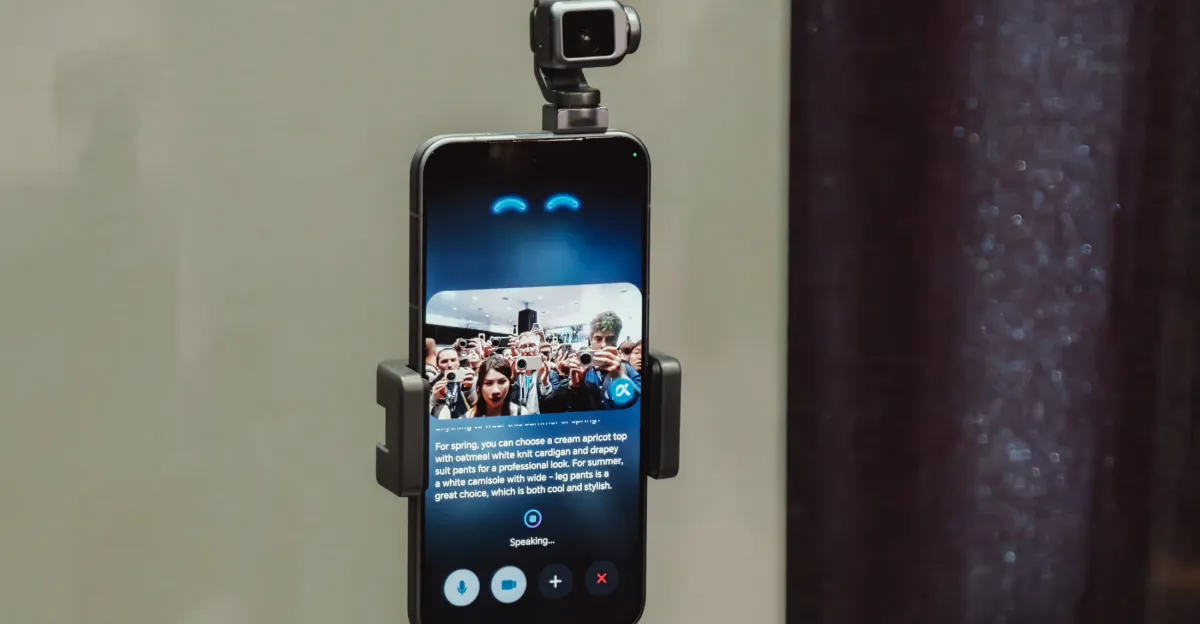
The Mobile World Congress 2026 in Barcelona marked a significant milestone as Honor announced and demonstrated its pioneering efforts in robotics and mobile technology with the debut of the so-called Robot Phone. While details remain scant, the showcased device signifies a bold step toward integrating advanced AI and robotics into consumer electronics, signaling a potential shift in how technology interacts with everyday users. The demonstration featured a working prototype capable of holding AI-enabled conversations, movably folding back, and mimicking human gestures—hallmarks of disruptive innovation aimed at positioning Honor firmly in the forefront of next-generation device development.

During the event, Honor also exhibited a humanoid robot, which impressed spectators with its agility, including dance routines and backflips—albeit with some ambiguity about whether the robot was remotely teleoperated or acting autonomously. Demonstrations of the robot haltingly waving and shaking hands hinted at rapid advancements in robotics behavior, but also highlighted lingering questions about the maturity and reliability of such machines in real-world applications. This dual showcase underscores a broader industry trend toward integrating autonomous robotics into consumer platforms, promising to redefine service, security, and entertainment sectors. Notably, Honor’s willingness to reveal these prototypes signals an industry-wide pivot toward robotics as a core strategic area, with the potential to challenge incumbent tech giants entrenched in mobile and AI markets.

Market analysts and industry leaders, including Gartner and MIT researchers, underscore the business implications of these developments. The convergence of AI-enabled smartphones and humanoid robotics is poised to accelerate the disruption of traditional industries, from customer support to personal assistants. Honor’s pivot into robotics — coupled with the planned release of the Robot Phone expected in China later this year — exemplifies how innovative companies are leveraging rapid technological advances to carve out unique market niches. This strategic move could catalyze a new era of integrated AI ecosystems, where devices are not just tools but partners capable of complex interactions and autonomous functions.

As the industry hurtles toward this future, stakeholders face the dual challenge of harnessing the immense potential of robotics and AI while managing the risks associated with interoperability, safety, and ethical deployment. Experts like Elon Musk and Peter Thiel emphasize that the coming decade will be pivotal; failure to adapt quickly to the disruptive wave of AI and robotics could render current market leaders obsolete. With Honor’s latest prototypes nudging the boundaries of what’s technologically feasible, it is clear that the race for control of this new frontier is intensifying. The urgency for established corporations and startups alike to innovate at breakneck speed has never been greater. The industry’s trajectory suggests that those who lead in AI-powered robotics and ubiquitous intelligent devices will dominate the next wave of global tech dominance, making the immediate future one of unparalleled opportunity and strategic risk. The clock is ticking — the future belongs to the bold, the innovative, and those willing to disrupt.”

George Clooney Warns: Dropping Biden for Harris Was a Misstep

Global Implications of Domestic Political Shifts in the United States

In a remarkable display of internal discord within the Democratic Party, recent events have underscored the profound geopolitical impact of America’s shifting political landscape. The outspoken actor and activist George Clooney publicly criticized the party’s decision to renominate Kamala Harris as the Democratic candidate for the 2024 presidential election. Clooney’s assertion that the nomination was a “mistake” highlights a fissure growing within American political ranks, a fissure that could have ripple effects well beyond national borders. As he expressed regret over the absence of a primary process to challenge Harris, Clooney subtly questioned the durability of the current Democratic leadership’s strategy, hinting at the potential for wider instability in Washington.

His candid comments came amidst a backdrop of widespread concern among analysts who warn that Biden’s perceived decline and the party’s controversial nomination process threaten to undermine America’s global standing. Historically, United States elections have been pivotal, shaping international alliances and economic policies worldwide. The decision to forego a competitive primary—an attempt at party unity, as some officials argue—may instead fracture the very fabric of American society and influence the geo-strategic balance. Particularly, how the U.S. handles internal dissent now could serve as a harbinger for its ability to lead on global challenges.

Meanwhile, the internal saga has devolved into personal attacks, with Hunter Biden publicly dismissing Clooney’s critique with uncensored hostility. This public spat underscores a broader theme: the erosion of civility in political discourse—yet it masks a deeper question of policy direction and international influence. Critics, including some historians and international observers, warn that such internal chaos may embolden adversaries like China and Russia, who are watching carefully to exploit perceived vulnerabilities in American leadership. Decisions made behind closed doors today could ultimately influence the future of global security, trade, and diplomatic relations for generations to come.

Rising Dissent and Its Global Consequences

  • In July, Hunter Biden’s profanity-laced interview criticizing Clooney revealed the deep divisions within emerging political narratives about America’s leadership, encapsulating a nation at a crossroads.
  • Harris’s own reflections in her book, “107 Days,” exposed her awareness of her delicate political position, recognizing the potential harm to national unity should her candidacy be challenged from within.

International institutions and political analysts have long warned that fractured democracies pose risks to global stability. The United Nations, for example, has emphasized that enduring democracy depends on transparency, accountability, and internal cohesion—all elements that appear strained in the current American scenario. As the geopolitical focus pivots toward Asia, the Middle East, and Eastern Europe, America’s internal turmoil serves as a cautionary tale about the importance of strong, decisive leadership at home. With international crises mounting—climate change, ISIS resurgence, and economic instability—the risk of distraction and disunity undermine America’s capacity to lead effectively.

The history books may record this an era of betrayal of democratic ideals, where internal discord amid high-stakes elections fractured both society and the balance of power. As global powers recalibrate their strategies, the American story continues to unfold—its next chapters determined not only by the outcomes of elections but by how it navigates the aftermath of its own internal divisions. In the shadows of the White House, decisions ripple outward, shaping the future of nations and civilizations—an unfolding saga still deeply embedded in the fabric of history itself.

Top chargers dropping early — get ready before Prime Day hits!

Harnessing Portable Power: The Future of Mobile Energy Solutions Dominates Tech Discourse

In an era where technological disruption is reshaping how we connect, work, and play, portable power innovations are taking center stage. Industry leaders like Anker and Jackery continue to push the boundaries of mobility, positioning themselves not just as accessory providers but as pivotal players in the burgeoning portable energy market. These advancements could redefine the interface between consumers and technology, emphasizing innovation, convenience, and resilience.

The recent launch of Anker’s 633 Magnetic Battery exemplifies how companies are integrating disruptive features into compact form factors. This MagSafe-compatible charger combines high efficiency with user-centric features such as an integrated kickstand and multiple charging modes—wireless at 7.5W or through its USB-C port at 20W. Its support for passthrough charging and dual-port options profoundly impacts on-the-go energy management. While gadget users have long perhaps accepted the constraints of power limitations, innovations like this shift the paradigm, enabling a seamless, always-connected experience. With a capacity of 10,000mAh, enough to power most smartphones, it underscores a market trend toward more energy delivery in smaller packages.

On the industrial front, the emergence of dedicated portable power stations such as Jackery’s Explorer 1000 V2 signals a shift toward *off-grid sustainability*. Its design—notably three AC outlets, multiple USB ports, and an impressive 1,070Wh capacity—positions it as an essential device for outdoor adventurers, emergency preparedness, and remote work settings. Early October Prime Day deals, which cut its price to under $430, reflect strategic pricing aimed at capturing a segment eager for reliable, high-capacity power on demand. Given that Jackery claims its batteries retain about 70% of their capacity after 4,000 cycles, the platform’s longevity makes it a disruptive force in traditional power storage industries. Companies that pivot quickly to incorporate these mobile solutions could capture unprecedented market share, especially as remote work and outdoor activities accelerate globally.

The business implications are equally dynamic, with innovations driving a new competitive landscape. Analysts such as Gartner forecast that portable power devices will grow at a compound annual rate exceeding 20% in the coming years, driven by shifting consumer expectations and the relentless rise of mobile lifestyles. Tech giants and startups alike are investing heavily in R&D—integrating AI for smarter power management, developing lighter yet more durable battery chemistries, and exploring hybrid systems that combine solar with conventional energy sources. This wave of disruption not only threatens established utilities but also paves the way for new ecosystems of integrated, sustainable energy solutions. Firms that prioritize interoperability, durability, and rapid charging will dominate emerging markets, fundamentally altering how we think about energy independence.

Looking ahead, the pace of innovation suggests a tech landscape increasingly defined by lightweight, high-capacity, and eco-friendly portability. The convergence of AI, IoT, and battery technology heralds a future where **portable energy devices** are not just tools but strategic assets—enabling everything from autonomous remote operations to emergency disaster response. As industry pioneers like Elon Musk and Peter Thiel emphasize, maintaining a sense of urgency and anticipating breakthrough shifts will be crucial for stakeholders aiming to lead this dynamic sector. In the coming decade, the race to dominate portable power markets will likely determine the next wave of technological sovereignty, with those embracing innovation at its core poised to define the future of mobility and resilience.

Social Media Auto Publish Powered By : XYZScripts.com