
Matox News

Truth Over Trends, always!

US and Australia team up on rare earths to push back against China's grip
US and Australia team up on rare earths to push back against China’s grip

The evolving geopolitical landscape continues to underscore the strategic importance of critical minerals in the global power struggle. On the recent front, the United States and Australia have solidified their alliance by signing a landmark agreement aimed at dominating the supply of rare earth elements. As tensions with China escalate over control of vital resources, this partnership signals a decisive move by Western nations to break China’s stranglehold—an alarming 70% of rare earths mining and 90% of processing. These materials are fundamental to modern defense systems, technology, and automotive industries. With China’s aggressive border restrictions and trade maneuvers, Washington and Canberra are actively seeking alternatives to secure their economic and military resilience.

Prime Minister Anthony Albanese emphasized the plan’s scope, revealing that this deal supports a pipeline of over $8.5 billion (A$13 billion; £6.3 billion) worth of projects, designed to expand Australia’s mining and processing capabilities. The agreement also commits an initial $1 billion investment over just six months, targeting critical supply chain vulnerabilities. Analysts observe that such investment is part of a broader strategic effort to foster self-sufficiency within allied nations, reducing reliance on China’s dominant market and circumventing future restrictions. Furthermore, a dedicated focus on developing advanced processing facilities, including a 100-tonne-per-year gallium refinery in Western Australia, highlights Washington’s commitment to undercut China’s control and bolster its own high-tech industries.

Alongside resource diversification, the agreement has significant military-strategic implications. Recently, President Donald Trump reaffirmed support for Australia’s Aukus submarine deal—an alliance with the US and UK—despite earlier delays and uncertainties over procurement aligned with the “America First” agenda. While current discourse suggests Australia may not receive US submarines in the near term, Trump’s unequivocal statement, “they’re getting them,” signals intention to strengthen traditional security ties. This dynamic infers a deliberate effort by Washington to leverage maritime dominance as a deterrent against an increasingly assertive China. As fireworks of diplomatic and military maneuvers intensify, the Pacific region remains the battlefield where the future of global supremacy is being forged.

The geopolitical impact of these moves is profound, altering alliances and reshaping regional balances of power. Experts warn that the strategies developed today will resonate for decades, influencing the capabilities of nations to sustain high-tech economies and military power. Historically, access to critical minerals has been a decisive factor in conflicts and economic dominance—patterns that repeat as nations scramble to secure the resources that fuel the 21st century’s technological revolution. As the US and Australia forge ahead to confront China’s resource monopoly, the world watches with bated breath, aware that these decisions are fueling a new chapter of international rivalry—one in which the raw materials of the future will define the winners and losers of the unfolding geopolitical saga. The pages of history are being written anew, and the stakes have never been higher.
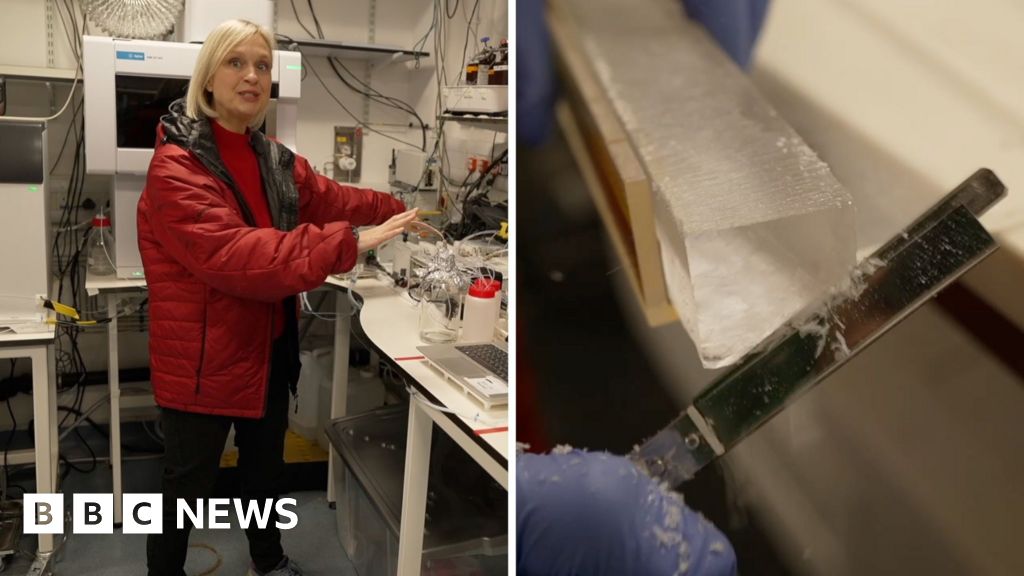

Exploring the lab where scientists unlock Earth's ancient ice secrets
Exploring the lab where scientists unlock Earth’s ancient ice secrets

Unveiling Earth’s Deep Climate History: The Antarctic Ice Cores

In a groundbreaking effort that underscores the relentless pursuit of knowledge, scientists from the British Antarctic Survey have successfully extracted and analyzed ice cores from the depths of the Antarctic ice sheet. These cores, drilled down to a staggering 2.8 kilometers, represent a chronological window extending back over 1.5 million years. With each segment carefully melted and examined, researchers hope to piece together a comprehensive environmental history that spans both glacial and interglacial periods — a veritable timeline of Earth’s climatic evolution. As the oldest ice samples ever retrieved for scientific study, these cores may fundamentally reshape our understanding of natural climate variability and human impact on the environment.

From the Coldest Continents to Global Policy: The Geopolitical Impact

The research into ancient ice cores has profound geopolitical implications. In recent years, nation-states, particularly those involved in polar research such as Australia, the United Kingdom, the United States, and China, have intensified efforts to secure influence over Antarctica’s vast and largely unclaimed territory. According to analysts at the International Institute for Strategic Studies, the continent is becoming a flashpoint—not for conventional conflict, but for strategic dominance rooted in resource access and environmental leadership. Decisions made today about scientific cooperation and territorial claims will shape regional alliances and global power balances. This latest venture into the Antarctic’s oldest ice not only aims to decode climate history but also signals the importance of scientific sovereignty in an era marked by intense geopolitical competition.

How These Findings Influence Societal and Environmental Policies

The knowledge gleaned from this 1.5-million-year-old ice has the potential to trigger policy shifts worldwide. Climate skeptics and alarmists alike watch these discoveries with keen interest, as they provide empirical data crucial for debates on human influence and future climate resilience. Historians like Dr. James Fleming note that understanding the natural cycles that have oscillated over millennia can better inform international efforts like the Paris Agreement. Yet, critics warn that such deep-time data must be integrated cautiously, lest it be exploited to advance economic or political agendas under the guise of environmental stewardship. The melting of these ancient ice cores symbolizes a pivotal juncture: either humanity will confront the long-term patterns of Earth’s climate with clarity or stumble into future crises driven by ignorance and short-term priorities.

The Unfolding Narrative of Earth’s Climate Legacy

As the last fragments of these primeval samples are melted for analysis, a story as old as Earth itself begins to reveal its secrets. Scientists, historians, and policymakers stand at a crossroads—faced with the responsibility to interpret this critical epoch with prudence. The outcomes of this research could dictate the course of environmental policies for decades to come, determining not only how humanity perceives its past but how it safeguards its future. Yet, amid the hum of drills and melting ice, the shadows of uncertainty loom: the climate of tomorrow is still being written in the ancient ice beneath our feet, a silent witness to the ongoing saga that will forever define mankind’s relationship with planet Earth.

‘Alien’ Showrunner Says Earth’s Dark Reflection Was the Goal for Season 1

Innovative Disruption in the Alien Franchise: A Reflection of Contemporary Technological and Societal Shifts

The latest installment in the Alien series—Alien: Romulus—continues to redefine the boundaries of science fiction storytelling, illustrating a deliberate pivot towards exploring synthetic beings and youth-centered narratives. Showrunner Noah Hawley’s approach signals a notable disruption in franchise storytelling, emphasizing innovation through perspective shifts that resonate deeply with contemporary societal anxieties. The series’ pivot aligns with trends analyzed by institutions such as Gartner, which forecast a sustained growth of AI-driven narratives and synthetic characters as central elements in future entertainment and branding ventures.

What distinguishes this new era of disruptive storytelling is the way it integrates technology, morality, and geopolitics. Hawley’s keen focus on the moral horror of children confronting life-and-death decisions—exemplified in their roles in the series—mirrors broader societal concerns over escalating online exposure of youth to adult spheres. This storytelling device reflects real-world trends where children are thrust into complex digital environments early on, leading to profound implications for societal norms, cybersecurity, and ethical AI development. Industry analysts from MIT have emphasized that this narrative shift could press tech companies and policymakers to rethink the “containment” of AI risks, as AI and synthetic characters become more autonomous and unpredictable.

Technological Innovation and Business Implications in AI Content

The series’ emphasis on synthetic beings and AI-human interactions signifies a new frontier with substantial business implications. Major entertainment players are now investing in AI-powered storytelling—such as deepfake technology, interactive narratives, and virtual actors—aiming to create immersive experiences that are both engaging and cost-effective. The rise of hyper-realistic AI characters demands that traditional entertainment stakeholders adapt rapidly; those who fail risk becoming obsolete in a marketplace that increasingly favors personalized, on-demand content. Businesses leveraging these innovations will need to navigate regulatory frameworks and ethical considerations, especially as platforms face pressure to ensure AI transparency and prevent misuse.

Grand visions from industry leaders like Elon Musk and Peter Thiel corroborate the disruptive trajectory, emphasizing that AI and synthetic characters will soon dominate entertainment, marketing, and even social interaction. The technology’s milestone—such as GPT-5 and advanced neural interfaces—will accelerate this trend, pushing the boundaries from scripted entertainment to emergent AI-driven worlds where virtual characters formalize new forms of social organization and conflict. Executives and investors are advised to monitor these innovations closely, for they may herald an era where the distinction between reality and simulation blurs, demanding new business models and regulatory paradigms.

Future Outlook: A Call to Urgency and Innovation

As the Alien franchise grapples with the moral and societal implications of synthetic intelligence, industry leaders and policymakers must recognize the critical urgency of proactive engagement with AI safety and policy. Hawley’s exploration of global power struggles and technological hazards signals that the leap before you look approach—seen both in show narratives and real-world AI development—poses profound risks and opportunities. The future belongs to those who innovate boldly, but with caution, ensuring that the disruptive power of AI serves societal good rather than unforeseen chaos.

In an era where technological advancement accelerates at an unprecedented rate, the warning signs are clear: the window to shape AI’s trajectory is closing fast. Stakeholders—whether in entertainment, tech, or governance—must act swiftly to harness this disruptive wave, channeling innovation into creating a resilient, ethically grounded future. The next decade promises transformative change; those who lead the charge today will define the legacy of tomorrow’s technological landscape.

Social Media Auto Publish Powered By : XYZScripts.com



